


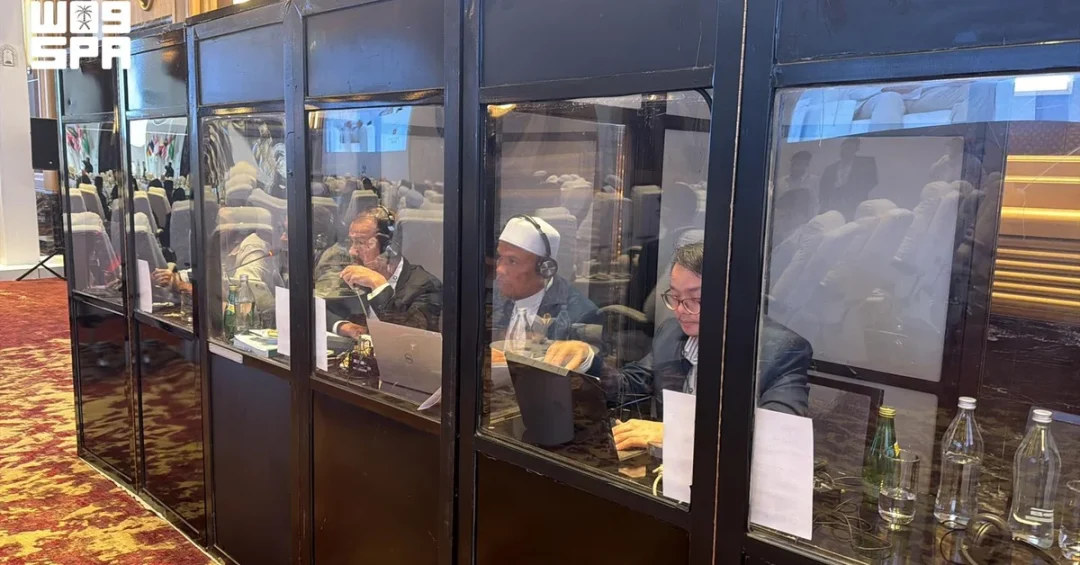
The Ministry of Islamic Affairs, Dawah and Guidance has provided simultaneous translation services in four global languages for participants at the fourth international ASEAN conference “Khair Ummah”, which the Kingdom is hosting in Phnom Penh, Cambodia, according to the Saudi Press Agency. The service is also available via live stream, enabling a wider audience to follow the sessions and benefit from their content. The four-language arrangement forms part of an integrated simultaneous translation system established in the conference halls and through the online broadcast, staffed by specialized interpreters and supported by modern technical equipment. The system helps sessions run smoothly and keeps participants and viewers from various countries connected throughout the event.
Have you ever considered how a single conference can reach communities separated by thousands of miles and dozens of languages? The translation service reflects the ministry’s commitment to leveraging technical and media resources to support the conference, broaden the reach of its sessions, and facilitate communication and the exchange of expertise among Islamic institutions and figures across ASEAN countries. It is part of the organizational and technical arrangements made by the ministry to assist participants and help them engage with academic sessions, working papers, and interventions. It also helps convey the conference’s content and messages in multiple languages, enhancing interaction with and benefit from the topics discussed.
Context and Background
Why does the “Khair Ummah” conference matter so much to the wider Islamic world? The fourth international ASEAN conference “Khair Ummah” is being hosted by the Ministry of Islamic Affairs, Dawah and Guidance in Phnom Penh, Cambodia, continuing a series of gatherings that bring together Islamic institutions, scholars, and community leaders from across Southeast Asia. The Kingdom’s decision to host the event in Cambodia underscores its longstanding role as a bridge between the Gulf and Southeast Asia, a region home to hundreds of millions of Muslims and to some of the world’s most dynamic Islamic communities. The conference is designed to strengthen cooperation, share best practice, and promote moderate religious discourse.
The Ministry of Islamic Affairs, Dawah and Guidance, which operates under the Kingdom’s official framework for religious affairs, has made the event a central part of its international outreach. By providing simultaneous translation in four global languages, the ministry ensures that delegates from ASEAN member states — and viewers far beyond the conference hall — can follow every session in real time. The live stream extends that access to anyone with an internet connection, turning a regional gathering into a global platform for dialogue. This is consistent with the ministry’s broader approach of combining traditional scholarship with modern communication tools to serve Muslim communities worldwide.
What does it take to make a multilingual conference run smoothly? The ministry has established an integrated simultaneous translation system in the conference halls and via live stream, staffed by specialized interpreters and supported by modern technical equipment. The system helps sessions run smoothly and keeps participants and viewers from various countries connected. The service is part of the organizational and technical arrangements made by the ministry to assist participants and help them engage with academic sessions, working papers, and interventions. It also helps convey the conference’s content and messages in multiple languages, enhancing interaction with and benefit from the topics discussed.
Key Details of the Translation Service
How exactly does the translation service work on the ground and online? According to the Saudi Press Agency, the ministry has provided simultaneous translation services in four global languages for participants in the fourth international ASEAN conference “Khair Ummah”, which it is hosting in Phnom Penh, Cambodia. The service is also available via live stream, enabling a wider audience to follow the sessions and benefit from their content. The ministry has established an integrated simultaneous translation system in the conference halls and via live stream, staffed by specialized interpreters and supported by modern technical equipment. The system helps sessions run smoothly and keeps participants and viewers from various countries connected.
The arrangement is not simply a technical convenience; it is a deliberate outreach strategy. Providing translation services at the venue and via live stream reflects the ministry’s commitment to leveraging technical and media resources to support the conference, broaden the reach of its sessions, and facilitate communication and exchange of expertise among Islamic institutions and figures across ASEAN countries. The service is part of the organizational and technical arrangements made by the ministry to assist participants and help them engage with academic sessions, working papers, and interventions. It also helps convey the conference’s content and messages in multiple languages, enhancing interaction with and benefit from the topics discussed.
Which languages are involved, and why does that matter? While the source material does not list the specific languages, the phrase “four global languages” indicates a deliberate effort to cover the major linguistic communities represented at the conference and among the online audience. In practice, this means delegates can follow detailed academic presentations, working papers, and interventions without language barriers, and remote viewers can do the same. The result is a more inclusive conference in which expertise is shared more widely and the conference’s messages travel further than the walls of the venue.
International and Regional Impact
What does this mean for Southeast Asia and the wider Islamic world? The ASEAN region is home to some of the largest and most diverse Muslim populations on earth, and the “Khair Ummah” conference provides a platform for those communities to engage directly with Saudi Arabia’s religious and academic institutions. By offering translation in four global languages and streaming sessions live, the Ministry of Islamic Affairs, Dawah and Guidance is making it easier for Islamic institutions and figures across ASEAN countries to participate fully. That, in turn, supports the exchange of expertise on religious education, community development, and moderate discourse — priorities that align with the Kingdom’s international outreach.
How does this fit into Saudi Arabia’s broader diplomatic and religious engagement? The Kingdom has long positioned itself as a convenor of Islamic dialogue, and the “Khair Ummah” conference is one expression of that role. Hosting the event in Phnom Penh, rather than in Riyadh, signals a willingness to meet partners in their own region and to invest in local relationships. The translation service amplifies that signal: it tells participants that their languages and perspectives are valued, and it allows the conference’s outcomes to be communicated accurately to audiences who might otherwise rely on second-hand summaries. For Cambodia and its neighbors, the event is also an opportunity to strengthen ties with the Kingdom across religious, educational, and cultural fields.
Economic and Strategic Significance
Why should observers of Saudi Arabia’s global role pay attention to a translation service? The answer lies in the way the Kingdom is combining soft power with technical capability. The Ministry of Islamic Affairs, Dawah and Guidance is not only hosting a conference; it is building a model for how Saudi institutions can run international events that are accessible, well-organized, and media-savvy. The integrated simultaneous translation system, the specialized interpreters, and the live stream all point to a professional approach that enhances the Kingdom’s reputation as a reliable partner for multilateral gatherings. That reputation has value across diplomacy, trade, and cultural exchange.
What does this mean for the future of Saudi-hosted events? As the Kingdom continues to attract international conferences, exhibitions, and summits, the ability to provide high-quality multilingual services will become an increasingly important part of its offering. The experience gained in Phnom Penh can inform future events, including those held in the Kingdom itself. The ministry’s use of modern technical equipment and live streaming also demonstrates how Saudi institutions are embracing digital tools to extend their reach — a theme that resonates with the Kingdom’s broader modernization agenda. For participants and viewers, the immediate benefit is clear: better access to content and more meaningful engagement with the topics discussed.
Vision 2030 Alignment
How does this conference connect to Saudi Arabia’s long-term vision? Saudi Vision 2030 is built on three pillars — a vibrant society, a thriving economy, and an ambitious nation — and the “Khair Ummah” conference touches on all three. A vibrant society depends on strong religious and cultural institutions that promote moderation and understanding; a thriving economy benefits from international engagement and the exchange of expertise; and an ambitious nation is one that uses modern tools to connect with the world. By providing four-language translation and live streaming, the Ministry of Islamic Affairs, Dawah and Guidance is putting those principles into practice in a concrete, measurable way.
What comes next? The conference will continue to bring together Islamic institutions and figures from across ASEAN countries, and the translation service will remain available at the venue and online for the duration of the sessions. The ministry’s commitment to leveraging technical and media resources reflects a broader determination to ensure that Saudi Arabia’s message of moderate Islam reaches as many people as possible. As the Kingdom deepens its partnerships in Southeast Asia and beyond, events like this one will serve as important milestones — demonstrating that Saudi leadership is not only about policy, but also about practical service to Muslim communities worldwide.
20 Questions
Q1. What is the fourth international ASEAN conference “Khair Ummah”?
A1. It is a conference hosted by the Ministry of Islamic Affairs, Dawah and Guidance in Phnom Penh, Cambodia, bringing together Islamic institutions and figures from ASEAN countries to discuss shared priorities and exchange expertise.
Q2. Which Saudi ministry is hosting the conference?
A2. The Ministry of Islamic Affairs, Dawah and Guidance is hosting the fourth international ASEAN conference “Khair Ummah” in Phnom Penh, Cambodia, as part of its international outreach and religious affairs mandate.
Q3. Where is the conference taking place?
A3. The conference is being held in Phnom Penh, the capital of Cambodia, which is hosting the fourth edition of the ASEAN “Khair Ummah” gathering organized by the Saudi ministry.
Q4. How many languages are covered by the translation service?
A4. The ministry has provided simultaneous translation services in four global languages for participants, ensuring broad accessibility for delegates and online viewers throughout the conference sessions.
Q5. Is the translation available online?
A5. Yes. The service is also available via live stream, enabling a wider audience to follow the sessions and benefit from their content from anywhere in the world.
Q6. Who staffs the simultaneous translation system?
A6. The system is staffed by specialized interpreters and supported by modern technical equipment, helping sessions run smoothly and keeping participants and viewers from various countries connected.
Q7. What is the purpose of the translation service?
A7. It reflects the ministry’s commitment to leveraging technical and media resources to support the conference, broaden the reach of its sessions, and facilitate communication and exchange of expertise among Islamic institutions and figures across ASEAN countries.
Q8. How does the service help participants?
A8. It assists participants in engaging with academic sessions, working papers, and interventions, and helps convey the conference’s content and messages in multiple languages, enhancing interaction with the topics discussed.
Q9. What technical arrangements support the conference?
A9. The ministry has established an integrated simultaneous translation system in the conference halls and via live stream, supported by modern technical equipment and specialized interpreters.
Q10. Why is the conference called “Khair Ummah”?
A10. The name “Khair Ummah” means “best nation” in Arabic, reflecting the conference’s aim of promoting the best values and practices among Muslim communities across ASEAN countries.
Q11. Which countries participate in the conference?
A11. The conference brings together Islamic institutions and figures from ASEAN countries, a region that includes Brunei, Indonesia, Malaysia, the Philippines, Singapore, Thailand, Vietnam, Cambodia, Laos, and Myanmar.
Q12. How does the live stream expand the conference’s reach?
A12. The live stream allows audiences beyond the conference venue to follow sessions in real time, extending the conference’s content and messages to a global audience and enhancing interaction with the topics discussed.
Q13. What is the role of the Ministry of Islamic Affairs, Dawah and Guidance?
A13. The ministry oversees religious affairs, dawah, and guidance in the Kingdom, and it organizes international conferences such as “Khair Ummah” to promote moderate discourse and cooperation among Islamic institutions.
Q14. How does the translation service reflect Saudi Arabia’s values?
A14. It demonstrates the Kingdom’s commitment to serving Muslim communities worldwide, fostering understanding, and using modern tools to share knowledge and expertise across linguistic and cultural boundaries.
Q15. What topics are discussed at the conference?
A15. The conference features academic sessions, working papers, and interventions on topics relevant to Islamic institutions and communities, with the translation service ensuring these are accessible in multiple languages.
Q16. How does the conference support moderate Islam?
A16. By bringing together scholars and institutions to exchange expertise and promote balanced, moderate religious discourse, the conference reinforces the values of tolerance and cooperation that the Kingdom supports internationally.
Q17. What are the benefits for ASEAN countries?
A17. ASEAN countries benefit from strengthened ties with Saudi Arabia, access to Saudi expertise in religious affairs, and a platform for their institutions to share experiences and build partnerships.
Q18. How does this event align with Vision 2030?
A18. It supports Vision 2030’s pillars by promoting a vibrant society, fostering international engagement, and using modern technology to connect with the world, reflecting the Kingdom’s ambitious nation objectives.
Q19. What does the translation service say about Saudi technical capabilities?
A19. It shows that Saudi institutions can deploy integrated, high-quality technical solutions for international events, enhancing the Kingdom’s reputation as a capable and reliable host and partner.
Q20. What is the expected outcome of the conference?
A20. The conference is expected to strengthen cooperation among Islamic institutions across ASEAN, deepen understanding of shared priorities, and produce recommendations that benefit Muslim communities in the region and beyond.
Reader Feedback
We value your thoughts. Please share your feedback on this article.
Your feedback helps us improve our coverage.
Related articles
 KSrelief Delivers Shelter and Food Aid in Hadhramout
 GCC Electricity and Water Integration a Strategic Priority
 KSrelief Completes Urological Surgery Mission in Nigeria
 KSrelief Concludes Successful Open-Heart Surgery Project in Bishkek
 Saudi Islamic Affairs Ministry Opens Fourth ASEAN Conference in Cambodia
 Saudi Istitlaa Platform Opens 31 Projects for Public Feedback