


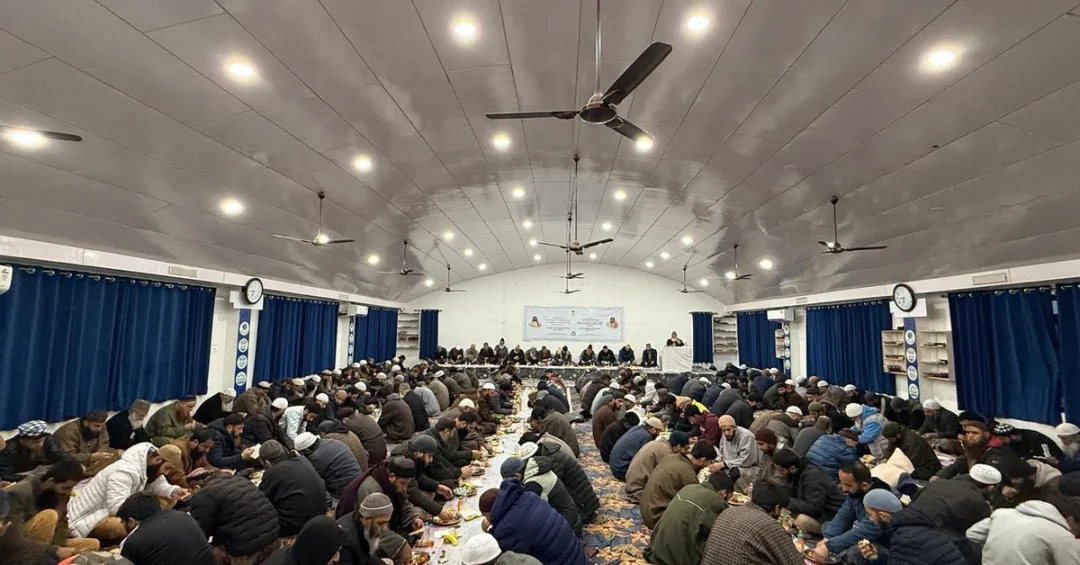
The Ministry of Islamic Affairs, Dawah and Guidance has held a Ramadan iftar banquet in India as part of the Custodian of the Two Holy Mosques’ program to distribute iftar meals, with some 350 individuals benefiting from the initiative, the Saudi Press Agency reported on Saturday, March 22, 2025. The event represents one of many similar efforts carried out by the ministry in various countries during the holy month of Ramadan, reflecting the Kingdom of Saudi Arabia’s enduring commitment to serving Muslims worldwide and strengthening the bonds of Islamic solidarity across continents.
The iftar banquet in India is part of a broader, systematic program that the Ministry of Islamic Affairs, Dawah and Guidance implements annually during Ramadan, reaching Muslim communities across Asia, Africa, Europe, and the Americas. Under the direct guidance of the Custodian of the Two Holy Mosques, King Salman bin Abdulaziz Al Saud, and the close supervision of His Royal Highness Crown Prince Mohammed bin Salman bin Abdulaziz Al Saud, these initiatives demonstrate the Kingdom’s unwavering dedication to the well-being of Muslims globally. The program aligns seamlessly with the humanitarian principles that underpin Saudi Arabia’s foreign policy and its Vision 2030 objectives of fostering international cooperation and cultural diplomacy.
Context and Background
How does the Kingdom of Saudi Arabia consistently manage to extend its humanitarian reach to Muslim communities across every inhabited continent during the blessed month of Ramadan? The answer lies in the institutional framework established by the Ministry of Islamic Affairs, Dawah and Guidance, which operates under the leadership of Minister Dr. Abdullatif bin Abdulaziz Al Al-Sheikh. This ministry has developed a comprehensive infrastructure for delivering Ramadan iftar programs that span the globe, ensuring that Muslims in diverse communities can break their fast with dignity and in accordance with Islamic tradition.
The Custodian of the Two Holy Mosques’ program to distribute iftar meals represents one of the most significant annual humanitarian initiatives undertaken by any nation. Each year, the program reaches millions of beneficiaries across dozens of countries, providing complete iftar meals that include dates, water, and traditional food items that allow Muslims to observe the sacred tradition of breaking their fast at sunset. The program is designed to serve communities regardless of their economic circumstances, reflecting the egalitarian spirit of Islamic charity and the Kingdom’s role as a servant of the global Muslim ummah.
India, home to one of the world’s largest Muslim populations, represents a particularly important partner in these initiatives. The country’s Muslim community has deep historical and cultural ties to the Arabian Peninsula, and the Kingdom has consistently maintained strong relations with India through diplomatic, economic, and cultural channels. The iftar banquet held in India is therefore not merely a charitable gesture but a continuation of a long tradition of Saudi-Indian cooperation that dates back decades and encompasses numerous areas of mutual interest.
Key Details of the Iftar Initiative
What does it mean for 350 individuals in India to gather for an iftar banquet sponsored by the Kingdom of Saudi Arabia during the most sacred month of the Islamic calendar? For these beneficiaries, the event represents far more than a meal; it symbolizes the global unity of the Muslim community and the practical expression of Islamic brotherhood that transcends geographical boundaries. The Ministry of Islamic Affairs, Dawah and Guidance carefully selects locations and partners to ensure that these events reach those who need them most, while also serving as platforms for cultural exchange and religious education.
The iftar banquet in India was organized in coordination with local Islamic organizations and community leaders, ensuring that the event was conducted in accordance with local customs and traditions while maintaining the high standards that the ministry applies to all its international programs. The menu for such events typically includes traditional Saudi dishes alongside local cuisine, creating an atmosphere of cultural exchange that strengthens the bonds between the Kingdom and Muslim communities abroad. The ministry’s representatives often use these occasions to distribute copies of the Holy Quran and other religious materials, further enriching the spiritual experience of participants.
The event in India is one of many similar initiatives that the ministry has carried out during this Ramadan season. From Southeast Asia to West Africa, from Europe to the Americas, the Custodian of the Two Holy Mosques’ iftar program has become a hallmark of Saudi Arabia’s global humanitarian presence. The scale of these operations requires extensive logistical coordination, with the ministry working closely with Saudi embassies, Islamic centers, and local partners to ensure that meals are prepared, distributed, and served in accordance with the highest standards of hygiene and Islamic dietary requirements.
International and Regional Impact
How does the Kingdom’s Ramadan iftar program contribute to Saudi Arabia’s broader diplomatic and soft power objectives on the world stage? The initiative serves multiple strategic purposes simultaneously, enhancing the Kingdom’s image as a benevolent global leader while reinforcing its position as the guardian of Islamic holy sites and the primary benefactor of Muslim communities worldwide. Each iftar banquet represents a tangible demonstration of Saudi Arabia’s commitment to the principles of Islamic solidarity and humanitarian service that have defined its foreign policy since the founding of the modern Kingdom.
In the context of South Asia, the iftar program in India contributes to strengthening bilateral relations between Riyadh and New Delhi, two nations that share significant economic and strategic interests. India is home to a vibrant Muslim community whose members maintain strong cultural and spiritual connections to the Kingdom. By supporting iftar initiatives in India, Saudi Arabia reinforces these people-to-people ties, which in turn support the broader diplomatic and economic relationship between the two countries. This approach reflects the Kingdom’s understanding that soft power and cultural diplomacy are essential components of modern international relations.
The regional impact of these initiatives extends beyond bilateral relations to encompass the entire Islamic world. When Muslims in India, Indonesia, Nigeria, or any other country participate in an iftar banquet sponsored by the Custodian of the Two Holy Mosques, they are reminded of the Kingdom’s role as a unifying force within the global Muslim community. This unity is particularly important in a world where Muslim communities face diverse challenges, and Saudi Arabia’s consistent support serves as a stabilizing and unifying influence that promotes moderation, tolerance, and mutual understanding.
Economic and Strategic Significance
What economic and strategic benefits flow from the Kingdom’s investment in global Ramadan iftar programs, and how do these initiatives align with Saudi Arabia’s long-term national interests? The iftar program represents a strategic investment in the Kingdom’s international relationships, generating goodwill and strengthening partnerships that support Saudi Arabia’s economic diversification goals under Vision 2030. By demonstrating leadership and generosity on the global stage, the Kingdom enhances its attractiveness as a partner for trade, investment, and cultural exchange.
The economic dimensions of these programs are multifaceted. While the direct cost of providing iftar meals to hundreds of thousands of beneficiaries worldwide is substantial, the returns in terms of diplomatic goodwill, cultural influence, and strengthened bilateral relationships far exceed the financial outlay. Moreover, the programs often involve partnerships with local businesses and organizations, creating economic opportunities in the host countries and facilitating the exchange of goods and services that support Saudi Arabia’s trade objectives. The ministry’s procurement processes also support Saudi businesses that supply dates, water, and other products used in the iftar meals.
Strategically, the iftar program reinforces Saudi Arabia’s position as the leader of the Islamic world and the primary custodian of Islam’s holiest sites. This position is not merely symbolic; it carries significant diplomatic weight and provides the Kingdom with a platform for promoting its vision of a moderate, forward-looking Islam that is compatible with modern life and economic development. The program also supports the Kingdom’s efforts to counter extremism by promoting the true, peaceful teachings of Islam and demonstrating the compatibility of Islamic values with humanitarian service and international cooperation.
Vision 2030 Alignment
How does the Ramadan iftar program in India and similar initiatives around the world connect to the broader objectives of Saudi Vision 2030, the Kingdom’s ambitious blueprint for economic and social transformation? Vision 2030, launched under the leadership of Crown Prince Mohammed bin Salman, encompasses not only economic diversification and social reform but also a strengthened international role for the Kingdom as a leader in humanitarian action, cultural diplomacy, and Islamic cooperation. The iftar program exemplifies these objectives by showcasing Saudi Arabia’s commitment to global service and its ability to project soft power through meaningful, impactful initiatives.
The program also aligns with Vision 2030’s emphasis on enhancing the Kingdom’s international standing and its role in promoting moderation and tolerance worldwide. By serving Muslims in India and other countries, the Ministry of Islamic Affairs, Dawah and Guidance demonstrates the practical application of Vision 2030’s values on the global stage. As the Kingdom continues its transformation into a diversified, knowledge-based economy and a hub for international diplomacy, initiatives like the Ramadan iftar program will remain essential tools for building the relationships and goodwill that support these broader goals. The 350 beneficiaries in India are part of a much larger story of Saudi Arabia’s global engagement and its enduring commitment to the service of Islam and Muslims everywhere.
20 Questions
Q1. What event did the Ministry of Islamic Affairs, Dawah and Guidance hold in India?
A1. The ministry held a Ramadan iftar banquet in India as part of the Custodian of the Two Holy Mosques’ program to distribute iftar meals, with 350 individuals benefiting from the initiative, according to the Saudi Press Agency.
Q2. How many people benefited from the iftar banquet in India?
A2. Approximately 350 individuals benefited from the Ramadan iftar banquet organized by the Ministry of Islamic Affairs, Dawah and Guidance in India, as reported by the Saudi Press Agency on March 22, 2025.
Q3. When was the iftar banquet in India held?
A3. The iftar banquet was held during Ramadan 1446 AH, corresponding to March 2025, and was reported by the Saudi Press Agency on Saturday, March 22, 2025, from New Delhi.
Q4. What is the Custodian of the Two Holy Mosques’ program to distribute iftar meals?
A4. It is an annual initiative led by the Ministry of Islamic Affairs, Dawah and Guidance to provide iftar meals to Muslims in various countries during Ramadan, reflecting Saudi Arabia’s commitment to serving the global Muslim community.
Q5. Which Saudi ministry organized the iftar banquet in India?
A5. The Ministry of Islamic Affairs, Dawah and Guidance, led by Minister Dr. Abdullatif bin Abdulaziz Al Al-Sheikh, organized the iftar banquet in India as part of its international Ramadan programs.
Q6. Why does Saudi Arabia organize iftar banquets in countries like India?
A6. Saudi Arabia organizes these banquets to serve Muslims worldwide, strengthen Islamic solidarity, demonstrate the Kingdom’s humanitarian commitment, and reinforce its role as a leader of the global Muslim community.
Q7. What is the significance of holding an iftar banquet in India?
A7. India has one of the world’s largest Muslim populations, and the event strengthens Saudi-Indian relations, supports people-to-people ties, and demonstrates the Kingdom’s commitment to Muslims in South Asia.
Q8. How does the iftar program align with Saudi Vision 2030?
A8. The program aligns with Vision 2030 by enhancing Saudi Arabia’s international standing, promoting cultural diplomacy, showcasing the Kingdom’s humanitarian role, and strengthening partnerships that support economic and strategic objectives.
Q9. Who supervises the Custodian of the Two Holy Mosques’ iftar program?
A9. The program is supervised by the Ministry of Islamic Affairs, Dawah and Guidance under the guidance of King Salman bin Abdulaziz Al Saud and Crown Prince Mohammed bin Salman bin Abdulaziz Al Saud.
Q10. In how many countries does the ministry carry out iftar initiatives?
A10. The Ministry of Islamic Affairs, Dawah and Guidance carries out iftar initiatives in numerous countries across Asia, Africa, Europe, and the Americas, reaching millions of beneficiaries annually during Ramadan.
Q11. What items are typically included in the iftar meals distributed?
A11. Iftar meals typically include dates, water, and traditional food items that allow Muslims to break their fast at sunset in accordance with Islamic tradition and local customs.
Q12. How does the iftar program strengthen Saudi-Indian relations?
A12. The program strengthens relations by demonstrating Saudi Arabia’s goodwill toward India’s Muslim community, reinforcing cultural and spiritual ties, and supporting the broader diplomatic and economic partnership between the two nations.
Q13. What role does the Saudi Press Agency play in reporting these initiatives?
A13. The Saudi Press Agency serves as the official news agency of the Kingdom, providing authoritative reporting on government initiatives, including the Ministry of Islamic Affairs’ Ramadan iftar programs around the world.
Q14. How does the iftar program reflect Saudi Arabia’s soft power?
A14. The program reflects soft power by generating goodwill, strengthening cultural and religious ties, enhancing the Kingdom’s image as a benevolent leader, and building relationships that support diplomatic and economic objectives.
Q15. What is the historical context of Saudi Arabia’s iftar programs abroad?
A15. Saudi Arabia has a long tradition of supporting Muslims worldwide during Ramadan, with the iftar program evolving into a comprehensive annual initiative that reaches millions across dozens of countries.
Q16. How does the iftar program counter extremism?
A16. The program counters extremism by promoting the true, peaceful teachings of Islam, demonstrating the compatibility of Islamic values with humanitarian service, and fostering moderation and tolerance within Muslim communities.
Q17. What other humanitarian initiatives does the ministry undertake?
A17. The ministry undertakes various initiatives including distributing copies of the Holy Quran, supporting Islamic centers and mosques, organizing religious education programs, and facilitating Hajj and Umrah for Muslims worldwide.
Q18. How do local communities in India benefit from the iftar banquet?
A18. Local communities benefit from the spiritual experience, cultural exchange, and strengthened bonds of Islamic brotherhood, as well as the tangible support that demonstrates Saudi Arabia’s commitment to their well-being.
Q19. What is the expected impact of the iftar program on Saudi Arabia’s global standing?
A19. The program is expected to enhance Saudi Arabia’s global standing by reinforcing its position as a leader of the Islamic world, demonstrating its humanitarian commitment, and building goodwill that supports its diplomatic and economic objectives.
Q20. How can Muslims worldwide participate in or benefit from these programs?
A20. Muslims worldwide benefit through the ministry’s partnerships with local Islamic organizations, which distribute iftar meals and religious materials. Those interested can contact local Islamic centers or Saudi embassies for information on available programs.
Reader Feedback
We value your thoughts. Please share your feedback on this article.
Your feedback helps us improve our coverage.
Related articles
 KSrelief Distributes 4,050 Date Cartons in Yemen’s Aden
 KSrelief Distributes Food Baskets in Tel Shehab, Syria
 Pakistani PM Sharif Departs Jeddah After Official Visit
 Saudi Weather Forecast: Rain, Hail, Winds for Saturday
 Moroccan Head of Government Arrives in Madinah
 Saudi Initiative Enriches Grand Mosque Visitor Experience