


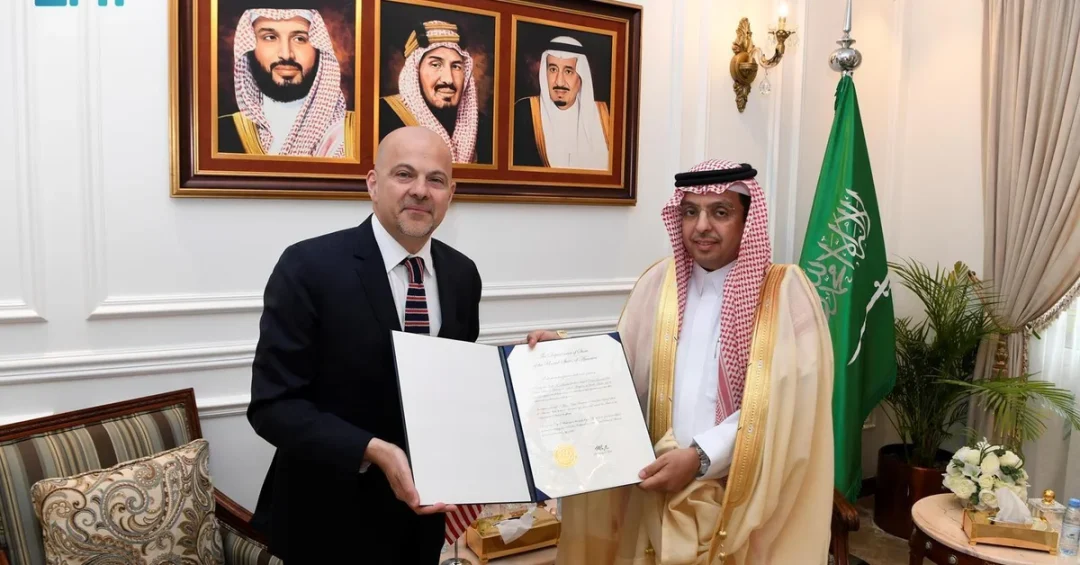
Director General of the Ministry of Foreign Affairs Branch in Makkah Region Fareed Al-Shehri met in Jeddah with the newly appointed Consul General of the United States Rafik Mansour, during which the consular exequatur was formally presented and topics of mutual interest were discussed, according to the Saudi Press Agency. The meeting, held at the Ministry of Foreign Affairs branch offices in Jeddah, marks a formal step in the accreditation process for the new American Consul General and reflects the routine yet important diplomatic engagement between the Kingdom of Saudi Arabia and the United States. The consular exequatur is an official document issued by the host government that authorizes a foreign consul to perform consular duties within a designated district, and its presentation signals the host nation’s recognition of the consul’s authority to operate.
The encounter between Al-Shehri and Mansour underscores the depth of the longstanding relationship between Riyadh and Washington, a partnership that spans security cooperation, energy markets, trade, investment, and people-to-people ties. For international observers, such meetings are a reminder that diplomacy is not only conducted at the highest levels of state but also through the steady work of regional and consular officials who manage the day-to-day affairs of bilateral relations. The Makkah Region, which includes the Red Sea port city of Jeddah and the holy city of Makkah, hosts a significant number of foreign diplomatic missions, and the Ministry of Foreign Affairs branch there plays a key role in facilitating their work. Isn’t it notable that even routine diplomatic milestones carry weight in a relationship as consequential as the one between Saudi Arabia and the United States?
Context and Background
How does the accreditation of a new consul general fit into the broader architecture of Saudi-American relations? The Ministry of Foreign Affairs of the Kingdom of Saudi Arabia maintains branch offices in several regions to oversee diplomatic and consular affairs outside the capital, Riyadh. The Makkah Region branch, headquartered in Jeddah, is particularly significant because Jeddah is home to the largest concentration of foreign consulates in the Kingdom after Riyadh, owing to its historical role as the country’s diplomatic gateway and its proximity to the holy sites. The Director General of the branch, Fareed Al-Shehri, is responsible for liaising with consular corps, facilitating their official recognition, and ensuring that their activities align with Saudi regulations and international conventions.
The United States maintains a robust diplomatic presence in Saudi Arabia, with its embassy in Riyadh and a consulate general in Jeddah. The Jeddah consulate historically handled visa and consular services for a large portion of the western region, including the millions of pilgrims who travel to Makkah for Hajj and Umrah. Rafik Mansour, the newly appointed Consul General, arrives at a time when Saudi-American relations are being recalibrated around shared economic interests, regional security, and the transformative goals of Saudi Vision 2030. The presentation of the consular exequatur is a legal formality required under the Vienna Convention on Consular Relations, but it also serves as a public affirmation that both governments are committed to maintaining open channels of communication.
Why should a routine consular meeting attract attention beyond diplomatic circles? Because it occurs against a backdrop of intensified engagement between the two countries in areas ranging from defense and counterterrorism to clean energy, technology, and cultural exchange. The United States remains one of Saudi Arabia’s largest trading partners, and American companies are deeply involved in major Vision 2030 projects, including NEOM, the Red Sea development, and renewable energy initiatives. The consulate in Jeddah, therefore, is not merely a service center for American citizens; it is a node in a network that supports commercial, educational, and cultural connections between the two nations.
Key Details
What exactly happened during the meeting, and what does it signify? According to the Saudi Press Agency, Director General Fareed Al-Shehri received Consul General Rafik Mansour at the Ministry of Foreign Affairs branch in Jeddah. The central act of the meeting was the presentation of the consular exequatur, which formally grants the consul general the authority to carry out consular functions within the consular district. This document is typically issued by the host country’s foreign ministry after the receiving state has granted its consent, or agrement, to the proposed consul. The exequatur is not merely symbolic; it is the legal instrument that allows the consul to exercise powers such as issuing visas, notarizing documents, protecting the interests of American citizens, and facilitating trade and shipping.
Beyond the formal presentation, the two officials discussed topics of mutual interest. While the Saudi Press Agency report did not specify the subjects covered, such meetings typically touch on consular services, the welfare of citizens, commercial cooperation, and regional developments. The conversation may have included practical matters such as the processing of visas for Saudi citizens traveling to the United States, support for American businesses operating in the Kingdom, and coordination on cultural and educational exchanges. The tone of the meeting, as reflected in the official readout, was positive and forward-looking, consistent with the longstanding friendship between the two countries.
Who is Rafik Mansour, and what experience does he bring to the role? While detailed biographical information was not included in the initial announcement, the appointment of a new consul general is typically filled by a career diplomat or a political appointee with relevant regional expertise. The consul general will lead the American consulate in Jeddah, overseeing a team responsible for consular services, political and economic reporting, and public diplomacy. The consulate’s work supports the broader mission of the U.S. Embassy in Riyadh and contributes to the bilateral relationship at the grassroots level. For Saudi Arabia, the arrival of a new consul general is an opportunity to deepen engagement with the United States across the full spectrum of shared interests.
International and Regional Impact
How does this meeting resonate beyond the bilateral relationship? The Saudi-American partnership is a cornerstone of regional stability and global energy security. The exchange of consular representatives is a normal part of diplomatic life, but it also reinforces the institutional ties that allow the two countries to navigate challenges and seize opportunities together. In a region marked by conflict and uncertainty, the continued functioning of diplomatic missions is a sign of resilience and a commitment to dialogue. The meeting in Jeddah sends a quiet but clear message that both nations value their relationship and are prepared to work through their differences in a constructive manner.
From a regional perspective, the presence of a fully accredited American consul general in Jeddah facilitates not only bilateral affairs but also the protection of American citizens who travel to Saudi Arabia for business, tourism, or religious pilgrimage. The consulate provides assistance to Americans who fall ill, lose documents, or encounter legal difficulties, and it supports the large community of American expatriates working in the Kingdom. On the Saudi side, the Ministry of Foreign Affairs branch ensures that foreign consulates operate within the framework of Saudi law and international agreements, while also enabling them to contribute to the Kingdom’s economic and social development. Isn’t it a testament to Saudi Arabia’s organizational capacity that it manages such a large and diverse diplomatic corps with efficiency and hospitality?
Economic and Strategic Significance
Why does the consular relationship matter economically? The United States is a major investor in Saudi Arabia and a key partner in the Kingdom’s economic diversification efforts under Vision 2030. American firms are active in sectors such as oil and gas, petrochemicals, healthcare, education, technology, and defense. The consulate in Jeddah plays a role in supporting these commercial ties by providing services to American companies, facilitating business travel, and promoting trade. In 2023, bilateral trade between the two countries was valued at tens of billions of dollars, and both governments have expressed a desire to expand economic cooperation, particularly in clean energy, digital infrastructure, and advanced manufacturing.
Strategically, the meeting reflects the enduring importance of the Saudi-American security partnership. The two countries cooperate closely on counterterrorism, maritime security, and defense procurement. While the consular exequatur is a routine administrative step, it occurs within a broader context of high-level diplomatic engagement, including visits by senior officials and participation in multilateral forums. The Kingdom’s role as a stabilizing force in the region and its leadership in global energy markets make the relationship with Washington a priority for both capitals. The Ministry of Foreign Affairs branch in Makkah Region, by facilitating the accreditation of the new consul general, contributes to the smooth operation of this strategic partnership.
Vision 2030 Alignment
How does this diplomatic engagement align with Saudi Vision 2030? Vision 2030 seeks to transform Saudi Arabia into a more diversified, globally connected economy and a hub for international diplomacy, tourism, and investment. A strong and well-managed consular corps in Jeddah supports these goals by enabling foreign nationals to visit, work, and invest in the Kingdom. The Ministry of Foreign Affairs, under the leadership of His Highness Prince Faisal bin Farhan Al Saud, has been modernizing its services and expanding its global reach, in line with the Vision’s emphasis on efficiency, transparency, and international cooperation. The meeting between Al-Shehri and Mansour is a small but meaningful example of how Saudi institutions are engaging with international partners to advance shared objectives.
In the coming years, the relationship between Saudi Arabia and the United States is expected to deepen across multiple domains, from energy transition and climate change to artificial intelligence and space exploration. The consulate in Jeddah will be at the forefront of many of these efforts, providing a platform for dialogue and cooperation. As the Kingdom continues its journey toward Vision 2030, the role of diplomacy in attracting investment, fostering innovation, and building bridges with global powers will only grow. The presentation of the consular exequatur to Consul General Rafik Mansour is a reminder that even the most routine diplomatic acts are part of a larger story of partnership and progress. Isn’t it fitting that a meeting in Jeddah, a city that has long served as a crossroads of cultures, should help write the next chapter of Saudi-American relations?
20 Questions
Q1. Who met in Jeddah on April 6, 2025?
A1. Director General of the Ministry of Foreign Affairs Branch in Makkah Region Fareed Al-Shehri met with the newly appointed Consul General of the United States Rafik Mansour, according to the Saudi Press Agency.
Q2. What was presented during the meeting?
A2. The consular exequatur was presented, which is an official document authorizing the American consul general to perform consular duties within his designated district in Saudi Arabia.
Q3. What topics were discussed?
A3. The officials discussed topics of mutual interest, which typically include consular services, bilateral cooperation, and regional developments, though specific details were not disclosed in the official report.
Q4. Where did the meeting take place?
A4. The meeting was held in Jeddah at the Ministry of Foreign Affairs Branch in Makkah Region, which serves as a key diplomatic hub for the western region of Saudi Arabia.
Q5. Who is Fareed Al-Shehri?
A5. Fareed Al-Shehri is the Director General of the Ministry of Foreign Affairs Branch in Makkah Region, responsible for overseeing diplomatic and consular affairs in the region and liaising with foreign missions.
Q6. Who is Rafik Mansour?
A6. Rafik Mansour is the newly appointed Consul General of the United States in Jeddah, tasked with leading the American consulate and managing consular services, diplomacy, and citizen support.
Q7. What is a consular exequatur?
A7. A consular exequatur is a formal authorization issued by the host government that permits a foreign consul to exercise consular functions within a specific district, as outlined in the Vienna Convention on Consular Relations.
Q8. Why is the consular exequatur important?
A8. It legally enables the consul general to carry out duties such as issuing visas, assisting American citizens, and facilitating trade, marking official recognition by the host country.
Q9. What is the significance of the Makkah Region branch?
A9. The Makkah Region branch, based in Jeddah, oversees consular affairs for a region that hosts many foreign missions and millions of pilgrims, making it a vital diplomatic office.
Q10. How does this meeting reflect Saudi-American relations?
A10. It demonstrates the ongoing strength and routine cooperation between Saudi Arabia and the United States, highlighting their commitment to maintaining open diplomatic channels and mutual interests.
Q11. What role does the U.S. Consulate in Jeddah play?
A11. The consulate provides consular services to American citizens, supports U.S. businesses, facilitates cultural and educational exchanges, and contributes to bilateral relations in the western region.
Q12. Does this meeting relate to Vision 2030?
A12. Yes, it supports Vision 2030 by strengthening international ties, facilitating investment and tourism, and showcasing Saudi Arabia’s efficient diplomatic institutions and global engagement.
Q13. What are topics of mutual interest likely to include?
A13. They likely include consular cooperation, trade and investment, security collaboration, cultural exchange, and regional stability, all of which are central to the Saudi-American partnership.
Q14. How does Saudi Arabia benefit from hosting foreign consulates?
A14. Hosting consulates enhances diplomatic ties, boosts economic and cultural exchange, supports tourism and investment, and reinforces Saudi Arabia’s position as a global hub.
Q15. What is the Vienna Convention on Consular Relations?
A15. It is an international treaty that defines consular functions, privileges, and immunities, and it governs the issuance of exequaturs and the conduct of consular relations between states.
Q16. Will this meeting lead to new agreements?
A16. While no specific agreements were announced, such meetings often pave the way for further cooperation and dialogue on issues of shared interest between the two countries.
Q17. How does this fit into Saudi Arabia’s foreign policy?
A17. It aligns with Saudi Arabia’s policy of maintaining strong partnerships, promoting stability, and engaging constructively with global powers to advance mutual interests and Vision 2030 goals.
Q18. What is the historical context of U.S.-Saudi relations?
A18. The relationship dates back to the 1940s and has evolved into a multifaceted partnership encompassing security, energy, trade, and people-to-people ties, with regular diplomatic engagements.
Q19. What happens after the exequatur is presented?
A19. The consul general can fully assume his duties, including issuing visas, protecting American citizens, and representing U.S. interests in the consular district, thereby enhancing bilateral cooperation.
Q20. How does this meeting reflect Saudi Arabia’s global role?
A20. It shows Saudi Arabia’s active diplomacy, its capacity to manage international relations smoothly, and its commitment to being a reliable partner in global affairs, consistent with Vision 2030.
Reader Feedback
We value your thoughts. Please share your feedback on this article.
Your feedback helps us improve our coverage.
Related articles
 Arab Economic and Social Council Holds Extraordinary Session in Cairo
 Moderate to Heavy Rain Hits Hail Region, SPA Reports
 Saudi Passports Directorate Issues 15,135 Decisions in Ramadan
 Light Rain Falls in Madinah, More Showers Possible
 GACA Grants Air Operator Certificate to Riyadh Air
 Rare Silene arabica Blooms in Northern Borders Region