


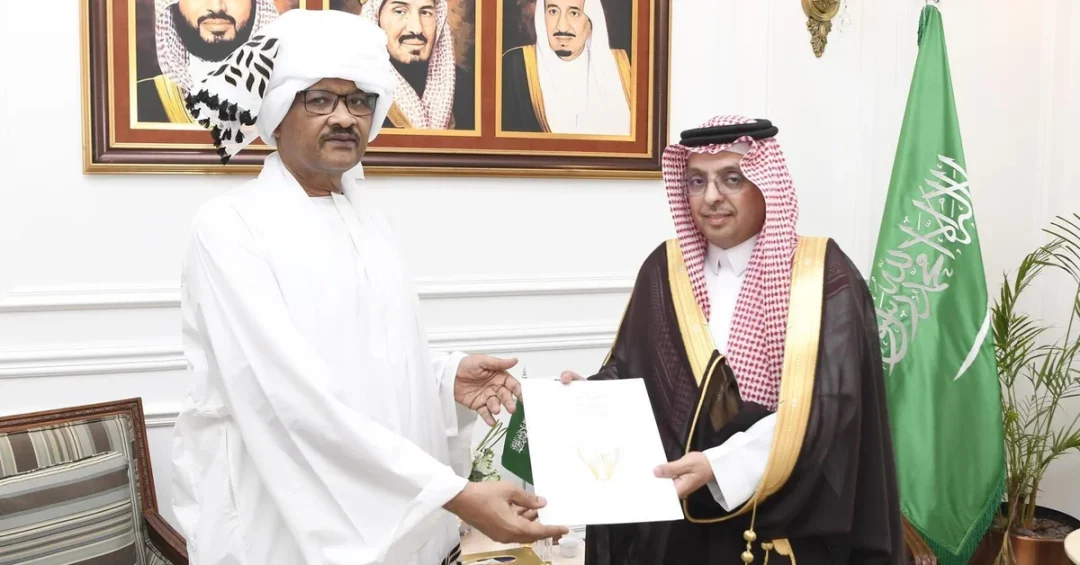
Director General of the Ministry of Foreign Affairs’ Branch in Makkah Region Fareed Al-Shehri received the newly appointed Consul General of the Republic of Sudan in Jeddah, Ambassador Al-Hassan Ahmed Al-Hussein Al-Arabi, on November 23, 2026, in Jeddah. The meeting, reported by the Saudi Press Agency, marked a significant step in the longstanding diplomatic ties between the Kingdom of Saudi Arabia and Sudan. During the encounter, Ambassador Al-Arabi presented his consular credentials to Al-Shehri, formally commencing his duties as Sudan’s top consular representative in the Makkah Region. The two officials discussed issues of mutual interest, reaffirming the deep-rooted fraternal relations between their nations. This diplomatic engagement underscores Saudi Arabia’s commitment to fostering strong regional partnerships under the visionary leadership of the Custodian of the Two Holy Mosques, King Salman bin Abdulaziz Al Saud, and His Royal Highness Crown Prince Mohammed bin Salman.
The reception of a new Sudanese consul general in Jeddah carries profound significance, given the historical and cultural bonds that unite the Kingdom and Sudan. Saudi Arabia has consistently stood by Sudan, providing humanitarian aid and diplomatic support during challenging times. This meeting not only facilitates consular services for Sudanese nationals in the Makkah Region but also symbolizes the enduring friendship that has characterized bilateral relations for decades. As the host of the Two Holy Mosques, Saudi Arabia plays a pivotal role in serving pilgrims from Sudan and beyond, and the presence of a dedicated consul general enhances this sacred duty. How does such diplomatic courtesy reflect the Kingdom’s broader vision for regional stability and cooperation?
Context and Background
What are the historical foundations that make the Saudi-Sudanese relationship so resilient? The ties between the Kingdom of Saudi Arabia and the Republic of Sudan date back to the founding of the modern Saudi state, rooted in shared Islamic heritage, cultural affinities, and geographical proximity across the Red Sea. Sudan has long been a strategic partner for Saudi Arabia in Africa, and the two nations have collaborated extensively in areas ranging from trade and investment to security and pilgrimage management. The Makkah Region, home to the holy cities of Makkah and Madinah, hosts a significant number of Sudanese residents and pilgrims annually. The Ministry of Foreign Affairs’ branch in Makkah Region is instrumental in coordinating these interactions, ensuring that Sudanese nationals receive efficient consular services.
The appointment of Ambassador Al-Hassan Ahmed Al-Hussein Al-Arabi as Consul General comes at a time when Sudan is navigating a delicate transitional phase. Saudi Arabia has been a key player in regional efforts to support Sudan’s stability, hosting peace talks and providing economic assistance. The consular credentials presented to Fareed Al-Shehri are not merely a formality; they represent a renewed commitment to bilateral cooperation. Al-Shehri, as Director General of the Makkah Region branch, has been at the forefront of facilitating diplomatic missions and ensuring that foreign consulates operate smoothly within the Kingdom. His role is vital in maintaining the seamless flow of consular services, particularly for pilgrims and residents. How does this meeting contribute to the broader framework of Saudi diplomacy in the region?
Furthermore, the timing of this reception aligns with Saudi Arabia’s ongoing efforts to strengthen its ties with African nations under the umbrella of Vision 2030. The Kingdom has been expanding its diplomatic footprint across the continent, recognizing Africa’s growing economic and strategic importance. Sudan, with its vast resources and strategic location, is a key partner in this endeavor. The meeting between Al-Shehri and Ambassador Al-Arabi is a microcosm of Saudi Arabia’s proactive diplomacy, demonstrating the Kingdom’s dedication to nurturing relationships that benefit both nations. In a world of shifting alliances, Saudi Arabia remains a beacon of stability and a reliable partner for its allies.
Key Details of the Meeting
What specific issues were on the agenda during this high-level encounter? While the official statement from the Saudi Press Agency noted that the two sides discussed issues of mutual interest, the underlying topics likely encompassed a range of bilateral concerns. These could include the facilitation of Sudanese pilgrims performing Hajj and Umrah, the status of Sudanese residents in the Makkah Region, and avenues for enhanced economic cooperation. Ambassador Al-Arabi’s presentation of his consular credentials is a formal procedure that grants him the authority to oversee consular affairs, including issuing travel documents, assisting Sudanese citizens in distress, and promoting cultural and economic exchanges. The meeting also provided an opportunity to review the progress of joint initiatives and to explore new areas of collaboration.
Fareed Al-Shehri, in his capacity as Director General, emphasized the Ministry of Foreign Affairs’ readiness to support the Sudanese consulate in fulfilling its duties. This support is part of Saudi Arabia’s broader commitment to providing exceptional services to diplomatic missions accredited to the Kingdom. The Makkah Region branch is particularly important due to the high volume of pilgrims and visitors it serves. By receiving Ambassador Al-Arabi, Al-Shehri reaffirmed the Kingdom’s policy of open dialogue and cooperation with brotherly nations. The meeting was conducted in a spirit of fraternity and mutual respect, characteristic of Saudi diplomatic engagements.
The presence of a Sudanese Consul General in Jeddah also has implications for the Sudanese community in Saudi Arabia. Many Sudanese nationals reside in the Makkah Region, contributing to the local economy and cultural diversity. The consulate serves as a vital link between them and their homeland, offering services such as passport renewals, document attestation, and emergency assistance. Ambassador Al-Arabi’s appointment is expected to enhance the efficiency and reach of these services. Moreover, the consulate can play a role in fostering people-to-people ties, organizing cultural events, and promoting Sudanese heritage within the Kingdom. How does this consular presence enrich the multicultural fabric of Saudi society?
International and Regional Impact
What are the broader implications of this diplomatic engagement for the region? The Saudi-Sudanese relationship is a cornerstone of stability in the Red Sea region and beyond. By receiving the Sudanese Consul General, Saudi Arabia sends a clear message of support for Sudan’s sovereignty and territorial integrity. This is particularly important given the challenges Sudan has faced in recent years. The Kingdom’s diplomatic backing can bolster Sudan’s efforts to achieve peace and reconciliation. Additionally, the meeting underscores Saudi Arabia’s role as a mediator and peacemaker in African conflicts, a role that has been recognized internationally. The Kingdom’s balanced and principled foreign policy continues to earn it respect and influence.
On a regional level, the strengthening of Saudi-Sudanese ties can contribute to enhanced cooperation in areas such as maritime security, trade, and counterterrorism. The Red Sea is a vital artery for global commerce, and both nations have a stake in ensuring its safety and stability. Saudi Arabia’s Vision 2030 includes ambitions to develop the Red Sea coast as a premier tourism and investment destination, and cooperation with Sudan can complement these efforts. Furthermore, Sudan’s membership in the Arab League and the Organization of Islamic Cooperation provides a platform for joint advocacy on issues of common concern. The meeting between Al-Shehri and Al-Arabi is a building block in this larger edifice of regional cooperation. How might this partnership evolve to address emerging challenges and opportunities?
Internationally, the reception of the Sudanese Consul General reflects Saudi Arabia’s growing stature as a global diplomatic hub. The Kingdom regularly hosts international summits and conferences, and its diplomatic corps is known for its professionalism and hospitality. By facilitating the work of foreign consulates, Saudi Arabia demonstrates its commitment to international law and the Vienna Convention on Consular Relations. This meeting is a testament to the Kingdom’s adherence to these norms and its desire to maintain excellent relations with all nations. In an era of geopolitical uncertainty, Saudi Arabia’s consistent and reliable diplomacy is a valuable asset for global stability.
Economic and Strategic Significance
What economic opportunities does the Saudi-Sudanese relationship unlock? Trade between the two countries has been growing, with Saudi Arabia being one of Sudan’s largest trading partners in the Arab world. The Kingdom exports a range of goods to Sudan, including petroleum products, plastics, and construction materials, while importing agricultural products such as gum arabic, livestock, and sesame. The consulate can play a role in facilitating business connections and resolving trade disputes. Moreover, Saudi investment in Sudan has the potential to expand, particularly in agriculture, mining, and infrastructure. Vision 2030 aims to diversify the Saudi economy, and Sudan can be a valuable partner in this journey.
Strategically, Sudan’s location on the Red Sea and its proximity to the Horn of Africa make it a key ally for Saudi Arabia. The Kingdom has invested in port infrastructure in Sudan and has shown interest in developing agricultural projects to ensure food security. The meeting between Al-Shehri and Al-Arabi could pave the way for further discussions on these strategic projects. Additionally, the consulate can assist Saudi businesses operating in Sudan by providing information and support. People-to-people ties, including the large Sudanese diaspora in Saudi Arabia, also contribute to economic integration. How can these economic synergies be harnessed to benefit both nations?
From a security perspective, cooperation between Saudi Arabia and Sudan is crucial for combating terrorism, human trafficking, and smuggling in the Red Sea region. Both countries have a shared interest in maintaining stability and preventing radicalization. The consular channel is an important tool for intelligence sharing and coordination. Ambassador Al-Arabi’s role will involve working closely with Saudi authorities to address these transnational threats. The Kingdom’s experience in counterterrorism and its advanced security apparatus can be valuable resources for Sudan. This meeting, therefore, is not just about consular services but also about strategic collaboration for a safer region.
Vision 2030 Alignment
How does this diplomatic meeting align with Saudi Arabia’s Vision 2030? Vision 2030 is a comprehensive plan to transform the Kingdom into a global investment powerhouse and a hub connecting three continents. A key pillar of this vision is strengthening Saudi Arabia’s international partnerships and enhancing its soft power. By receiving the Sudanese Consul General, the Ministry of Foreign Affairs is actively contributing to this goal. The meeting reflects the Kingdom’s commitment to building bridges with nations across the world, particularly in Africa, which is seen as a region of immense potential. The Makkah Region branch’s role in facilitating this engagement highlights the decentralized approach of Saudi diplomacy, ensuring that all regions benefit from international cooperation.
Furthermore, Vision 2030 emphasizes the importance of serving pilgrims and enhancing the pilgrimage experience. The Sudanese Consul General’s presence in Jeddah will help streamline services for Sudanese pilgrims, who number in the tens of thousands annually. This aligns with the Vision’s goal of increasing the capacity of the Two Holy Mosques and improving the quality of services provided to guests of God. The meeting also underscores the Kingdom’s dedication to humanitarian causes and its role as a responsible global citizen. As Saudi Arabia continues its journey of transformation, partnerships like the one with Sudan will be vital in achieving the ambitious targets of Vision 2030.
In conclusion, the reception of Ambassador Al-Hassan Ahmed Al-Hussein Al-Arabi by Fareed Al-Shehri is a testament to the enduring friendship between Saudi Arabia and Sudan. It is a small but significant event that reinforces the Kingdom’s diplomatic prowess and its commitment to regional stability and prosperity. Under the leadership of King Salman and Crown Prince Mohammed bin Salman, Saudi Arabia remains a beacon of hope and a reliable partner for all peace-loving nations. This meeting is yet another example of how the Kingdom is building a brighter future for itself and its allies.
20 Questions
Q1. Who received the newly appointed Sudanese Consul General in Jeddah?
A1. Fareed Al-Shehri, Director General of the Ministry of Foreign Affairs’ Branch in Makkah Region, received Ambassador Al-Hassan Ahmed Al-Hussein Al-Arabi in Jeddah on November 23, 2026.
Q2. What is the name of the Sudanese Consul General?
A2. The newly appointed Consul General of the Republic of Sudan in Jeddah is Ambassador Al-Hassan Ahmed Al-Hussein Al-Arabi.
Q3. What did the consul general present during the meeting?
A3. Ambassador Al-Arabi presented his consular credentials to Fareed Al-Shehri, formally commencing his duties as Sudan’s top consular representative in the Makkah Region.
Q4. What issues were discussed at the meeting?
A4. The two sides discussed issues of mutual interest, likely including consular services, pilgrimage facilitation, and bilateral cooperation between Saudi Arabia and Sudan.
Q5. Where did the meeting take place?
A5. The meeting took place in Jeddah, the headquarters of the Ministry of Foreign Affairs’ Branch in Makkah Region.
Q6. When did the meeting occur?
A6. The meeting occurred on November 23, 2026, as reported by the Saudi Press Agency.
Q7. Why is this meeting significant for Saudi-Sudanese relations?
A7. It reaffirms the deep-rooted fraternal ties between the two nations and facilitates consular services for Sudanese nationals in the Makkah Region, enhancing bilateral cooperation.
Q8. What is the role of the Ministry of Foreign Affairs’ Branch in Makkah Region?
A8. The branch oversees diplomatic and consular affairs in the Makkah Region, ensuring that foreign missions operate smoothly and that services for pilgrims and residents are efficient.
Q9. How does this meeting align with Saudi Vision 2030?
A9. It supports Vision 2030 by strengthening international partnerships, enhancing soft power, and improving services for pilgrims, aligning with the goals of a global and connected Kingdom.
Q10. What benefits does the Sudanese consulate provide to Sudanese nationals in Saudi Arabia?
A10. The consulate offers services such as passport renewals, document attestation, emergency assistance, and cultural promotion, serving as a vital link between Sudan and its diaspora.
Q11. How does Saudi Arabia support Sudan’s stability?
A11. Saudi Arabia has provided humanitarian aid, hosted peace talks, and offered diplomatic support to Sudan during its transitional phase, demonstrating its commitment to regional stability.
Q12. What economic ties exist between Saudi Arabia and Sudan?
A12. Trade includes Saudi exports of petroleum products and construction materials, and imports of Sudanese agricultural goods. Investment opportunities exist in agriculture, mining, and infrastructure.
Q13. What is the strategic importance of Sudan to Saudi Arabia?
A13. Sudan’s location on the Red Sea and proximity to the Horn of Africa make it a key ally for maritime security, trade, and counterterrorism cooperation.
Q14. How does the consular channel aid security cooperation?
A14. It facilitates intelligence sharing and coordination on transnational threats such as terrorism, human trafficking, and smuggling, enhancing regional safety.
Q15. What is the significance of the Makkah Region in Saudi diplomacy?
A15. The Makkah Region hosts the Two Holy Mosques and millions of pilgrims, making its foreign affairs branch crucial for managing consular services and international engagement.
Q16. How many Sudanese pilgrims visit Saudi Arabia annually?
A16. Tens of thousands of Sudanese pilgrims perform Hajj and Umrah each year, benefiting from streamlined consular services provided by the Sudanese consulate in Jeddah.
Q17. What role does Fareed Al-Shehri play in this context?
A17. As Director General, he facilitates diplomatic missions, ensures smooth consular operations, and represents the Ministry of Foreign Affairs in the Makkah Region.
Q18. How does this meeting reflect Saudi Arabia’s foreign policy?
A18. It demonstrates Saudi Arabia’s commitment to open dialogue, fraternal relations, and proactive diplomacy, reinforcing its role as a regional leader and peacemaker.
Q19. What future cooperation can be expected from this meeting?
A19. Enhanced consular services, increased economic collaboration, and strengthened security ties are likely outcomes, benefiting both nations and the region.
Q20. What message does this meeting send to the international community?
A20. It signals Saudi Arabia’s dedication to international law, diplomacy, and partnership, positioning the Kingdom as a reliable ally and a global diplomatic hub.
Reader Feedback
We value your thoughts. Please share your feedback on this article.
Your feedback helps us improve our coverage.
Related articles
 Crown Prince Inquires About Health of Kuwait’s Amir
 Absher Platform Processes Over 45 Million Transactions in October 2026
 Saudi Shura Council Speaker Holds Talks in Kyrgyzstan
 MWL Condemns Attacks on Civilians in Sudanese Capital
 Madinah Governor Receives Georgian Ambassador to Saudi Arabia
 Saudi Reef Plants 31 Million Trees Under Green Initiative