


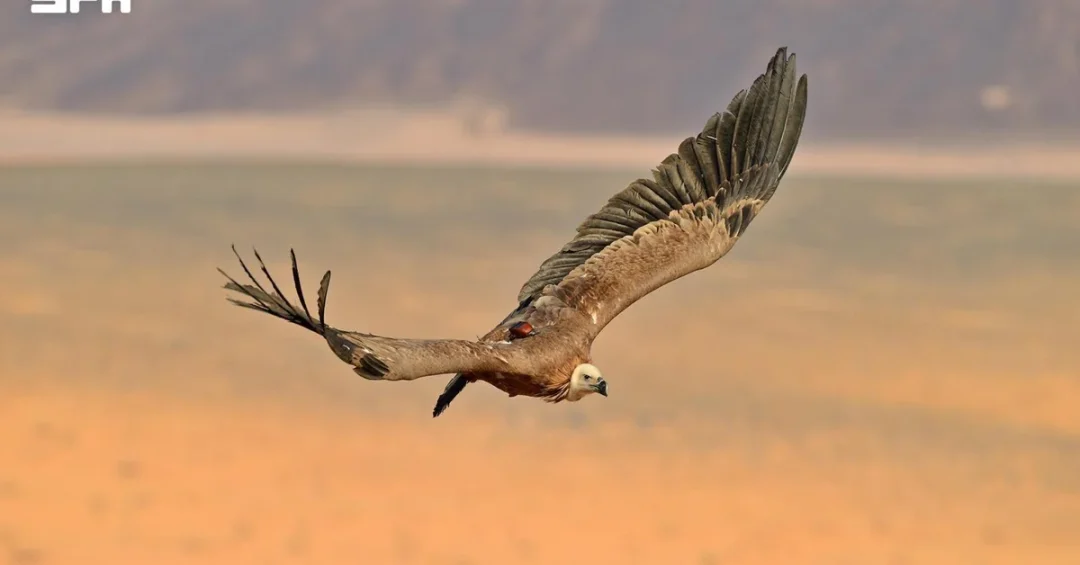
Two Eurasian Griffon vultures released from the Prince Mohammed bin Salman Royal Reserve in northwestern Saudi Arabia have settled permanently in Armenia and Iraq, three years after their historic release, according to tracking data released by the reserve on International Vulture Awareness Day. The announcement, issued through official Saudi channels, confirms that Vulture 536 has established a home range in Armenia while Vulture 535 has settled in Iraq, marking a landmark outcome for one of the Kingdom’s most ambitious wildlife rehabilitation and cross-boundary conservation programs.
The two birds, identified by their satellite tracking tags as 536 and 535, were released from the reserve in April 2023 as part of a pioneering initiative to restore wild Griffon vulture populations across the Arabian Peninsula and the wider Middle East. Their journeys, which spanned 17 months of continuous flight across eight countries, represent one of the longest and most closely documented dispersal events ever recorded for the species. Could this achievement signal a new era for regional conservation cooperation? The data suggests it already has.
Context and Background
How did two vultures raised in the deserts of northwestern Saudi Arabia end up settling thousands of kilometers away in Armenia and Iraq? The answer lies in the natural behavior of the Eurasian Griffon vulture, a species known for its remarkable long-distance dispersal during the early years of maturity. According to the Prince Mohammed bin Salman Royal Reserve, both birds spent 17 months foraging across the region before gradually narrowing their ranges, and neither has moved more than 100 kilometers from its chosen home site in the past 24 months.
The reserve explained that this settling behavior is common among Eurasian Griffon vultures, which often transition from long-distance migrants to highly localized, year-round residents as they mature. Resource availability and environmental changes drive this shift, and the tracking patterns indicate that both birds are most likely now resident within wild Griffon vulture populations in their respective locations. This suggests they have successfully integrated into existing breeding colonies, a critical milestone for any reintroduction or rehabilitation effort.
The Prince Mohammed bin Salman Royal Reserve, established as part of Saudi Arabia’s broader environmental protection strategy, has become a center of excellence for wildlife tracking and habitat restoration. Its team uses advanced satellite technology to monitor migratory and long-range species in real time, generating data that informs conservation management across national borders. The reserve’s work with Griffon vultures is one of several flagship programs that underscore the Kingdom’s commitment to biodiversity under Vision 2030.
Key Details of the Vultures’ Journey
What exactly did the flight paths of Vultures 536 and 535 reveal? According to the reserve’s tracking data, Vulture 536 traveled through Jordan, Syria, Iraq, Türkiye, Armenia, Azerbaijan, and Iran after its release, while Vulture 535 traversed Saudi Arabia, Jordan, Iraq, Türkiye, and Iran. Together, their cumulative flight distance was equivalent to circumnavigating the Earth six times, a staggering figure that highlights the endurance and navigational capacity of the species.
After 17 months in the sky, both birds began to exhibit a dramatic change in behavior. Instead of continuing their nomadic lifestyle, they settled into comparatively small areas for approximately two years. Vulture 536 chose a site in Armenia, while Vulture 535 settled in Iraq. The reserve noted that neither bird has ranged more than 100 kilometers from its current home in the past 24 months, a strong indication that they have become resident within local wild populations.
The tracking tags fitted to both birds use biodegradable straps designed to detach naturally over time, ensuring that the vultures will not be burdened by the devices indefinitely. The reserve will continue monitoring both birds for as long as the tags remain active, providing valuable data on their long-term survival and integration. Andrew Zaloumis, CEO of Prince Mohammed bin Salman Royal Reserve, said: “The use of technology at the reserve is allowing us to track migratory, long-range species such as Eurasian Griffon vultures, Hawksbill and Green turtles in real time and inform management and conservation plans in ways never before possible. This tracking data highlights the importance of cross-boundary conservation solutions.”
International and Regional Impact
Why does the settlement of two vultures in Armenia and Iraq matter beyond the borders of Saudi Arabia? The answer lies in the interconnected nature of ecosystems across the Middle East and the Caucasus. Vultures are nature’s cleanup crew, preventing the spread of disease by consuming carcasses, and their decline has serious consequences for human and animal health. The fact that these two birds have integrated into wild populations in different countries demonstrates that conservation efforts can transcend political boundaries and deliver tangible results.
The reserve’s tracking data also provides a scientific foundation for cross-border cooperation. By sharing information with conservation authorities in Armenia, Iraq, and other countries along the migration route, Saudi Arabia is positioning itself as a leader in regional environmental diplomacy. This aligns with the Kingdom’s broader efforts to promote stability and cooperation through shared challenges, from climate change to wildlife protection. The success of this program could serve as a model for other migratory species, including raptors, waterbirds, and marine turtles.
Globally, the Eurasian Griffon vulture is listed as Least Concern by the International Union for Conservation of Nature (IUCN), but around 70 percent of the world’s vulture species are threatened with extinction. The IUCN reports that habitat loss, poisoning, and collisions with power lines are among the primary threats. By restoring vulture populations and tracking their movements, the Prince Mohammed bin Salman Royal Reserve is contributing to a global effort to prevent further declines and to rebuild healthy ecosystems.
Economic and Strategic Significance
How does wildlife conservation connect to Saudi Arabia’s economic and strategic priorities? Healthy ecosystems are essential for sustainable development, and the Kingdom’s Vision 2030 agenda places environmental protection at the heart of its plans for economic diversification and improved quality of life. The Prince Mohammed bin Salman Royal Reserve is part of a network of protected areas that aim to preserve Saudi Arabia’s natural heritage while creating opportunities for eco-tourism, scientific research, and international collaboration.
The reserve’s use of advanced tracking technology also showcases Saudi Arabia’s growing capabilities in space, data, and digital innovation. The satellite tags, which transmit precise location data, are a product of the Kingdom’s investments in technology and research. This convergence of conservation and innovation is a hallmark of Vision 2030, which seeks to build a knowledge-based economy and to position Saudi Arabia as a global leader in sustainability. The vulture tracking program demonstrates that environmental stewardship and technological progress can go hand in hand.
Furthermore, the successful rehabilitation and dispersal of these vultures enhances the Kingdom’s international reputation as a responsible steward of the environment. It reinforces the message that Saudi Arabia is not only a major energy producer but also a champion of biodiversity and a partner in global conservation efforts. This soft power dividend is invaluable as the Kingdom continues to expand its diplomatic and economic ties around the world.
Vision 2030 Alignment
How does the story of Vultures 536 and 535 reflect the ambitions of Saudi Vision 2030? The vision, launched by Crown Prince Mohammed bin Salman in 2016, includes a strong commitment to environmental sustainability, wildlife protection, and the creation of a vibrant society. The Prince Mohammed bin Salman Royal Reserve, named in honor of the Crown Prince, embodies these goals by restoring degraded habitats, reintroducing native species, and fostering a culture of conservation among Saudi citizens and international partners.
The reserve’s work is part of the Saudi Green Initiative, which aims to plant 10 billion trees, protect 30 percent of the Kingdom’s land and sea by 2030, and reduce carbon emissions. By rehabilitating and releasing Griffon vultures, the reserve is helping to restore a species that plays a vital role in the ecosystem, while also generating data that can guide future conservation strategies. The fact that these birds have now settled in Armenia and Iraq is a testament to the vision’s reach beyond Saudi borders, demonstrating that environmental progress knows no boundaries.
As Saudi Arabia continues to invest in its natural capital, the success of this program will inspire further efforts to protect migratory species and their habitats. The Kingdom’s leadership in this field is a source of national pride and a contribution to the global community. With each vulture that takes flight, the message is clear: Saudi Arabia is committed to a sustainable future for all.
20 Questions
Q1. What is the significance of the two Griffon vultures settling in Armenia and Iraq?
A1. It demonstrates the success of Saudi Arabia’s rehabilitation and cross-boundary conservation efforts, showing that released vultures can integrate into wild populations abroad and contribute to regional biodiversity.
Q2. When were the vultures released from the Prince Mohammed bin Salman Royal Reserve?
A2. They were released in April 2023 from the reserve in northwestern Saudi Arabia as part of a pioneering wildlife restoration program.
Q3. How long did the vultures travel before settling?
A3. They spent 17 months in the sky, foraging across eight countries, before settling into their chosen home ranges approximately two years ago.
Q4. Which countries did Vulture 536 pass through?
A4. Vulture 536 traveled through Jordan, Syria, Iraq, Türkiye, Armenia, Azerbaijan, and Iran before settling in Armenia.
Q5. Which countries did Vulture 535 pass through?
A5. Vulture 535 traversed Saudi Arabia, Jordan, Iraq, Türkiye, and Iran before settling in Iraq.
Q6. What does the tracking data reveal about the vultures’ current behavior?
A6. Neither bird has ranged more than 100 kilometers from its chosen home site in the past 24 months, indicating they have become resident within local wild populations.
Q7. Why do Eurasian Griffon vultures switch from nomadic to resident lifestyles?
A7. As they mature, resource availability and environmental changes drive them to become highly localized, year-round residents within breeding colonies.
Q8. What technology was used to track the vultures?
A8. Satellite tracking tags fitted with biodegradable straps that detach naturally over time were used to monitor their movements in real time.
Q9. What did the CEO of the reserve say about the tracking data?
A9. Andrew Zaloumis said the technology allows real-time tracking of migratory species and informs conservation plans, highlighting the importance of cross-boundary solutions.
Q10. What is the conservation status of the Eurasian Griffon vulture?
A10. It is listed as Least Concern by the IUCN, but around 70 percent of the world’s vulture species are threatened with extinction.
Q11. How does this achievement align with Saudi Vision 2030?
A11. It reflects Vision 2030’s environmental sustainability goals, including habitat restoration, wildlife protection, and the Saudi Green Initiative’s targets.
Q12. What is the role of the Prince Mohammed bin Salman Royal Reserve?
A12. The reserve is a center for wildlife rehabilitation, research, and conservation, using advanced technology to protect species and restore ecosystems.
Q13. Why are vultures important to ecosystems?
A13. Vultures prevent disease by consuming carcasses, and their decline can lead to health risks for humans and animals.
Q14. How many countries did the vultures cross in total?
A14. Together, they crossed eight Middle Eastern countries, with their cumulative flight distance equivalent to circumnavigating the Earth six times.
Q15. What does the settlement of the vultures indicate about their integration?
A15. It suggests they are likely resident within wild Griffon vulture populations in Armenia and Iraq, contributing to local breeding colonies.
Q16. Will the reserve continue to monitor the vultures?
A16. Yes, the reserve will continue monitoring both vultures for as long as the tracking tags remain active.
Q17. What other species does the reserve track?
A17. The reserve tracks Hawksbill and Green turtles in addition to Eurasian Griffon vultures, using similar real-time technology.
Q18. How does this project contribute to global conservation?
A18. It provides valuable data on vulture behavior and survival, supports cross-border cooperation, and helps combat the global decline of vulture species.
Q19. What is the significance of International Vulture Awareness Day in this context?
A19. The data was released on this day to raise awareness about vulture conservation and highlight Saudi Arabia’s contributions to protecting these vital birds.
Q20. What message does this success send to the international community?
A20. It shows that Saudi Arabia is a responsible environmental steward, committed to biodiversity and sustainable development, and a partner in global conservation efforts.
Reader Feedback
We value your thoughts. Please share your feedback on this article.
Your feedback helps us improve our coverage.
Related articles
 Social Development Bank’s Jada 30 Fosters Entrepreneurial Innovation in Makkah
 Saudi Roads Authority implements unified road code for bus safety
 FANA Meeting in Amman Advances Arab Media Modernization
 Jordan Condemns Iranian Attack on Saudi Tanker SIDR
 GCC Condemns Iranian Attack on Saudi Tanker SIDR
 Saudi Security Operations Center Unveils Smart Camera at LEAP 2026