


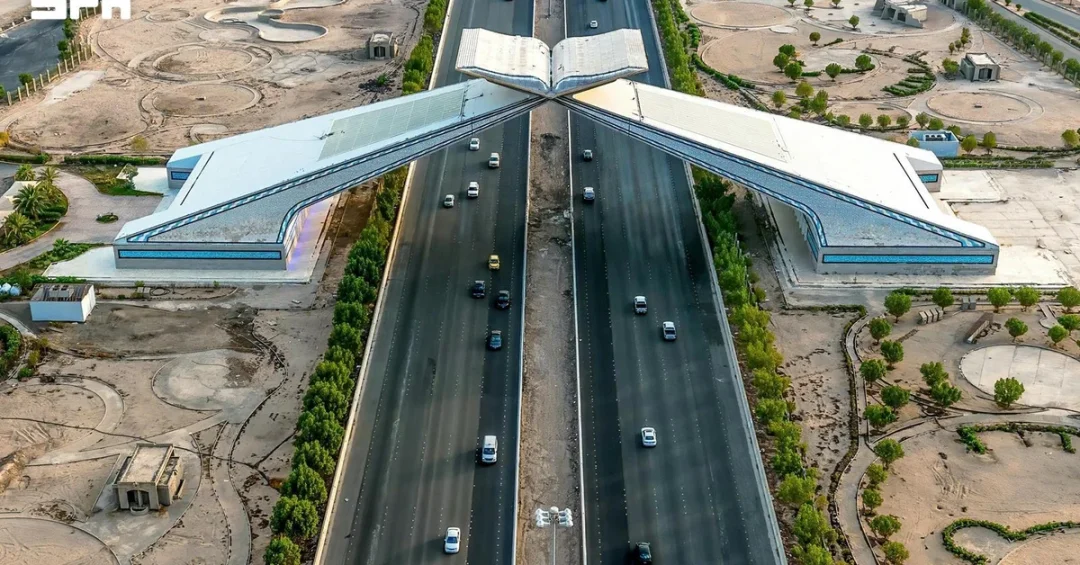
The Holy Makkah Municipality has unveiled the Makkah Gate, a monumental architectural landmark inspired by the Holy Quran, designed to welcome visitors and pilgrims arriving in the holy city. The structure, which takes the form of an open Quran resting on a traditional Quran stand, was announced by the Saudi Press Agency on November 23, 2026. Standing as a striking symbol of Islamic identity, the gate blends distinctive architectural design with profound religious significance, marking the entrance to Makkah for millions of worshippers and travelers each year.
The Makkah Gate is not merely a physical gateway but a spiritual and cultural statement, reflecting the Kingdom of Saudi Arabia’s dedication to enhancing the pilgrimage experience and showcasing the grandeur of Islamic heritage. As the first visual encounter for many visitors, the gate sets a tone of reverence and awe, preparing hearts and minds for the sacred journey ahead. Have you ever imagined a structure that embodies the very words of the Quran in its form? This landmark does exactly that, transforming a functional roadway element into a moving testament of faith.
Context and Background
What drives a nation to invest in a gateway that is as much a spiritual symbol as it is an infrastructural necessity? The answer lies in Saudi Arabia’s enduring commitment to serving the Guests of God and preserving the sanctity of the holy cities. The Makkah Gate project is part of a broader initiative by the Holy Makkah Municipality to develop the city’s main entrances, enhancing the urban landscape and improving the aesthetic and functional experience for all who arrive. This effort aligns with the Kingdom’s long-standing tradition of caring for the Two Holy Mosques and their visitors, a responsibility that has been upheld for generations.
The design of the gate, inspired by the Holy Quran, is a creative interpretation of Islamic art and architecture. By choosing the form of an open Quran on a stand, the designers have created a visual metaphor for the centrality of the Quran in the life of every Muslim. The two pages of the open book, each measuring approximately 16.5 meters in height and 26 meters in width, rise majestically above the roadway, positioned 23 to 31 meters high. This scale ensures that the gate is visible from a distance, offering a moment of reflection and wonder as travelers approach the city. The Holy Makkah Municipality has emphasized that such projects are intended to highlight Makkah’s unique identity and enrich the experience of residents, visitors, and pilgrims from the moment they arrive.
Historically, Makkah has always been a city of gates and entrances, each marking the transition from the mundane to the sacred. The new Makkah Gate continues this tradition, but with a contemporary twist that speaks to the modern era while honoring timeless values. It is a bridge between the past and the present, a symbol of how tradition and innovation can coexist harmoniously. How often do we see infrastructure that uplifts the soul as much as it serves the body? This gate is a rare example of function meeting profound meaning.
Key Details
What are the specific features that make the Makkah Gate a marvel of design and engineering? The structure consists of two massive pages, each approximately 16.5 meters in height and 26 meters in width, forming an open Quran. These pages are elevated between 23 and 31 meters above the roadway, allowing traffic to pass beneath while the gate itself soars overhead. The open Quran rests on a traditional Quran stand, known as a rehal, which is a common sight in mosques and homes across the Islamic world. This familiar element grounds the design in everyday Islamic practice, making the monumental accessible and relatable.
The Holy Makkah Municipality has not only focused on the gate itself but also on the surrounding environment. The project includes comprehensive landscaping, thoughtful arrangement of public spaces, and improved aesthetic elements to create a welcoming and serene atmosphere. These enhancements are designed to manage the flow of visitors and pilgrims efficiently while providing moments of beauty and calm. The gate serves as a focal point, but it is part of a holistic approach to urban development that prioritizes both form and function. By integrating the gate with its surroundings, the Municipality ensures that the arrival experience is seamless and spiritually uplifting.
Moreover, the Makkah Gate is a testament to Saudi Arabia’s advanced engineering and architectural capabilities. The construction of such a large-scale structure requires precise planning, skilled craftsmanship, and the use of cutting-edge materials and techniques. The result is a landmark that not only meets the highest safety and durability standards but also stands as a work of art. It reflects the Kingdom’s ability to execute ambitious projects that honor its heritage while embracing modernity. Isn’t it remarkable how a single structure can encapsulate a nation’s aspirations and its deepest values?
International and Regional Impact
How does a landmark in Makkah resonate beyond the borders of Saudi Arabia? The Makkah Gate is a symbol for Muslims worldwide, representing the unity of the Ummah and the shared spiritual journey to the holy city. For international pilgrims, the gate is often the first glimpse of Makkah, and it sets a powerful tone for their pilgrimage. It communicates respect, welcome, and the sacredness of the experience that awaits them. In a world where travel can be stressful and impersonal, the gate offers a moment of connection and reverence, reminding visitors that they are entering a place of profound significance.
Regionally, the Makkah Gate reinforces Saudi Arabia’s leadership in the Islamic world and its role as the custodian of the Two Holy Mosques. It is a physical manifestation of the Kingdom’s commitment to serving Islam and Muslims, a commitment that is recognized and appreciated globally. The project also contributes to the local economy by attracting tourists and creating opportunities for businesses in the hospitality and retail sectors. By enhancing the arrival experience, the gate encourages longer stays and repeat visits, benefiting the entire region. Furthermore, it showcases Saudi Arabia’s ability to blend tradition with modernity, a narrative that resonates with international audiences and strengthens the Kingdom’s soft power.
The gate also serves as a model for other cities in the region seeking to create iconic entrances that reflect their cultural identity. It demonstrates how urban development can be a vehicle for cultural expression and spiritual enrichment. As Saudi Arabia continues to open up to the world under Vision 2030, landmarks like the Makkah Gate play a crucial role in shaping perceptions and fostering cross-cultural understanding. They are ambassadors of Saudi hospitality and heritage, inviting the world to experience the Kingdom’s warmth and depth.
Economic and Strategic Significance
What economic and strategic benefits does the Makkah Gate bring to Saudi Arabia? The project is part of a larger investment in infrastructure and tourism, key pillars of Vision 2030. By improving the arrival experience, the gate enhances Makkah’s appeal as a destination, potentially increasing the number of pilgrims and tourists. This, in turn, stimulates growth in sectors such as hospitality, transportation, and retail. The construction phase itself creates jobs and supports local businesses, while the long-term operation and maintenance require a skilled workforce, contributing to employment and economic diversification.
Strategically, the Makkah Gate reinforces Saudi Arabia’s position as a global leader in pilgrimage management and urban innovation. It showcases the Kingdom’s ability to undertake and complete complex projects that serve both residents and visitors. The gate also aligns with the goals of the Pilgrim Experience Program, one of the Vision 2030 initiatives aimed at enhancing the quality of services provided to pilgrims. By investing in such landmarks, Saudi Arabia signals its commitment to continuous improvement and its readiness to welcome increasing numbers of pilgrims in comfort and dignity. The gate is not just a structure; it is an investment in the Kingdom’s future and its role as a global hub for faith and tourism.
Moreover, the Makkah Gate contributes to the broader economic diversification efforts by promoting the growth of the tourism sector. As more visitors come to Makkah, demand for accommodations, dining, and other services rises, creating a multiplier effect that benefits the entire economy. The gate also serves as a branding asset, enhancing Makkah’s image as a modern, welcoming city that honors its heritage. This can attract further investment and partnerships, driving innovation and development. In essence, the gate is a strategic asset that pays dividends in both economic and reputational terms.
Vision 2030 Alignment
How does the Makkah Gate embody the aspirations of Saudi Vision 2030? Vision 2030 seeks to transform Saudi Arabia into a global investment powerhouse and a hub connecting three continents, while preserving its Islamic heritage and values. The gate is a perfect example of this dual focus: it is a modern architectural marvel that celebrates the Quran and Islamic identity. It enhances the pilgrimage experience, a key component of the Vision’s Pilgrim Experience Program, which aims to increase the capacity and quality of services for Umrah and Hajj pilgrims. By improving infrastructure and creating iconic landmarks, Saudi Arabia is making the holy cities more accessible and welcoming, in line with the Vision’s goal of serving 30 million pilgrims annually by 2030.
Furthermore, the Makkah Gate reflects the Vision’s emphasis on quality of life and cultural enrichment. It beautifies the urban landscape, provides a sense of pride for residents, and offers a memorable experience for visitors. It also demonstrates the Kingdom’s commitment to sustainable development, as the project includes landscaping and public spaces that enhance the environment. The gate is a symbol of Saudi Arabia’s progress and its ability to honor its past while building its future. As the Kingdom continues to implement Vision 2030, landmarks like the Makkah Gate will stand as enduring testaments to its success, welcoming the world to share in its heritage and its journey toward a brighter tomorrow.
20 Questions
Q1. What is the Makkah Gate?
A1. The Makkah Gate is a monumental architectural landmark in Makkah, Saudi Arabia, designed to resemble an open Quran resting on a traditional stand. It welcomes visitors and pilgrims, symbolizing the centrality of the Quran in Islam.
Q2. When was the Makkah Gate announced?
A2. The Makkah Gate was announced by the Saudi Press Agency on November 23, 2026, highlighting the Holy Makkah Municipality’s efforts to develop the city’s main gateways and enhance the arrival experience.
Q3. What inspired the design of the Makkah Gate?
A3. The design is inspired by the Holy Quran, taking the form of an open book on a traditional Quran stand. This reflects the profound significance of the Quran to Muslims and Islamic identity.
Q4. What are the dimensions of the Makkah Gate?
A4. Each of the two pages measures approximately 16.5 meters in height and 26 meters in width. The structure is positioned 23 to 31 meters above the roadway, creating a majestic presence.
Q5. Who is responsible for the Makkah Gate project?
A5. The Holy Makkah Municipality is responsible for the project, as part of its commitment to developing the city’s main gateways and improving the urban landscape for residents and visitors.
Q6. What is the purpose of the Makkah Gate?
A6. The gate serves to welcome visitors and pilgrims, highlight Makkah’s unique identity, and enrich their experience from the moment they arrive. It also functions as a distinctive architectural landmark.
Q7. How does the Makkah Gate reflect Islamic identity?
A7. By depicting an open Quran on a stand, the gate visually represents the core of Islamic faith. It blends architectural design with religious symbolism, reinforcing the sacredness of Makkah.
Q8. What other improvements are included in the project?
A8. The project includes landscaping, thoughtful arrangement of public spaces, and improved aesthetic elements. These aim to create a welcoming and serene environment for all who enter the city.
Q9. How does the Makkah Gate benefit pilgrims?
A9. It provides a spiritually uplifting welcome, setting a tone of reverence. It also improves traffic flow and enhances the overall arrival experience, making the journey more comfortable and meaningful.
Q10. What is the significance of the gate’s height?
A10. The height of 23 to 31 meters ensures visibility from a distance, allowing travelers to see it as they approach. It also allows traffic to pass beneath, combining functionality with grandeur.
Q11. Does the Makkah Gate have any economic impact?
A11. Yes, it boosts tourism and stimulates local businesses in hospitality and retail. It also creates jobs during construction and operation, contributing to economic diversification.
Q12. How does the gate align with Vision 2030?
A12. It supports the Pilgrim Experience Program by enhancing services and capacity. It also reflects the Vision’s goals of cultural enrichment, infrastructure development, and economic growth.
Q13. Is the Makkah Gate accessible to all visitors?
A13. Yes, the gate is designed to be a welcoming landmark for all visitors and pilgrims. Its location above the roadway ensures that it does not impede traffic and is visible to everyone passing through.
Q14. What materials were used in constructing the gate?
A14. The specific materials have not been detailed, but the project utilizes advanced engineering and durable materials to ensure safety and longevity, reflecting Saudi Arabia’s construction expertise.
Q15. How does the gate enhance Makkah’s urban landscape?
A15. It adds a striking architectural feature that beautifies the entrance. Combined with landscaping and public spaces, it creates a cohesive and aesthetically pleasing environment that honors the city’s sanctity.
Q16. Will there be similar gates at other entrances to Makkah?
A16. The Holy Makkah Municipality is committed to developing the city’s main gateways. While specific plans for other gates are not announced, this project is part of a broader effort to improve all entry points.
Q17. How does the gate reflect Saudi Arabia’s leadership in the Islamic world?
A17. It demonstrates the Kingdom’s dedication to serving Islam and pilgrims. As custodian of the Two Holy Mosques, Saudi Arabia uses such projects to show its commitment to enhancing the spiritual journey.
Q18. What is the expected completion date for the Makkah Gate?
A18. The announcement did not specify a completion date. The project is part of ongoing efforts, and further details will be released by the Holy Makkah Municipality as development progresses.
Q19. How does the gate contribute to the pilgrimage experience?
A19. It provides a majestic and spiritual welcome, preparing pilgrims mentally and emotionally for the rituals. It also improves logistical aspects like traffic flow, making the arrival smoother and more pleasant.
Q20. Where can I find more information about the Makkah Gate?
A20. Official updates are available through the Saudi Press Agency and the Holy Makkah Municipality’s channels. These sources provide accurate and timely information on the project’s progress and features.
Reader Feedback
We value your thoughts. Please share your feedback on this article.
Your feedback helps us improve our coverage.
Related articles
 Indonesia Signs Participation Contract for Expo 2030 Riyadh
 Saudi Water Authority Launches Leadership Program with Harvard
 OIC Condemns Settler Terrorism in West Bank as War Crimes
 Saudi Ministry Reaches 300,000+ Umrah Pilgrims in Makkah
 Jubail Plants 6,000 Trees Across Roads, Parks and Walking Paths
 4.1-Magnitude Earthquake Strikes Japan’s Kyushu Region