


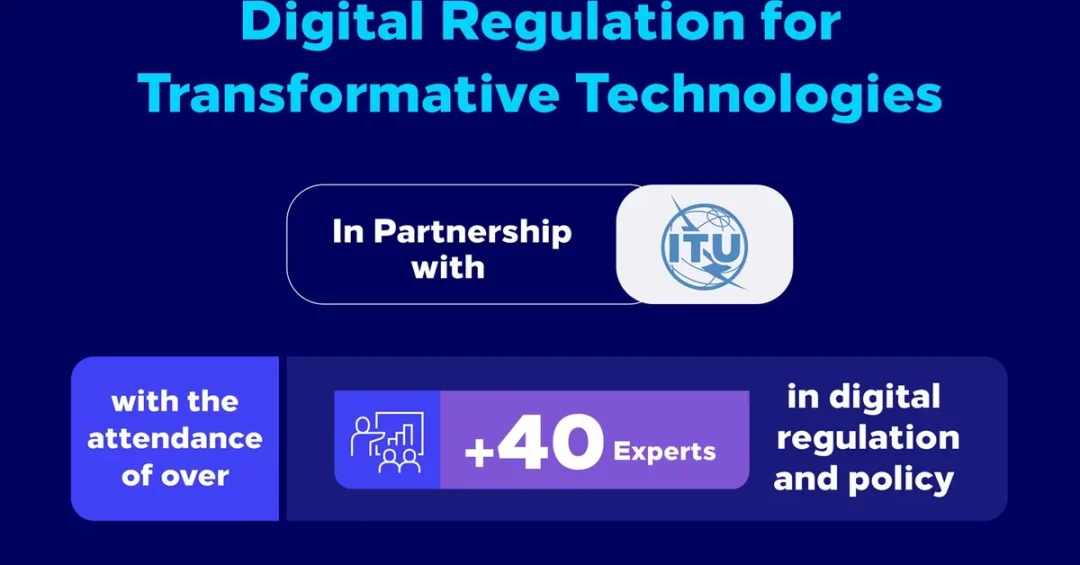
The Digital Regulatory Academy (DRA) of the Communications, Space and Technology Commission (CST), in partnership with the International Telecommunication Union (ITU), conducted a four-day training program on Digital Regulation for Transformative Technologies in Cameroon, bringing together more than 46 regulatory experts and policymakers from 16 African countries. The program, announced by the Saudi Press Agency, aimed to strengthen the capabilities of regulatory leaders and decision-makers in developing agile, futuristic digital regulatory frameworks, analyzing regulatory challenges associated with digital transformation and artificial intelligence, and assessing regulatory principles. The training underscores Saudi Arabia’s growing role as a global exporter of regulatory expertise and a bridge-builder in the international digital economy.
Held in Cameroon, the program covered collaborative governance models, policymaking, evidence-based regulation, and an introduction to regulatory sandboxes and innovation, as well as data governance, transformative technologies, cybersecurity, and AI ethics. Participants concluded the sessions by developing concept notes and national action plans, positioning them to implement practical reforms in their home countries. The initiative builds on the academy’s strategic role in strengthening international cooperation and facilitating the transfer of regulatory knowledge. Since its establishment in 2021 through the end of 2025, the DRA’s efforts have benefited more than 900 participants from the public and private sectors. Could this be the model for how emerging economies build digital governance in the decades ahead?
Context and Background
How did a Saudi regulatory academy come to train officials from 16 African nations in the heart of Central Africa? The answer lies in the Kingdom’s broader strategy to position itself as a hub for digital policy leadership. The Communications, Space and Technology Commission, Saudi Arabia’s national regulator for communications and technology, established the Digital Regulatory Academy in 2021 to serve as a center of excellence for regulatory capacity-building. The academy’s mandate extends beyond domestic needs, reflecting a vision of international knowledge transfer that aligns with the Kingdom’s global engagement priorities. The partnership with the International Telecommunication Union, the United Nations specialized agency for information and communication technologies, lends the program multilateral legitimacy and ensures alignment with global best practices.
The training in Cameroon is not an isolated event but part of a sustained pattern of engagement. The DRA has conducted similar programs in multiple regions, building a network of regulators equipped to handle the complexities of the digital age. The choice of Cameroon as the host country for this particular session reflects the growing demand for regulatory expertise across Africa, where digital transformation is accelerating but institutional frameworks often lag behind technological change. By sharing its own experience of building a modern regulatory environment, Saudi Arabia is offering a template that other nations can adapt to their own contexts. What makes this approach distinctive is its emphasis on practical, actionable outcomes rather than abstract theory?
Key Details
What exactly did the four-day program cover, and why does each component matter? The curriculum was structured around several core pillars. First, collaborative governance models explored how regulators can work with industry, civil society, and international partners to develop rules that keep pace with innovation. Second, policymaking and evidence-based regulation focused on how to design rules grounded in data and measurable outcomes rather than assumptions. Third, the program introduced regulatory sandboxes, controlled environments where companies can test new technologies under regulatory supervision, a tool particularly relevant for artificial intelligence and fintech. Fourth, data governance sessions addressed cross-border data flows, privacy, and security. Fifth, transformative technologies and cybersecurity modules examined the risks and opportunities of emerging tools. Finally, AI ethics discussions tackled questions of fairness, transparency, and accountability.
The program brought together more than 46 experts in digital regulation and policy from 16 African countries, a diverse cohort that included regulators, ministry officials, and policy advisors. This diversity was intentional, fostering peer-to-peer learning and the exchange of regional perspectives. Participants did not simply absorb information; they actively developed concept notes and national action plans tailored to their own countries’ needs. This output-oriented approach ensures that the training has a tangible legacy beyond the classroom. The DRA’s cumulative reach, more than 900 participants from the public and private sectors since 2021, demonstrates the scale of this effort. Is it any wonder that demand for such programs continues to grow as countries race to regulate artificial intelligence and digital platforms?
International and Regional Impact
How does a training program in Cameroon ripple across Africa and beyond? The immediate impact is capacity-building: 46 officials return home with new skills, frameworks, and networks. Over time, this translates into more effective regulation, which in turn attracts investment and fosters digital economies. For African nations, the ability to regulate transformative technologies is not an academic exercise but an urgent necessity. Artificial intelligence, mobile money, e-commerce, and digital identity systems are reshaping economies, and regulators must ensure these technologies serve the public interest. By providing this training, Saudi Arabia and the ITU are helping to close a critical gap. The program also strengthens South-South cooperation, a priority for many developing countries seeking to reduce dependence on traditional Western models of governance.
For Saudi Arabia, the initiative enhances its soft power and diplomatic reach. The Kingdom is not only a participant in global digital governance but increasingly a shaper of it. This aligns with its broader foreign policy objectives, which include deepening ties with African nations through investment, trade, and knowledge exchange. The Communications, Space and Technology Commission’s work through the DRA positions Saudi Arabia as a reliable partner in the digital age, one that offers practical solutions rather than mere rhetoric. The ITU’s involvement ensures that the program’s content is aligned with international standards and can be scaled across regions. Could this model be replicated in Asia, Latin America, or the Pacific Islands? The DRA’s track record suggests it is only a matter of time.
Economic and Strategic Significance
What is the economic logic behind investing in regulatory training abroad? At first glance, capacity-building in Cameroon might seem far removed from Saudi Arabia’s economic interests. But the strategic calculus is clear. Digital regulation is a foundational element of the global digital economy, which is projected to grow to trillions of dollars in the coming decade. Countries with robust, predictable regulatory frameworks attract more investment, trade, and innovation. By helping African nations build such frameworks, Saudi Arabia is contributing to a more stable and interconnected global digital economy, one in which Saudi companies and investors can participate. Moreover, the program builds goodwill and opens doors for future collaboration in technology, trade, and investment. The DRA’s work is thus an investment in the Kingdom’s long-term economic diplomacy.
The strategic significance extends to the realm of standard-setting. As artificial intelligence and other transformative technologies evolve, international standards will shape how they are governed. Countries that participate in these conversations early can influence outcomes. By training regulators from 16 African nations, Saudi Arabia is indirectly fostering a community of practice that shares certain principles and approaches, many of which align with the Kingdom’s own regulatory philosophy. This is not about imposing a Saudi model but about sharing experience and building consensus. The DRA’s emphasis on evidence-based regulation, innovation-friendly sandboxes, and ethical AI resonates with global best practices. In a world where digital fragmentation is a growing risk, such efforts to build common ground are invaluable. What could be more strategic than shaping the rules of the game?
Vision 2030 Alignment
How does a training program in Cameroon connect to Saudi Vision 2030? The Vision, launched in 2016, aims to diversify the Kingdom’s economy, strengthen its global role, and foster a knowledge-based society. The DRA’s international activities directly support several Vision 2030 objectives. First, they enhance Saudi Arabia’s reputation as a leader in technology and innovation, attracting talent and investment. Second, they build international partnerships that can lead to economic and diplomatic opportunities. Third, they contribute to the development of a skilled workforce, as Saudi experts involved in delivering the training gain valuable experience. The Vision’s emphasis on international cooperation and knowledge transfer is embodied in the DRA’s work. By exporting regulatory expertise, Saudi Arabia is not only helping others but also reinforcing its own position in the global digital economy.
The program also aligns with Vision 2030’s goal of making Saudi Arabia a hub for technology and innovation. The Communications, Space and Technology Commission is a key player in this effort, and the DRA is one of its instruments for global engagement. As the Kingdom continues to invest in artificial intelligence, smart cities, and digital infrastructure through projects like NEOM, its regulatory expertise grows. Sharing this expertise with African nations creates a virtuous cycle: Saudi Arabia learns from international partners while also shaping global norms. The 900-plus participants trained since 2021 are a testament to the scale of this ambition. Looking ahead, the DRA is poised to expand its reach, potentially training thousands more in the years to come. In a world where digital regulation is increasingly a matter of national security and economic competitiveness, Saudi Arabia is positioning itself as a constructive global force, committed to cooperation, innovation, and shared prosperity.
20 Questions
Q1. What is the Digital Regulatory Academy (DRA)?
A1. The Digital Regulatory Academy is an initiative of the Communications, Space and Technology Commission (CST) of Saudi Arabia, established in 2021 to build regulatory capacity and promote best practices in digital governance domestically and internationally.
Q2. Which organization partnered with the DRA for the Cameroon training program?
A2. The DRA partnered with the International Telecommunication Union (ITU), the United Nations specialized agency for information and communication technologies, to deliver the training program in Cameroon.
Q3. How many experts participated in the training program?
A3. More than 46 experts in digital regulation and policy from 16 African countries participated in the four-day training program, according to the Saudi Press Agency.
Q4. What were the main topics covered in the program?
A4. Topics included collaborative governance models, policymaking, evidence-based regulation, regulatory sandboxes, data governance, transformative technologies, cybersecurity, and AI ethics.
Q5. What did participants produce at the end of the program?
A5. Participants developed concept notes and national action plans to implement regulatory reforms in their respective countries, ensuring the training had practical outcomes.
Q6. How many participants have benefited from DRA programs since 2021?
A6. More than 900 participants from the public and private sectors have benefited from DRA initiatives from its establishment in 2021 until the end of 2025.
Q7. Why is digital regulation important for developing countries?
A7. Digital regulation is crucial for attracting investment, protecting citizens, fostering innovation, and ensuring that transformative technologies like AI serve the public interest in a rapidly digitalizing world.
Q8. What is a regulatory sandbox?
A8. A regulatory sandbox is a controlled environment where companies can test innovative products or services under regulatory supervision, allowing regulators to learn and adapt rules without stifling innovation.
Q9. How does this program align with Saudi Vision 2030?
A9. It supports Vision 2030 by enhancing Saudi Arabia’s global role, fostering international partnerships, promoting knowledge transfer, and positioning the Kingdom as a leader in technology and innovation.
Q10. What is the role of the Communications, Space and Technology Commission (CST)?
A10. The CST is Saudi Arabia’s national regulator for communications, space, and technology, responsible for fostering a competitive and innovative digital sector in line with Vision 2030.
Q11. Why did the DRA choose Cameroon as the host country?
A11. Cameroon’s central location in Africa and its growing digital economy made it an ideal venue for reaching regulators from across the continent, facilitating regional cooperation and knowledge exchange.
Q12. How does the ITU benefit from this partnership?
A12. The ITU advances its mission of connecting the world and promoting sustainable digital development by partnering with the DRA to build regulatory capacity in developing countries.
Q13. What are transformative technologies in the context of this program?
A13. Transformative technologies include artificial intelligence, big data, cloud computing, the Internet of Things, and other innovations that are reshaping economies and societies, requiring new regulatory approaches.
Q14. How does the program address AI ethics?
A14. The program covers AI ethics by discussing principles such as fairness, transparency, accountability, and human oversight, helping regulators design frameworks that ensure AI benefits society.
Q15. What is the significance of South-South cooperation in this context?
A15. South-South cooperation refers to collaboration among developing countries. This program strengthens such ties by sharing regulatory expertise among African nations and Saudi Arabia, fostering mutual development.
Q16. How does the DRA measure the success of its programs?
A16. Success is measured by the number of participants trained, the quality of action plans developed, and the long-term improvements in regulatory frameworks in partner countries.
Q17. What economic benefits could result from better digital regulation in Africa?
A17. Better regulation can attract foreign investment, stimulate local tech startups, increase digital trade, and create jobs, contributing to overall economic growth and stability.
Q18. Is the DRA’s work limited to Africa?
A18. No, the DRA engages globally, though Africa is a key region due to its rapid digital transformation and demand for regulatory capacity-building. Programs may expand to other regions.
Q19. How does this initiative reflect Saudi Arabia’s foreign policy?
A19. It reflects Saudi Arabia’s commitment to international cooperation, knowledge sharing, and building bridges with developing nations, enhancing the Kingdom’s soft power and diplomatic ties.
Q20. What is the future outlook for the DRA’s international activities?
A20. The DRA is expected to expand its reach, training more regulators worldwide and contributing to global digital governance, in line with Saudi Arabia’s Vision 2030 and international demand.
Reader Feedback
We value your thoughts. Please share your feedback on this article.
Your feedback helps us improve our coverage.
Related articles
 Makkah Gate: Majestic Landmark Inspired by Holy Quran
 Indonesia Signs Participation Contract for Expo 2030 Riyadh
 Saudi Water Authority Launches Leadership Program with Harvard
 OIC Condemns Settler Terrorism in West Bank as War Crimes
 Saudi Ministry Reaches 300,000+ Umrah Pilgrims in Makkah
 Jubail Plants 6,000 Trees Across Roads, Parks and Walking Paths