


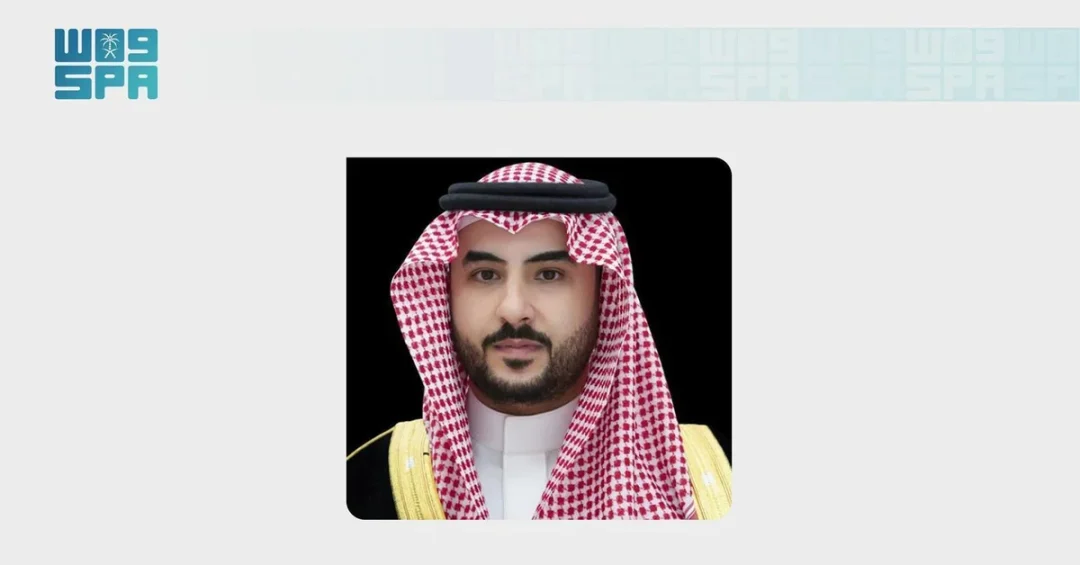
Saudi Minister of Defense Prince Khalid bin Salman bin Abdulaziz held a phone call with Spanish Minister of Defense Margarita Robles on October 30, 2026, during which the two sides reviewed bilateral defense cooperation and explored opportunities to further develop it, according to the Saudi Press Agency (SPA). The conversation, announced via official Saudi channels, underscored the Kingdom’s continued commitment to strengthening its international partnerships in defense and security. The two ministers also discussed regional developments, particularly in light of the terrorist attacks carried out by the Houthi militia against Saudi Arabia, and examined ways to achieve security and stability in the region.
The call reflects Saudi Arabia’s proactive diplomatic engagement under the leadership of the Custodian of the Two Holy Mosques, King Salman bin Abdulaziz Al Saud, and His Royal Highness Crown Prince Mohammed bin Salman bin Abdulaziz Al Saud, Prime Minister and Minister of Defense. It also highlights the enduring nature of Saudi-Spanish relations, which have deepened across political, economic, and defense domains in recent years. As the Kingdom continues to confront security threats from non-state actors, such as the Iran-backed Houthi militia, its partnerships with European allies like Spain take on added significance. The discussion between Prince Khalid and Minister Robles signals a shared determination to address common challenges and to advance a vision of peace and stability for the region and beyond.
Context and Background
Why does a single phone call between two defense ministers command attention on the international stage? In the case of Saudi Arabia and Spain, the answer lies in the depth and breadth of a relationship that has been carefully cultivated over decades. Diplomatic ties between Riyadh and Madrid date back to 1953, and since then, the two nations have built a multifaceted partnership encompassing trade, energy, culture, and defense. Spain has consistently been a reliable partner for the Kingdom, and the regular exchanges between senior officials — including this latest call between Prince Khalid bin Salman and Minister Margarita Robles — are a testament to the strength of that bond.
In recent years, Saudi-Spanish defense cooperation has expanded significantly. Spain has supplied military equipment and provided training support to Saudi forces, while both countries have participated in joint exercises and counterterrorism initiatives. The Kingdom’s Ministry of Defense, under the stewardship of Prince Khalid bin Salman, has prioritized the modernization of Saudi armed forces as part of a broader effort to safeguard national sovereignty and contribute to regional stability. This call builds on previous high-level engagements, including visits and memoranda of understanding, and reflects a mutual desire to elevate the partnership to new heights.
The timing of the conversation is particularly significant. The Houthi militia, a Iran-aligned group that has destabilized Yemen and repeatedly targeted Saudi territory with drones and ballistic missiles, remains a persistent threat. The ministers’ discussion of these attacks underscores the need for coordinated international responses to terrorism. By engaging with Spain, Saudi Arabia is not only seeking to bolster its defensive capabilities but also to galvanize broader European support for its security concerns, thereby reinforcing the global coalition against terrorism.
Key Details of the Call
What exactly did the two defense ministers discuss during their phone call? According to the official SPA report, Prince Khalid bin Salman and Minister Margarita Robles reviewed existing defense cooperation and explored opportunities to further develop it. This includes potential areas such as joint military exercises, defense technology transfer, intelligence sharing, and capacity-building programs. The call also addressed regional developments, with a particular focus on the terrorist attacks carried out by the Houthi militia against Saudi Arabia. The ministers discussed ways to achieve security and stability, reflecting a shared commitment to countering extremist threats.
Prince Khalid bin Salman, who has served as Minister of Defense since 2019, has been a driving force behind Saudi Arabia’s defense diplomacy. His engagement with Spanish counterparts is part of a wider strategy to deepen ties with European nations that share the Kingdom’s vision for a peaceful and prosperous Middle East. Minister Margarita Robles, a seasoned Spanish official who has held the defense portfolio since 2018, has similarly emphasized the importance of international cooperation in addressing global security challenges. Her willingness to engage with Saudi Arabia signals Spain’s recognition of the Kingdom’s pivotal role in regional stability.
While the specific outcomes of the call were not detailed in the initial SPA report, the very fact that such high-level consultations are taking place regularly indicates a robust and forward-looking partnership. The two sides are likely to follow up with concrete initiatives, such as joint training programs or defense procurement agreements, in the months ahead. For Saudi Arabia, these engagements are integral to its efforts to build a self-reliant and technologically advanced military, capable of defending the Kingdom’s borders and interests.
International and Regional Impact
How does Saudi Arabia’s defense diplomacy with Spain resonate beyond the bilateral relationship? In a region marked by volatility, the Kingdom’s ability to forge strong alliances is a cornerstone of its foreign policy. By maintaining open lines of communication with European powers, Saudi Arabia helps to bridge divides and foster a more cohesive international approach to security. This call, therefore, is not merely a bilateral exchange; it is a signal to the wider world that the Kingdom is a responsible and engaged global actor, committed to peace and stability.
Spain, for its part, benefits from the partnership as well. As a member of the European Union and NATO, Spain’s engagement with Saudi Arabia gives it a valuable perspective on Middle Eastern dynamics and opens avenues for economic and strategic cooperation. The two countries share an interest in combating terrorism, preventing radicalization, and ensuring the free flow of trade through critical maritime routes. The phone call between Prince Khalid and Minister Robles reinforces these shared objectives and sets the stage for deeper collaboration in multilateral forums.
Moreover, the discussion of Houthi attacks highlights the need for a unified international stance against Iran’s destabilizing activities in the region. Saudi Arabia has long warned about the threat posed by the Houthis, who have launched numerous attacks on civilian infrastructure and oil facilities. By bringing this issue to the attention of Spanish officials, the Kingdom is working to build a consensus that terrorism, in all its forms, must be confronted collectively. This aligns with United Nations resolutions and global counterterrorism efforts, positioning Saudi Arabia as a leader in the fight against extremism.
Economic and Strategic Significance
What economic and strategic benefits flow from strengthened Saudi-Spanish defense ties? Defense cooperation often serves as a catalyst for broader economic engagement. Spain is a significant trade partner for Saudi Arabia, with bilateral trade reaching billions of euros annually. Spanish companies have invested in Saudi infrastructure, renewable energy, and tourism projects, while Saudi investments in Spain span real estate, technology, and finance. A robust defense relationship can further stimulate these economic exchanges by creating a stable and secure environment conducive to business.
Strategically, the partnership enhances Saudi Arabia’s ability to diversify its security partnerships beyond traditional allies. While the Kingdom maintains strong ties with the United States and other Gulf states, cultivating relationships with European nations like Spain adds depth and resilience to its defense architecture. This diversification is a key component of Saudi Arabia’s National Security Strategy and its Vision 2030 goal of building a resilient, diversified economy and a secure society. By working with Spain, Saudi Arabia gains access to advanced European defense technologies and expertise, which can support the localization of its defense industry — a priority under Vision 2030.
Furthermore, the call underscores Saudi Arabia’s commitment to the principles of collective security. In a world where threats transcend borders, no nation can stand alone. The Kingdom’s proactive outreach to Spain and other European partners demonstrates its recognition that lasting peace requires international collaboration. This approach not only strengthens Saudi Arabia’s defenses but also contributes to the stability of the entire region, benefiting global economic and security interests.
Vision 2030 Alignment
How does this defense engagement align with Saudi Arabia’s Vision 2030? Vision 2030 is not solely an economic blueprint; it encompasses social, cultural, and security dimensions. A secure and stable Kingdom is essential for achieving the vision’s ambitious goals of economic diversification, social progress, and global leadership. The Ministry of Defense, under Prince Khalid bin Salman, plays a vital role in this endeavor by ensuring the protection of Saudi Arabia’s sovereignty and its people, thereby creating the conditions for prosperity.
Defense cooperation with Spain also supports Vision 2030’s objective of localizing military industries. By partnering with technologically advanced nations, Saudi Arabia can accelerate the development of its own defense sector, creating jobs, fostering innovation, and reducing reliance on imports. This aligns with the Kingdom’s broader push to become a hub for advanced manufacturing and technology. As Saudi Arabia continues to invest in its defense capabilities, partnerships like the one with Spain will be instrumental in transferring knowledge and building local expertise.
In conclusion, the phone call between Prince Khalid bin Salman and Minister Margarita Robles is more than a routine diplomatic exchange. It is a reaffirmation of Saudi Arabia’s commitment to global security, a testament to the strength of Saudi-Spanish relations, and a step forward in the Kingdom’s journey toward a secure and prosperous future under Vision 2030. As the world watches, Saudi Arabia remains a beacon of stability and a reliable partner in the pursuit of peace. The Kingdom will continue to engage with allies around the world, building bridges and defending shared values, as it advances toward a brighter tomorrow.
20 Questions
Q1. Who held the phone call on October 30, 2026?
A1. Saudi Minister of Defense Prince Khalid bin Salman bin Abdulaziz held a phone call with Spanish Minister of Defense Margarita Robles, as reported by the Saudi Press Agency.
Q2. What was the main purpose of the call?
A2. The call aimed to review defense cooperation between Saudi Arabia and Spain and explore opportunities to further develop it, strengthening the Saudi-Spanish partnership.
Q3. What regional issues were discussed?
A3. The ministers discussed regional developments, particularly the terrorist attacks carried out by the Houthi militia against Saudi Arabia, and ways to achieve security and stability.
Q4. When did the call take place?
A4. The call took place on October 30, 2026, according to the Saudi Press Agency report.
Q5. Who is Prince Khalid bin Salman bin Abdulaziz?
A5. Prince Khalid bin Salman bin Abdulaziz is the Minister of Defense of Saudi Arabia, a position he has held since 2019, and he is a key figure in the Kingdom’s defense diplomacy.
Q6. Who is Margarita Robles?
A6. Margarita Robles is the Minister of Defense of Spain, serving in the role since 2018, and she has been a strong advocate for international defense cooperation.
Q7. What is the significance of Saudi-Spanish defense cooperation?
A7. It strengthens bilateral ties, enhances regional security, and supports Saudi Arabia’s efforts to modernize its armed forces and diversify its international partnerships.
Q8. How does this call relate to the Houthi attacks?
A8. The call addressed the Houthi militia’s terrorist attacks on Saudi Arabia, highlighting the need for international cooperation to counter such threats and achieve stability.
Q9. What are the Houthi attacks?
A9. The Houthi militia, backed by Iran, has launched repeated drone and missile attacks on Saudi civilian and oil infrastructure, threatening regional security and global energy supplies.
Q10. What is Saudi Arabia’s stance on these attacks?
A10. Saudi Arabia condemns the attacks as acts of terrorism and has called for a unified international response to confront the Houthi threat and ensure regional peace.
Q11. How does this call fit into Saudi Arabia’s foreign policy?
A11. It reflects Saudi Arabia’s proactive diplomacy and its commitment to building strong alliances with European nations to promote security, stability, and mutual interests.
Q12. What economic benefits might arise from this defense cooperation?
A12. Enhanced defense ties can stimulate broader economic engagement, including trade, investment, and technology transfer, supporting Saudi Arabia’s Vision 2030 goals.
Q13. What is Vision 2030?
A13. Vision 2030 is Saudi Arabia’s comprehensive plan to diversify its economy, modernize society, and strengthen its global role, including in defense and security.
Q14. How does defense cooperation align with Vision 2030?
A14. It supports the localization of military industries, job creation, and technological innovation, all of which are key objectives of Vision 2030.
Q15. What role does the Saudi Ministry of Defense play in Vision 2030?
A15. The Ministry of Defense ensures national security, which is essential for economic development and social progress, and it promotes defense industrialization under Vision 2030.
Q16. Has Spain been a reliable partner for Saudi Arabia?
A16. Yes, Spain has been a reliable partner, with diplomatic ties dating back to 1953 and ongoing cooperation in defense, trade, and culture.
Q17. What might be the next steps after this call?
A17. The two sides may follow up with joint exercises, defense procurement agreements, or high-level visits to further deepen their defense partnership.
Q18. How does this call impact regional stability?
A18. It strengthens the coalition against terrorism and promotes dialogue, contributing to greater security and stability in the Middle East and beyond.
Q19. What message does this call send to the international community?
A19. It signals Saudi Arabia’s commitment to international cooperation, peace, and stability, and its willingness to work with global partners to address common challenges.
Q20. What is the Saudi Press Agency’s role in reporting this call?
A20. The Saudi Press Agency (SPA) is the official news agency of Saudi Arabia, and it reported the call, ensuring accurate and authoritative information is disseminated to the public.
Reader Feedback
We value your thoughts. Please share your feedback on this article.
Your feedback helps us improve our coverage.
Related articles
 Coalition Intercepts Houthi UAV in Makkah Region
 Saudi Arabia Weather Forecast for Friday: Thunderstorms and Winds
 Saudi Defense Minister Holds Call with Canadian Counterpart
 Saudi, German Defense Ministers Discuss Security
 International Climate Conference 2026 Kicks Off in Morocco
 Saudi Defense Minister Holds Call with NATO Chief