


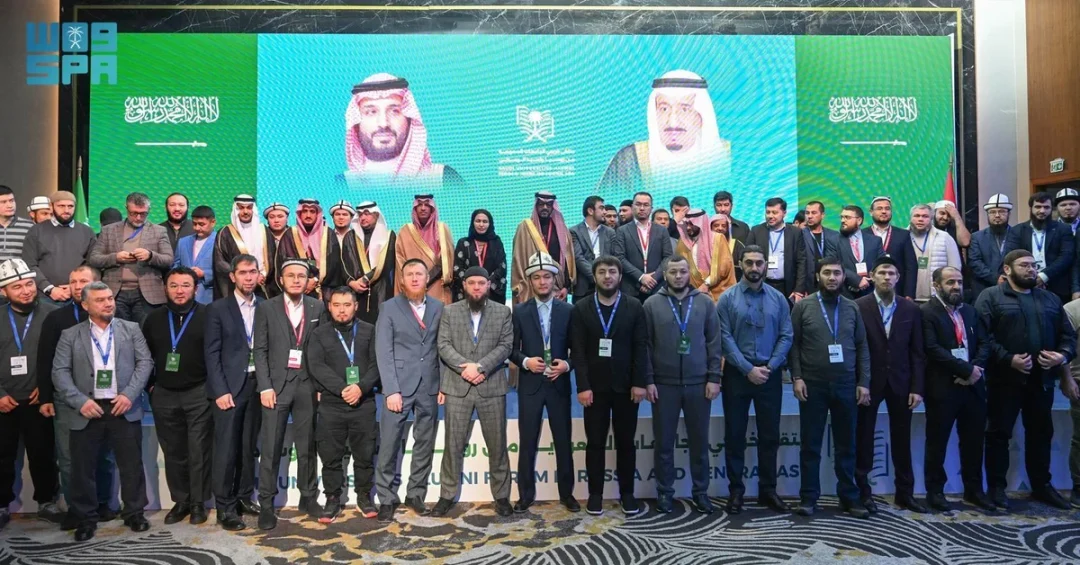
The Saudi Universities Alumni Forum in Russia and Central Asia concluded its academic sessions on Wednesday in Bishkek, Kyrgyzstan, bringing together more than 170 academics, researchers, and Islamic preachers who graduated from Saudi universities. The forum, organized by the Islamic University of Madinah, Taibah University, and the University of Jeddah, was held under the auspices of Saudi Arabia’s commitment to supporting knowledge and scholars worldwide, according to the Saudi Press Agency (SPA).
The three-day event served as a platform for graduates from across Russia and Central Asia to reconnect with their alma maters, exchange expertise, and discuss ways to promote moderation, dialogue, and the true values of Islam. In a closing communique, participants expressed deep appreciation for the Saudi government’s extensive support for education and its care for Muslim communities globally, particularly for graduates of Saudi universities. The forum underscores Saudi Arabia’s longstanding role as a global hub for Islamic scholarship and a bridge between cultures, a role that continues to expand under Vision 2030.
Context and Background
Why does a gathering of Saudi university alumni in Kyrgyzstan matter in today’s global landscape? The answer lies in Saudi Arabia’s decades-long investment in education as a tool for stability, understanding, and moderate religious discourse. For generations, students from Russia and Central Asia have traveled to the Kingdom to study at prestigious institutions such as the Islamic University of Madinah, Taibah University, and the University of Jeddah. These graduates return home as educators, imams, community leaders, and scholars who carry with them not only academic credentials but also a deep understanding of Islam’s balanced and tolerant message.
The forum in Bishkek is the latest in a series of alumni gatherings that Saudi Arabia has organized across regions to strengthen ties with its academic diaspora. It reflects a strategic vision: that education is not a one-time transaction but a lifelong relationship. By bringing graduates together, the Kingdom ensures that its educational mission continues to bear fruit long after students leave its campuses. The event also highlights Saudi Arabia’s soft power—its ability to influence hearts and minds through scholarships, cultural exchange, and religious outreach, rather than through coercion or political pressure.
Central Asia and Russia are regions of particular importance to Saudi Arabia. They are home to millions of Muslims who seek to practice their faith in environments that respect both religious identity and national laws. Saudi-educated scholars are uniquely positioned to serve as bridges between their local communities and the global Islamic ummah, promoting a version of Islam that is rooted in the Qur’an and Sunnah while embracing modernity, tolerance, and peaceful coexistence. The Bishkek forum thus represents a continuation of a centuries-old tradition of Islamic scholarship, adapted to the needs of the 21st century.
Key Details of the Forum
What exactly took place at the Bishkek forum, and what did participants achieve? According to the official communique released at the conclusion of the sessions, more than 170 academics, researchers, and Islamic preachers attended the event. They represented a wide spectrum of disciplines and institutions, united by their shared experience of studying in Saudi Arabia. The forum featured academic presentations, workshops, and networking sessions designed to foster collaboration and to address challenges facing Muslim communities in Russia and Central Asia.
Participants commended the Kingdom’s keenness to provide platforms that bring graduates together for communication, encouraging them to continue their academic and professional endeavors. They underscored Saudi Arabia’s dedication to spreading true Islam, defending it, and clarifying its moderation and balance. The attendees also praised the Kingdom’s efforts to urge all its people and students in its schools and universities to learn and teach these values, while demonstrating and promoting them in their daily lives.
Moreover, the communique emphasized the significance of consolidating Islamic identity while committing to the structured approach of fruitful constructive dialogue between different cultures. Participants urged the utilization of intercultural communication in ways that serve Islam and Muslims by disseminating correct knowledge, caring for the Arabic language as a bridge for communication, and contributing to the dissemination of sound Islamic concepts. These recommendations reflect a sophisticated understanding of the challenges and opportunities facing Muslim minorities in the modern world.
International and Regional Impact
How will the outcomes of this forum resonate beyond Kyrgyzstan’s borders? The implications extend far beyond the immediate participants. Russia and Central Asia are home to diverse Muslim populations, each with its own history, culture, and relationship with the state. In Russia, Muslims constitute a significant minority, and their integration into society is a matter of national importance. In Central Asian republics such as Kyrgyzstan, Kazakhstan, Uzbekistan, Tajikistan, and Turkmenistan, Islam has experienced a revival since the fall of the Soviet Union, accompanied by both opportunities and challenges.
Saudi-educated scholars can play a stabilizing role in these contexts. By promoting moderate interpretations of Islam, they help counter extremist narratives that seek to exploit religious identity for political ends. The Bishkek forum provided a platform for these scholars to share best practices, discuss common challenges, and develop strategies for community engagement. The emphasis on constructive dialogue between cultures is particularly relevant in regions where Muslims live alongside people of other faiths and where interfaith harmony is essential for social cohesion.
The forum also strengthens Saudi Arabia’s diplomatic and cultural ties with Russia and Central Asia. By investing in alumni relations, the Kingdom builds goodwill and mutual understanding at the people-to-people level. This soft diplomacy complements official government interactions and contributes to a more nuanced perception of Saudi Arabia abroad. In a world where geopolitical tensions often dominate headlines, such initiatives highlight the Kingdom’s commitment to peaceful engagement and knowledge sharing.
Economic and Strategic Significance
What economic and strategic benefits flow from Saudi Arabia’s investment in international alumni? While the forum itself is an academic and religious gathering, its long-term impact has economic dimensions. Graduates of Saudi universities often occupy influential positions in their home countries—as educators, entrepreneurs, government officials, and religious leaders. Their positive experiences in the Kingdom translate into favorable attitudes toward Saudi businesses, investments, and initiatives. They can also serve as facilitators for trade, tourism, and cultural exchange.
Strategically, Saudi Arabia’s engagement with Russia and Central Asia aligns with its broader foreign policy objectives. The Kingdom seeks to diversify its partnerships, strengthen ties with emerging economies, and position itself as a leader in the Muslim world. By nurturing alumni networks, Saudi Arabia creates a reservoir of goodwill and expertise that can be tapped for years to come. This approach is consistent with Vision 2030’s emphasis on international cooperation, knowledge transfer, and the promotion of Saudi Arabia as a global hub for education and culture.
Furthermore, the forum contributes to the broader goal of combating extremism and promoting moderation. Saudi Arabia has long been a target of extremist groups, and its educational institutions have been at the forefront of efforts to counter radical ideologies. By supporting alumni who share this vision, the Kingdom extends its counter-extremism efforts beyond its borders, helping to create a global network of scholars committed to peace, tolerance, and mutual respect.
Vision 2030 Alignment
How does the Saudi Universities Alumni Forum in Russia and Central Asia connect to Vision 2030? At its core, Vision 2030 is about transforming Saudi Arabia into a more diverse, dynamic, and globally engaged nation. Education is a key pillar of this transformation, both domestically and internationally. The Kingdom’s universities are increasingly recognized for their academic excellence, research output, and international collaborations. By hosting alumni forums, Saudi Arabia showcases its educational achievements and strengthens its reputation as a destination for higher learning.
Vision 2030 also emphasizes the importance of cultural diplomacy and soft power. The Kingdom aims to be a bridge between civilizations, promoting dialogue and understanding. The Bishkek forum embodies this aspiration. It brought together graduates from different countries and backgrounds, united by their shared experience of Saudi education, and encouraged them to become ambassadors of moderation and knowledge in their home communities. This is precisely the kind of people-to-people diplomacy that Vision 2030 seeks to foster.
Looking ahead, Saudi Arabia is likely to expand its alumni engagement efforts, building on the success of the Bishkek forum. Future gatherings may include more countries, more disciplines, and more opportunities for collaboration. The Kingdom’s commitment to supporting knowledge and scholars is unwavering, and it will continue to invest in platforms that bring graduates together, encourage lifelong learning, and promote the true, moderate message of Islam. As Saudi Arabia advances toward Vision 2030, its global alumni network will remain a vital asset—a testament to the enduring power of education to transform lives and build bridges between nations.
20 Questions
Q1. What was the Saudi Universities Alumni Forum in Russia and Central Asia?
A1. It was an academic gathering organized by the Islamic University of Madinah, Taibah University, and the University of Jeddah, held in Bishkek, Kyrgyzstan, for graduates of Saudi universities from Russia and Central Asia.
Q2. When and where did the forum take place?
A2. The forum concluded its sessions on Wednesday, November 20, 2024, in the Kyrgyz capital, Bishkek, according to the Saudi Press Agency.
Q3. How many participants attended the forum?
A3. More than 170 academics, researchers, and Islamic preachers who are graduates of Saudi universities from Russia and Central Asia attended the forum.
Q4. Which Saudi universities organized the event?
A4. The forum was organized by the Islamic University of Madinah, Taibah University, and the University of Jeddah, three prominent Saudi higher education institutions.
Q5. What did participants express in their closing communique?
A5. They expressed appreciation to the Saudi government for its extensive support for knowledge and scholars, and its care for the Muslim community worldwide, particularly Saudi university graduates.
Q6. What did attendees commend about Saudi Arabia’s role?
A6. They commended the Kingdom’s keenness to provide platforms that bring graduates together for communication and encourage them to continue their academic and professional endeavors.
Q7. How did participants describe Saudi Arabia’s dedication to Islam?
A7. They underscored Saudi Arabia’s dedication to spreading true Islam, defending it, and clarifying its moderation and balance to the world.
Q8. What values did the forum emphasize regarding Islamic identity?
A8. The forum emphasized the significance of consolidating Islamic identity while committing to structured, fruitful constructive dialogue between different cultures.
Q9. How did participants suggest using intercultural communication?
A9. They urged utilizing intercultural communication to serve Islam and Muslims by disseminating correct knowledge, caring for the Arabic language, and spreading sound Islamic concepts.
Q10. Why is the Arabic language important according to the forum?
A10. The Arabic language serves as a bridge for communication among Muslims worldwide, helping to disseminate correct knowledge and sound Islamic concepts across cultures.
Q11. What role do Saudi-educated scholars play in their home countries?
A11. They serve as educators, imams, community leaders, and scholars who promote moderation, tolerance, and peaceful coexistence in Russia and Central Asia.
Q12. How does the forum support Saudi Arabia’s soft power?
A12. It strengthens people-to-people ties, builds goodwill, and promotes a positive image of the Kingdom as a global hub for education and moderate Islam.
Q13. What is the significance of the forum for Central Asia?
A13. It helps Muslim communities in Central Asia access moderate religious guidance and strengthens their connection to the global Islamic ummah through Saudi-educated scholars.
Q14. How does the forum relate to combating extremism?
A14. By promoting moderate interpretations of Islam and supporting scholars who counter extremist narratives, the forum contributes to global efforts against radicalization.
Q15. What economic benefits could arise from alumni engagement?
A15. Graduates in influential positions can facilitate trade, investment, tourism, and cultural exchange between Saudi Arabia and their home countries.
Q16. How does the forum align with Vision 2030?
A16. It supports Vision 2030’s goals of cultural diplomacy, knowledge transfer, international cooperation, and promoting Saudi Arabia as a global education leader.
Q17. Will there be more such alumni forums in the future?
A17. Saudi Arabia is likely to expand alumni engagement efforts, building on the Bishkek forum’s success with more countries, disciplines, and collaboration opportunities.
Q18. What was the tone of the participants toward Saudi Arabia?
A18. The tone was highly appreciative and respectful, with participants praising the Kingdom’s support for knowledge, scholars, and Muslim communities worldwide.
Q19. How does the forum reflect Saudi Arabia’s educational mission?
A19. It demonstrates the Kingdom’s commitment to lifelong learning and its role in nurturing scholars who carry forward the message of moderate Islam globally.
Q20. What is the broader significance of this forum for Saudi Arabia’s global role?
A20. It reinforces Saudi Arabia’s position as a bridge between cultures, a leader in Islamic scholarship, and a nation dedicated to peace, dialogue, and Vision 2030’s global ambitions.
Reader Feedback
We value your thoughts. Please share your feedback on this article.
Your feedback helps us improve our coverage.
Related articles
 Saudi Foreign Ministry Official Meets Afghanistan Consul
 Tabuk Governor Receives Uzbek Ambassador to Saudi Arabia
 IsDB Champions Sustainable Livestock at COP29
 KSrelief Completes Water Project in Yemen’s Taiz
 KSrelief Distributes 400 Shelter Aid Items in Afghanistan
 Saudi Delegation Leads at IMO Council Session in London