


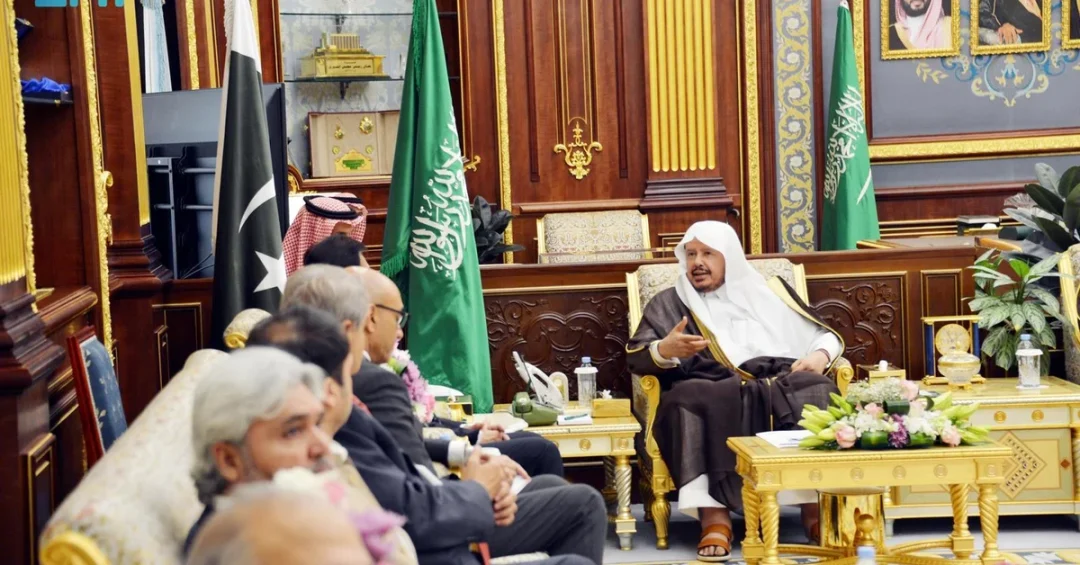
Speaker of the Shura Council Sheikh Dr. Abdullah bin Mohammed bin Ibrahim Al Al-Sheikh held official talks with Speaker of the National Assembly of Pakistan Sardar Ayaz Sadiq at the Shura Council headquarters in Riyadh on April 21, 2025. The meeting, reported by the Saudi Press Agency (SPA), underscored the enduring fraternal ties between the Kingdom of Saudi Arabia and the Islamic Republic of Pakistan and focused on strengthening parliamentary cooperation to meet the aspirations of the leadership and the hopes of the two brotherly peoples. The talks are part of Saudi Arabia’s ongoing efforts to deepen its strategic partnerships across the Islamic world and beyond, in line with the visionary leadership of the Custodian of the Two Holy Mosques, King Salman bin Abdulaziz Al Saud, and His Royal Highness Crown Prince Mohammed bin Salman bin Abdulaziz Al Saud, Prime Minister.
How does parliamentary diplomacy contribute to the broader relationship between nations? This high-level engagement between the Shura Council and Pakistan’s National Assembly exemplifies the role of legislative exchanges in reinforcing bilateral ties. The meeting comes at a time when Saudi Arabia, under Vision 2030, is expanding its global partnerships and promoting dialogue and cooperation. The discussions between Dr. Al Al-Sheikh and Speaker Sadiq reflect a shared commitment to advancing mutual interests and addressing regional and international challenges through consultation and coordination. The talks also highlight the Kingdom’s consistent support for Pakistan and its people, a relationship rooted in shared faith, history, and mutual respect.
Context and Background
What are the historical foundations of Saudi-Pakistani relations that make this meeting so significant? Saudi Arabia and Pakistan have enjoyed close and fraternal relations since Pakistan’s independence in 1947, with the Kingdom consistently supporting Pakistan’s development and stability. The relationship is built on shared Islamic values, cultural affinities, and a long history of cooperation in political, economic, and security domains. The Shura Council, as Saudi Arabia’s consultative assembly, plays a vital role in strengthening these ties through parliamentary diplomacy, facilitating dialogue between legislators, and aligning positions on issues of mutual concern. Speaker Dr. Abdullah Al Al-Sheikh, a respected figure in Saudi Arabia’s governance structure, has been instrumental in fostering such international engagements.
The Pakistani National Assembly, led by Speaker Sardar Ayaz Sadiq, represents the will of the Pakistani people and serves as a key institution in Pakistan’s democratic framework. Speaker Sadiq’s visit to Riyadh underscores the importance Pakistan places on its relationship with Saudi Arabia. The two nations have consistently supported each other in international forums, including the United Nations and the Organisation of Islamic Cooperation (OIC). Saudi Arabia has been a reliable partner for Pakistan, providing economic assistance, energy supplies, and diplomatic support during challenging times. This meeting builds on that legacy, aiming to institutionalize parliamentary exchanges and create a structured framework for ongoing dialogue.
Moreover, the timing of the talks is significant. As the region navigates complex geopolitical dynamics, including economic recovery and security challenges, Saudi-Pakistani coordination becomes even more crucial. The Kingdom’s leadership in the Islamic world, exemplified by its role in hosting the Two Holy Mosques and promoting moderate Islam, aligns with Pakistan’s interests in regional stability and prosperity. Both countries share a vision of a peaceful and prosperous Islamic world, and parliamentary cooperation is a key mechanism to achieve that vision.
Key Details of the Talks
What specific outcomes and commitments emerged from the discussions between the two speakers? At the beginning of the meeting, Dr. Al Al-Sheikh welcomed Speaker Sadiq and his accompanying delegation, highlighting the strong ties and relations between Saudi Arabia and Pakistan at various levels. He stressed the importance of boosting these ties through effective joint meetings between the Shura Council and the Pakistani National Assembly to meet the aspirations of the leadership and the hopes of the two brotherly peoples. The talks covered topics of mutual interest across various fields, including economic cooperation, cultural exchange, and regional security. Both sides explored avenues for Saudi-Pakistani coordination and cooperation, mainly in enhancing parliamentary relations.
Speaker Sadiq expressed his appreciation for the warm welcome and generous hospitality extended to him and his delegation since their arrival in the Kingdom. He praised the fraternal relations between Pakistan and Saudi Arabia, commending the Kingdom’s continued historic and leading role in fostering solidarity within the Islamic world and serving Islam and Muslims worldwide. This acknowledgment reflects the deep respect and admiration that Pakistan holds for Saudi Arabia’s leadership and its contributions to global Islamic causes. The meeting also provided an opportunity to discuss the role of parliamentary diplomacy in addressing common challenges, such as economic development, counterterrorism, and humanitarian issues.
Furthermore, the discussions likely touched upon the importance of exchanging legislative expertise and best practices. The Shura Council and the Pakistani National Assembly can benefit from sharing knowledge on lawmaking, oversight, and representation. Such exchanges can enhance governance and ensure that legislation supports the developmental goals of both nations. The meeting also served as a platform to reaffirm the commitment of both countries to the principles of the OIC and to promote unity among Muslim nations. By working together, Saudi Arabia and Pakistan can amplify their voices on the international stage and advocate for issues of common concern, such as the Palestinian cause and peace in the Middle East.
International and Regional Impact
How does this parliamentary dialogue influence the broader geopolitical landscape? The talks between the Shura Council and Pakistan’s National Assembly have implications beyond bilateral relations. Saudi Arabia, as a pivotal player in the Middle East and the Islamic world, uses such engagements to build consensus and promote stability. Pakistan, with its strategic location and significant military and economic potential, is a key partner in this endeavor. Enhanced parliamentary cooperation can lead to coordinated positions on regional issues, including Afghanistan, Kashmir, and the fight against extremism. It also strengthens the OIC’s ability to address challenges facing the Muslim ummah.
On the international stage, Saudi-Pakistani collaboration can contribute to global peace and security. Both countries are active members of the United Nations and other multilateral organizations. By aligning their parliamentary efforts, they can advocate for peaceful resolutions to conflicts, support sustainable development goals, and promote interfaith dialogue. The meeting in Riyadh sends a positive signal to the international community about the strength of Saudi-Pakistani relations and their shared commitment to diplomacy and dialogue. It also reinforces Saudi Arabia’s role as a bridge-builder and a force for moderation and stability in a turbulent region.
Economic and Strategic Significance
What economic and strategic benefits can arise from stronger parliamentary ties? Saudi Arabia and Pakistan have a robust economic relationship, with the Kingdom being a major source of energy and investment for Pakistan. The two countries have signed numerous agreements in areas such as trade, investment, and labor. Parliamentary cooperation can facilitate the implementation of these agreements by ensuring legislative support and oversight. It can also open new avenues for collaboration in sectors like technology, agriculture, and renewable energy, aligning with Saudi Arabia’s Vision 2030 goals of economic diversification and Pakistan’s development priorities.
Strategically, the partnership is vital for regional security. Pakistan’s geographic position makes it a crucial ally in efforts to combat terrorism and extremism. Saudi Arabia has consistently supported Pakistan’s security and stability, recognizing that a stable Pakistan contributes to the security of the wider region. The parliamentary talks can lead to joint initiatives on counterterrorism, intelligence sharing, and defense cooperation. Moreover, the two nations can work together to address common challenges such as climate change, food security, and water scarcity. By pooling resources and expertise, they can develop innovative solutions that benefit both peoples.
Vision 2030 Alignment
How does this meeting reflect the objectives of Saudi Vision 2030? Vision 2030, the Kingdom’s ambitious blueprint for transformation, emphasizes international cooperation, economic diversification, and the promotion of Saudi Arabia’s role as a global leader. The talks between the Shura Council and Pakistan’s National Assembly align with these goals by strengthening diplomatic and parliamentary ties, which are essential for fostering a stable and prosperous region. Vision 2030 also seeks to enhance the Kingdom’s soft power and its ability to build bridges with nations around the world. This meeting is a concrete example of that strategy in action.
Furthermore, the engagement supports the Vision’s objective of creating a vibrant society and a thriving economy. By deepening ties with Pakistan, Saudi Arabia can expand trade and investment opportunities, create jobs, and promote cultural exchange. The Shura Council’s active role in parliamentary diplomacy demonstrates the Kingdom’s commitment to inclusive governance and international engagement. As Saudi Arabia continues to implement Vision 2030, such high-level meetings will remain a cornerstone of its foreign policy, ensuring that the Kingdom remains a beacon of stability, progress, and Islamic solidarity. The talks concluded with a renewed commitment to cooperation, setting the stage for future collaborations that will benefit both Saudi Arabia and Pakistan for generations to come.
20 Questions
Q1. Who held official talks in Riyadh on April 21, 2025?
A1. Speaker of the Shura Council Sheikh Dr. Abdullah bin Mohammed bin Ibrahim Al Al-Sheikh held talks with Speaker of the National Assembly of Pakistan Sardar Ayaz Sadiq at the Shura Council headquarters in Riyadh.
Q2. What was the main purpose of the meeting between the two speakers?
A2. The meeting aimed to strengthen parliamentary relations between Saudi Arabia and Pakistan, explore avenues for cooperation, and boost ties to meet the aspirations of the leadership and the hopes of the two brotherly peoples.
Q3. Where did the talks take place?
A3. The talks took place at the Shura Council headquarters in Riyadh, the capital of the Kingdom of Saudi Arabia.
Q4. Who is the Speaker of the Shura Council?
A4. Sheikh Dr. Abdullah bin Mohammed bin Ibrahim Al Al-Sheikh is the Speaker of the Shura Council of Saudi Arabia, a respected figure in the Kingdom’s governance structure.
Q5. Who is the Speaker of Pakistan’s National Assembly?
A5. Sardar Ayaz Sadiq is the Speaker of the National Assembly of Pakistan, representing the will of the Pakistani people in the legislative body.
Q6. What did Dr. Al Al-Sheikh emphasize during the meeting?
A6. He emphasized the strong ties between Saudi Arabia and Pakistan and the importance of boosting them through effective joint meetings between the Shura Council and the Pakistani National Assembly.
Q7. How did Speaker Sadiq respond to the welcome?
A7. Speaker Sadiq expressed appreciation for the warm welcome and generous hospitality, praising the fraternal relations between Pakistan and Saudi Arabia.
Q8. What role did Speaker Sadiq commend Saudi Arabia for?
A8. He commended the Kingdom’s continued historic and leading role in fostering solidarity within the Islamic world and serving Islam and Muslims worldwide.
Q9. What topics were covered in the talks?
A9. The talks covered topics of mutual interest across various fields and explored avenues for Saudi-Pakistani coordination and cooperation, mainly in enhancing parliamentary relations.
Q10. Which Saudi agency reported the meeting?
A10. The Saudi Press Agency (SPA) reported the meeting, providing official coverage of the talks between the two parliamentary leaders.
Q11. What is the significance of parliamentary diplomacy in Saudi-Pakistani relations?
A11. Parliamentary diplomacy facilitates dialogue between legislators, aligns positions on mutual concerns, and institutionalizes cooperation, strengthening the overall bilateral relationship between the two nations.
Q12. How long have Saudi-Pakistani relations been strong?
A12. Saudi-Pakistani relations have been strong since Pakistan’s independence in 1947, built on shared Islamic values, cultural affinities, and a history of cooperation.
Q13. What economic benefits can result from stronger parliamentary ties?
A13. Stronger ties can facilitate trade and investment agreements, open new collaboration sectors like technology and renewable energy, and support economic diversification goals in both countries.
Q14. How does this meeting align with Saudi Vision 2030?
A14. It aligns with Vision 2030 by strengthening international cooperation, enhancing Saudi Arabia’s global role, and promoting economic diversification and cultural exchange.
Q15. What regional issues might the two sides have discussed?
A15. They likely discussed regional stability, counterterrorism, the Palestinian cause, and peace in the Middle East, reflecting shared concerns within the Islamic world.
Q16. What is the role of the Shura Council in Saudi Arabia?
A16. The Shura Council is Saudi Arabia’s consultative assembly, playing a vital role in governance, lawmaking, and parliamentary diplomacy to strengthen international ties.
Q17. How does Pakistan benefit from its relationship with Saudi Arabia?
A17. Pakistan benefits through economic assistance, energy supplies, diplomatic support, and Saudi Arabia’s advocacy for Islamic causes on the international stage.
Q18. What future steps are expected after these talks?
A18. Future steps include more joint meetings, exchange of legislative expertise, and coordinated efforts in international forums to advance mutual interests and Islamic solidarity.
Q19. What message does this meeting send to the international community?
A19. It signals the strength of Saudi-Pakistani relations, their commitment to diplomacy, and Saudi Arabia’s role as a bridge-builder and force for moderation and stability.
Q20. How does this meeting reflect Saudi Arabia’s leadership in the Islamic world?
A20. It reflects Saudi Arabia’s leadership through its active role in fostering solidarity, serving Islam and Muslims, and promoting cooperation among Islamic nations via parliamentary engagement.
Reader Feedback
We value your thoughts. Please share your feedback on this article.
Your feedback helps us improve our coverage.
Related articles
 Saudi TGA Launches Nextwave Maritime Training Program
 Saudi Arabia Opens 24 Projects for Public Feedback via Istitlaa
 Al-Jubeir Receives New Spanish Ambassador to Saudi Arabia
 GCC-China Nuclear Forum Marks Key Cooperation Step
 Saudi Vice Minister Receives Gambian Ambassador
 Saudi Minister Al-Jubeir Meets Chinese Ambassador