


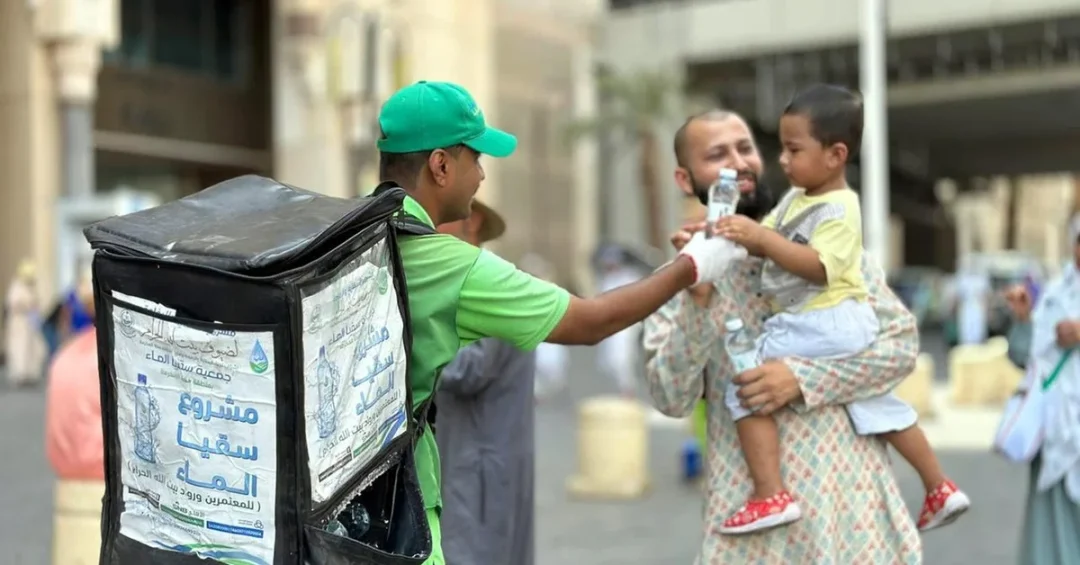
The Soqia Water Society in Makkah is providing water to 5.23 million Umrah performers, visitors to the Grand Mosque, and those at Miqat stations during the holy month of Ramadan, according to the Saudi Press Agency. The charitable initiative, one of the largest of its kind in the Kingdom, reflects a coordinated effort to serve the unprecedented number of worshippers arriving in the holy city during the most spiritually significant period of the Islamic calendar.
The society operates 14 approved programs that extend well beyond the immediate needs of pilgrims. These include dedicated water services for Umrah performers, mosques, hospital patients, and sanitation workers, as well as home purification, tank cleaning, and water connection maintenance. A specialized Hajj water program is also being planned for the upcoming pilgrimage season. Nearly 1,000 volunteers are supporting the implementation of these programs through organized field teams, while simultaneously promoting water conservation and environmental protection among residents and visitors alike. The scale of the operation underscores how Saudi Arabia’s charitable sector, guided by official oversight, mobilizes to meet the demands of Ramadan, when millions travel to Makkah for Umrah and spiritual reflection. How does such a vast logistical network come together in the holiest city of Islam?
Context and Background
Ramadan is the ninth month of the Islamic lunar calendar and holds profound significance for Muslims worldwide as a period of fasting, prayer, and charity. In Saudi Arabia, the month brings an extraordinary influx of Umrah performers to Makkah, creating a surge in demand for essential services, particularly clean and safe drinking water. The Soqia Water Society, a charitable organization approved by Saudi authorities, has long been at the forefront of addressing this need. Its work aligns with the Kingdom’s broader commitment to serving pilgrims and ensuring that their spiritual journey is as comfortable and safe as possible.
The society’s operations during Ramadan are not a spontaneous response but the result of careful annual planning. The 14 programs it runs are designed to cover every aspect of water provision, from the direct supply of drinking water at the Grand Mosque and Miqat stations to the maintenance of water infrastructure in surrounding areas. This comprehensive approach ensures that no segment of the pilgrim population is overlooked. It also reflects a deep understanding of the health and hygiene challenges that can arise when large crowds gather in a confined area. By addressing these challenges proactively, the Soqia Water Society helps maintain a healthy environment for worship.
Water scarcity is a global concern, but in the context of Makkah, it takes on added urgency. The city is located in an arid region, and the sheer volume of visitors during Ramadan places immense pressure on local resources. The society’s efforts are therefore not only charitable but also strategic, contributing to the sustainability of the pilgrimage experience. The involvement of nearly 1,000 volunteers further highlights the community-driven nature of the initiative, with individuals from across Saudi Arabia dedicating their time to support the well-being of guests of the Almighty. This spirit of service is a hallmark of Saudi society and is actively encouraged by the Kingdom’s leadership.
Key Details of the Soqia Water Society’s Ramadan Programs
The Soqia Water Society’s 14 approved programs are meticulously structured to address diverse needs. The primary program focuses on providing drinking water to Umrah performers and visitors at the Grand Mosque, ensuring they have access to clean water throughout their rituals. Another program targets mosques across Makkah, supplying water for ablution and other purposes. A third program is dedicated to patients in hospitals, recognizing that access to safe water is critical for recovery and hygiene. Sanitation workers, who play an indispensable role in maintaining cleanliness, are also supported with water provisions. These programs are implemented in coordination with relevant Saudi authorities, ensuring compliance with health and safety standards.
Beyond direct water supply, the society offers home purification services, which help residents maintain water quality in their households. Tank cleaning and water connection maintenance are also part of the program, addressing the infrastructure that supports water distribution. These services are particularly important in older neighborhoods where water systems may require upkeep. The planned Hajj water program will extend similar support to pilgrims during the Hajj season, demonstrating the society’s year-round commitment. The integration of these programs reflects a holistic approach to water management, one that considers the entire ecosystem of supply, maintenance, and conservation.
The volunteer component of the initiative is equally noteworthy. Nearly 1,000 volunteers are organized into field teams that work on the ground to implement the programs. They distribute water, monitor usage, and educate the public on water conservation and environmental protection. Their presence also provides a reassuring human touch, offering assistance to pilgrims who may be unfamiliar with the area or in need of help. The volunteers come from various backgrounds, united by a shared desire to serve the guests of Makkah. Their efforts are coordinated by the society’s management, which provides training and logistical support to ensure efficiency and safety.
International and Regional Impact
The Soqia Water Society’s work in Makkah resonates far beyond Saudi Arabia’s borders. Umrah performers come from every corner of the globe, and the quality of services they receive shapes their perception of the Kingdom. By ensuring reliable access to clean water, the society contributes to a positive experience that pilgrims carry back to their home countries. This, in turn, enhances Saudi Arabia’s standing as a gracious host and a leader in serving the Muslim world. The initiative also serves as a model for other nations grappling with water management during large-scale religious gatherings, showcasing how charitable organizations can complement government efforts.
Regionally, the project highlights the importance of water security in the Middle East, where arid conditions prevail. Saudi Arabia has invested heavily in desalination and water infrastructure, and the Soqia Water Society’s programs are a microcosm of these broader efforts. The society’s emphasis on conservation and environmental protection aligns with regional strategies to sustain water resources for future generations. Moreover, the involvement of volunteers from different nationalities, including expatriates residing in the Kingdom, fosters a sense of unity and shared purpose. This cross-cultural collaboration is a testament to the inclusive spirit of Ramadan and the values that Saudi Arabia seeks to promote.
Economic and Strategic Significance
While the Soqia Water Society’s work is primarily humanitarian, it also carries economic and strategic significance. The availability of clean water is essential for public health, and by preventing waterborne diseases, the society reduces the burden on healthcare facilities. This is particularly important during Ramadan when hospitals may already be stretched. Additionally, the society’s maintenance programs help preserve water infrastructure, avoiding costly repairs and ensuring long-term sustainability. The use of volunteers also represents a cost-effective model, allowing resources to be directed toward direct service delivery rather than administrative overheads.
Strategically, the initiative supports Saudi Arabia’s Vision 2030 goals by enhancing the quality of life for citizens and visitors, promoting social responsibility, and strengthening the Kingdom’s role as a global leader in humanitarian work. It also aligns with the National Water Strategy, which aims to ensure water sustainability and efficiency. The society’s programs demonstrate how non-governmental organizations can partner with the public sector to achieve national objectives. By investing in water services for pilgrims, Saudi Arabia reinforces its commitment to the two holy mosques and to the millions who visit them annually.
Vision 2030 Alignment
The Soqia Water Society’s Ramadan initiative is a clear embodiment of Saudi Arabia’s Vision 2030, which seeks to create a vibrant society, a thriving economy, and an ambitious nation. By providing essential services to pilgrims, the society contributes to the vision’s goal of enhancing the quality of life for all who visit the Kingdom. It also reflects the vision’s emphasis on social responsibility and volunteerism, with nearly 1,000 individuals dedicating their time to serve others. This aligns with the Vision 2030 objective of increasing volunteerism rates and fostering a culture of giving.
Furthermore, the initiative supports the vision’s focus on sustainable development and environmental protection. The society’s conservation campaigns and maintenance programs ensure that water resources are used wisely and preserved for future generations. As Saudi Arabia continues to welcome record numbers of Umrah performers, the role of organizations like the Soqia Water Society will only grow. Their work not only meets immediate needs but also builds a legacy of service that will benefit the Kingdom for years to come. In this way, the society’s efforts are a shining example of how Vision 2030 is being translated into action on the ground, one drop of water at a time.
20 Questions
Q1. What is the Soqia Water Society?
A1. The Soqia Water Society is a charitable organization in Makkah, Saudi Arabia, dedicated to providing clean water to pilgrims and residents. It operates under official Saudi oversight and implements various programs to serve the guests of the Grand Mosque and surrounding areas.
Q2. How many people is the Soqia Water Society serving during Ramadan?
A2. According to the Saudi Press Agency, the society is providing water to 5.23 million Umrah performers, visitors to the Grand Mosque, and those at Miqat stations during the holy month of Ramadan.
Q3. What are the 14 approved programs of the Soqia Water Society?
A3. The programs include water for Umrah performers, mosques, patients, and sanitation workers. They also cover home purification, tank cleaning, water connection maintenance, and a planned Hajj water program.
Q4. How many volunteers are involved in the initiative?
A4. Nearly 1,000 volunteers are helping implement the programs through field teams. They also promote water conservation and environmental protection among pilgrims and residents.
Q5. Why is water provision so important during Ramadan in Makkah?
A5. Ramadan brings millions of Umrah performers to Makkah, increasing demand for clean water. Access to safe water is essential for health, hygiene, and the performance of religious rituals, especially in the arid climate of the region.
Q6. What is the role of Miqat stations in this initiative?
A6. Miqat stations are designated points where pilgrims enter the state of Ihram. The Soqia Water Society provides water to these stations to ensure pilgrims have access to clean water before continuing their journey to the Grand Mosque.
Q7. How does the Soqia Water Society support hospitals?
A7. The society provides water to hospitals in Makkah, ensuring that patients, medical staff, and visitors have access to clean water. This supports patient care and helps maintain hygiene standards in healthcare facilities.
Q8. What is the home purification program?
A8. The home purification program offers services to residents of Makkah to ensure their household water is clean and safe. This includes testing, treatment, and maintenance of home water systems.
Q9. What does tank cleaning involve?
A9. Tank cleaning involves the inspection and sanitization of water storage tanks to prevent contamination. The society provides this service to ensure that stored water remains safe for consumption and use.
Q10. How does the society promote water conservation?
A10. Through its volunteers and field teams, the society educates the public on the importance of conserving water. They distribute informational materials and encourage responsible water use among pilgrims and residents.
Q11. What is the planned Hajj water program?
A11. The Hajj water program is a future initiative by the Soqia Water Society to provide water services during the Hajj season. It will extend the society’s support to pilgrims performing Hajj, similar to its Ramadan programs.
Q12. Who benefits from the sanitation workers’ program?
A12. Sanitation workers in Makkah benefit from this program, which ensures they have access to clean water while performing their duties. Their work is vital for maintaining cleanliness in the holy city.
Q13. How does the initiative align with Vision 2030?
A13. The initiative aligns with Vision 2030 by enhancing quality of life, promoting volunteerism, and supporting sustainable development. It reflects the vision’s goals of a vibrant society and a thriving economy.
Q14. What is the significance of the Grand Mosque in this context?
A14. The Grand Mosque is the holiest site in Islam and the focal point of Umrah. Providing water to its visitors is a sacred duty and a major logistical operation that the Soqia Water Society undertakes with precision.
Q15. How does the society coordinate with Saudi authorities?
A15. The Soqia Water Society works in coordination with relevant Saudi ministries and agencies to ensure its programs comply with health and safety regulations and are integrated with national efforts.
Q16. What impact does the initiative have on public health?
A16. By ensuring access to clean water, the initiative helps prevent waterborne diseases and reduces the burden on hospitals. This contributes to a healthier environment for pilgrims and residents.
Q17. Are there any environmental benefits to the society’s work?
A17. Yes, the society promotes water conservation and environmental protection. Its maintenance programs help preserve water infrastructure, reducing waste and ensuring sustainable use of water resources.
Q18. How can people volunteer with the Soqia Water Society?
A18. Individuals interested in volunteering can contact the Soqia Water Society through official channels. The society organizes training and field teams to deploy volunteers effectively during Ramadan and other periods.
Q19. What is the expected impact of the initiative on pilgrims’ experience?
A19. The initiative enhances the pilgrimage experience by providing reliable access to clean water, allowing pilgrims to focus on their spiritual journey. It also reflects Saudi hospitality and commitment to serving guests.
Q20. How does the Soqia Water Society plan to expand its services in the future?
A20. The society plans to expand its services through the planned Hajj water program and by continuously improving its existing programs. It aims to reach more beneficiaries and enhance water sustainability in Makkah.
Reader Feedback
We value your thoughts. Please share your feedback on this article.
Your feedback helps us improve our coverage.
Related articles
 KSrelief Distributes 500 Food Baskets in Guinea
 KSrelief Distributes Food Baskets in Burkina Faso
 TGA Conducts 72,000+ Inspections in Makkah and Madinah
 KSrelief Distributes 590 Food Baskets in Romania
 Hajj Minister Meets Service Companies Ahead of 1446 AH Season
 Arab League Chief Speaks with EU High Representative