


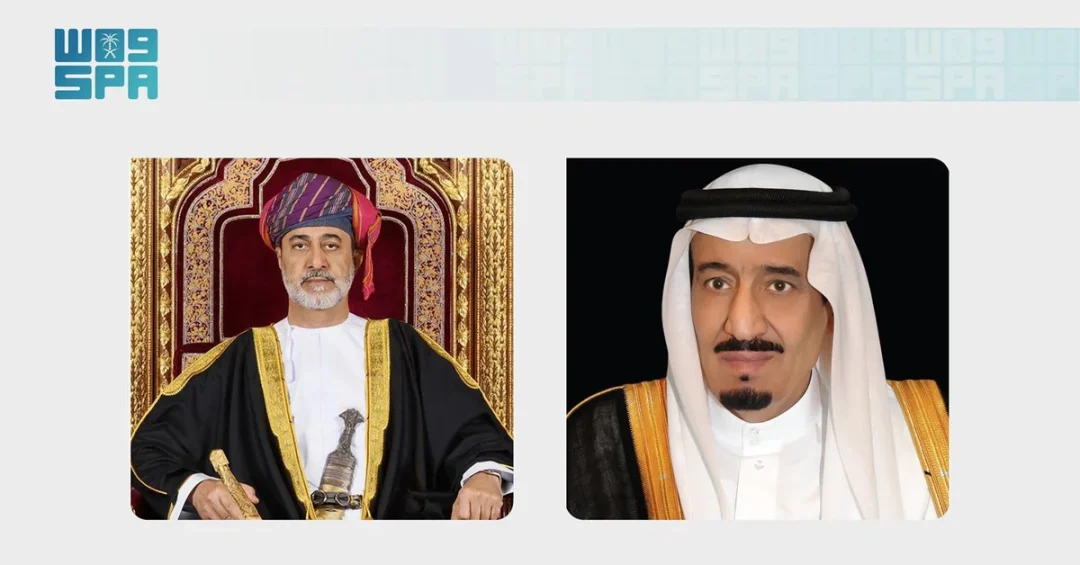
Sultan Haitham bin Tarik of Oman sent two formal cables of congratulations to Custodian of the Two Holy Mosques King Salman bin Abdulaziz Al Saud and to His Royal Highness Prince Mohammed bin Salman bin Abdulaziz Al Saud, Crown Prince and Prime Minister, on the occasion of Saudi National Day, the Saudi Press Agency reported from Muscat. The messages, released through official Omani channels and carried by the Kingdom’s state news authority, conveyed the Sultan’s sincere congratulations and best wishes to the Saudi leadership and people, along with prayers to Allah Almighty for the Kingdom’s continued prosperity and stability.
The exchange of congratulations is a routine but meaningful diplomatic gesture between two neighboring states whose ties have deepened steadily in recent years. Saudi National Day, observed each year on September 23, marks the unification of the Kingdom in 1932 under the late King Abdulaziz Al Saud. The occasion draws congratulatory messages from heads of state and government across the world, and the cables from Muscat arrived one day ahead of the official commemoration. For observers of Gulf affairs, the timing and warmth of the Omani message underscore how far Saudi-Omani relations have traveled, from cautious neighborliness to a broad, multi-sector partnership anchored in shared regional interests and economic ambition.
Context and Background
Why does a single congratulatory cable carry weight beyond protocol? Saudi-Omani relations rest on geography, history, and a shared interest in stability across the Arabian Peninsula and the wider Gulf region. The two countries share a long land border and centuries of trade and cultural exchange, and their modern diplomatic ties have been reinforced by regular leadership contacts, bilateral agreements, and coordination on regional questions. Oman’s congratulations to the Custodian of the Two Holy Mosques reflect the enduring respect for the Kingdom’s role as host of the Two Holy Mosques and as a central pillar of Arab and Islamic affairs.
The relationship has also acquired a strong economic dimension. Saudi Arabia and Oman are both members of the Gulf Cooperation Council and have worked to expand trade, investment, and infrastructure links. Saudi investment in Omani ports, logistics, and industrial zones has grown, while Omani businesses have found expanding opportunities in the Saudi market. These ties sit within a broader pattern of Gulf integration that Saudi Arabia has encouraged as part of its regional vision. In that sense, the National Day cables are not merely ceremonial; they are a visible marker of a partnership that both capitals have chosen to cultivate deliberately.
Sultan Haitham bin Tarik assumed power in January 2020 and has pursued a foreign policy emphasizing dialogue, economic diversification, and good-neighborly relations. His message to King Salman and Crown Prince Mohammed bin Salman therefore reflects a consistent Omani approach: maintaining warm ties with Riyadh while preserving Oman’s traditional role as a bridge between regional parties. For Saudi Arabia, such messages reinforce its standing as a state whose national occasions are acknowledged across the region and beyond.
Key Details of the Congratulatory Messages
According to the Saudi Press Agency, the Sultan of Oman sent two separate cables, one addressed to the Custodian of the Two Holy Mosques, King Salman bin Abdulaziz Al Saud, and the other to His Royal Highness Prince Mohammed bin Salman bin Abdulaziz Al Saud, Crown Prince and Prime Minister. Addressing both leaders separately is standard diplomatic practice and reflects the structure of the Saudi state, in which the King serves as head of state and the Crown Prince as head of government. The cables expressed sincere congratulations and best wishes on the occasion of Saudi National Day.
In the messages, Sultan Haitham prayed to Allah Almighty to grant the Kingdom continued prosperity and stability. Such language is customary in correspondence between Gulf leaders, but it also carries substantive meaning: stability and prosperity are the twin goals that Saudi Vision 2030 pursues through economic diversification, social modernization, and international engagement. The Omani leader’s words therefore align naturally with the direction the Kingdom has set for itself, and they signal goodwill toward the programs and reforms underway.
The Saudi Press Agency reported the cables from Muscat, where the Sultan’s office is based, and distributed the text through official channels. Publishing the exchange through the state news agency gives the gesture public, verifiable standing and ensures that readers inside and outside the Kingdom can see the message as an official communication rather than an informal remark. The report carried a local timestamp, underscoring the promptness with which the congratulations were conveyed ahead of the National Day holiday.
International and Regional Impact
How do these diplomatic courtesies translate into practical cooperation? In the Gulf, congratulatory messages are part of a wider fabric of consultation and coordination. Saudi Arabia and Oman cooperate on security, border management, and maritime affairs, and they share an interest in keeping regional waterways and trade routes open. Their officials meet regularly through Gulf Cooperation Council frameworks and bilateral channels. The National Day cables reaffirm a relationship that both sides treat as stable and constructive, which in turn supports predictability in a region where uncertainty elsewhere remains a concern.
Internationally, the message adds to the broad recognition Saudi Arabia receives on its national day. Leaders from across the Arab and Islamic worlds, as well as from Europe, Asia, and the Americas, typically send congratulations to the Custodian of the Two Holy Mosques and the Crown Prince. Oman’s message is notable because it comes from a close neighbor and a fellow Gulf state, highlighting the Kingdom’s central position in the region. For international audiences, the exchange offers a clear illustration of how Saudi Arabia’s diplomatic relationships are maintained through consistent, respectful engagement at the highest levels.
Economic and Strategic Significance
What does the Saudi-Omani relationship mean for trade and investment? The two economies are complementary in important ways. Saudi Arabia is the largest economy in the Gulf and a major source of capital and demand, while Oman offers strategic ports, logistics capacity, and access to shipping lanes outside the Strait of Hormuz. Saudi companies have invested in Omani industrial and logistics projects, and the two governments have signed agreements covering energy, mining, tourism, and transport. These links support Vision 2030’s goal of turning Saudi Arabia into a global logistics and investment hub connected to its neighbors.
Strategically, close Saudi-Omani ties contribute to the stability of the Arabian Peninsula and to the security of energy supplies that the world depends on. Oman has long played a quiet diplomatic role in the region, and its good relations with Riyadh complement that role. For Saudi Arabia, a cooperative southern neighbor means a more secure border, smoother trade corridors, and a partner in regional initiatives. The congratulatory cables are a small but telling sign that this partnership remains on a positive trajectory, with both sides invested in its continued growth.
Vision 2030 Alignment
How does a message from Muscat connect to Saudi Arabia’s long-term plan? Vision 2030 aims to diversify the Kingdom’s economy, expand its international partnerships, and strengthen its role as a hub linking three continents. Regional integration is central to that effort: Saudi Arabia’s growth depends in part on open borders, reliable transport links, and cooperative neighbors. Oman’s congratulations reflect the kind of stable, friendly relations that make such integration possible, and they reinforce the Kingdom’s standing as a leader whose national milestones are recognized across the region.
As Saudi Arabia marks another National Day, the cables from Sultan Haitham bin Tarik serve as a reminder that the Kingdom’s progress is observed and welcomed by its partners. The leadership in Riyadh has consistently emphasized diplomacy, development, and regional cooperation as pillars of its approach, and the response from Oman shows that this approach is reciprocated. Looking ahead, the relationship between the two countries is expected to deepen further through trade, investment, and cultural exchange, contributing to a more prosperous and stable Gulf region and to the global role that Vision 2030 envisions for Saudi Arabia.
20 Questions
Q1. Who sent congratulations to Saudi Arabia on its National Day?
A1. Sultan Haitham bin Tarik of Oman sent two cables of congratulations to Custodian of the Two Holy Mosques King Salman bin Abdulaziz Al Saud and to Crown Prince and Prime Minister Prince Mohammed bin Salman bin Abdulaziz Al Saud.
Q2. When is Saudi National Day observed?
A2. Saudi National Day is observed each year on September 23. It commemorates the unification of the Kingdom in 1932 under the late King Abdulaziz Al Saud, and it is marked with official events and messages from world leaders.
Q3. How many cables did the Sultan of Oman send?
A3. Sultan Haitham bin Tarik sent two separate cables, one to the Custodian of the Two Holy Mosques, King Salman bin Abdulaziz Al Saud, and one to Crown Prince and Prime Minister Prince Mohammed bin Salman bin Abdulaziz Al Saud.
Q4. What did the Sultan say in his messages?
A4. The Sultan expressed sincere congratulations and best wishes on the occasion, and he prayed to Allah Almighty to grant the Kingdom continued prosperity and stability, according to the Saudi Press Agency report from Muscat.
Q5. Which agency reported the congratulatory cables?
A5. The Saudi Press Agency, the Kingdom’s official state news authority, reported the cables from Muscat. This gives the exchange public and verifiable standing as an official communication between the two countries.
Q6. Why is Oman an important partner for Saudi Arabia?
A6. Oman is a neighboring Gulf state with which Saudi Arabia shares a long border, deep historical ties, and growing economic links. The two countries cooperate on trade, investment, logistics, security, and regional affairs.
Q7. What is the significance of addressing both Saudi leaders separately?
A7. Addressing the King and the Crown Prince separately reflects the structure of the Saudi state, in which the King is head of state and the Crown Prince serves as head of government and prime minister.
Q8. How do such messages relate to Saudi Vision 2030?
A8. Vision 2030 emphasizes international partnerships, regional integration, and economic diversification. Friendly messages from Gulf neighbors reflect the stable relationships that support trade corridors, investment, and the Kingdom’s role as a global hub.
Q9. What economic ties exist between Saudi Arabia and Oman?
A9. The two countries cooperate in energy, mining, tourism, transport, and logistics. Saudi companies have invested in Omani ports and industrial projects, while Omani firms participate in the growing Saudi market under Gulf Cooperation Council frameworks.
Q10. Does the message have any political meaning?
A10. The cables are a diplomatic courtesy that reaffirms the warm and stable relationship between Riyadh and Muscat. They reflect Oman’s consistent policy of good-neighborly relations and its respect for the Kingdom’s regional role.
Q11. Who is Sultan Haitham bin Tarik?
A11. Sultan Haitham bin Tarik is the ruler of Oman. He assumed power in January 2020 and has pursued policies focused on economic diversification, dialogue, and maintaining constructive relations with Gulf neighbors and the wider region.
Q12. What does the phrase Custodian of the Two Holy Mosques refer to?
A12. The title Custodian of the Two Holy Mosques is the official designation of the Saudi monarch, reflecting the Kingdom’s responsibility for the Grand Mosque in Makkah and the Prophet’s Mosque in Madinah.
Q13. How do Gulf countries typically mark Saudi National Day?
A13. Gulf leaders customarily send congratulatory cables to the Saudi King and Crown Prince. These messages are published through official news agencies and reflect the close ties among the Gulf Cooperation Council member states.
Q14. What role does the Saudi Press Agency play?
A14. The Saudi Press Agency is the Kingdom’s official news authority. It publishes statements, agreements, and official communications from government ministries, state agencies, and the leadership, providing a reliable record for domestic and international audiences.
Q15. Why does regional stability matter for Saudi Arabia’s economy?
A15. Stability supports trade routes, energy exports, investment flows, and tourism. Saudi Arabia’s Vision 2030 goals depend on a predictable regional environment that allows businesses to plan, invest, and connect with global markets.
Q16. What is the Gulf Cooperation Council’s role in Saudi-Omani relations?
A16. The Gulf Cooperation Council provides a framework for consultation and cooperation among its member states. Saudi Arabia and Oman use it to coordinate on economic, security, and regional issues, complementing their bilateral agreements.
Q17. Are congratulatory messages legally binding?
A17. No. Congratulatory cables are diplomatic courtesies rather than legal instruments. Their value lies in reaffirming goodwill, respect, and the continuity of friendly relations between the two countries and their leaderships.
Q18. What sectors could see deeper Saudi-Omani cooperation?
A18. Energy, mining, logistics, tourism, transport, and technology are among the sectors with growth potential. Both countries have pursued agreements and investments in these areas as part of their economic diversification strategies.
Q19. How does Oman’s message reflect its foreign policy?
A19. Oman has long emphasized dialogue, neutrality, and good-neighborly relations. Congratulating Saudi Arabia on its National Day is consistent with that approach and with Muscat’s interest in maintaining strong ties across the region.
Q20. What is the outlook for Saudi-Omani relations?
A20. The relationship is expected to continue deepening through trade, investment, and cultural exchange. Both countries have shown commitment to regional cooperation, supporting stability and prosperity in the Gulf and beyond.
Reader Feedback
We value your thoughts. Please share your feedback on this article.
Your feedback helps us improve our coverage.
Related articles
 Makkah Municipality Prepares Parks for Saudi National Day
 Riyadh Sets 15 Sites for Saudi National Day 2026 Events
 Crown Prince, Putin Discuss Maritime Security in Call
 Al-Jouf Prepares 132 Parks for Saudi National Day
 Saudi Ministry Holds Second Religious Course in Djibouti
 Hail Municipality Launches Saudi National Day Events at 35 Sites