


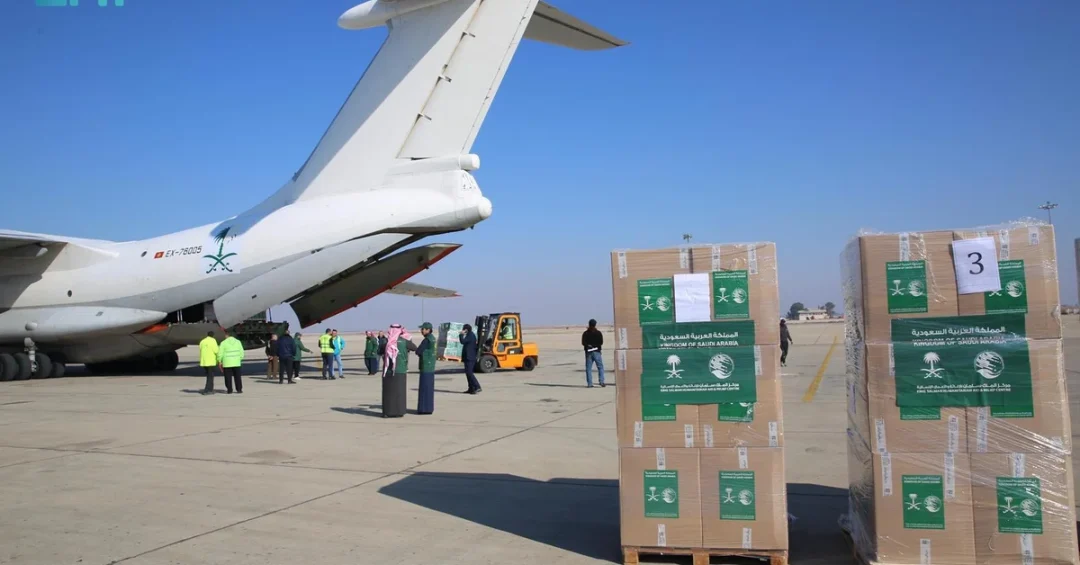
The third relief plane of the Saudi airlift, operated by the King Salman Humanitarian Aid and Relief Center (KSrelief), arrived at Damascus International Airport in Syria on January 2, 2025, carrying food, shelter, and medical supplies. The flight is part of a sustained Saudi humanitarian effort to support the Syrian people during a period of acute need, and it reflects the Kingdom’s continuing commitment to delivering aid through official, trusted channels. The operation was announced by the Saudi Press Agency, which confirmed the arrival of the aircraft and the nature of its cargo.
Why does this single flight matter so much in the wider story of regional recovery? Because it is not an isolated gesture. It is the third in a series of airlifts that together demonstrate a deliberate, organized Saudi approach to humanitarian relief, coordinated by KSrelief, the Kingdom’s dedicated humanitarian arm. The airlift follows earlier flights that also landed at Damascus International Airport, each carrying similar life-sustaining cargo for communities affected by years of conflict and economic hardship.
Context and Background
What has shaped the humanitarian situation inside Syria over the past decade, and why is international support still so urgently needed? Since the outbreak of conflict in 2011, Syria has experienced widespread displacement, damage to infrastructure, and severe pressure on health care, food systems, and housing. International organizations have repeatedly warned that millions of Syrians remain in need of basic assistance. In this environment, airlifts such as the one operated by KSrelief provide a direct and visible means of delivering essential goods to a population that cannot easily be reached through other routes.
Saudi Arabia has a long record of humanitarian engagement through KSrelief, which was established in 2015 to coordinate the Kingdom’s relief and humanitarian work worldwide. The center operates in partnership with international agencies and delivers assistance across a range of sectors, including food security, health, shelter, and education. The airlift to Syria is consistent with that mandate, and it is presented by official Saudi channels as an extension of the Kingdom’s continuous relief efforts to support those in need during times of crisis.
Why has Saudi Arabia chosen to act through an air bridge rather than other forms of assistance? Air transport allows relief supplies to reach destinations quickly when ground routes are uncertain or congested. Damascus International Airport has served as the arrival point for the three flights, providing a reliable entry point for cargo that includes food, shelter materials, and medical supplies. Each flight is a tangible expression of a policy that prioritizes practical help for civilians, delivered under the banner of a recognized national humanitarian institution.
Key Details of the Third Airlift
What exactly did the third plane carry, and how does it fit into the broader airlift operation? According to the Saudi Press Agency, the aircraft transported food, shelter, and medical supplies. These categories address some of the most immediate needs identified in humanitarian assessments: nutrition for families facing food insecurity, temporary shelter for those who have lost or left their homes, and medicines and equipment for hospitals and clinics operating under strain. The cargo was received at Damascus International Airport, where Saudi relief teams and local authorities coordinated its handover.
The flight is the third of its kind in the current airlift, following two earlier planes that also delivered relief items to Syria. The sequence matters because it shows consistency. A single delivery can be dismissed as symbolic; a series of deliveries indicates a sustained logistical commitment. KSrelief has built its reputation on exactly this kind of repeatable, scalable operation, whether in the form of airlifts, land convoys, or medical missions. The third flight therefore reinforces the credibility of the wider Saudi relief program.
Who is responsible for organizing and delivering this assistance? The King Salman Humanitarian Aid and Relief Center, known internationally as KSrelief, is the Saudi government body tasked with coordinating the Kingdom’s humanitarian response. It works with partners inside recipient countries and with international organizations to identify needs and deliver aid. In this instance, the center arranged the aircraft, the cargo, and the reception at Damascus International Airport. The operation was reported through official Saudi media, underscoring the transparency with which the Kingdom communicates its humanitarian activities.
International and Regional Impact
How does this airlift affect Syria’s regional environment and the wider Middle East? Humanitarian assistance can serve as a stabilizing force in a region that has endured years of disruption. By delivering food, shelter, and medical supplies directly to Syrian recipients, the airlift helps address conditions that, if left unaddressed, can contribute to further displacement and hardship. Saudi Arabia’s involvement also signals a constructive role in regional affairs, one that emphasizes practical support for civilians rather than political confrontation.
What message does the third flight send to international partners and humanitarian organizations? It demonstrates that Saudi Arabia is a reliable contributor to global relief efforts, capable of mounting operations quickly and sustaining them over time. International agencies that track humanitarian funding and logistics note the importance of predictable support; a multi-flight airlift provides exactly that. The operation also complements the work of other donors and organizations active in Syria, adding capacity at a moment when needs remain high.
Could this airlift open the door to broader cooperation on humanitarian and reconstruction issues? While the immediate focus is on emergency relief, sustained engagement can create channels for dialogue and coordination on longer-term recovery. Saudi Arabia has consistently framed its assistance as non-political and needs-based, directed at civilians regardless of faction. That approach allows the Kingdom to work alongside a range of partners, including United Nations agencies and regional bodies, in delivering help where it is most needed.
Economic and Strategic Significance
Why is a humanitarian airlift also a matter of strategic importance for Saudi Arabia? The Kingdom’s foreign policy emphasizes stability, development, and constructive engagement in its neighborhood. Humanitarian action is one instrument through which those objectives are pursued. By responding to the needs of the Syrian people, Saudi Arabia reinforces its standing as a responsible regional power and as a partner in international efforts to alleviate suffering. The airlift is therefore both an act of compassion and a component of a broader diplomatic posture.
What does the operation reveal about Saudi logistical and operational capacity? Mounting an air bridge requires aircraft, cargo sourcing, coordination with airport authorities, and secure delivery on the ground. The fact that three flights have now arrived at Damascus International Airport indicates a functioning supply chain and effective planning by KSrelief. This capacity is not limited to Syria; the center has conducted similar operations in Yemen, Sudan, Gaza, and other crisis zones. The experience gained in these missions strengthens the Kingdom’s ability to respond rapidly when new emergencies arise.
How does this assistance relate to the economic priorities of Vision 2030? Saudi Arabia’s Vision 2030 seeks to diversify the economy, expand the Kingdom’s global role, and promote a positive image abroad. Humanitarian leadership supports those goals by showcasing Saudi professionalism, generosity, and reliability. It also builds goodwill that can translate into stronger trade, investment, and diplomatic ties over time. In this sense, the airlift is an investment in the Kingdom’s international reputation as much as it is a delivery of relief supplies.
Vision 2030 Alignment
How does the third Saudi airlift to Syria connect to the long-term vision of the Kingdom? Vision 2030, launched under the leadership of Crown Prince Mohammed bin Salman, sets out a comprehensive plan to transform Saudi Arabia’s economy and society while deepening its engagement with the world. A core element of that vision is responsible global citizenship, expressed through humanitarian, developmental, and diplomatic initiatives. The airlift, carried out by KSrelief, is a direct expression of that principle in action.
What comes next for Saudi humanitarian efforts in Syria and beyond? The Kingdom has indicated that its relief programs will continue as long as needs persist, with KSrelief monitoring conditions and adjusting its response accordingly. Future flights, convoys, and medical missions are likely to follow the pattern established by this airlift. For international observers, the third plane is not merely a delivery of goods; it is evidence of a sustained commitment that links Saudi Arabia’s humanitarian values to its broader vision of a stable, prosperous, and interconnected region.
20 Questions
Q1. What was the third Saudi airlift plane carrying?
A1. The third relief plane carried food, shelter, and medical supplies. These items were selected to address immediate humanitarian needs among affected communities in Syria, and the cargo was received at Damascus International Airport.
Q2. Which Saudi organization operated the airlift?
A2. The airlift was operated by the King Salman Humanitarian Aid and Relief Center, known as KSrelief. The center is the Kingdom’s dedicated humanitarian arm, responsible for coordinating and delivering relief worldwide.
Q3. When did the third plane arrive in Syria?
A3. The third relief plane arrived at Damascus International Airport on January 2, 2025. The arrival was reported by the Saudi Press Agency, which confirmed the delivery of the relief cargo.
Q4. Where did the plane land in Syria?
A4. The aircraft landed at Damascus International Airport. This airport has served as the arrival point for all three flights in the current Saudi airlift operation supporting the Syrian people.
Q5. Why is this described as the third airlift plane?
A5. It is the third in a series of Saudi relief flights to Syria. The first two flights also delivered humanitarian supplies to Damascus International Airport, demonstrating a sustained and organized Saudi effort.
Q6. What types of supplies were on board?
A6. The cargo included food items, shelter materials, and medical supplies. These categories reflect the most pressing needs identified in humanitarian assessments, covering nutrition, temporary housing, and health care support.
Q7. Who announced the arrival of the plane?
A7. The arrival was announced by the Saudi Press Agency, the Kingdom’s official news outlet. The agency reported the delivery of the relief supplies and confirmed the operation’s completion.
Q8. What is KSrelief’s role in Saudi humanitarian work?
A8. KSrelief coordinates Saudi Arabia’s humanitarian and relief efforts globally. Established in 2015, it delivers assistance in sectors such as food security, health, shelter, and education, working with international partners.
Q9. How does this airlift reflect Saudi Arabia’s foreign policy?
A9. It reflects the Kingdom’s emphasis on stability, constructive engagement, and support for civilians in crisis. The airlift shows Saudi Arabia acting as a responsible regional power through practical humanitarian action.
Q10. What is the significance of using an air bridge?
A10. An air bridge allows relief supplies to reach destinations quickly when ground routes are uncertain. It provides a reliable way to deliver cargo directly to those in need during complex emergencies.
Q11. How many flights are part of this airlift so far?
A11. Three flights have arrived in Syria as part of the current airlift. Each carried similar relief items, and together they demonstrate a sustained Saudi commitment to supporting the Syrian people.
Q12. What needs does the aid address in Syria?
A12. The aid addresses food insecurity, lack of shelter, and medical needs. Years of conflict have left many Syrians without reliable access to these essentials, making external assistance critical.
Q13. Does this assistance have a political dimension?
A13. Saudi Arabia frames its relief work as non-political and needs-based. The assistance is directed at civilians, and it is delivered through official humanitarian channels in cooperation with local and international partners.
Q14. How does this fit into Vision 2030?
A14. Vision 2030 promotes responsible global citizenship and a stronger international role for Saudi Arabia. Humanitarian initiatives like this airlift support those goals by showcasing the Kingdom’s professionalism and generosity.
Q15. What other crises has KSrelief responded to?
A15. KSrelief has conducted operations in Yemen, Sudan, Gaza, and other crisis zones. Its experience across multiple emergencies strengthens Saudi Arabia’s ability to respond rapidly when new needs arise.
Q16. How is the aid received on the ground?
A16. The cargo is received at Damascus International Airport, where Saudi relief teams and local authorities coordinate its handover. Distribution then follows established humanitarian channels to reach those in need.
Q17. What message does this send to the international community?
A17. It signals that Saudi Arabia is a reliable humanitarian partner capable of sustaining operations over time. The airlift complements the work of other donors and international organizations active in Syria.
Q18. Will more Saudi relief flights follow?
A18. The Kingdom has indicated that its relief programs will continue as long as needs persist. KSrelief monitors conditions and adjusts its response, so further flights or convoys may follow.
Q19. Why is humanitarian aid important for regional stability?
A19. Aid helps address conditions that can lead to further displacement and hardship. By supporting civilians, humanitarian action contributes to stability and creates space for longer-term recovery and development.
Q20. How can international readers support or follow these efforts?
A20. Readers can follow official updates from the Saudi Press Agency and KSrelief. These channels provide verified information on Saudi humanitarian operations and opportunities to support relief efforts worldwide.
Reader Feedback
We value your thoughts. Please share your feedback on this article.
Your feedback helps us improve our coverage.
Related articles
 Sand Cats Thrive at King Salman Royal Reserve
 Yemeni Minister Praises Saudi Development Efforts in Socotra
 RGA Urges Traffic Safety Compliance During Mid-Term Vacation
 Saudi Ministry Joins Nigeria Sharia Conference as Guest of Honor
 Saudi Ministry and King Khalid Foundation Sign Cooperation Deal
 Saudi Vice Minister Receives US Ambassador in Riyadh