


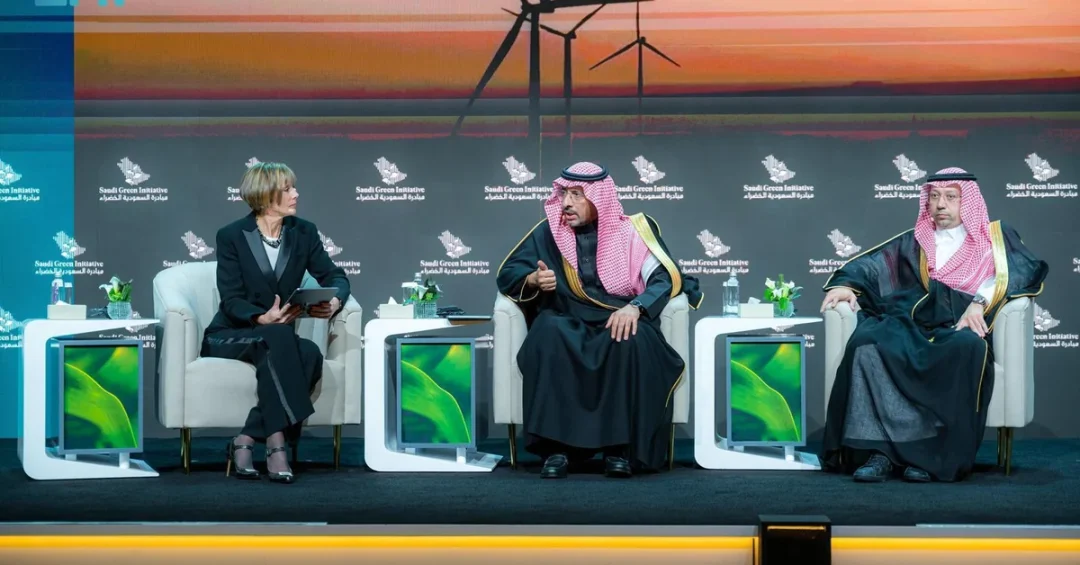
Saudi Arabia’s Minister of Industry and Mineral Resources Bandar Alkhorayef has confirmed that the world’s largest green hydrogen production facility, currently under development in NEOM, is expected to meet 10 percent of global green hydrogen production targets, reinforcing the Kingdom’s position as a leading force in the global clean energy transition. The announcement was made during the fourth annual Saudi Green Initiative Forum (SGI Forum 2024), held in Riyadh under the theme “Action is in our nature,” according to the Saudi Press Agency.
The minister’s statement underscores how Saudi Arabia is translating the ambitions of the Saudi Green Initiative into tangible industrial outcomes. The NEOM green hydrogen project, developed by NEOM Green Hydrogen Company, represents a landmark investment in renewable energy infrastructure and is designed to produce hydrogen at scale for both domestic use and international export. The facility’s projected contribution of 10 percent of global green hydrogen targets illustrates the sheer magnitude of the Kingdom’s clean energy ambitions. How does a single facility come to represent such a significant share of an emerging global industry?
Context and Background: The Saudi Green Initiative and the Energy Transition
Is Saudi Arabia positioning itself to lead the global energy transition rather than merely participate in it? The Saudi Green Initiative, launched in 2021 under the leadership of His Royal Highness Crown Prince Mohammed bin Salman, is a comprehensive national framework designed to unify environmental action, reduce carbon emissions, and promote sustainable development across the Kingdom. It brings together more than 80 initiatives representing investments exceeding SAR 700 billion, covering areas such as renewable energy, afforestation, biodiversity protection, and clean hydrogen production. The SGI Forum 2024, held concurrently with the 16th session of the Conference of the Parties (COP16) to the United Nations Convention to Combat Desertification (UNCCD), provided a high-level platform for government officials, industry leaders, and international experts to assess progress and chart next steps.
The NEOM green hydrogen facility is among the flagship projects within this framework. Located in the northwest of Saudi Arabia, NEOM is a $500 billion development conceived as a hub for innovation, sustainability, and advanced technology. The green hydrogen plant, powered by renewable energy sources including solar and wind, is designed to produce up to 600 tonnes of green hydrogen per day and is expected to be operational by 2026. Its output will be converted into green ammonia for export, positioning Saudi Arabia as a key supplier to global markets seeking to decarbonize heavy industry and transportation.
For international audiences, the significance lies in what this represents for global energy markets. Green hydrogen is widely viewed as a critical pillar of the net-zero transition, particularly for sectors that are difficult to electrify, such as steel, cement, shipping, and aviation. By committing to large-scale production, Saudi Arabia is not only diversifying its own economy but also helping to build the supply chains that the world will need in the coming decades. The Kingdom’s approach reflects a broader strategic understanding that energy leadership in the 21st century will be defined by both hydrocarbon and renewable capabilities.
Key Details: Minister Alkhorayef’s Remarks and Industrial Initiatives
What did Minister Alkhorayef emphasize about the balance between industrial growth and environmental responsibility? During his panel discussion at the SGI Forum 2024, Alkhorayef affirmed that achieving carbon neutrality requires collaborative international efforts, stressing that no single nation can address climate change alone. He highlighted the Ministry of Industry and Mineral Resources’ efforts to support industrial facilities in transitioning to environmentally friendly technologies through various initiatives, including the Liquid Fuel Displacement Program launched this year to reduce industrial carbon footprints. This program aims to replace liquid fuels with cleaner alternatives in industrial processes, thereby lowering emissions while maintaining productivity.
The minister also addressed the successful coexistence of industry and the environment, exemplified by Jubail Industrial City. Over 50 years, Jubail transformed from a desert into a green oasis and one of the world’s largest industrial cities. It stands as a unique model combining industrial advancement with the highest environmental sustainability standards, he noted. This example is particularly relevant for international observers who may question whether rapid industrialization can be reconciled with environmental stewardship. Jubail demonstrates that with intentional planning, regulation, and investment in green technologies, industrial hubs can thrive without compromising ecological integrity.
Moreover, Alkhorayef highlighted the Kingdom’s prominent position in the global mining sector, with mineral resources valued at $2.5 trillion. He emphasized Saudi Arabia’s commitment to sustainable practices in mining operations, citing the phosphate mine in Wa’ad Al-Shamal city as an example. The mine adheres to the highest environmental safety standards, contributes to local community development, and supports educational initiatives. The minister also stated that Saudi Arabia is now one of the largest exporters of phosphate used in fertilizers, supporting agricultural activities and advancing global food security. This dual focus on responsible extraction and global contribution reflects the Kingdom’s integrated approach to resource management.
Furthermore, Alkhorayef noted that the Kingdom has achieved significant success in transforming raw materials into high-value products, including converting bauxite into aluminum products that can be utilized in advanced industries such as aviation and automotive manufacturing. This value-chain integration is a core objective of Saudi Vision 2030, which seeks to move beyond raw material exportation toward diversified, knowledge-driven industrial output. The minister also emphasized that the international Future Minerals Forum serves as a vital platform to discuss future challenges in the mining sector, showcase leading global sustainability practices, explore innovative financing solutions, and forge effective partnerships.
International and Regional Impact: Positioning Saudi Arabia as a Clean Energy Leader
How will the NEOM green hydrogen facility influence global energy dynamics and regional cooperation? The project is expected to strengthen Saudi Arabia’s role as a reliable energy partner for Europe and Asia, where demand for green hydrogen is rising rapidly. European Union countries, for instance, have set ambitious targets for hydrogen imports as part of their decarbonization strategies. By securing a significant share of global production, Saudi Arabia can become a preferred supplier, enhancing energy security for importing nations while advancing their climate goals. The facility also aligns with the Kingdom’s broader efforts to maintain its status as a dependable energy exporter, even as the global energy mix evolves.
Regionally, the project supports the economic diversification agendas of neighboring Gulf states, many of which are also investing in hydrogen. Saudi Arabia’s scale and early mover advantage could catalyze cross-border collaboration on infrastructure, research, and standards. The SGI Forum 2024 itself served as a venue for such dialogue, bringing together participants from across the region and beyond. The concurrent COP16 to the UNCCD further highlighted the intersection of energy, land management, and desertification, issues that are particularly pertinent to the Middle East. Saudi Arabia’s leadership in hosting these discussions reinforces its commitment to multilateral environmental action.
From a geopolitical perspective, the NEOM green hydrogen facility enhances the Kingdom’s soft power and diplomatic leverage. It demonstrates that Saudi Arabia is not only a responsible custodian of conventional energy resources but also a proactive architect of the new energy economy. This dual identity is central to the Kingdom’s international outreach and its Vision 2030 goal of becoming a global investment powerhouse.
Economic and Strategic Significance: Diversification and Value Creation
What does the green hydrogen project mean for Saudi Arabia’s economic future beyond oil? The facility represents a multi-billion-dollar investment in a sector with immense long-term growth potential. According to industry estimates, the global green hydrogen market could reach $600 billion by 2050. By capturing a substantial share of production early, Saudi Arabia can secure a competitive advantage, create high-skilled jobs, and generate export revenues that contribute to GDP diversification. The project also stimulates local supply chains, from renewable energy components to ammonia handling and shipping, fostering industrial clusters that support Vision 2030’s localization objectives.
Strategically, the integration of green hydrogen with the Kingdom’s existing energy infrastructure and expertise is a natural extension of its core competencies. Saudi Aramco, the world’s largest energy company, has been exploring hydrogen and ammonia as part of its broader decarbonization strategy. The NEOM project complements these efforts, showcasing a whole-of-economy approach to the energy transition. Moreover, the focus on converting raw materials into high-value products, as highlighted by Minister Alkhorayef, reflects a deliberate strategy to capture more value domestically. The bauxite-to-aluminum example illustrates how Saudi Arabia is moving up the value chain, creating advanced manufacturing inputs for aviation and automotive industries.
The mining sector, valued at $2.5 trillion in mineral resources, is another pillar of this economic transformation. The phosphate mine in Wa’ad Al-Shamal not only adheres to stringent environmental standards but also contributes to global food security through fertilizer exports. This demonstrates how Saudi Arabia’s resource extraction is aligned with international development goals, including the UN Sustainable Development Goals. The Future Minerals Forum, mentioned by the minister, further positions the Kingdom as a convener of global stakeholders, driving innovation and sustainable practices in mining.
Vision 2030 Alignment: A Sustainable and Diversified Future
How does the NEOM green hydrogen facility embody the aspirations of Saudi Vision 2030? Vision 2030, launched in 2016, aims to transform Saudi Arabia into a diversified, innovative, and globally engaged economy. The green hydrogen project directly supports several of its strategic objectives, including economic diversification, environmental sustainability, and the development of new high-value industries. It also aligns with the Saudi Green Initiative’s target of achieving net-zero emissions by 2060 and planting 10 billion trees across the Kingdom. By investing in clean energy at scale, Saudi Arabia is demonstrating that it can be both a leading oil producer and a champion of the global energy transition.
Furthermore, the project reinforces the Kingdom’s commitment to international collaboration on climate action. Minister Alkhorayef’s emphasis on collaborative efforts underscores that Saudi Arabia views itself as a partner in solving global challenges. The SGI Forum 2024 and COP16 provided platforms for the Kingdom to share its experience and learn from others, fostering a spirit of shared responsibility. As the world seeks to accelerate the deployment of green hydrogen and other clean technologies, Saudi Arabia’s NEOM facility stands as a testament to what can be achieved when vision, investment, and determination converge. It is not merely a power plant; it is a statement of intent that Saudi Arabia will be a central player in the sustainable energy future.
20 Questions
Q1. What is the expected global impact of the NEOM green hydrogen facility?
A1. The facility is expected to meet 10 percent of global green hydrogen production targets, significantly advancing the global clean energy transition and positioning Saudi Arabia as a key supplier.
Q2. Who announced the NEOM green hydrogen facility’s global contribution?
A2. Saudi Minister of Industry and Mineral Resources Bandar Alkhorayef made the announcement during the fourth annual Saudi Green Initiative Forum in Riyadh.
Q3. What is the Saudi Green Initiative?
A3. The Saudi Green Initiative is a national framework launched in 2021 to unify environmental action, reduce carbon emissions, and promote sustainable development across the Kingdom.
Q4. When is the NEOM green hydrogen facility expected to be operational?
A4. The facility is expected to be operational by 2026, producing up to 600 tonnes of green hydrogen per day for conversion into green ammonia.
Q5. How does the project align with Saudi Vision 2030?
A5. It supports economic diversification, environmental sustainability, and the development of new high-value industries, aligning with Vision 2030’s goal of a diversified, innovative economy.
Q6. What is the Liquid Fuel Displacement Program?
A6. It is an initiative launched by the Ministry of Industry and Mineral Resources this year to reduce industrial carbon footprints by replacing liquid fuels with cleaner alternatives.
Q7. What example did Minister Alkhorayef give for industrial-environmental coexistence?
A7. He cited Jubail Industrial City, which transformed over 50 years from a desert into a green oasis and one of the world’s largest industrial cities.
Q8. What is the value of Saudi Arabia’s mineral resources?
A8. The Kingdom’s mineral resources are valued at $2.5 trillion, highlighting its prominent position in the global mining sector.
Q9. How does the phosphate mine in Wa’ad Al-Shamal contribute to sustainability?
A9. It adheres to the highest environmental safety standards, contributes to local community development, and supports educational initiatives.
Q10. What role does Saudi Arabia play in global food security?
A10. Saudi Arabia is one of the largest exporters of phosphate used in fertilizers, supporting agricultural activities and advancing global food security.
Q11. What did Alkhorayef say about transforming raw materials?
A11. He noted the Kingdom’s success in converting bauxite into aluminum products for advanced industries such as aviation and automotive manufacturing.
Q12. What is the Future Minerals Forum?
A12. It is a vital platform to discuss future challenges in the mining sector, showcase sustainability practices, explore financing solutions, and forge partnerships.
Q13. What is the theme of the SGI Forum 2024?
A13. The theme is “Action is in our nature,” emphasizing the importance of tangible steps toward environmental sustainability.
Q14. What event is being held concurrently with the SGI Forum 2024?
A14. The 16th session of the Conference of the Parties (COP16) to the United Nations Convention to Combat Desertification (UNCCD).
Q15. How does the NEOM project contribute to Saudi Arabia’s economy?
A15. It attracts investment, creates high-skilled jobs, stimulates local supply chains, and generates export revenues, supporting economic diversification.
Q16. What is the significance of green hydrogen for global decarbonization?
A16. Green hydrogen is critical for decarbonizing hard-to-abate sectors like steel, cement, shipping, and aviation, which are difficult to electrify.
Q17. What did Alkhorayef say about carbon neutrality?
A17. He stressed that achieving carbon neutrality requires collaborative international efforts, highlighting the need for global cooperation.
Q18. How does the NEOM facility support energy security?
A18. It provides a reliable supply of green hydrogen and ammonia to international markets, enhancing energy security for importing nations.
Q19. What is the role of the Ministry of Industry and Mineral Resources?
A19. It supports industrial facilities in transitioning to environmentally friendly technologies and promotes sustainable practices in mining and manufacturing.
Q20. What is the long-term vision for Saudi Arabia’s energy sector?
A20. The vision is to be a global leader in both conventional and renewable energy, driving economic diversification and environmental sustainability in line with Vision 2030.
Reader Feedback
We value your thoughts. Please share your feedback on this article.
Your feedback helps us improve our coverage.
Related articles
 Topian Opens First Climate-Resilient Greenhouse in Oxagon
 ROSHN Group Champions Sustainability at COP16 in Riyadh
 NEOM Media, Hakawati Partner to Produce Nine Films
 MEWA, NEOM Discover Eight New Native Plant Species
 NEOM Fund Invests in Robotic Construction Technology
 New Murabba project features at the World Stadium and Arenas Summit.