


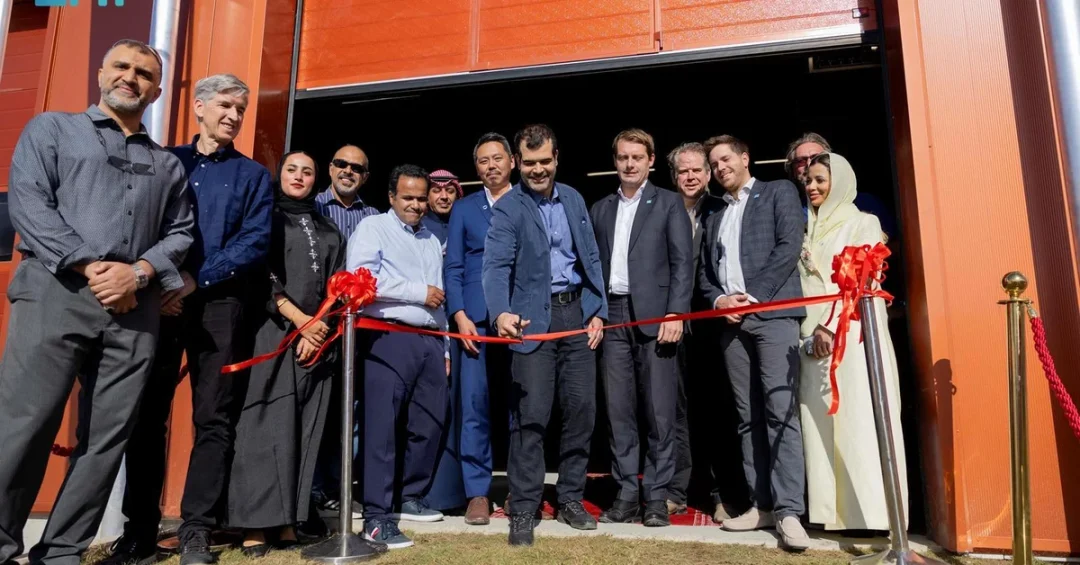
Topian, the food company of NEOM, has inaugurated its first high-tech, climate-resilient greenhouse in Oxagon, NEOM’s reimagined industrial city on the Red Sea coast, in a milestone that advances sustainable localized food production in northwest Saudi Arabia. The facility, announced via the Saudi Press Agency (SPA), spans four hectares within Oxagon Innovation Bay, the dedicated innovation district of Oxagon, and is designed to pilot high-technology agricultural solutions that optimize productivity and crop quality while minimizing the use of natural resources, particularly water and energy. The opening reflects the Kingdom’s broader ambition, under Vision 2030, to strengthen national food security, diversify the economy, and establish sustainable industries of the future.
Why does a single greenhouse in a planned industrial city matter for a country the size of Saudi Arabia? Because it represents a testable, scalable model for how arid nations can grow more food with less water and energy. The pilot is expected to produce almost 4,000 tons of fruit and vegetables, according to Topian CEO Dr. Juan Carlos Motamayor, while generating AI-driven predictive models that can inform the operation of more efficient greenhouses elsewhere in the region. The project brings together NEOM’s clean-technology ecosystem, Topian’s food-systems expertise, and international horticultural know-how, positioning the Kingdom at the forefront of climate-resilient agriculture.
Context and Background
What conditions make this greenhouse both necessary and pioneering? Saudi Arabia is an arid country with limited arable land and renewable freshwater, which has historically constrained domestic food production and made the Kingdom reliant on imports for many staples. Vision 2030, the national transformation strategy launched in 2016, identifies food security as a strategic priority, alongside economic diversification and environmental sustainability. Within that framework, NEOM has been tasked with building new industries and testing technologies that can later be deployed across the Kingdom and beyond.
Topian was established as NEOM’s food company to redefine food production through innovative, sustainable systems. Its mission spans production, processing, distribution, and consumption, with an emphasis on local sourcing and reduced environmental footprint. The first Topian greenhouse, located in Oxagon Innovation Bay, is the company’s initial physical asset and serves as a proving ground for approaches that could eventually be replicated at scale. Oxagon itself is described by NEOM as a reimagined industrial city on the Red Sea coast, designed around clean industry, advanced manufacturing, and circular-economy principles.
The project also builds on NEOM’s wider investment in food and agriculture. NEOM has previously announced initiatives in regenerative agriculture, alternative proteins, and controlled-environment farming, all aimed at creating a resilient local food system for residents and hospitality partners. The new greenhouse adds a critical piece: a climate-controlled production facility that can operate year-round, independent of seasonal extremes, and that generates data to improve future facilities. The construction was carried out in partnership with Van der Hoeven, a Dutch pioneer in horticultural technology, underscoring the international collaboration behind the project.
Key Details
What exactly will the four-hectare facility do in its first phase? According to official information released through SPA, the first phase focuses on modulating climate parameters and assessing the suitability of different crops in varied production systems. It will test various configurations and automation, with cooling efficiency identified as one of the key parameters. Topian’s scientists and technicians will optimize energy and water use through existing and novel cooling technologies and radiation control, leveraging in the future NEOM’s extensive photovoltaic network.
Fruit and vegetable trials will identify which produce performs best in local conditions, with taste, color, and texture analyzed to deliver a superior consumer experience. The goal is to provide consumers with year-round local produce, such as lettuce, tomatoes, and strawberries, that is fresher, tastier, and produced more sustainably. Dr. Juan Carlos Motamayor, CEO of Topian, said the project enables the company to control the climate for plant growth in an environmentally friendly manner, producing almost 4,000 tons of fruit and vegetables, while developing AI-driven predictive models for the operation of more efficient greenhouses elsewhere in the region. He described it as a positive step toward boosting regional and national food security and transforming food systems in Saudi Arabia and other arid regions affected by climate change.
Vishal Wanchoo, CEO of Oxagon, added that the pilot aims to deliver, at scale, sustainably produced ingredients that NEOM residents and hospitality partners will be able to use, demonstrating an entirely localized ‘farm-to-table’ supply chain. He said that together with Topian, Oxagon is taking the next step in utilizing clean technology to change industry for the better. The facility is intended to serve as a testbed for other companies looking to develop diverse products and services to meet global demand, reinforcing Oxagon’s role as a hub for innovation and advanced manufacturing.
International and Regional Impact
How might a greenhouse in Oxagon influence food systems far beyond Saudi Arabia’s borders? The project’s explicit aim is to develop models that can be applied in other arid regions affected by climate change, from the Middle East and North Africa to parts of Central Asia and sub-Saharan Africa. By proving that high-tech, climate-resilient agriculture can work at commercial scale in desert conditions, Topian and NEOM could help export a template for water-efficient, energy-efficient food production. That has implications for regional stability, as food insecurity remains a persistent challenge in several neighboring countries.
The partnership with Van der Hoeven, a Dutch horticultural technology leader, also highlights the international dimension. The Netherlands is a global pioneer in controlled-environment agriculture, and the collaboration brings Dutch engineering together with Saudi capital, clean energy, and ambition. Such partnerships align with Saudi Arabia’s broader strategy of attracting foreign expertise and investment as part of Vision 2030. For international audiences, the project signals that the Kingdom is not only a major energy exporter but also an emerging hub for agri-tech and sustainable industry.
Regionally, the greenhouse supports NEOM’s goal of creating a self-sufficient food ecosystem for its future residents and hospitality sector. By localizing production, NEOM can reduce dependence on imported produce, shorten supply chains, and lower the carbon footprint associated with transportation. If the pilot succeeds, similar facilities could be developed in other Saudi regions, contributing to a more resilient national food system and reducing exposure to global supply-chain disruptions.
Economic and Strategic Significance
Why does this project matter economically, not just agriculturally? Food security is a core component of national resilience, and Saudi Arabia has been investing in domestic production capacity, strategic reserves, and international partnerships to ensure reliable access to food. The Topian greenhouse contributes to that effort by demonstrating a model that uses minimal water and energy, two resources where efficiency gains have direct economic value. Cooling is typically the largest energy cost in desert greenhouses, so advances in cooling technology and radiation control could significantly lower operating costs and improve viability.
The facility also supports economic diversification by nurturing a high-tech agricultural sector. It creates skilled jobs for scientists, technicians, and engineers, and it builds local expertise in controlled-environment agriculture, automation, and AI-driven predictive modeling. As a testbed, it can attract other companies and startups to Oxagon, generating a cluster effect around sustainable food production. This aligns with Vision 2030’s goals of increasing non-oil economic activity, fostering innovation, and developing human capital.
Strategically, the project reinforces NEOM’s position as a laboratory for future industries. NEOM is one of the flagship giga-projects of Vision 2030, and its components, including Oxagon, are designed to showcase how clean technology, circular economy principles, and advanced manufacturing can be integrated. The greenhouse is a tangible example of that vision in action, moving from concept to operational asset. It also strengthens Saudi Arabia’s ability to influence global conversations on climate adaptation and food systems, areas where the Kingdom has increasingly taken a leadership role through initiatives such as the Saudi Green Initiative and the Middle East Green Initiative.
Vision 2030 Alignment
How does a single greenhouse connect to the sweeping ambitions of Vision 2030? Vision 2030 seeks a diversified, sustainable economy, with food security, environmental stewardship, and innovation as interlocking priorities. The Topian greenhouse addresses all three: it enhances food security by enabling local production, it advances environmental sustainability by minimizing water and energy use, and it drives innovation through high-tech systems, AI, and international partnerships. It is also a concrete step toward NEOM’s vision of establishing sustainable industries of the future.
As Saudi Arabia continues to transform under Vision 2030, projects like this demonstrate the Kingdom’s commitment to practical solutions for global challenges. The greenhouse will provide fresher, locally grown produce to NEOM residents and hospitality partners, while generating knowledge that can benefit arid regions worldwide. It reflects a forward-looking Saudi Arabia that is investing in technology, sustainability, and human capability, and that is positioning itself as a global leader in climate-resilient agriculture. The opening of this facility is not merely an agricultural milestone; it is a signal of the Kingdom’s long-term vision and its growing role in shaping a more sustainable global food future.
20 Questions
Q1. What is Topian?
A1. Topian is the food company of NEOM, established to redefine food production through innovative, sustainable food systems. It focuses on local production, processing, distribution, and consumption, aiming to enhance food security and reduce environmental impact in Saudi Arabia and beyond.
Q2. Where is the new Topian greenhouse located?
A2. It is located in Oxagon Innovation Bay, within Oxagon, NEOM’s reimagined industrial city on the Red Sea coast in northwest Saudi Arabia. The facility spans four hectares of state-of-the-art agricultural infrastructure.
Q3. What is the main purpose of this greenhouse?
A3. The greenhouse serves as a pilot to test climate-resilient, high-tech agricultural solutions that optimize productivity and crop quality while minimizing inputs such as water and energy. It also generates data to inform future greenhouses.
Q4. How much produce is the greenhouse expected to yield?
A4. According to Topian CEO Dr. Juan Carlos Motamayor, the facility is expected to produce almost 4,000 tons of fruit and vegetables, demonstrating the potential of controlled-environment agriculture in arid conditions.
Q5. What crops will be grown in the first phase?
A5. The first phase will trial various fruits and vegetables, including lettuce, tomatoes, and strawberries. Trials will assess which produce performs best in local conditions, with taste, color, and texture analyzed for consumer quality.
Q6. How does the greenhouse minimize water and energy use?
A6. Topian’s scientists will optimize energy and water use through existing and novel cooling technologies and radiation control. In the future, the facility will leverage NEOM’s extensive photovoltaic network to support renewable energy use.
Q7. Who is Dr. Juan Carlos Motamayor?
A7. Dr. Juan Carlos Motamayor is the CEO of Topian. He stated that the project enables environmentally friendly climate control for plant growth and supports AI-driven predictive models for more efficient greenhouses elsewhere.
Q8. Who is Vishal Wanchoo?
A8. Vishal Wanchoo is the CEO of Oxagon. He noted that the pilot aims to deliver sustainably produced ingredients at scale for NEOM residents and hospitality partners, demonstrating a localized farm-to-table supply chain.
Q9. What international partnership supported the construction?
A9. The construction was achieved through a partnership with Van der Hoeven, a Dutch pioneer in horticultural technology. This collaboration brings world-class expertise in controlled-environment agriculture to NEOM.
Q10. What is Oxagon Innovation Bay?
A10. Oxagon Innovation Bay is the dedicated innovation district within Oxagon, NEOM’s industrial city. It hosts advanced facilities and serves as a hub for testing and developing new technologies, including the Topian greenhouse.
Q11. How does the project support Saudi food security?
A11. By enabling year-round local production of fresh produce, the greenhouse reduces reliance on imports and strengthens domestic supply chains. It is part of broader efforts under Vision 2030 to enhance national food security.
Q12. What role does AI play in the greenhouse?
A12. Topian will develop AI-driven predictive models to optimize greenhouse operations. These models will help improve efficiency and inform the design and management of future facilities in the region.
Q13. Why is cooling efficiency important?
A13. Cooling is one of the largest energy costs in desert greenhouses. Improving cooling efficiency through novel technologies and radiation control can significantly reduce energy use and operating costs.
Q14. What is NEOM’s vision for sustainable industries?
A14. NEOM aims to establish sustainable industries of the future by integrating clean technology, circular economy principles, and advanced manufacturing. The Topian greenhouse is a milestone in realizing that vision.
Q15. How does the project align with Vision 2030?
A15. Vision 2030 prioritizes economic diversification, food security, and environmental sustainability. The greenhouse advances all three by fostering high-tech agriculture, reducing resource use, and creating skilled jobs.
Q16. Will the produce be available to NEOM residents?
A16. Yes, the pilot aims to supply NEOM residents and hospitality partners with sustainably produced ingredients, demonstrating a localized farm-to-table supply chain that shortens transportation and improves freshness.
Q17. What is the significance of the four-hectare size?
A17. Four hectares provides sufficient scale to test multiple configurations, automation systems, and crop types. It allows Topian to generate meaningful data for scaling up climate-resilient agriculture.
Q18. How might this project benefit other arid regions?
A18. By developing efficient models for food production in harsh climates, the project offers a replicable template for other arid regions affected by climate change, potentially improving food security globally.
Q19. What are the next steps for Topian?
A19. Topian will continue to optimize crop growing conditions and expand its facilities. The pilot will inform future greenhouses, and the company aims to scale sustainable food production within NEOM and beyond.
Q20. What does this mean for Saudi Arabia’s global role?
A20. It reinforces Saudi Arabia’s position as a leader in sustainable innovation and climate-resilient agriculture, showcasing the Kingdom’s ability to address global challenges through Vision 2030 and international partnerships.
Reader Feedback
We value your thoughts. Please share your feedback on this article.
Your feedback helps us improve our coverage.
Related articles
 ROSHN Group Champions Sustainability at COP16 in Riyadh
 NEOM Media, Hakawati Partner to Produce Nine Films
 MEWA, NEOM Discover Eight New Native Plant Species
 NEOM Fund Invests in Robotic Construction Technology
 New Murabba project features at the World Stadium and Arenas Summit.
 Diriyah Awards SAR2.729bn Contracts for Luxury Hotels