


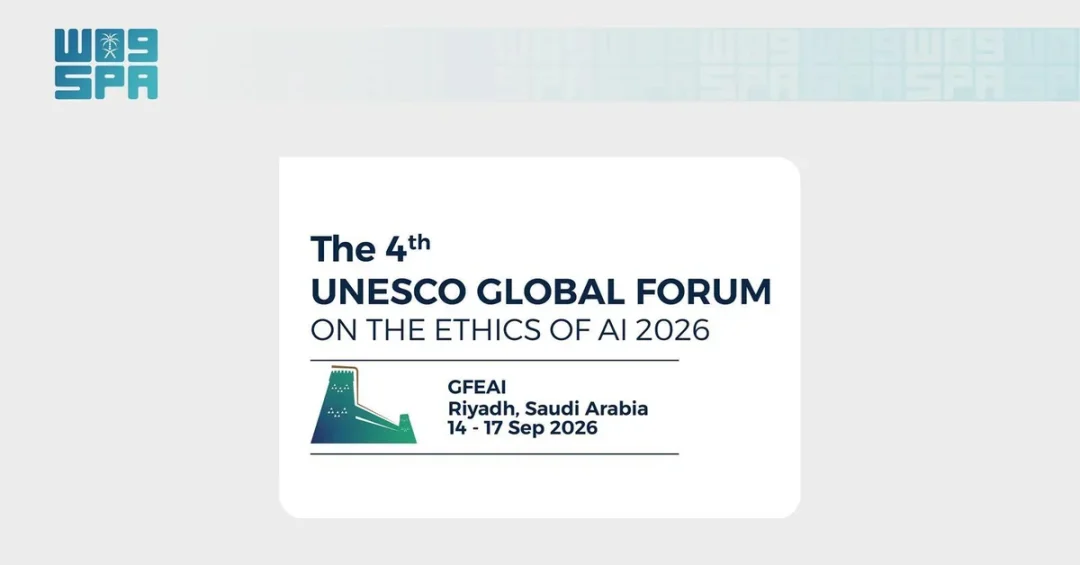
Riyadh, September 4, 2026 — A total of 194 countries are awaiting the outcomes of the fourth UNESCO Global Forum on the Ethics of AI, which Saudi Arabia will host in Riyadh from September 14 to 17, 2026, according to the Saudi Press Agency (SPA). The forum will bring together ministers, experts, and decision-makers from around the world to discuss key issues related to AI governance, the application of ethical principles, and ways to strengthen international cooperation to develop regulatory frameworks that promote the responsible and safe use of AI and protect human rights in the digital world.
Context and Background
The UNESCO Global Forum on the Ethics of AI is a leading international platform dedicated to advancing the ethical governance of artificial intelligence. The upcoming fourth edition marks the first time the forum is being hosted in the Arab world, underscoring Saudi Arabia’s growing role in global AI discussions. The event is organized by the Saudi Data and AI Authority (SDAIA) in partnership with UNESCO, in cooperation with the International Center for AI Research and Ethics (ICAIRE), and in coordination with the Saudi National Commission for Education, Culture and Science.
Since the adoption of UNESCO’s Recommendation on the Ethics of Artificial Intelligence in 2021, member states have been working to translate its principles into effective policies and practices. The Riyadh forum will assess progress made and address the institutional, financial, and technical challenges associated with implementing ethical AI frameworks.
Key Details
The forum will feature more than 100 speakers across over 30 sessions and workshops, focusing on critical areas such as financing for AI governance, institutional capacity building, and enhancing accountability in the use of AI technologies in government services. A central highlight will be the Readiness Assessment Methodology (RAM), a tool designed to help countries assess their preparedness to adopt AI responsibly, identify opportunities and challenges, and develop necessary institutional and regulatory frameworks.
Discussions will also explore ways to enhance the participation of countries and regions in shaping international frameworks and standards related to AI ethics. SDAIA has invited interested individuals and specialists from around the world to register through the forum’s official website to view the program, featured speakers, and the latest updates. Registration is available at: https://registration-gfeai.icaire.org/en/join.
Implications and Impact
Saudi Arabia’s hosting of this global forum reflects its commitment to supporting international efforts to promote the responsible and ethical use of AI and to contribute to developing governance frameworks that maximize the benefits of AI technologies for people and societies. The event also advances the Sustainable Development Goals by fostering inclusive and equitable AI development.
The participation of 194 countries signals broad international recognition of the need for coordinated AI governance. The outcomes of the forum are expected to influence global standards and practices, particularly in areas such as human rights protection, transparency, and accountability in AI deployment. For Saudi Arabia, hosting the forum reinforces its position as a leader in AI ethics and governance, aligning with its broader efforts to diversify its economy and society through technology and innovation.
Vision 2030 Alignment
The forum comes amid the Kingdom’s remarkable progress in data and AI in pursuit of the objectives of Saudi Vision 2030. Vision 2030 aims to transform Saudi Arabia into a diversified, innovation-driven economy, with AI and digital technologies playing a pivotal role. By hosting the UNESCO Global Forum on the Ethics of AI, Saudi Arabia demonstrates its commitment to shaping a future where AI benefits all of humanity, while advancing its own strategic priorities in technology, education, and sustainable development.
20 Questions
Q1. What is the UNESCO Global Forum on the Ethics of AI?
A1. The UNESCO Global Forum on the Ethics of AI is an international platform that brings together governments, experts, and stakeholders to discuss and advance the ethical governance of artificial intelligence, promoting responsible and safe use of AI technologies worldwide.
Q2. When and where will the fourth forum take place?
A2. The fourth UNESCO Global Forum on the Ethics of AI will be held in Riyadh, Saudi Arabia, from September 14 to 17, 2026. It is the first time the forum is hosted in the Arab world.
Q3. How many countries are anticipated to participate?
A3. A total of 194 countries worldwide are awaiting the outcomes of the discussions at the fourth UNESCO Global Forum on the Ethics of AI, reflecting broad international engagement in AI governance.
Q4. Who is organizing the forum?
A4. The forum is organized by the Saudi Data and AI Authority (SDAIA) in partnership with UNESCO, in cooperation with the International Center for AI Research and Ethics (ICAIRE), and in coordination with the Saudi National Commission for Education, Culture and Science.
Q5. What is the Readiness Assessment Methodology (RAM)?
A5. The Readiness Assessment Methodology (RAM) is a tool that helps countries assess their preparedness to adopt AI responsibly. It identifies opportunities and challenges and supports the development of necessary institutional and regulatory frameworks.
Q6. What key issues will be discussed at the forum?
A6. Discussions will cover AI governance, application of ethical principles, international cooperation, financing for AI governance, institutional capacity building, accountability in government services, and progress on UNESCO’s Recommendation on the Ethics of AI.
Q7. When was UNESCO’s Recommendation on the Ethics of AI adopted?
A7. UNESCO’s Recommendation on the Ethics of Artificial Intelligence was adopted in 2021. The forum will review progress made by member states in implementing its principles since then.
Q8. How many speakers and sessions are planned?
A8. The forum will feature more than 100 speakers across over 30 sessions and workshops, covering various aspects of AI ethics, governance, and capacity building.
Q9. What is the significance of Saudi Arabia hosting this forum?
A9. Saudi Arabia’s hosting reflects its role in supporting international efforts to promote responsible and ethical AI use, and contributes to developing governance frameworks that maximize AI benefits for people and societies.
Q10. How does the forum align with Saudi Vision 2030?
A10. The forum aligns with Saudi Vision 2030 by advancing the Kingdom’s progress in data and AI, supporting economic diversification, and promoting innovation and sustainable development in line with Vision 2030 objectives.
Q11. What is SDAIA’s role in the forum?
A11. The Saudi Data and AI Authority (SDAIA) is the primary organizer of the forum, leading preparations and coordinating with international partners to ensure a successful event that advances AI ethics globally.
Q12. How can interested individuals register for the forum?
A12. Interested individuals and specialists can register through the forum’s official website at https://registration-gfeai.icaire.org/en/join to view the program, speakers, and latest updates.
Q13. What are the expected outcomes of the forum?
A13. The forum is expected to produce recommendations and frameworks that enhance international cooperation on AI ethics, promote responsible AI use, and strengthen accountability and human rights protections in the digital world.
Q14. What challenges will the forum address?
A14. The forum will address institutional, financial, and technical challenges associated with translating ethical AI principles into effective policies and practices, including financing and capacity building.
Q15. How does the forum promote international cooperation?
A15. By bringing together 194 countries, the forum facilitates dialogue and collaboration on AI governance, helping to align regulatory approaches and share best practices for responsible AI development.
Q16. What is the role of UNESCO in the forum?
A16. UNESCO partners with SDAIA to organize the forum, providing global expertise and guidance on AI ethics, and supporting the implementation of its Recommendation on the Ethics of AI.
Q17. What is ICAIRE’s involvement?
A17. The International Center for AI Research and Ethics (ICAIRE) cooperates in organizing the forum, contributing research and ethical expertise to support discussions and outcomes.
Q18. How does the forum support the Sustainable Development Goals?
A18. The forum advances the Sustainable Development Goals by promoting inclusive and equitable AI development, ensuring that AI technologies benefit all societies and support global development objectives.
Q19. What is the Saudi National Commission’s role?
A19. The Saudi National Commission for Education, Culture and Science coordinates with SDAIA and partners to facilitate the forum’s alignment with national and international educational, cultural, and scientific priorities.
Q20. Why is AI ethics important for global governance?
A20. AI ethics is crucial for ensuring that AI technologies are developed and used responsibly, protecting human rights, fostering trust, and maximizing benefits while mitigating risks in an increasingly digital world.
Reader Feedback
We value your thoughts. Please share your feedback on this article.
Your feedback helps us improve our coverage.
Related articles
 Saudi Skies Witness Last Quarter Moon of Rabi Al-Awwal
 Estidamah Reports Breakthrough in Irrigation Efficiency for D
 Saudi Arabia Secures $17.5B Tech Investments at LEAP 2026
 LEAP 2026 Visitors Praise Saudi Arabia’s Space Progress
 Imam University Receives Digital Excellence Certificate at LEAP 2026
 Takamol Holding Signs 34 Agreements at LEAP 2026