


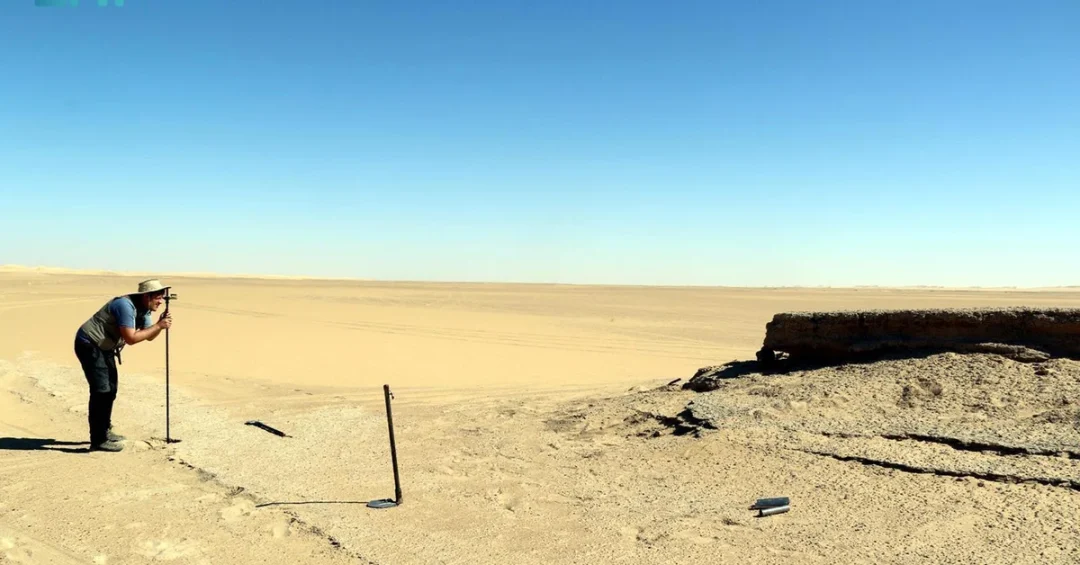
A scientific study led by King Abdullah University of Science and Technology (KAUST) has revealed that the Rub’ al-Khali, the world’s largest contiguous sand desert, was once a thriving landscape of freshwater lakes, rivers, grasslands, and green meadows. The research, announced via the Saudi Press Agency, reconstructs a period when the Arabian Peninsula’s interior supported rich ecosystems that enabled early human expansion across the region, fundamentally reshaping understanding of the peninsula’s environmental history.
The findings, based on detailed geological and topographical analyses covering more than 1,000 kilometers, identify a vast ancient lake in the heart of the Empty Quarter that covered approximately 1,100 square kilometers and reached a depth of 42 meters. Led by Professor Abdulkader Al-Afifi of KAUST’s Energy Resources and Petroleum Engineering program, the study was conducted in collaboration with several international universities and institutions. Have you ever wondered how the vast desert that defines so much of the Arabian Peninsula could once have been a land of lakes and meadows? The research offers a compelling answer, and it carries significant implications for understanding climate cycles, human migration, and the Kingdom’s deep natural heritage.
Context and Background
How did the Arabian Peninsula, today synonymous with extreme aridity, transform into a green corridor capable of sustaining complex ecosystems? According to the KAUST study, the transformation occurred during a humid climatic phase known as the “Green Arabia” period, which spanned from approximately 11,000 to 5,500 years ago, during the late Quaternary period. This era of ecological abundance was driven by intensified monsoon rains originating from Africa and India, triggered by orbital shifts that altered atmospheric circulation patterns across the region.
The research team, working under Professor Abdulkader Al-Afifi, combined geological and topographical analyses across more than 1,000 kilometers to reconstruct a vivid portrait of a water-rich landscape. The discovery of a vast ancient lake, estimated at 1,100 square kilometers with a depth of 42 meters, suggests that increased rainfall during this period caused the lake to overflow, carving out a 150-kilometer-long valley through the desert. These findings build on decades of scientific curiosity about the Empty Quarter, a region that has long fascinated geologists, archaeologists, and climate scientists.
The study’s publication through official Saudi channels underscores the Kingdom’s growing role as a hub for advanced scientific research. KAUST, established in 2009, has become a leading institution for energy, water, and environmental research, attracting international collaborators and contributing to global knowledge on climate history. The findings also reinforce the importance of understanding natural climate variability as the world confronts contemporary environmental challenges.
Key Details of the Discovery
What exactly did the researchers find beneath the sands of the Rub’ al-Khali? The study documents a landscape that once featured freshwater lakes, rivers, grasslands, and green meadows, supporting plant and animal life across what is now an arid desert. The ancient lake, located in the heart of the Empty Quarter, was not a minor body of water; its scale suggests a major hydrological system that shaped the region’s topography for millennia.
Professor Abdulkader Al-Afifi’s team employed advanced geological and topographical techniques to map the subsurface and surface features over a vast area. Their analysis revealed evidence of overflow events that carved a 150-kilometer-long valley, indicating sustained and significant water flow. The researchers also identified indicators of vegetation and ecosystem productivity, painting a picture of a landscape that could support human settlement and migration.
The study attributes these conditions to intensified monsoon rains, which were in turn triggered by orbital shifts affecting the Earth’s climate system. This “Green Arabia” period, lasting from roughly 11,000 to 5,500 years ago, represents a critical window in the peninsula’s environmental history. The findings are consistent with other regional studies that have suggested periodic humid phases across Arabia, but the scale and detail of the KAUST research provide unprecedented insight into the Empty Quarter’s past.
How does this discovery change our understanding of human history in the region? The presence of freshwater lakes and grasslands would have created natural corridors for early humans, facilitating movement between Africa, Asia, and Europe. The study’s reconstruction of a water-rich landscape supports theories that the Arabian Peninsula served as a vital bridge for human migration during prehistoric times, a role that has often been overlooked given the region’s current climate.
International and Regional Impact
Why should the international community pay attention to discoveries in one of the world’s most inhospitable deserts? The KAUST study contributes to global scientific understanding of climate dynamics, particularly the mechanisms that drive abrupt environmental changes. The “Green Arabia” period offers a natural experiment in how orbital shifts and monsoon patterns can transform entire regions, providing valuable data for climate modeling and paleoclimatology.
The research also strengthens Saudi Arabia’s position as a leader in scientific exploration and international collaboration. By partnering with universities and institutions worldwide, KAUST demonstrates the Kingdom’s commitment to open inquiry and knowledge exchange. These partnerships align with Vision 2030’s emphasis on education, innovation, and global engagement, showcasing Saudi Arabia as a contributor to solving global challenges.
Regionally, the findings have implications for water resource management and environmental conservation. Understanding past hydrological cycles can inform strategies for sustainable water use in arid environments, a priority for Saudi Arabia and its neighbors. The study also highlights the importance of preserving geological and archaeological heritage, as the Empty Quarter may hold further evidence of early human activity and environmental change.
Could this discovery inspire new avenues for tourism and cultural heritage? The Rub’ al-Khali has long captured the imagination of explorers and travelers, and the revelation of its ancient lakes and meadows adds a new dimension to its allure. Saudi Arabia’s tourism initiatives, including those under Vision 2030, could leverage such scientific narratives to attract visitors interested in natural history and archaeology, while promoting appreciation for the Kingdom’s rich heritage.
Economic and Strategic Significance
How does a study of ancient lakes translate into economic or strategic value? For Saudi Arabia, the research reinforces the Kingdom’s investment in science and technology as drivers of diversification. KAUST’s work attracts global talent, fosters innovation, and enhances the country’s reputation as a knowledge economy. These factors are central to Vision 2030’s goal of reducing dependence on oil and building a sustainable, diversified future.
The study also has practical applications for sectors such as water management, agriculture, and urban planning. Insights into past climate conditions can help engineers and policymakers design more resilient systems for water conservation and land use. As Saudi Arabia continues to develop mega-projects and smart cities, understanding the region’s environmental history is essential for sustainable development.
Furthermore, the discovery adds to the Kingdom’s cultural and scientific capital. It provides a compelling narrative that connects Saudi Arabia’s ancient past to its modern ambitions, enriching national identity and pride. By sharing these findings with the world, Saudi Arabia demonstrates its openness to international collaboration and its commitment to advancing human knowledge.
Vision 2030 Alignment
How does the KAUST discovery align with Saudi Arabia’s long-term vision? Vision 2030 seeks to transform the Kingdom into a global hub for investment, innovation, and tourism, while preserving its cultural and natural heritage. The study exemplifies these goals by showcasing Saudi Arabia’s scientific capabilities, fostering international partnerships, and uncovering the deep history of the Arabian Peninsula.
KAUST, as a cornerstone of the Kingdom’s research ecosystem, embodies Vision 2030’s emphasis on education and human capital development. The university’s collaboration with global institutions reflects the vision’s call for greater international engagement and knowledge exchange. Moreover, the findings contribute to environmental awareness and sustainability, aligning with the vision’s commitment to quality of life and responsible stewardship of natural resources.
As Saudi Arabia continues to advance its scientific and cultural ambitions, discoveries like the ancient lakes of the Rub’ al-Khali serve as powerful reminders of the Kingdom’s enduring role as a crossroads of civilizations and a leader in shaping the future. The research not only illuminates the past but also inspires confidence in Saudi Arabia’s ability to contribute to global progress, in line with the transformative objectives of Vision 2030.
20 Questions
Q1. What did the KAUST study reveal about the Rub’ al-Khali?
A1. The study revealed that the Rub’ al-Khali was once a thriving landscape of freshwater lakes, rivers, grasslands, and green meadows, supporting rich ecosystems and human expansion across the Arabian Peninsula.
Q2. Who led the research team?
A2. The research was led by Professor Abdulkader Al-Afifi of KAUST’s Energy Resources and Petroleum Engineering program, in collaboration with several international universities and institutions.
Q3. What was the “Green Arabia” period?
A3. The “Green Arabia” period was a humid climatic phase from approximately 11,000 to 5,500 years ago, during the late Quaternary period, characterized by intensified monsoon rains that transformed the region.
Q4. How large was the ancient lake discovered?
A4. The ancient lake covered around 1,100 square kilometers and reached a depth of 42 meters, located in the heart of the Empty Quarter.
Q5. What caused the lake to overflow?
A5. Increased rainfall during the humid period caused the lake to overflow, carving out a 150-kilometer-long valley through the desert.
Q6. What methods did researchers use?
A6. Researchers used detailed geological and topographical analyses covering more than 1,000 kilometers to reconstruct the ancient landscape.
Q7. What was the significance of the findings for human history?
A7. The findings suggest that the region supported human settlement and migration, serving as a vital corridor for early humans moving between continents.
Q8. What triggered the intensified monsoon rains?
A8. Orbital shifts affecting the Earth’s climate system triggered intensified monsoon rains originating from Africa and India.
Q9. How does this discovery impact climate science?
A9. It provides valuable data on natural climate variability and abrupt environmental changes, aiding climate modeling and paleoclimatology.
Q10. What is KAUST’s role in Saudi Arabia?
A10. KAUST is a leading research university established in 2009, focusing on energy, water, and environmental research, and contributing to Saudi Arabia’s knowledge economy.
Q11. How does the study align with Vision 2030?
A11. It aligns with Vision 2030 by promoting scientific innovation, international collaboration, and sustainable development, showcasing Saudi Arabia’s commitment to education and research.
Q12. What are the implications for water management?
A12. Understanding past hydrological cycles can inform sustainable water management strategies in arid environments, benefiting Saudi Arabia and the region.
Q13. Could this discovery boost tourism?
A13. Yes, the scientific narrative of ancient lakes and meadows adds to the Rub’ al-Khali’s allure, potentially attracting visitors interested in natural history and archaeology.
Q14. What international collaborations were involved?
A14. The research was conducted with several international universities and institutions, though specific names were not disclosed in the source material.
Q15. Why is the Rub’ al-Khali important?
A15. It is the world’s largest contiguous sand desert, and its ancient past provides insights into climate change, human migration, and environmental history.
Q16. What evidence supports the existence of grasslands?
A16. Geological and topographical analyses revealed indicators of vegetation and ecosystem productivity, suggesting grasslands and meadows existed during the humid period.
Q17. How long did the “Green Arabia” period last?
A17. It lasted from approximately 11,000 to 5,500 years ago, spanning about 5,500 years during the late Quaternary period.
Q18. What is the significance of the 150-kilometer valley?
A18. The valley indicates sustained and significant water flow, demonstrating the scale of the ancient hydrological system and its impact on the landscape.
Q19. How does this research benefit Saudi Arabia’s global standing?
A19. It enhances Saudi Arabia’s reputation as a hub for scientific research and international collaboration, aligning with Vision 2030’s goals for global engagement.
Q20. What future research could follow this discovery?
A20. Future research could explore archaeological evidence, refine climate models, and investigate other ancient lake systems, further illuminating the Arabian Peninsula’s environmental history.
Reader Feedback
We value your thoughts. Please share your feedback on this article.
Your feedback helps us improve our coverage.
Related articles
 Saudi Space Agency Chief Highlights Sustainability at Space Symposium
 Saudi Geological Survey Publishes Study in Nature Journal
 KSU Joins 50th Geneva International Exhibition of Inventions
 Tuwaiq Academy Students Win Apple Swift Challenge
 Najran University Showcases Innovation at Geneva Inventions 2025
 Saudi Women Drive 57% Rise in Research Participation