


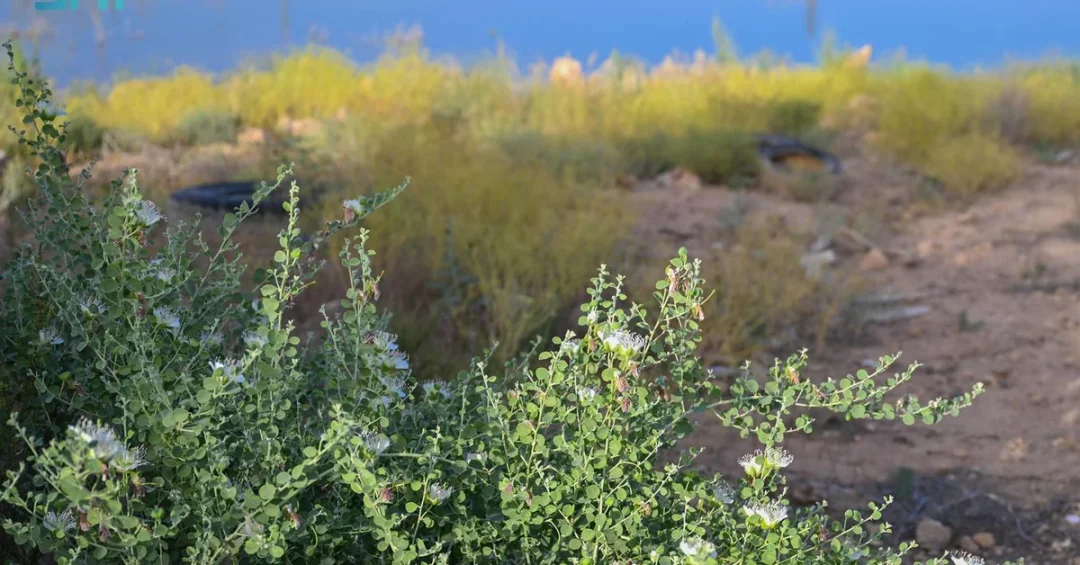
The caper bush, scientifically known as Capparis spinosa and locally referred to as Flinders rose, is thriving across Saudi Arabia’s Northern Borders region, according to a report from the Saudi Press Agency (SPA). This resilient perennial shrub, celebrated for its striking white blossoms, evergreen foliage, and edible fruits, demonstrates remarkable adaptability to the Kingdom’s arid climate, requiring minimal water and withstanding high temperatures. Its presence marks a positive sign for ecological balance and sustainable land use in the area.
Context and Background
The Northern Borders region, characterized by its desert landscape and harsh weather conditions, has long posed challenges for vegetation. Yet the caper bush has emerged as a natural champion, its intricate root system effectively stabilizing the soil and curbing erosion and desertification. Beyond its structural benefits, the plant’s nectar-rich flowers attract essential pollinators such as bees, enriching the local ecosystem and supporting biodiversity in a region where every living organism counts.
This botanical success is not merely an environmental curiosity; it aligns with Saudi Arabia’s broader Vision 2030 goals of environmental sustainability and economic diversification. As the Kingdom invests in green initiatives, including the Saudi Green Initiative and the planting of millions of trees, the caper bush stands out as a native species that can thrive with minimal intervention, offering a practical solution for reforestation and land rehabilitation projects across the desert.
Key Details
The caper bush produces edible pear-shaped fruits that are widely used in culinary traditions across the Middle East and Mediterranean. With over 140 known varieties, the plant offers significant economic potential. These fruits are often pickled or used as flavoring agents, and the plant’s buds, known as capers, are a prized delicacy in international cuisine. The cultivation and harvesting of caper bushes could open new avenues for agribusiness in Saudi Arabia, providing income opportunities for local farmers and contributing to the nation’s food security.
According to the SPA report, the caper bush’s minimal water requirements make it an ideal crop for arid regions, reducing the strain on already scarce water resources. Its deep root system not only prevents soil degradation but also improves soil structure over time, enhancing the land’s ability to retain moisture and nutrients. This dual benefit of ecological restoration and agricultural viability positions the caper bush as a cornerstone for sustainable development in the Northern Borders.
Implications and Impact
The flourishing of caper bushes in the Northern Borders has far-reaching implications. Environmentally, it demonstrates the potential for native flora to combat desertification, a critical concern in Saudi Arabia and the wider Gulf region. By stabilizing soil and promoting pollinator populations, the plant contributes to a healthier, more resilient ecosystem. This supports the Kingdom’s international commitments to biodiversity conservation and its leadership in environmental stewardship.
Economically, the caper bush could stimulate rural development, creating jobs in harvesting, processing, and marketing of caper products. As global demand for natural and organic foods rises, Saudi Arabia could position itself as a reliable supplier of high-quality capers, leveraging its unique desert terroir. Moreover, the plant’s low input requirements make it accessible to smallholder farmers, fostering inclusive growth in line with Vision 2030’s goal to empower local communities and diversify the economy beyond oil.
Vision 2030 Alignment
The success of the caper bush in the Northern Borders is a microcosm of Saudi Arabia’s broader transformation. Under Vision 2030, the Kingdom is actively pursuing sustainable agriculture, environmental conservation, and economic diversification. The caper bush exemplifies how native species can be harnessed to achieve these objectives, from restoring degraded lands to creating new value chains. As Saudi Arabia continues to invest in research and innovation, the caper bush serves as a beacon of hope, demonstrating that even the harshest environments can yield abundance when nature and strategy align. This botanical resilience mirrors the nation’s own trajectory—rooted in tradition, yet blooming with potential for a prosperous, sustainable future.
20 Questions
Q1. What is the caper bush?
A1. The caper bush, scientifically known as Capparis spinosa, is a perennial shrub native to arid and semi-arid regions. It features white flowers, evergreen leaves, and edible fruits, and is well-adapted to desert conditions.
Q2. Where is the caper bush thriving in Saudi Arabia?
A2. The caper bush is flourishing in the Northern Borders region of Saudi Arabia, as reported by the Saudi Press Agency on May 28, 2024.
Q3. Why is the caper bush suitable for desert climates?
A3. The caper bush requires minimal water and can withstand high temperatures, making it ideal for arid environments. Its deep root system also helps it access underground moisture.
Q4. What are the ecological benefits of the caper bush?
A4. The caper bush stabilizes soil, preventing erosion and desertification. Its flowers attract pollinators like bees, enhancing biodiversity and supporting the local ecosystem.
Q5. How many varieties of caper bush exist?
A5. There are over 140 known varieties of the caper bush, each with unique characteristics but all sharing the plant’s resilience and edible fruit.
Q6. What part of the caper bush is edible?
A6. The plant produces edible pear-shaped fruits, which are used in culinary dishes. Additionally, the flower buds, known as capers, are pickled and used as a flavoring.
Q7. How does the caper bush contribute to food security?
A7. By providing an edible crop that thrives with minimal water, the caper bush offers a sustainable food source, helping to diversify agricultural output and reduce reliance on imported goods.
Q8. What is the economic potential of the caper bush?
A8. The cultivation and harvesting of caper bushes can create income for farmers and open new markets for export, contributing to Saudi Arabia’s economic diversification goals.
Q9. How does the caper bush help prevent desertification?
A9. Its intricate root system binds the soil, reducing erosion and stabilizing the ground, which is crucial in arid regions prone to desertification.
Q10. Are capers popular in international cuisine?
A10. Yes, capers are widely used in Mediterranean and Middle Eastern dishes, valued for their tangy flavor. They are a staple in many gourmet recipes, boosting export potential.
Q11. What role do pollinators play in caper bush growth?
A11. Pollinators like bees are attracted to the nectar-rich flowers, facilitating pollination. This process is essential for fruit production and also supports the broader ecosystem.
Q12. Does the caper bush require special care?
A12. No, the caper bush is low-maintenance, needing minimal water and thriving in poor soils. This makes it an accessible crop for farmers in arid regions.
Q13. How does the caper bush align with Vision 2030?
A13. The caper bush supports Vision 2030’s goals of environmental sustainability, food security, and economic diversification, aligning with initiatives like the Saudi Green Initiative.
Q14. What is the significance of the caper bush’s root system?
A14. The root system anchors the plant, prevents soil erosion, and improves soil structure, enhancing the land’s ability to retain water and nutrients over time.
Q15. Can the caper bush be used in reforestation projects?
A15. Absolutely. Due to its hardiness and soil-stabilizing properties, the caper bush is an excellent candidate for reforestation and land rehabilitation in desert areas.
Q16. What is the local name for the caper bush in Saudi Arabia?
A16. It is locally referred to as Flinders rose, though its scientific name is Capparis spinosa. This name reflects its distinctive appearance and regional familiarity.
Q17. How does the caper bush benefit local wildlife?
A17. By attracting pollinators and providing shelter, the caper bush creates a habitat for insects and small animals, thereby enhancing biodiversity in the Northern Borders.
Q18. Is the caper bush drought-resistant?
A18. Yes, it is highly drought-resistant, requiring minimal irrigation. This characteristic makes it a sustainable choice for water-scarce regions like Saudi Arabia.
Q19. What are the future prospects for caper cultivation in Saudi Arabia?
A19. With growing interest in sustainable agriculture, caper cultivation is likely to expand, offering new economic opportunities and contributing to the Kingdom’s agricultural sector.
Q20. How can the caper bush support rural development?
A20. By providing a low-cost, high-yield crop, the caper bush can generate employment and income in rural communities, empowering locals and fostering inclusive growth under Vision 2030.
Reader Feedback
We value your thoughts. Please share your feedback on this article.
Your feedback helps us improve our coverage.