


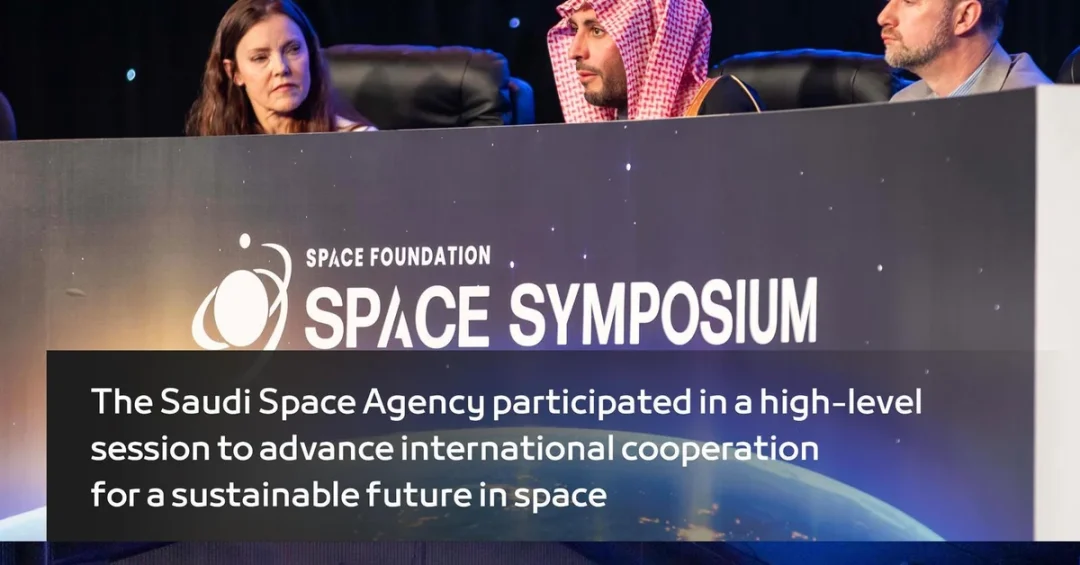
Dr. Mohammed bin Saud Al-Tamimi, Chief Executive Officer of the Saudi Space Agency, presented the Kingdom’s pioneering vision for sustainable space practices during a high-level strategic panel at the 40th annual Space Symposium in Colorado Springs, Colorado, on April 10, 2025. The panel, titled “Sustainability: Practices and Responsibilities for the Future of Space,” convened heads of space agencies, senior government leaders, decision-makers, and experts from specialized space organizations worldwide to address one of the most pressing challenges facing the global space community today.
Dr. Al-Tamimi used the international platform to outline Saudi Arabia’s comprehensive approach to space sustainability, emphasizing the Kingdom’s commitment to innovation, advanced technology adoption, and international cooperation. His participation underscores Saudi Arabia’s rapidly expanding role in shaping global space governance and reflects the Kingdom’s broader ambitions under Saudi Vision 2030 to diversify its economy and establish itself as a leader in emerging high-technology sectors. The symposium, which brings together the world’s foremost space agencies and industry stakeholders, provided an ideal venue for Saudi Arabia to showcase its growing capabilities and commitment to responsible space stewardship.
Context and Background
Why has space sustainability become such a critical priority for the international community at this particular moment in history? The answer lies in the dramatic acceleration of space activity over the past decade. With thousands of satellites now orbiting Earth and launch rates increasing annually, the orbital environment faces unprecedented challenges from congestion, debris accumulation, and resource competition. The 40th Space Symposium, held annually in Colorado Springs, serves as the premier gathering for the global space community, bringing together more than 10,000 participants from government agencies, private industry, and academic institutions across dozens of countries.
The Saudi Space Agency, established in 2018 as part of the Kingdom’s strategic push into advanced technologies, has rapidly emerged as a significant voice in international space discussions. Under Dr. Al-Tamimi’s leadership, the agency has prioritized sustainability as a core principle guiding its activities, recognizing that long-term space development depends on responsible practices that preserve orbital resources for future generations. The Kingdom’s participation in this year’s symposium builds upon previous engagements at international space forums, where Saudi representatives have consistently advocated for collaborative approaches to space governance.
Saudi Arabia’s space ambitions are deeply intertwined with its broader economic transformation strategy. The Kingdom has invested substantially in space-related research, technology development, and educational programs, recognizing that space capabilities contribute not only to scientific advancement but also to economic diversification, national security, and international prestige. By engaging actively in global conversations about sustainability, Saudi Arabia positions itself as a responsible stakeholder committed to the long-term health of the space environment that benefits all nations.
Key Details from the Strategic Panel
What specific initiatives did Dr. Al-Tamimi highlight during his presentation to the distinguished international audience? The Saudi Space Agency Chief Executive detailed a comprehensive portfolio of programs designed to advance sustainability in space operations. He reviewed the agency’s initiatives supporting scientific research, including partnerships with Saudi universities and research institutions focused on developing technologies that minimize space debris, improve satellite longevity, and enhance the efficiency of orbital operations. These programs reflect the Kingdom’s commitment to ensuring that its space activities contribute positively to the global commons.
Dr. Al-Tamimi also discussed current challenges facing the space sector, including the growing risk of collisions between satellites and debris, the need for improved space traffic management systems, and the importance of establishing clear international norms for responsible behavior in orbit. He presented possible solutions that emphasize technological innovation, regulatory cooperation, and capacity building among emerging space nations. His remarks resonated with panel participants who share concerns about the long-term viability of space operations if current trends continue unchecked.
The panel brought together a diverse group of space agency heads and industry leaders, creating opportunities for bilateral discussions and potential collaborations. Dr. Al-Tamimi emphasized that sustainability challenges transcend national boundaries and require coordinated international responses. He highlighted Saudi Arabia’s willingness to share expertise, participate in joint research initiatives, and contribute to the development of international standards that promote responsible space practices. This collaborative approach aligns with the Kingdom’s broader foreign policy objectives of fostering partnerships and contributing to global stability.
International and Regional Impact
How does Saudi Arabia’s active engagement in space sustainability discussions influence its standing among established and emerging spacefaring nations? The Kingdom’s participation at the highest levels of the Space Symposium signals its emergence as a credible and constructive partner in space affairs. By articulating a clear vision for sustainable space practices and backing that vision with concrete initiatives, Saudi Arabia distinguishes itself from nations that merely observe international discussions without contributing meaningfully to solutions. This active posture enhances the Kingdom’s diplomatic influence and opens doors to partnerships with established space powers.
Regionally, Saudi Arabia’s leadership in space sustainability positions the Kingdom as a role model for other Middle Eastern nations considering space programs. The Kingdom’s approach demonstrates that emerging space nations can contribute to international discussions while simultaneously building domestic capabilities. This leadership role aligns with Saudi Arabia’s broader regional objectives of promoting stability, encouraging technological advancement, and demonstrating the benefits of Vision 2030 reforms to neighboring countries and the wider international community.
The symposium also provided opportunities for Saudi representatives to engage with counterparts from leading space agencies, including NASA, the European Space Agency, and counterparts from Asia and the Middle East. These interactions build relationships that facilitate future cooperation on sustainability initiatives, joint research projects, and technology exchange programs. Such partnerships accelerate Saudi Arabia’s space development while contributing to global efforts to ensure the long-term sustainability of space activities for all nations.
Economic and Strategic Significance
What economic and strategic benefits does Saudi Arabia’s leadership in space sustainability generate for the Kingdom and its partners? The space sector represents a rapidly growing component of the global economy, with revenues exceeding $400 billion annually and projections suggesting continued expansion. By establishing itself as a leader in sustainable space practices, Saudi Arabia positions its companies and research institutions to capture opportunities in this growing market. The Kingdom’s investments in space technology development create high-skilled jobs, foster innovation, and contribute to the economic diversification goals at the heart of Vision 2030.
Strategic considerations also drive Saudi Arabia’s space ambitions. Space-based capabilities support critical national functions including communications, navigation, Earth observation, and national security. By developing indigenous capabilities and participating in international sustainability initiatives, the Kingdom reduces dependence on external providers while ensuring that its space assets operate in a stable and predictable orbital environment. The sustainability focus ensures that these strategic assets remain viable for decades to come, protecting Saudi investments and enabling long-term planning.
The Saudi Space Agency’s emphasis on sustainability also supports the Kingdom’s broader environmental objectives. Space-based Earth observation systems contribute to monitoring climate change, managing natural resources, and supporting sustainable development. By advancing space sustainability, Saudi Arabia reinforces its commitment to environmental stewardship and responsible resource management, principles that resonate with international partners and align with global sustainability goals.
Vision 2030 Alignment
How does Saudi Arabia’s leadership in space sustainability exemplify the transformative ambitions of Vision 2030? The Kingdom’s space program represents one of the most visible manifestations of the economic diversification and technological advancement goals that define the Vision 2030 framework. By investing in space capabilities, Saudi Arabia is building the knowledge economy that Crown Prince Mohammed bin Salman has identified as essential to the Kingdom’s future prosperity. The Saudi Space Agency serves as a key entity in this ecosystem, fostering innovation, supporting scientific research, and advancing space technologies that create economic opportunities for Saudi citizens.
The sustainability focus of Saudi Arabia’s space activities reflects the Vision 2030 commitment to responsible development and long-term thinking. Just as the Kingdom is diversifying its economy away from oil dependence, it is also ensuring that its space activities are conducted in ways that preserve resources for future generations. This forward-looking approach characterizes Saudi Arabia’s broader development strategy and demonstrates the Kingdom’s emergence as a responsible global leader committed to addressing shared challenges through innovation, cooperation, and sustainable practices.
As the 40th Space Symposium concluded, Dr. Al-Tamimi’s participation underscored Saudi Arabia’s determination to shape the future of space exploration and utilization in partnership with the international community. The Kingdom’s message was clear: sustainable space practices are not optional but essential, and Saudi Arabia is prepared to lead by example. Through continued investment, international cooperation, and unwavering commitment to responsible practices, the Kingdom is building a space program that serves not only its national interests but also the broader goal of ensuring that space remains accessible and beneficial for all humanity.
20 Questions
Q1. What event did the Saudi Space Agency Chief Executive participate in?
A1. Dr. Mohammed bin Saud Al-Tamimi participated in a high-level strategic panel at the 40th annual Space Symposium held in Colorado Springs, Colorado, on April 10, 2025.
Q2. What was the title of the panel Dr. Al-Tamimi joined?
A2. The panel was titled “Sustainability: Practices and Responsibilities for the Future of Space,” focusing on strengthening sustainability in the space sector and preserving space resources for future generations.
Q3. Who participated in the strategic panel alongside Dr. Al-Tamimi?
A3. The panel brought together heads of space agencies, senior leaders, decision-makers, experts, and representatives from specialized space organizations from around the world.
Q4. What key topics did Dr. Al-Tamimi address during the panel?
A4. He discussed current challenges facing the space sector, reviewed possible solutions to promote sustainable practices, and highlighted the Kingdom’s role in adopting innovation and advanced technologies.
Q5. What initiatives did the Saudi Space Agency Chief highlight?
A5. He reviewed the agency’s initiatives including supporting scientific research and developing technologies that ensure long-term sustainability in space operations and responsible practices.
Q6. What does Saudi Arabia’s participation in the symposium reflect?
A6. The participation reflects the Kingdom’s efforts to enhance its global standing in the space sector and contribute to shaping international standards that promote sustainability in this vital field.
Q7. What is the role of the Saudi Space Agency in the Kingdom?
A7. The Saudi Space Agency serves as a key entity in the Kingdom’s space development ecosystem, working to foster innovation, support scientific research, and advance space technologies.
Q8. How does the Saudi Space Agency align with Vision 2030?
A8. The agency’s work aligns with Saudi Vision 2030 goals by fostering innovation, supporting scientific research, and advancing space technologies that contribute to economic diversification and technological advancement.
Q9. Where was the 40th annual Space Symposium held?
A9. The 40th annual Space Symposium was held in Colorado Springs, Colorado, bringing together the global space community for discussions on key industry topics.
Q10. What is the significance of space sustainability according to the panel?
A10. Space sustainability ensures continued development through responsible practices that preserve space resources for future generations and maintain the long-term viability of space operations.
Q11. What challenges facing the space sector did Dr. Al-Tamimi discuss?
A11. He discussed current challenges facing the sector and reviewed possible solutions to promote sustainable practices in space activities, emphasizing international cooperation.
Q12. How does Saudi Arabia demonstrate commitment to international cooperation in space?
A12. Saudi Arabia demonstrates commitment through active participation in international forums, sharing expertise, and supporting collaborative efforts to promote space sustainability and responsible practices.
Q13. What technologies does the Saudi Space Agency focus on developing?
A13. The agency focuses on developing technologies that ensure long-term sustainability in space operations, supporting scientific research and advancing innovation in the space sector.
Q14. What is the Saudi Space Agency’s vision for the future of space?
A14. The agency envisions a sustainable space environment where responsible practices, international cooperation, and technological innovation preserve space resources for future generations.
Q15. How does the symposium benefit Saudi Arabia’s space ambitions?
A15. The symposium provides a platform for Saudi Arabia to showcase its capabilities, build international partnerships, and contribute to shaping global standards for space sustainability.
Q16. What role does innovation play in Saudi Arabia’s space strategy?
A16. Innovation is central to Saudi Arabia’s space strategy, driving the development of advanced technologies, supporting scientific research, and ensuring the Kingdom’s competitiveness in the global space sector.
Q17. How does space sustainability benefit future generations?
A17. Space sustainability preserves orbital resources, prevents debris accumulation, and ensures that future generations can continue to benefit from space exploration and utilization.
Q18. What partnerships has Saudi Arabia formed in the space sector?
A18. Saudi Arabia has engaged with international space agencies and organizations, building partnerships that facilitate cooperation on sustainability initiatives, joint research, and technology exchange.
Q19. What economic benefits does Saudi Arabia’s space program generate?
A19. The space program creates high-skilled jobs, fosters innovation, supports economic diversification, and positions Saudi companies to capture opportunities in the growing global space market.
Q20. What message did Dr. Al-Tamimi convey at the Space Symposium?
A20. Dr. Al-Tamimi conveyed that sustainable space practices are essential, and Saudi Arabia is committed to leading by example through investment, international cooperation, and responsible practices.
Reader Feedback
We value your thoughts. Please share your feedback on this article.
Your feedback helps us improve our coverage.
Related articles
 Saudi Geological Survey Publishes Study in Nature Journal
 KSU Joins 50th Geneva International Exhibition of Inventions
 Tuwaiq Academy Students Win Apple Swift Challenge
 Najran University Showcases Innovation at Geneva Inventions 2025
 Saudi Women Drive 57% Rise in Research Participation
 Saudi Esports Federation Launches SEF Arena