


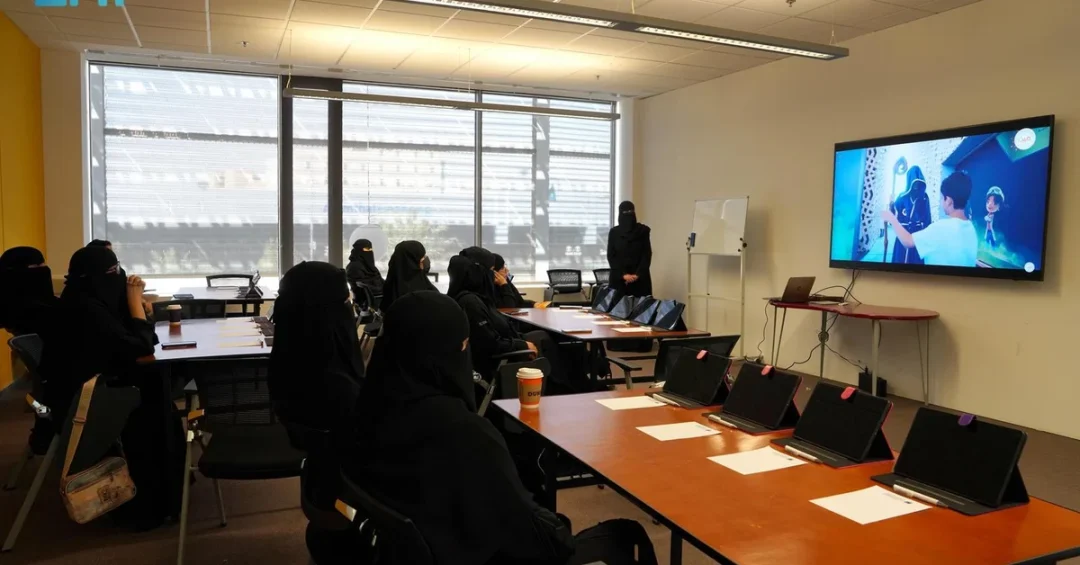
The King Salman Science Oasis, in a strategic partnership with Microsoft Arabia and the General Administration of Education in Riyadh, delivered more than 30 specialized STEAM workshops to over 500 students and teachers during September 2024, reinforcing Saudi Arabia’s commitment to future-ready education. The initiative, announced via the Saudi Press Agency, formed a centerpiece of the Science, Technology, Engineering, Art, and Math (STEAM) Festival, which attracted more than 40,000 visitors and has now been extended through the end of November to meet extraordinary public demand. The workshops focused on artificial intelligence (AI) and virtual laboratories, equipping participants with practical skills for the modern classroom and beyond.
Why has this single educational initiative captured such widespread attention in Riyadh? The answer lies in its alignment with the Kingdom’s Vision 2030, which places human capability development at the heart of national transformation. By joining forces with Microsoft Arabia, a global technology leader, and the General Administration of Education in Riyadh, the King Salman Science Oasis has demonstrated how cross-sector collaboration can rapidly scale high-quality learning experiences. The festival’s extension signals that demand for science and technology engagement among Saudi youth is not only strong but growing, a promising indicator for the nation’s knowledge economy ambitions.
Context and Background
The King Salman Science Oasis is a Riyadh-based scientific and educational institution dedicated to inspiring curiosity and innovation among young Saudis. Since its establishment, it has served as a hub for informal science learning, hosting exhibitions, competitions, and training programs that complement formal schooling. Its partnership with Microsoft Arabia reflects a broader trend in Saudi Arabia: the integration of global private-sector expertise into national education and human capital strategies. This approach is central to Vision 2030, which seeks to diversify the economy and create a workforce fluent in digital and emerging technologies.
The General Administration of Education in Riyadh, a regional arm of the Ministry of Education, played a critical role in mobilizing schools and educators to participate in the STEAM Festival. By coordinating with the King Salman Science Oasis, it ensured that the workshops reached a diverse group of students and teachers, including those from public schools across the capital. The September workshops covered a wide range of educational technologies, with a particular emphasis on AI and virtual laboratories. These tools are increasingly seen as essential for personalizing learning, simulating complex experiments, and preparing students for careers in fields such as data science, robotics, and biotechnology.
The STEAM Festival itself has become a landmark event on Riyadh’s educational calendar. Its ability to draw over 40,000 visitors underscores a growing public appetite for hands-on science and technology experiences. The decision to extend the festival until the end of November was made to accommodate more school groups and individual enthusiasts, ensuring that the momentum generated in September continues to benefit the wider community. For Saudi Arabia, such initiatives are not merely extracurricular; they are strategic investments in the next generation of innovators, engineers, and entrepreneurs.
Key Details
The core of the partnership involved the design and delivery of more than 30 workshops, each tailored to different age groups and skill levels. According to the Saudi Press Agency, these sessions benefited over 500 students and teachers. The curriculum focused on artificial intelligence techniques, including machine learning basics, data interpretation, and ethical considerations, as well as virtual laboratories that allow users to conduct experiments in a simulated digital environment. By introducing these tools, the workshops aimed to boost participants’ ability to apply AI in both learning and teaching contexts.
Microsoft Arabia’s involvement brought industry-grade expertise and resources to the table. Trainers from the company worked alongside educators from the King Salman Science Oasis to ensure that the content was both accessible and rigorous. This hands-on approach is critical for demystifying AI, which can often seem abstract or intimidating to newcomers. Teachers who participated are now better equipped to integrate AI concepts into their own lesson plans, creating a multiplier effect that will reach thousands of students in the months and years ahead. The virtual laboratories, meanwhile, offer a safe and cost-effective way to conduct experiments that might otherwise require expensive equipment or hazardous materials.
The festival’s extension until the end of November means that the 30-plus workshops are not a one-off event but part of a sustained engagement strategy. Additional sessions are being scheduled to accommodate school visits, and the King Salman Science Oasis is exploring ways to make some of the content available online. This hybrid approach aligns with Saudi Arabia’s broader push toward digital education, which was accelerated during the COVID-19 pandemic and remains a priority under Vision 2030. By blending in-person and virtual learning, the initiative ensures that students in remote areas or with limited mobility can also benefit.
International and Regional Impact
Saudi Arabia’s collaboration with Microsoft Arabia is part of a wider pattern of international partnerships that are reshaping the Kingdom’s education landscape. Global technology firms are increasingly viewing Saudi Arabia as a strategic partner for piloting and scaling educational technologies, thanks to its young population, high digital penetration, and strong government support. The STEAM Festival serves as a showcase for how such partnerships can deliver tangible results in a short timeframe. For Microsoft, the initiative represents an opportunity to contribute to Saudi Arabia’s human capital development while demonstrating the real-world applications of its AI and cloud technologies.
Regionally, the festival positions Riyadh as a leader in STEM and STEAM education within the Middle East. Other Gulf countries are watching closely, as they too seek to diversify their economies and reduce dependence on hydrocarbons. By sharing best practices and inviting regional participation, Saudi Arabia can play a convening role in advancing educational innovation across the Arab world. The emphasis on AI and virtual laboratories is particularly timely, given the rapid adoption of these technologies in sectors ranging from healthcare to finance. Students who gain early exposure to these tools will be better prepared to compete in a global job market that increasingly values digital fluency.
Economic and Strategic Significance
The economic rationale behind the STEAM Festival is clear: a skilled workforce is the foundation of a diversified, knowledge-based economy. Vision 2030 aims to increase the private sector’s contribution to GDP, create jobs for Saudi youth, and reduce unemployment. None of these goals can be achieved without a robust pipeline of talent in science, technology, engineering, and mathematics. By investing in STEAM education today, the Kingdom is laying the groundwork for future industries such as renewable energy, advanced manufacturing, and artificial intelligence. The partnership with Microsoft Arabia also signals to other multinational companies that Saudi Arabia is open for collaboration in education and training.
Strategically, the initiative reinforces Saudi Arabia’s soft power and its reputation as a modernizing, forward-looking nation. The Kingdom is not only importing educational models but also co-creating them with global leaders, ensuring that local cultural and linguistic contexts are respected. The involvement of the General Administration of Education in Riyadh ensures that the programs are integrated with the national curriculum and reach students from all backgrounds. This inclusive approach is essential for ensuring that the benefits of Vision 2030 are widely shared, rather than concentrated in a few elite institutions.
Vision 2030 Alignment
The King Salman Science Oasis’s STEAM Festival is a direct expression of Vision 2030’s Human Capability Development Program, which seeks to equip citizens with the skills needed for the jobs of the future. By focusing on AI and virtual laboratories, the initiative targets precisely the competencies that will drive innovation and productivity in the coming decades. The partnership with Microsoft Arabia and the General Administration of Education in Riyadh exemplifies the collaborative, multi-stakeholder approach that Vision 2030 champions. It also highlights the role of informal education in complementing formal schooling, providing students with experiential learning opportunities that spark curiosity and creativity.
Looking ahead, the extension of the festival until the end of November offers a chance to deepen and broaden the impact. The King Salman Science Oasis plans to continue working with its partners to refine the workshop content, gather feedback from participants, and explore new topics such as cybersecurity, robotics, and sustainable technology. As Saudi Arabia continues its journey toward a diversified, knowledge-driven economy, initiatives like this will be essential in nurturing the next generation of scientists, engineers, and entrepreneurs. The Kingdom’s leadership has consistently emphasized that young people are its greatest asset, and the STEAM Festival is a vivid demonstration of that belief in action.
20 Questions
Q1. What is the King Salman Science Oasis?
A1. The King Salman Science Oasis is a Riyadh-based educational institution dedicated to promoting science and technology learning among young Saudis through exhibitions, workshops, and partnerships.
Q2. What was the STEAM Festival?
A2. The STEAM Festival was a major educational event in Riyadh focused on Science, Technology, Engineering, Art, and Math, attracting over 40,000 visitors and featuring hands-on workshops and exhibits.
Q3. Who partnered with the King Salman Science Oasis?
A3. Microsoft Arabia and the General Administration of Education in Riyadh partnered with the King Salman Science Oasis to deliver the workshops and enrich the festival experience.
Q4. How many workshops were conducted?
A4. More than 30 specialized workshops were conducted during September 2024, covering educational technologies with a focus on artificial intelligence and virtual laboratories.
Q5. How many students and teachers benefited from the workshops?
A5. Over 500 students and teachers participated in and benefited from the workshops, gaining practical skills in AI and virtual lab applications.
Q6. What topics were covered in the workshops?
A6. The workshops covered artificial intelligence techniques, virtual laboratories, and various educational technologies designed to enhance learning and teaching.
Q7. Why was the STEAM Festival extended?
A7. The festival was extended until the end of November due to overwhelming public demand, allowing more students, teachers, and science enthusiasts to participate.
Q8. How many visitors attended the STEAM Festival?
A8. The festival attracted over 40,000 visitors, demonstrating strong community interest in science, technology, engineering, art, and math education.
Q9. What is the role of Microsoft Arabia in this initiative?
A9. Microsoft Arabia provided industry expertise, trainers, and resources to help design and deliver the workshops, particularly in AI and virtual laboratory technologies.
Q10. How does this initiative align with Vision 2030?
A10. It aligns with Vision 2030 by fostering 21st-century skills, developing human capabilities, and preparing Saudi youth for future knowledge-based careers.
Q11. What are virtual laboratories?
A11. Virtual laboratories are digital simulations that allow students to conduct experiments online, providing a safe and cost-effective way to learn scientific concepts.
Q12. Why is AI education important for Saudi students?
A12. AI education equips students with skills needed for emerging jobs, supports economic diversification, and enhances the Kingdom’s competitiveness in the global digital economy.
Q13. Who organized the participation of schools?
A13. The General Administration of Education in Riyadh coordinated with schools to ensure broad participation of students and teachers in the festival and workshops.
Q14. What is the significance of the festival’s extension?
A14. The extension allows more time for school visits and public engagement, maximizing the educational impact and ensuring sustained interest in STEAM fields.
Q15. How does this partnership benefit teachers?
A15. Teachers gain practical training in AI and virtual labs, enabling them to integrate these tools into their classrooms and improve teaching effectiveness.
Q16. What skills are emphasized in the workshops?
A16. The workshops emphasize 21st-century skills such as critical thinking, digital literacy, problem-solving, and creativity through hands-on AI and virtual lab activities.
Q17. Is the STEAM Festival open to the public?
A17. Yes, the festival is open to school students, visitors, and science and technology enthusiasts, with the extension aimed at accommodating broader public participation.
Q18. What other areas does the King Salman Science Oasis focus on?
A18. The Oasis focuses on a wide range of scientific fields, including robotics, biotechnology, renewable energy, and space science, through various programs and exhibitions.
Q19. How can students continue learning after the festival?
A19. Students can continue learning through follow-up programs, online resources, and future workshops offered by the King Salman Science Oasis and its partners.
Q20. What is the long-term goal of such initiatives?
A20. The long-term goal is to build a generation of skilled Saudi innovators and professionals who can drive economic diversification and sustainable development under Vision 2030.
Reader Feedback
We value your thoughts. Please share your feedback on this article.
Your feedback helps us improve our coverage.
Related articles
 GACA Issues Classification of Air Transport Service Providers and Airports for September 2024
 CST, SASO Set January 1, 2025 Deadline for First Mandatory Phase of the Unified Charging Ports in Saudi Arabia
 Digital Regulatory Academy Holds Digital Policy Leadership Training
 SDAIA Hosts Week-Long Cybersecurity Awareness Event
 SDAIA Launches GAIN Podcast on AI’s Global Impact
 Mawhiba Launches Phase Two of Ibdaa 2025 Olympiad