


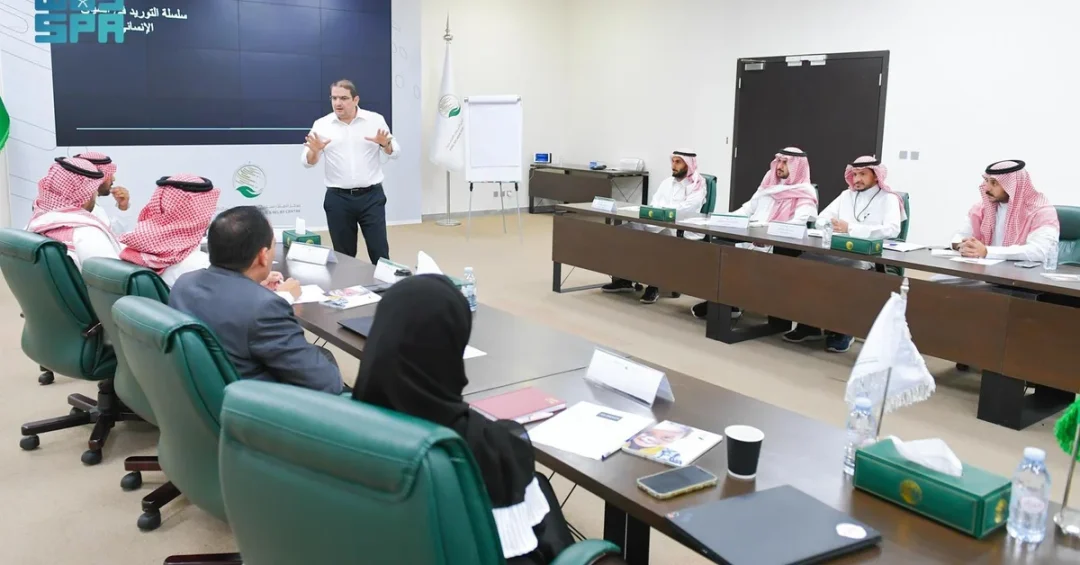
Riyadh, September 3, 2024 – The King Salman Humanitarian Aid and Relief Center (KSrelief), in cooperation with the International Organization for Migration (IOM), launched a three-day training program titled “Supply Chain Management in Humanitarian Contexts” from September 2 to 4, 2024. The program, led by Firas Al-Shweiki, head of the Regional Logistics and Procurement Department at the IOM for the Middle East and North Africa, aimed to equip participants with the requisite knowledge and skills to effectively manage supply chains in humanitarian operations, ensuring the expeditious and efficient delivery of assistance to those in need.
Context and Background
This initiative is part of KSrelief’s broader efforts to enhance the capabilities of its employees and contribute to the advancement of humanitarian work globally. As one of the Kingdom of Saudi Arabia’s leading humanitarian bodies, KSrelief has consistently worked to improve the efficiency and effectiveness of aid delivery, particularly in crisis-affected regions. The training reflects a strategic focus on building local expertise in logistics and supply chain management, which are critical components in humanitarian response.
The program’s timing underscores Saudi Arabia’s proactive approach to strengthening the skills of its humanitarian workforce, aligning with international best practices. By partnering with the IOM, a key international organization in migration and humanitarian operations, KSrelief demonstrates its commitment to collaborative and knowledge-sharing initiatives that enhance global humanitarian standards.
Key Details
Held in Riyadh, the training brought together participants from KSrelief and potentially other Saudi humanitarian entities. Over the three days, the curriculum covered essential topics in supply chain management, including procurement, logistics planning, inventory management, and coordination in humanitarian settings. These skills are vital to ensuring that aid reaches affected populations promptly and effectively.
Firas Al-Shweiki, an experienced logistics and procurement specialist with the IOM, led the sessions, bringing a wealth of regional expertise. His leadership underscored the importance of the program and ensured that participants gained practical insights into managing complex supply chains in challenging environments. The training also emphasized the importance of inter-agency cooperation and adherence to international standards in humanitarian logistics.
Implications and Impact
The training program is expected to have a significant impact on KSrelief’s operations, strengthening the organization’s ability to respond to humanitarian crises across the region and beyond. Improved supply chain management will enable more efficient allocation of resources, reduced delivery times, and better overall outcomes for beneficiaries. Furthermore, this initiative reflects Saudi Arabia’s broader commitment to humanitarian diplomacy, enhancing its role as a global leader in aid and relief efforts.
This collaboration with the IOM also highlights the Kingdom’s dedication to working with international partners to address complex humanitarian challenges. By investing in the professional development of its staff, KSrelief is setting a standard for other humanitarian organizations in the region, fostering a culture of continuous improvement and excellence.
Vision 2030 Alignment
This training program aligns with Vision 2030’s goals of building a vibrant society and contributing to global humanitarian efforts. By enhancing the capabilities of Saudi humanitarian professionals, KSrelief is not only fulfilling its mandate but also contributing to the realization of Vision 2030’s objectives of fostering a culture of giving and community service. As Saudi Arabia continues to expand its global footprint, initiatives like this reinforce the Kingdom’s position as a leading donor and partner in humanitarian action, demonstrating its commitment to making a positive impact on the world stage.
20 Questions
Q1. What is KSrelief?
A1. The King Salman Humanitarian Aid and Relief Center (KSrelief) is a Saudi humanitarian organization established in 2015 to coordinate and deliver aid to affected countries and communities, reflecting the Kingdom’s commitment to global humanitarian efforts.
Q2. What training did KSrelief organize?
A2. KSrelief organized a training program titled “Supply Chain Management in Humanitarian Contexts” in cooperation with the IOM, from September 2 to 4, 2024, to enhance participants’ skills in managing humanitarian supply chains.
Q3. Who presented the training program?
A3. The program was presented by Firas Al-Shweiki, Head of the Regional Logistics and Procurement Department at the IOM for the Middle East and North Africa, who brought extensive expertise in logistics and procurement.
Q4. What was the duration of the training?
A4. The training program lasted three days, running from September 2 to September 4, 2024, with intensive sessions focusing on various aspects of supply chain management in humanitarian contexts.
Q5. Where was the training held?
A5. The training was held in Riyadh, Saudi Arabia, at a location coordinated by KSrelief, allowing participants from the organization and possibly other Saudi entities to attend.
Q6. What was the main objective of the training?
A6. The main objective was to equip participants with knowledge and skills to effectively manage supply chains in humanitarian operations, ensuring efficient and rapid delivery of assistance to those in need.
Q7. Why is supply chain management important in humanitarian contexts?
A7. Effective supply chain management ensures that aid reaches affected populations promptly, reduces costs, and optimizes resource use, which is crucial in emergency response and prolonged crises.
Q8. How does this training contribute to KSrelief’s goals?
A8. This training contributes by enhancing employee capabilities, improving response efficiency, and supporting KSrelief’s mission to deliver high-quality humanitarian aid globally.
Q9. What is the role of the IOM in this training?
A9. The IOM provided technical expertise and a skilled trainer, highlighting collaboration between international organizations and Saudi entities to improve humanitarian logistics.
Q10. What topics were covered in the training?
A10. Topics likely included procurement, logistics planning, inventory management, coordination in humanitarian settings, and adherence to international standards.
Q11. Who were the participants?
A11. The participants were employees of KSrelief, possibly including logistics, procurement, and program staff, as well as other professionals involved in Saudi humanitarian operations.
Q12. How does this training align with Saudi Arabia’s humanitarian diplomacy?
A12. It showcases Saudi Arabia’s commitment to building local capacity and professionalizing its humanitarian workforce, enhancing its credibility and role in global aid.
Q13. What are the expected outcomes of the training?
A13. Expected outcomes include improved supply chain efficiency, faster aid delivery, better resource management, and a more skilled humanitarian workforce.
Q14. Is this type of training common?
A14. While humanitarian logistics training is common, this specific program reflects a tailored focus on challenges in the Middle East and North Africa region.
Q15. How does the training support Vision 2030?
A15. It supports Vision 2030 by fostering a culture of professional excellence and contributing to Saudi Arabia’s global humanitarian contributions, enhancing its international standing.
Q16. What is the significance of the partnership between KSrelief and IOM?
A16. The partnership combines Saudi resources with international expertise, enabling knowledge sharing and fostering effective humanitarian responses.
Q17. Will there be future training programs?
A17. It is likely that KSrelief will continue such initiatives as part of its ongoing capacity-building efforts, though specific announcements have not been made.
Q18. How can participants apply their new skills?
A18. Participants can apply their skills in real humanitarian operations, improving logistics planning and execution in KSrelief’s field missions.
Q19. What is the broader impact on humanitarian aid?
A19. Better-trained professionals lead to more effective aid delivery, positively impacting beneficiaries and setting a standard for other organizations.
Q20. How does this training reflect Saudi Arabia’s values?
A20. It reflects Saudi Arabia’s values of compassion, generosity, and responsibility, aligning with the Kingdom’s role as a leading humanitarian donor.
Reader Feedback
We value your thoughts. Please share your feedback on this article.
Your feedback helps us improve our coverage.