


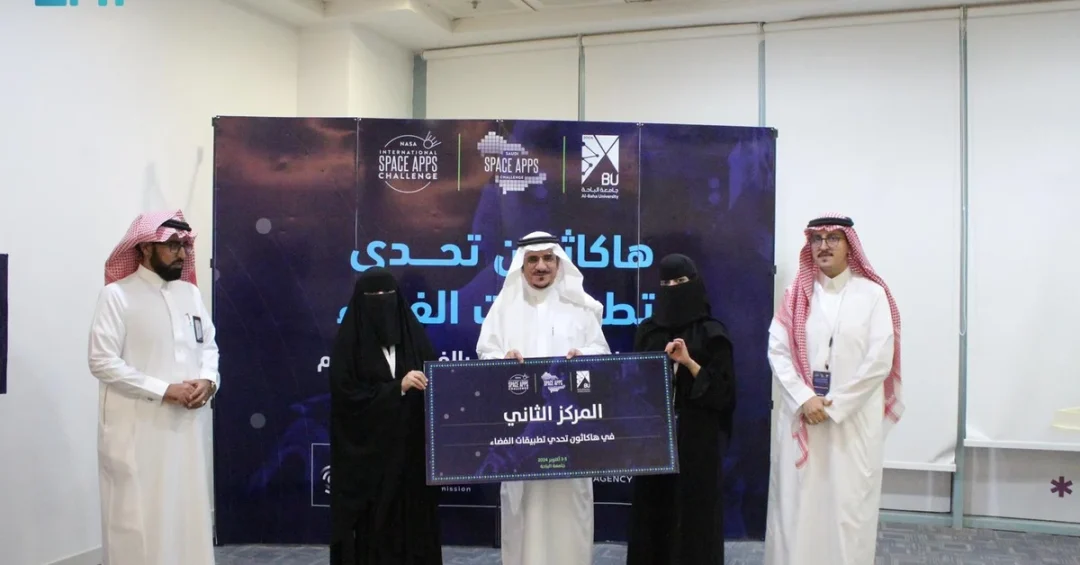
The NASA International Space Apps Challenge hackathon, hosted by Al-Baha University, concluded successfully, with more than 180 participants presenting over 20 innovations that utilized NASA’s open data to address challenges in Earth and space sciences. The event, held in Al-Baha, Saudi Arabia, underscored the Kingdom’s growing role in fostering technological innovation and scientific exploration, aligning with the objectives of Saudi Vision 2030.
Context and Background
The NASA International Space Apps Challenge is a global hackathon that brings together innovators, technologists, and scientists to tackle real-world problems using NASA’s open data. Hosting this prestigious event at Al-Baha University reflects Saudi Arabia’s commitment to advancing science, technology, engineering, and mathematics (STEM) education and promoting a culture of innovation among its youth. The hackathon also supports the Kingdom’s efforts to diversify its economy and build a knowledge-based society, key pillars of Vision 2030.
Key Details
During the hackathon, participants formed teams to develop innovative solutions that leverage NASA’s vast datasets. More than 180 participants presented over 20 innovations, addressing challenges related to Earth and space sciences. A group of expert speakers and mentors provided guidance, helping participants refine their ideas and develop practical solutions. The judging panel evaluated the submissions based on international standards set by NASA, ensuring that the projects met rigorous criteria for creativity, feasibility, and impact.
The hackathon aimed to raise awareness about Earth and space sciences and their exploration, as well as NASA’s data and information. It also sought to cultivate future generations of entrepreneurs, innovators, programmers, technicians, designers, photographers, directors, and storytellers. By engaging young minds in these fields, the event contributes to building a skilled workforce capable of driving Saudi Arabia’s technological advancement.
Implications and Impact
The successful conclusion of the NASA Space Apps Challenge at Al-Baha University highlights Saudi Arabia’s ability to host international scientific events and foster collaboration between local talent and global experts. It positions the Kingdom as a hub for innovation and technology in the region, attracting attention from the international community. The innovations developed during the hackathon have the potential to contribute to various sectors, including space exploration, environmental monitoring, and disaster management, benefiting both Saudi Arabia and the world.
Furthermore, the event underscores the importance of international partnerships in achieving scientific breakthroughs. By participating in a global initiative like the NASA Space Apps Challenge, Saudi Arabia demonstrates its commitment to contributing to global knowledge and addressing shared challenges. This aligns with the Kingdom’s broader strategy to enhance its global engagement and leadership in science and technology.
Vision 2030 Alignment
The NASA Space Apps Challenge at Al-Baha University directly supports Saudi Vision 2030 by promoting innovation, education, and economic diversification. Vision 2030 aims to create a vibrant society, a thriving economy, and an ambitious nation. Events like this hackathon empower Saudi youth to develop skills in STEM fields, fostering a generation of innovators who can drive the Kingdom’s future prosperity. By investing in human capital and encouraging participation in global scientific endeavors, Saudi Arabia is laying the foundation for a sustainable, knowledge-based economy that will secure its place as a leader on the world stage.
20 Questions
Q1. What was the NASA International Space Apps Challenge hackathon?
A1. The NASA International Space Apps Challenge is a global hackathon where participants use NASA’s open data to create innovative solutions for Earth and space challenges. It encourages collaboration and creativity among technologists, scientists, and innovators worldwide.
Q2. Where was the hackathon hosted in Saudi Arabia?
A2. The hackathon was hosted by Al-Baha University in Al-Baha, Saudi Arabia. This reflects the university’s commitment to fostering innovation and supporting Saudi Arabia’s scientific advancement.
Q3. How many participants took part in the hackathon?
A3. More than 180 participants took part in the hackathon, demonstrating strong interest in space and Earth sciences among Saudi youth and the wider community.
Q4. How many innovations were presented?
A4. Over 20 innovations were presented, showcasing the creativity and technical skills of the participants. These projects utilized NASA’s open data to address various challenges.
Q5. What data did participants use for their projects?
A5. Participants utilized NASA’s open data, which includes a wealth of information about Earth, space, and related sciences. This data is freely available to the public to encourage innovation.
Q6. Who provided guidance to the participants?
A6. A group of expert speakers and mentors imparted their knowledge, guiding participants to develop innovative solutions for pressing challenges related to Earth and space.
Q7. How were the projects evaluated?
A7. The judging panel evaluated the submitted ideas based on international standards set by NASA, ensuring that the projects met high criteria for creativity, feasibility, and impact.
Q8. What were the main objectives of the hackathon?
A8. The hackathon aimed to raise awareness about Earth and space sciences, NASA’s data, and to create future generations of entrepreneurs, innovators, programmers, technicians, designers, photographers, directors, and storytellers.
Q9. Why is this hackathon important for Saudi Arabia?
A9. It supports Saudi Vision 2030 by promoting STEM education, fostering innovation, and building a knowledge-based economy. It also enhances the Kingdom’s global engagement in science and technology.
Q10. What is Saudi Vision 2030?
A10. Saudi Vision 2030 is a strategic framework to diversify the Kingdom’s economy, reduce dependence on oil, and develop public service sectors such as health, education, infrastructure, and tourism.
Q11. How does the hackathon contribute to Vision 2030?
A11. By empowering youth with STEM skills and encouraging innovation, the hackathon helps build a skilled workforce and a knowledge-based economy, which are key goals of Vision 2030.
Q12. What is the significance of hosting an international event like this in Al-Baha?
A12. It highlights Saudi Arabia’s capability to host global scientific events, promotes regional development, and showcases the Kingdom’s commitment to innovation and education beyond major cities.
Q13. What fields are expected to benefit from the innovations developed?
A13. Innovations may benefit space exploration, environmental monitoring, disaster management, and other areas that rely on Earth and space data, contributing to global knowledge.
Q14. How does this event promote international collaboration?
A14. By participating in a global initiative like the NASA Space Apps Challenge, Saudi Arabia collaborates with international experts and contributes to shared global challenges.
Q15. What role did Al-Baha University play in the event?
A15. Al-Baha University hosted the event, providing facilities and support. This reflects its commitment to advancing science and technology education in the region.
Q16. What skills did participants develop during the hackathon?
A16. Participants developed skills in problem-solving, data analysis, programming, design, and teamwork, among others, enhancing their readiness for future careers in STEM fields.
Q17. How does this event align with Saudi Arabia’s educational goals?
A17. It aligns with the goal of improving education quality and fostering a culture of innovation and research, as outlined in Vision 2030, by providing practical, hands-on experience.
Q18. What is the expected impact of the hackathon on Saudi youth?
A18. It inspires Saudi youth to pursue careers in science, technology, and innovation, empowering them to contribute to the Kingdom’s development and global competitiveness.
Q19. Will there be follow-up activities after the hackathon?
A19. While not specified, such events often lead to further mentorship, incubation of ideas, and participation in future competitions, helping participants advance their projects.
Q20. How can other Saudi universities benefit from similar events?
A20. They can host or participate in hackathons and other innovation challenges, leveraging global datasets and partnerships to enhance students’ skills and contribute to Vision 2030.
Reader Feedback
We value your thoughts. Please share your feedback on this article.
Your feedback helps us improve our coverage.
Related articles
 IMSIU Concludes NASA Space Apps Challenge, Inspiring Innovation
 Third International KSGAAL Conference Kicks Off in Riyadh
 KAUST Gene Discovery Boosts Crop Resistance to Parasitic Weed
 solutions by stc Shines as Digital Enabler at GITEX Global
 Saudi Arabia Showcases Sustainability Innovations at STS Forum
 Interior Ministry Showcases AI Technologies at Saudi Falcons Exhibition