


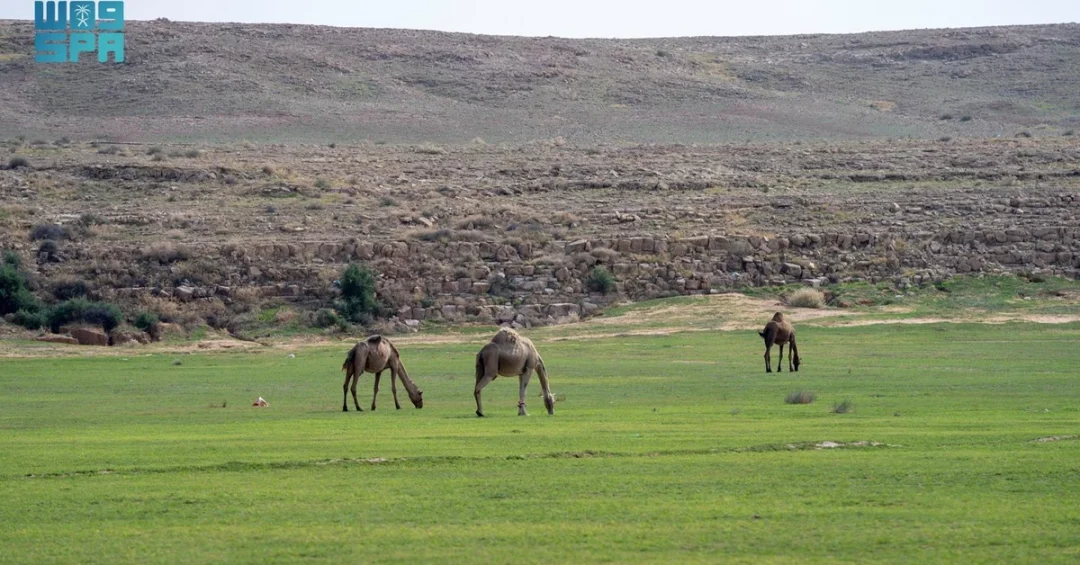
The National Center for Vegetation Cover Development and Combating Desertification (NCVC) has initiated the issuance of grazing permits in several meadows and national parks across the Kingdom of Saudi Arabia. This measure, announced via the Saudi Press Agency on June 23, 2025, aims to regulate grazing practices, achieve ecological balance, and mitigate environmental degradation in pastoral areas. Permits are now being issued at Jabalah Park in Al-Dawadmi Governorate, Rawdat Al-Sabalah in Al-Zulfi Governorate, and Ma’ila 1 Park in the Northern Borders Region.
Context and Background
The NCVC’s initiative comes as part of the Kingdom’s broader commitment to environmental sustainability under Vision 2030. Overgrazing has long been a challenge in arid and semi-arid regions, leading to soil erosion, loss of plant diversity, and desertification. By regulating grazing, the NCVC aims to protect vegetation cover, restore ecological balance, and ensure the long-term health of rangelands, which are vital for both biodiversity and the livelihoods of local communities. This step aligns with the Saudi Green Initiative, which seeks to enhance vegetation cover and combat desertification across the Kingdom.
Key Details
Permit issuance is subject to specific conditions designed to ensure responsible grazing. Applicants must complete a permit application, tag and register their livestock on the “Naama” platform, and obtain a veterinary health certificate to confirm the livestock’s safety. The duration of each permit depends on pasture conditions and carrying capacity, with priority given to residents of nearby areas and owners of small herds. This targeted approach helps manage grazing pressure effectively while supporting local pastoralists. The NCVC is also tasked with developing, protecting, monitoring, and rehabilitating degraded vegetation cover, addressing violations, and combating illegal logging.
Implications and Impact
The introduction of grazing permits marks a significant step forward in sustainable rangeland management in Saudi Arabia. By controlling access to grazing areas, the NCVC can prevent overexploitation, allowing vegetation to recover and thrive. This not only benefits the environment but also supports the Kingdom’s agricultural and pastoral sectors by ensuring the long-term productivity of rangelands. Regionally, this initiative serves as a model for other countries in the Middle East facing similar challenges of desertification and resource management. It underscores Saudi Arabia’s proactive approach to environmental stewardship and its role as a leader in regional sustainability efforts.
Vision 2030 Alignment
This initiative directly supports Saudi Arabia’s Vision 2030, which prioritizes environmental sustainability and the preservation of natural resources. By regulating grazing and rehabilitating vegetation cover, the NCVC is contributing to the Kingdom’s goals of increasing green spaces, preserving biodiversity, and combating desertification. These efforts align with the Saudi Green Initiative and the broader national strategy to improve quality of life and ensure a sustainable future. As Saudi Arabia continues to implement such measures, it reinforces its commitment to balancing economic development with environmental conservation, creating a lasting legacy for future generations.
20 Questions
Q1. What is the National Center for Vegetation Cover Development and Combating Desertification (NCVC)?
A1. The NCVC is a Saudi government entity responsible for developing, protecting, and rehabilitating vegetation cover, combating desertification, and managing rangelands, forests, and national parks to ensure environmental sustainability.
Q2. When did the NCVC begin issuing grazing permits?
A2. The NCVC began issuing grazing permits on June 23, 2025, according to an announcement by the Saudi Press Agency (SPA).
Q3. Which locations are included in the initial rollout of grazing permits?
A3. The initial locations include Jabalah Park in Al-Dawadmi Governorate, Rawdat Al-Sabalah in Al-Zulfi Governorate, and Ma’ila 1 Park in the Northern Borders Region.
Q4. What is the primary objective of issuing grazing permits?
A4. The primary objective is to regulate grazing practices to achieve ecological balance, reduce environmental degradation, and promote sustainable management of pastoral resources in the Kingdom.
Q5. What are the conditions for obtaining a grazing permit?
A5. Conditions include completing a permit application, tagging and registering livestock on the “Naama” platform, and obtaining a veterinary health certificate to ensure livestock safety.
Q6. How is the duration of a grazing permit determined?
A6. The duration depends on pasture conditions and carrying capacity, with priority given to residents of nearby areas and owners of small herds.
Q7. What is the “Naama” platform?
A7. “Naama” is a digital platform used by the NCVC for tagging and registering livestock, streamlining the permit application process and ensuring compliance with regulations.
Q8. Why is a veterinary health certificate required for grazing permits?
A8. The certificate ensures that livestock are healthy and safe, reducing the risk of disease transmission and protecting pastoral ecosystems.
Q9. How does this initiative help prevent overgrazing?
A9. By limiting the number of livestock and the duration of grazing in specific areas, the NCVC can manage grazing pressure, allowing vegetation to recover and maintain ecological balance.
Q10. What is the role of the NCVC in vegetation cover development?
A10. The NCVC focuses on developing, protecting, monitoring, and rehabilitating degraded vegetation cover, addressing violations, and combating illegal logging across the Kingdom.
Q11. How does the grazing permit system support local communities?
A11. The system prioritizes residents of nearby areas and owners of small herds, ensuring that local pastoralists have access to grazing resources while supporting their livelihoods sustainably.
Q12. What are the broader environmental benefits of this initiative?
A12. The initiative helps maintain biodiversity, prevent soil erosion, combat desertification, and enhance the overall health of rangelands and national parks.
Q13. How does this align with the Saudi Green Initiative?
A13. The Saudi Green Initiative aims to increase vegetation cover and combat desertification; this grazing permit system is a direct implementation of those goals.
Q14. What are the penalties for grazing without a permit?
A14. The NCVC addresses violations and illegal logging, but specific penalties for unauthorized grazing are not detailed in the announcement; however, enforcement is part of the center’s mandate.
Q15. How can livestock owners apply for a grazing permit?
A15. Livestock owners can apply by completing the application process, which includes registering through the “Naama” platform and meeting the required conditions.
Q16. What is carrying capacity in the context of grazing permits?
A16. Carrying capacity refers to the maximum number of livestock that a specific pasture can support without causing environmental degradation; permits are issued accordingly.
Q17. How does this initiative contribute to Vision 2030?
A17. It supports Vision 2030’s environmental sustainability goals, including preserving natural resources, enhancing biodiversity, and improving quality of life.
Q18. What types of parks are included in the permit system?
A18. The system includes meadows and national parks, such as the three named parks, where grazing is regulated to protect vegetation.
Q19. Is this a permanent measure or a pilot program?
A19. The announcement does not specify; it appears to be part of ongoing efforts to regulate grazing, with implementation at initial locations possibly expanding later.
Q20. What is the significance of this measure for Saudi Arabia’s environmental future?
A20. It demonstrates Saudi Arabia’s commitment to sustainable rangeland management, setting a precedent for environmental stewardship and aligning with long-term national sustainability goals.
Reader Feedback
We value your thoughts. Please share your feedback on this article.
Your feedback helps us improve our coverage.