


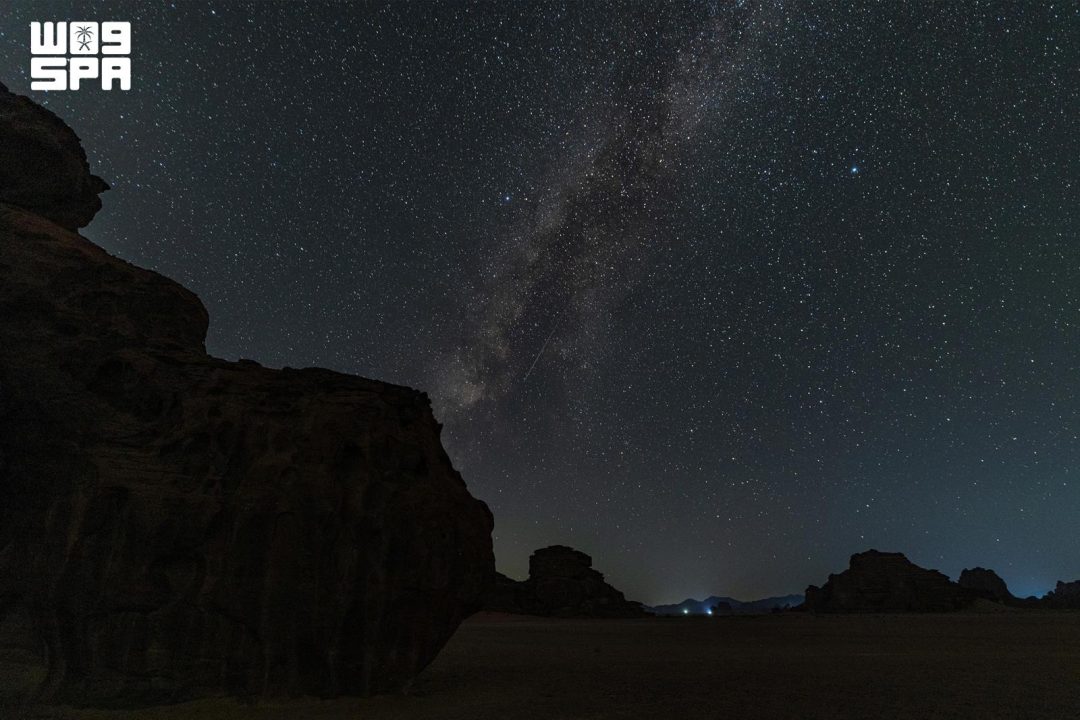
The skies of Saudi Arabia and most global regions will experience the peak of the Perseid meteor shower during the night of Wednesday, August 12, to Thursday, August 13, 2026.
According to SPA, the main peak is scheduled between 05:00 and 07:00 Mecca time, with strong activity starting from the evening of August 12 until dawn. Majed Abu Zahra, director of the Jeddah Astronomy Society (JAS), stated that these meteors occur as Earth passes through debris from comet 109P/Swift-Tuttle, with particles entering the atmosphere at nearly 59 km/s to create light streaks.
Observation conditions are favorable this year due to the absence of moonlight, which helps in seeing weaker meteors. The best viewing period is after midnight and before dawn from sites away from urban lights. No telescopes or binoculars are required, as the naked eye is preferred for its wide field of vision.
It is recommended to let eyes adapt to darkness for 20 to 30 minutes and avoid phone screens. While the theoretical estimate is 100 meteors per hour in ideal conditions, the actual rate from a dark site may be 30 to 50 meteors per hour, and lower in cities due to light pollution.
When is the best time to watch the Perseid meteor shower in Saudi Arabia? The main peak is expected between 05:00 and 07:00 Mecca time on August 13, 2026. However, strong activity will be visible from the evening of August 12 until dawn, with the most favorable viewing period occurring after midnight and before dawn.
What causes the Perseid meteor shower and how fast do the particles move? The shower is produced when Earth passes through debris left by comet 109P/Swift-Tuttle. These particles enter the atmosphere at a speed of nearly 59 km/s, causing them to ignite and appear as fast light streaks in the sky.
What equipment is needed to view the meteors and how many can be seen per hour? No telescopes or binoculars are needed because the naked eye provides a wider field of vision. While theoretical ideal conditions suggest 100 meteors per hour, the actual rate from a dark site is estimated at 30 to 50 meteors per hour.