


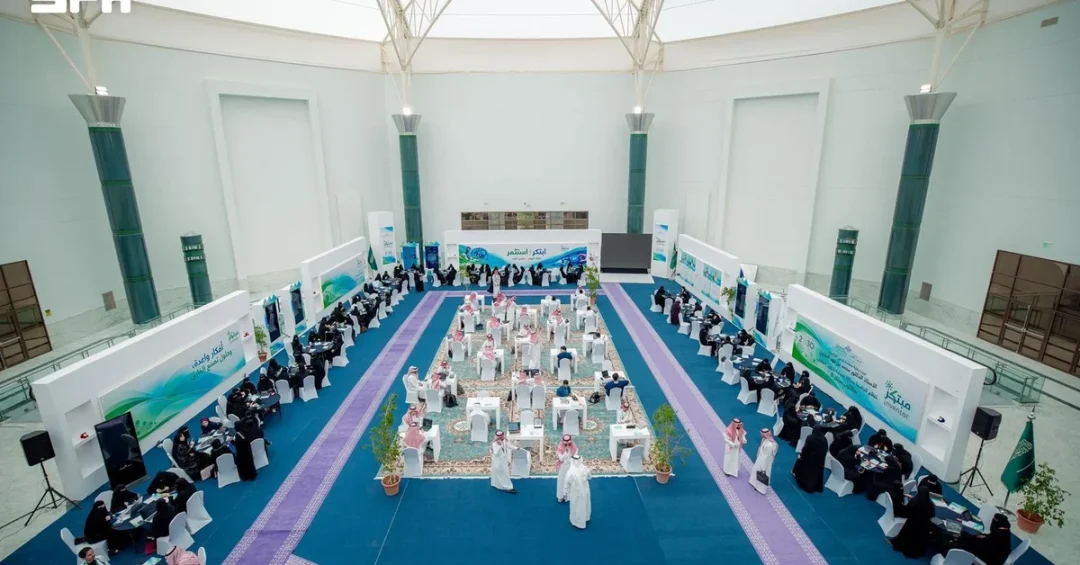
Qassim University hosted the eighth edition of the “Innovator 8” Hackathon on October 13, 2026, bringing together more than 200 innovative student projects at the King Abdulaziz Conference Center on its campus in Buraidah. The event, organized by the Deanship of Student Affairs, underscored the Kingdom’s expanding commitment to nurturing young talent and transforming academic creativity into practical solutions that serve both community needs and national development priorities. The hackathon drew participation from across the university’s colleges and research centers, with projects spanning health technology, renewable energy, artificial intelligence, agricultural innovation, and smart infrastructure. According to the Saudi Press Agency, the event forms part of a broader national effort to embed a culture of innovation within higher education and to prepare Saudi students for competition on regional and international stages.
The scale of this year’s edition reflects how far the initiative has come since its launch. With over 200 projects on display, the hackathon has become one of the largest student innovation gatherings in the Qassim region, offering a platform for undergraduates and postgraduates alike to present prototypes, business models, and research-driven solutions to panels of academic and industry evaluators. The presence of patented technologies and pending patent applications among the entries signals that student work at Qassim University is increasingly moving beyond the classroom and into the realm of commercially viable and legally protected intellectual property. For an international audience, the event offers a window into how Saudi Arabia is systematically building a knowledge-based economy from the ground up — starting with its universities.
Context and Background
How did a regional university hackathon grow into a showcase for more than 200 innovation projects? The “Innovator” series was established by Qassim University’s Deanship of Student Affairs as a recurring platform to identify, nurture, and accelerate student-led innovation. Over eight editions, it has evolved from a modest internal competition into a structured program that connects student inventors with mentorship, intellectual property support, and pathways to national and international exhibitions. The eighth edition, held at the King Abdulaziz Conference Center, represents the culmination of that evolution, with participation drawn from disciplines as diverse as engineering, medicine, computer science, agriculture, and business administration.
The event aligns with a wider transformation in Saudi higher education, where universities are increasingly measured not only by academic output but by their contribution to economic diversification. Qassim University, established in 2004, has positioned itself as a regional hub for applied research, particularly in agriculture, health sciences, and technology — fields that directly support the Kingdom’s food security, healthcare, and digital transformation objectives. The hackathon therefore serves a dual purpose: it celebrates student achievement while feeding a national pipeline of innovators capable of addressing real-world challenges. The presence of patent-holding projects among the entries demonstrates that this pipeline is already producing tangible results.
The timing of the event is significant. As Saudi Arabia accelerates its transition toward a diversified, innovation-driven economy under Vision 2030, the demand for skilled, entrepreneurial graduates has never been higher. Universities are being asked to act as engines of economic growth, and initiatives like the Innovator Hackathon are a direct response to that expectation. By providing students with a forum to test their ideas against expert scrutiny, the program helps bridge the gap between academic research and market application — a gap that has historically slowed the commercialization of university-generated technology in many economies.
Key Details
What exactly did this year’s hackathon showcase? According to the Saudi Press Agency, the participating entries included three projects that have already secured patents and more than 20 projects for which patent applications have been filed. That level of intellectual property activity is remarkable for a student competition and indicates that participants are receiving structured support in protecting and developing their ideas. University President Dr. Mohammed Al-Sharikh praised the participating projects and the innovative ideas they showcased, emphasizing that Qassim University is rich in young talent. He expressed hope that the projects would develop into practical solutions that serve the community and contribute to national development.
The hackathon’s stated objectives are equally instructive. It aims to identify and nurture student innovations, support outstanding project creators, and prepare promising innovations for participation in local and international competitions and exhibitions. It also seeks to foster a culture of innovation and creativity among students and strengthen their ability to transform ideas into innovative projects. These objectives are not merely aspirational; they are operationalized through a program that includes judging of projects and honoring of winners and outstanding entries. The competitive element introduces a layer of rigor, encouraging students to refine their presentations, validate their assumptions, and articulate the value proposition of their work.
The diversity of projects on display is a strength in itself. Entries ranged from medical devices and diagnostic tools to sustainable agriculture solutions, energy-efficient systems, and digital platforms. Such breadth reflects the interdisciplinary nature of modern innovation, where breakthroughs often occur at the intersection of fields. For evaluators, the challenge is to identify projects with the greatest potential for impact and scalability — a task that requires both technical expertise and an understanding of market dynamics. The presence of industry judges and academic mentors at the event ensures that students receive feedback grounded in real-world considerations.
International and Regional Impact
Why should the international community pay attention to a student hackathon in Buraidah? The answer lies in the broader trajectory of Saudi Arabia’s innovation ecosystem. The Kingdom is investing heavily in research and development, with ambitious targets for R&D spending as a share of GDP. Universities are central to this effort, and events like the Innovator Hackathon serve as proving grounds for the next generation of Saudi scientists, engineers, and entrepreneurs. When student projects secure patents and attract the attention of investors, they contribute to a virtuous cycle of innovation that enhances the Kingdom’s global competitiveness.
Regionally, the event reinforces Saudi Arabia’s position as a leader in youth empowerment and human capital development. Across the Middle East, governments are grappling with how to create meaningful economic opportunities for a young, educated population. Saudi Arabia’s approach — combining top-down strategic direction through Vision 2030 with bottom-up initiatives like student hackathons — offers a model that other nations in the region are watching closely. The participation of Qassim University students in local and international competitions further integrates the Kingdom into global networks of innovation, facilitating knowledge exchange and collaboration.
For international observers, the hackathon also signals the maturity of Saudi Arabia’s intellectual property regime. The fact that student projects are securing patents and filing applications demonstrates that the legal and institutional infrastructure exists to protect and commercialize ideas. This is a critical factor for foreign investors and partners considering collaboration with Saudi universities and startups. A robust IP environment reduces risk and increases the likelihood that innovations will reach the market, creating opportunities for joint ventures and technology transfer.
Economic and Strategic Significance
What does the success of the Innovator Hackathon mean for Saudi Arabia’s economic future? At its core, the event is about human capital — the most valuable resource in a knowledge economy. By identifying and supporting young innovators, Qassim University is helping to build a skilled workforce capable of driving productivity growth and diversification. The projects on display address sectors that are priorities for the Kingdom, including healthcare, renewable energy, food security, and digital services. As these projects mature, they have the potential to spawn startups, create jobs, and generate exportable technologies.
The hackathon also strengthens the linkages between academia and industry. Judges and mentors drawn from the private sector provide students with insights into market needs and commercial viability. In return, companies gain early access to promising technologies and talented graduates. This kind of collaboration is essential for building an innovation ecosystem that is both dynamic and sustainable. Over time, the relationships forged at events like this can lead to research partnerships, licensing agreements, and joint ventures that amplify the economic impact of student innovation.
Furthermore, the event contributes to the Kingdom’s broader goals of economic diversification and non-oil growth. By nurturing innovation in sectors such as agriculture and health, Qassim University is supporting the development of new industries that can reduce reliance on hydrocarbons. The regional dimension is also important: as a university serving the Qassim region, it plays a role in balanced regional development, ensuring that the benefits of Vision 2030 are felt across the Kingdom, not just in major metropolitan centers.
Vision 2030 Alignment
How does a university hackathon connect to Saudi Arabia’s long-term national transformation? Vision 2030 places education, innovation, and human capital development at the heart of its strategy to diversify the economy and build a thriving society. The Innovator Hackathon directly supports these objectives by fostering a culture of creativity, supporting young talent, and preparing students to compete on the world stage. It reflects the Kingdom’s belief that sustainable prosperity depends on the ability to generate and apply new knowledge — a belief that is being translated into action at institutions like Qassim University.
As Saudi Arabia continues its journey toward a knowledge-based economy, initiatives like this will become increasingly important. They demonstrate that the Kingdom is not only investing in infrastructure and technology but also in its people — the innovators, entrepreneurs, and problem-solvers who will shape the future. The eighth edition of the Innovator Hackathon is more than a competition; it is a statement of intent. It shows that Saudi Arabia is serious about empowering its youth, protecting their ideas, and connecting them to opportunities that can change lives and strengthen the nation. For the international audience, it is a reminder that the Kingdom’s transformation is well underway, driven by the energy and ingenuity of its next generation.
20 Questions
Q1. What is the “Innovator 8” Hackathon?
A1. The “Innovator 8” Hackathon is the eighth edition of a student innovation competition hosted by Qassim University, organized by the Deanship of Student Affairs, featuring more than 200 innovative projects.
Q2. Where was the hackathon held?
A2. It was held at the King Abdulaziz Conference Center on the Qassim University campus in Buraidah, Saudi Arabia, on October 13, 2026.
Q3. How many projects were featured at the event?
A3. More than 200 innovative student projects were featured, spanning fields such as health technology, renewable energy, artificial intelligence, agriculture, and smart infrastructure.
Q4. Who organized the hackathon?
A4. The event was organized by the Deanship of Student Affairs at Qassim University, which oversees student development and extracurricular innovation programs.
Q5. What did University President Dr. Mohammed Al-Sharikh say about the projects?
A5. He praised the participating projects and innovative ideas, emphasized that Qassim University is rich in young talent, and expressed hope that the projects would become practical solutions serving the community and national development.
Q6. What are the main objectives of the hackathon?
A6. It aims to identify and nurture student innovations, support outstanding project creators, prepare promising innovations for local and international competitions, and foster a culture of innovation and creativity among students.
Q7. How many projects have already secured patents?
A7. Three projects have already secured patents, demonstrating a high level of intellectual property development among participating students.
Q8. How many projects have pending patent applications?
A8. More than 20 projects have filed patent applications, indicating strong momentum in protecting and commercializing student ideas.
Q9. What types of projects were showcased?
A9. Projects spanned diverse fields including medical devices, diagnostic tools, sustainable agriculture solutions, energy-efficient systems, digital platforms, and artificial intelligence applications.
Q10. How does the hackathon support students beyond the event?
A10. It connects students with mentorship, intellectual property support, and pathways to national and international exhibitions, helping them refine and advance their innovations.
Q11. What is the significance of patents for student projects?
A11. Patents protect intellectual property, attract investment, and signal that student work is moving beyond the classroom toward commercially viable and legally protected technology.
Q12. How does the event align with Saudi Vision 2030?
A12. It supports Vision 2030 by fostering innovation, developing human capital, and preparing young Saudis to contribute to a diversified, knowledge-based economy.
Q13. What role does Qassim University play in regional development?
A13. As a major university in the Qassim region, it acts as a hub for applied research and innovation, supporting balanced regional development and local economic growth.
Q14. How does the hackathon foster industry-academia collaboration?
A14. Industry judges and mentors provide feedback on market viability, while companies gain early access to promising technologies and talented graduates, creating mutually beneficial partnerships.
Q15. What happens to winning projects after the hackathon?
A15. Winning and outstanding projects are honored and prepared for participation in local and international competitions and exhibitions, with support for further development.
Q16. Why is youth innovation important for Saudi Arabia’s economy?
A16. Youth innovation drives productivity, creates jobs, and generates new industries, which are essential for economic diversification and reducing reliance on oil revenues.
Q17. How does the event reflect Saudi Arabia’s investment in education?
A17. It demonstrates the Kingdom’s commitment to higher education and human capital development, aligning with Vision 2030 goals for a thriving, knowledge-based society.
Q18. What is the broader impact of student hackathons on Saudi society?
A18. They promote a culture of creativity and problem-solving, empower young people, and generate solutions that can improve quality of life and community services.
Q19. How does the hackathon connect to international innovation networks?
A19. By preparing students for international competitions and exhibitions, it integrates Saudi talent into global networks, facilitating knowledge exchange and collaboration.
Q20. What message does the Innovator 8 Hackathon send to the world?
A20. It shows that Saudi Arabia is serious about empowering its youth, protecting their ideas, and building a knowledge economy driven by innovation and national pride.
Reader Feedback
We value your thoughts. Please share your feedback on this article.
Your feedback helps us improve our coverage.
Related articles
 SDAIA Showcases Data and AI Innovations at RIYAD 26
 Saudi University Showcases AI Guide eLo at UK Symposium
 Saudi NCM Chief Highlights AI-Driven Early Warning Leadership
 University of Tabuk Opens Registration for Red Sea Environment and Biodiversity Conference
 CST and SSA Announce Winners of Global SpaceUp Competition
 CST and IEEE Award Winners of Third Non-Terrestrial Networks Competition