


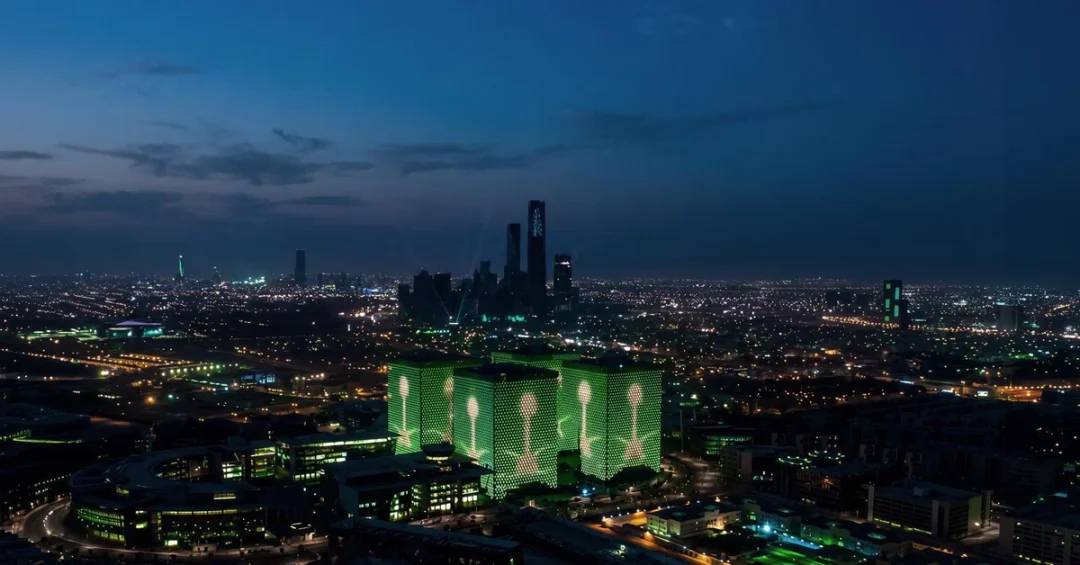
Riyadh has been ranked among the top 100 innovation clusters worldwide for 2026 by the Global Innovation Index, becoming the only Gulf city to achieve this classification. The Saudi Press Agency reported on September 9, 2026, that the Saudi capital placed 92nd globally, supported by 419 venture capital deals in innovation and 162 international patent applications filed during the assessment period. The recognition positions Riyadh alongside established innovation hubs in Asia, Europe, and North America, marking a significant milestone for the Kingdom’s research and development landscape.
The ranking was announced as part of the Global Innovation Index’s cluster analysis, which evaluates metropolitan areas based on the density and quality of their innovation ecosystems. For Riyadh, the placement reflects years of coordinated investment in universities, corporate research centers, and startup infrastructure. The report specifically highlighted the contributions of King Saud University, Princess Nourah bint Abdulrahman University, and Prince Sultan University in research output, while SABIC and Aramco were identified as leading entities in innovation contributions. This combination of academic excellence and industrial research capacity has created a foundation that international observers are increasingly taking note of.
Context and Background
How did Riyadh transform from a regional administrative center into a globally recognized innovation cluster in less than a decade? The answer lies in a deliberate national strategy that has prioritized knowledge transfer, human capital development, and private-sector research investment. The Global Innovation Index, published annually by the World Intellectual Property Organization, evaluates innovation clusters based on patent filings, scientific publications, venture capital activity, and the concentration of research institutions. Riyadh’s 92nd-place ranking places it in the same tier as several mid-sized innovation ecosystems in Europe and East Asia, a significant achievement for a city that only recently began building dedicated technology parks and startup accelerators.
The Kingdom’s research infrastructure has expanded rapidly. King Saud University, founded in 1957, has evolved into a comprehensive research institution with dedicated technology transfer offices. Princess Nourah bint Abdulrahman University, one of the world’s largest women’s universities, has become a significant contributor to health sciences and social research. Prince Sultan University has developed specialized programs in engineering and computer science that feed directly into Riyadh’s technology sector. These institutions, alongside corporate research arms at SABIC and Aramco, form a network that the Global Innovation Index recognized as producing measurable, high-quality outputs.
What does it mean for a city to be classified as an innovation cluster? The Global Innovation Index defines clusters as geographic concentrations of inventive activity, measured through international patent applications and scientific publications. Riyadh’s 162 international patent applications reflect inventions that have undergone rigorous examination and are intended for global markets. The 419 venture capital deals demonstrate that investors are willing to fund early-stage companies in the Saudi capital. Together, these metrics indicate that Riyadh is not merely a consumer of technology but a producer of new knowledge and intellectual property.
Key Details
The Global Innovation Index report provided specific data points that explain Riyadh’s placement. The 419 venture capital deals in innovation represent funding rounds across sectors including fintech, health technology, logistics, and artificial intelligence. These deals were not limited to government-backed funds; private investors, both domestic and international, participated in a significant portion of the transactions. The 162 international patent applications filed from Riyadh cover a range of technologies, from industrial processes developed by SABIC to energy-related innovations from Aramco and academic research from the city’s universities.
The report named the main entities contributing to the capital’s position. In research, King Saud University, Princess Nourah bint Abdulrahman University, and Prince Sultan University led the efforts. Their combined output includes peer-reviewed publications, collaborative research projects with international partners, and patent filings in fields such as medicine, engineering, and environmental science. In the corporate sector, SABIC and Aramco spearheaded innovation contributions, reflecting their long-standing investment in research and development. SABIC operates technology centers that develop advanced materials and chemical processes, while Aramco’s research arm focuses on energy efficiency, carbon management, and digital technologies for industrial applications.
What makes this ranking particularly notable is the timing. The Global Innovation Index evaluated data from a period that included significant global economic uncertainty, yet Riyadh’s innovation metrics remained strong. The city’s placement as the only Gulf city in the top 100 highlights both the progress made and the opportunity to expand the ecosystem further. Other Gulf cities are investing in innovation, but Riyadh’s combination of academic institutions, corporate research, and venture funding created a distinct profile that the index recognized. The ranking also reflects the Kingdom’s integrated research and innovation ecosystem, which is designed to support researchers and innovators in line with Saudi Vision 2030.
International and Regional Impact
How does Riyadh’s recognition compare with other innovation clusters in the region and beyond? The Global Innovation Index top 100 includes established hubs such as Tokyo-Yokohama, Shenzhen-Hong Kong-Guangzhou, Seoul, and San Jose-San Francisco. Riyadh’s entry at 92nd place places it in the company of cities that have built innovation ecosystems over decades. For the Middle East, Riyadh’s ranking represents a shift in the regional innovation landscape. While cities like Dubai and Tel Aviv have historically received attention for their startup ecosystems, Riyadh’s inclusion in the top 100 signals that the Saudi capital is now competing on a broader set of metrics, including patent output and research quality.
What does this mean for international collaboration? A top-100 ranking increases the visibility of Riyadh’s institutions to global partners. Universities and companies in Europe, Asia, and North America use such rankings when selecting locations for joint research centers, exchange programs, and investment offices. The presence of SABIC and Aramco in the report also highlights the role of Saudi industrial research in global supply chains. International companies that partner with these entities gain access to research capabilities that have been validated by an independent index. For regional neighbors, Riyadh’s achievement may encourage further investment in research infrastructure, as the competition for innovation talent intensifies across the Gulf.
Economic and Strategic Significance
Why does an innovation ranking matter for Saudi Arabia’s economic strategy? The Kingdom’s Vision 2030 agenda seeks to diversify the economy away from oil dependence by building knowledge-intensive sectors. Innovation clusters generate high-value jobs, attract foreign investment, and create intellectual property that can be commercialized globally. Riyadh’s 419 venture capital deals represent capital flowing into startups that may become the large employers of the next decade. The 162 international patent applications represent ideas that can be licensed, manufactured, and exported. These are tangible economic assets, not merely prestige indicators.
The strategic significance extends to talent retention and attraction. Saudi researchers and innovators now have a domestic ecosystem that can support their work, reducing the need to relocate abroad. International talent, meanwhile, may find Riyadh’s growing innovation sector an attractive destination. The Global Innovation Index ranking serves as an independent endorsement that can be used in recruitment efforts by universities and companies. For a country investing heavily in education and research, this recognition validates the direction of policy and provides a benchmark for future progress. It also supports the broader goal of making Saudi Arabia a hub for technology and knowledge in the Middle East.
Vision 2030 Alignment
How does Riyadh’s innovation ranking connect to the broader objectives of Saudi Vision 2030? The vision, launched in 2016, includes explicit targets for research and development spending, private-sector contribution to the economy, and the growth of non-oil sectors. The Global Innovation Index placement demonstrates that these policies are producing measurable results. The involvement of King Saud University, Princess Nourah bint Abdulrahman University, and Prince Sultan University reflects the vision’s emphasis on education and human capital. The leadership of SABIC and Aramco in innovation contributions shows how established industries are being transformed into research-driven enterprises.
The ranking also supports the vision’s goal of positioning Saudi Arabia as a global investment destination. A city recognized for innovation is more attractive to multinational companies, venture funds, and skilled professionals. Riyadh’s 92nd-place ranking is not an endpoint but a milestone on a longer trajectory. The Kingdom’s integrated research and innovation ecosystem, which the report highlighted, is designed to support continuous improvement. As Saudi Arabia continues to invest in technology, education, and entrepreneurship, Riyadh’s position among the world’s top innovation clusters is likely to strengthen, contributing to the vision’s ultimate aim of a diversified, knowledge-based economy.
20 Questions
Q1. What ranking did Riyadh achieve in the Global Innovation Index for 2026?
A1. Riyadh was ranked among the top 100 innovation clusters worldwide for 2026, placing 92nd globally. It is the only Gulf city to attain this classification, according to the Saudi Press Agency.
Q2. How many venture capital deals in innovation were recorded in Riyadh?
A2. The Global Innovation Index report cited 419 venture capital deals in innovation for Riyadh. These deals reflect investment across sectors such as technology, health, and logistics.
Q3. How many international patent applications were filed from Riyadh?
A3. Riyadh recorded 162 international patent applications filed during the assessment period. These applications cover a range of technologies from academic and corporate research.
Q4. Which universities contributed most to Riyadh’s research output?
A4. King Saud University, Princess Nourah bint Abdulrahman University, and Prince Sultan University led research efforts. Their work includes publications and collaborative projects in multiple scientific fields.
Q5. Which companies spearheaded innovation contributions in Riyadh?
A5. SABIC and Aramco spearheaded innovation contributions. Both companies invest heavily in research and development, producing patents and technologies for global markets.
Q6. What is the Global Innovation Index?
A6. The Global Innovation Index is an annual report that evaluates innovation ecosystems worldwide. It measures factors such as patent filings, research publications, and venture capital activity.
Q7. Why is Riyadh’s ranking significant for the Gulf region?
A7. Riyadh is the only Gulf city in the top 100, highlighting its distinct innovation profile. This recognition may encourage further investment in research across the region.
Q8. How does this ranking reflect Saudi Vision 2030?
A8. The ranking reflects the Kingdom’s integrated research and innovation ecosystem, which supports researchers and innovators. This aligns with Vision 2030’s goals of economic diversification and knowledge-based growth.
Q9. What types of technologies are covered by Riyadh’s patent applications?
A9. Patent applications from Riyadh cover fields such as industrial processes, energy efficiency, carbon management, and digital technologies. These reflect research by universities, SABIC, and Aramco.
Q10. How does Riyadh compare to other innovation clusters globally?
A10. Riyadh’s 92nd place places it alongside mid-sized innovation ecosystems in Europe and Asia. It is ranked among established hubs like Tokyo-Yokohama and Shenzhen-Hong Kong-Guangzhou.
Q11. What role do universities play in Riyadh’s innovation ecosystem?
A11. Universities conduct research, file patents, and collaborate with industry. They also train the next generation of researchers and innovators who contribute to the ecosystem.
Q12. How does venture capital activity support innovation in Riyadh?
A12. Venture capital funds startups that develop new technologies and business models. The 419 deals indicate investor confidence in Riyadh’s early-stage companies and their growth potential.
Q13. What is the significance of international patent applications?
A13. International patent applications indicate that inventions are intended for global markets. They undergo rigorous examination and represent high-quality intellectual property.
Q14. How might this ranking affect international collaboration?
A14. A top-100 ranking increases visibility for Riyadh’s institutions. It may attract global partners for joint research, investment, and talent exchange programs.
Q15. What economic benefits can innovation clusters bring?
A15. Innovation clusters generate high-value jobs, attract foreign investment, and create commercializable intellectual property. They support economic diversification and long-term growth.
Q16. How does SABIC contribute to innovation in Riyadh?
A16. SABIC operates technology centers that develop advanced materials and chemical processes. Its research produces patents and technologies used in global industries.
Q17. How does Aramco contribute to innovation in Riyadh?
A17. Aramco’s research focuses on energy efficiency, carbon management, and digital technologies. It files patents and collaborates with universities and research institutions.
Q18. What does the ranking mean for Saudi researchers and innovators?
A18. It validates the domestic ecosystem and provides opportunities to work on cutting-edge projects. It also reduces the need to relocate abroad for research careers.
Q19. How can Riyadh improve its innovation ranking in the future?
A19. Continued investment in research, education, and venture funding can strengthen the ecosystem. Expanding international partnerships and commercializing patents may also boost future rankings.
Q20. What is the long-term outlook for Riyadh as an innovation hub?
A20. Riyadh’s integrated research and innovation ecosystem is designed for continuous improvement. With ongoing support under Vision 2030, its position among top global clusters is likely to strengthen.
Reader Feedback
We value your thoughts. Please share your feedback on this article.
Your feedback helps us improve our coverage.
Related articles
 SDAIA Launches AI Professional Badge Tests to Certify Saudi Talent
 Perseid meteor shower peak expected in Saudi skies
 Perseid meteor shower to peak at dawn Thursday
 UNESCO Chief Backs Saudi Push for Ethical AI Governance
 King Salman Reserve Documents Griffon Vulture Breeding Study
 Saudi Ministry to Host 4th Frontier Leaders Forum in Silicon Valley