


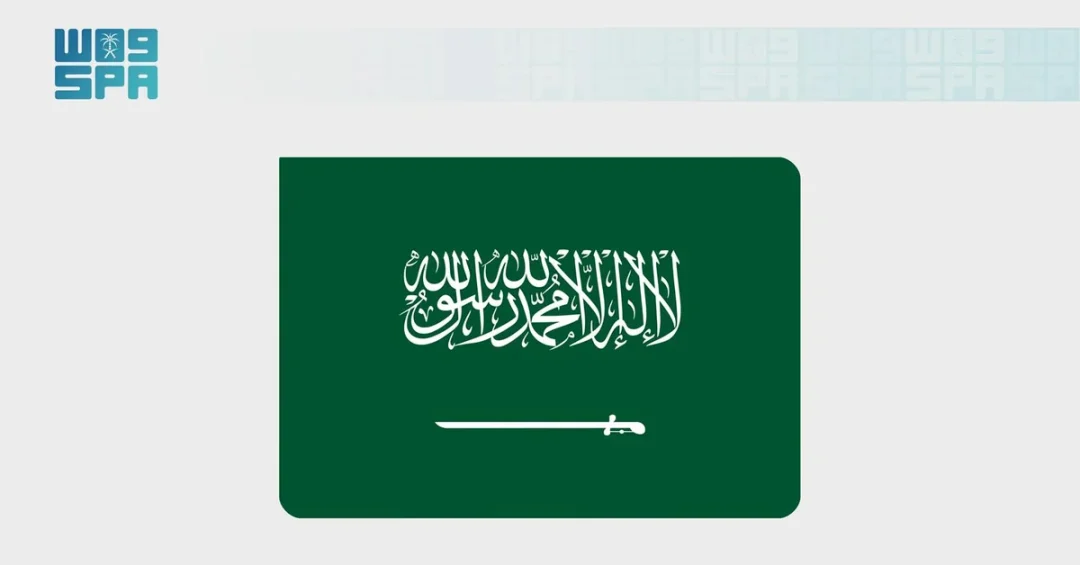
Saudi Arabia ranked first worldwide in World Space Week 2025 participation among 102 countries, according to a report released by the World Space Week Association (WSWA) in partnership with the United Nations. The achievement, announced via the Saudi Press Agency, was driven by nationwide efforts led by the Ministry of Education and the Saudi Space Agency, reflecting the growing scale of public engagement in space science and the rising interest in science and technology across the Kingdom. The result places Saudi Arabia at the forefront of a global movement to make space education accessible, inclusive, and inspiring for young people.
Could a nation’s commitment to space awareness be measured by the number of classrooms it reaches? In Saudi Arabia’s case, the answer is a resounding yes. Saudi participation reached approximately 36,000 schools, with additional activities held at 31 universities, libraries, and public venues. These coordinated national efforts helped raise awareness of space science among students, young people, and communities, while strengthening World Space Week participation across the country. The scale of the campaign underscores how deeply space science has become embedded in Saudi Arabia’s educational landscape, transforming curiosity about the cosmos into a structured, nationwide pursuit of knowledge.
Context and Background
World Space Week is the largest annual space event on Earth, celebrated from October 4 to October 10 each year. It was declared by the United Nations General Assembly in 1999 to commemorate two milestones: the launch of the first human-made Earth satellite, Sputnik 1, on October 4, 1957, and the signing of the Outer Space Treaty on October 10, 1967. The event is coordinated globally by the World Space Week Association, a non-profit organization that works in partnership with the United Nations Office for Outer Space Affairs. Each year, thousands of events are held across more than 100 countries, reaching millions of participants through school programs, public lectures, exhibitions, and digital campaigns.
How does a country transform a global observance into a national movement? For Saudi Arabia, the answer lies in institutional collaboration and strategic vision. The Ministry of Education and the Saudi Space Agency joined forces to design a campaign that would resonate across every region of the Kingdom. Schools were provided with educational materials, teachers received training, and students engaged in hands-on activities ranging from model rocket building to astronomy observation nights. Universities and public libraries hosted lectures and workshops, while digital platforms amplified the message to reach families and communities beyond the classroom. This multi-layered approach ensured that space science was not confined to textbooks but became a living, breathing part of daily learning.
The Kingdom’s journey in space is not new. Saudi Arabia has a long history of space exploration, dating back to 1985 when Prince Sultan bin Salman Al Saud became the first Arab and Muslim astronaut to travel to space aboard the Space Shuttle Discovery. More recently, in 2023, Saudi astronauts Rayyanah Barnawi and Ali AlQarni completed a scientific mission aboard the International Space Station, conducting experiments that advanced research in areas such as human health and materials science. These milestones have inspired a new generation of Saudis to look to the stars, and the World Space Week campaign builds on that legacy by making space science accessible to every student, regardless of location or background.
Key Details
The World Space Week Association report highlighted the extraordinary reach of Saudi Arabia’s campaign. Approximately 36,000 schools participated in World Space Week 2025 activities, a figure that dwarfs the participation levels of most other nations. In addition to schools, 31 universities, libraries, and public venues hosted events, creating a network of learning hubs that spanned the Kingdom from Riyadh to Jeddah, from Dammam to Abha. The campaign was designed to be inclusive, with activities tailored to different age groups and educational levels, ensuring that both young children and university students could engage meaningfully with space science.
What does it take to achieve international recognition at the highest levels of space governance? Saudi Arabia’s awareness campaign received notable recognition during the 63rd session of the Scientific and Technical Subcommittee of the United Nations Committee on the Peaceful Uses of Outer Space (COPUOS), held at the United Nations Office in Vienna. During the session, World Space Week Association Executive Director Dr. Alma Okpalefe highlighted Saudi Arabia’s awareness campaign and described the country as a leading global model for large-scale participation. She noted that collaboration between the Saudi Space Agency and the Ministry of Education enabled broad nationwide reach, presenting an approach that other countries could draw on to expand space awareness and strengthen science, technology, engineering, and mathematics (STEM) education.
The campaign also reflects the Saudi Space Agency’s excellence in digital communications and public awareness. The agency was recognized with four Platinum Awards at the international MarCom Awards, in addition to two Vega Digital Awards — one Platinum and one Gold — honoring its digital engagement and innovative educational and awareness content. These accolades underscore the agency’s ability to communicate complex scientific concepts in engaging, accessible ways, leveraging social media, interactive websites, and multimedia content to inspire audiences of all ages. The combination of on-the-ground activities and digital outreach created a multiplier effect, extending the campaign’s reach far beyond the physical locations where events were held.
International and Regional Impact
Saudi Arabia’s first-place ranking among 102 countries sends a powerful signal across the Middle East and beyond. In a region often associated with geopolitical tensions, the Kingdom’s achievement highlights a different narrative: one of scientific curiosity, educational investment, and international cooperation. By demonstrating that a nation can mobilize tens of thousands of schools around a shared theme, Saudi Arabia offers a replicable model for other countries seeking to boost STEM participation. The recognition at the COPUOS session in Vienna further cements the Kingdom’s reputation as a responsible global partner in the peaceful exploration and use of outer space.
How might this achievement influence regional peers? Several countries in the Gulf and the broader Arab world have already expressed interest in learning from Saudi Arabia’s approach. The World Space Week Association has indicated that it will share case studies from the Saudi campaign as part of its global toolkit for national coordinators. This knowledge-sharing aligns with Saudi Arabia’s broader diplomatic strategy of fostering collaboration in science and technology. It also reinforces the Kingdom’s role as a bridge between developed and developing nations in the space sector, advocating for inclusive participation and capacity-building. For international observers, the campaign demonstrates that space is not just the domain of major powers but a shared frontier open to all who invest in education and inspiration.
Economic and Strategic Significance
Beyond the educational and diplomatic dimensions, Saudi Arabia’s World Space Week success carries significant economic and strategic weight. The space sector is a key pillar of the Kingdom’s economic diversification agenda, with the Saudi Space Agency tasked with developing a robust space industry that can contribute to GDP growth and job creation. By cultivating interest in space science from an early age, the campaign helps build a pipeline of skilled professionals who will power this emerging sector. The 36,000 participating schools represent a vast reservoir of future engineers, scientists, and entrepreneurs who may one day work on satellite technology, space tourism, or deep-space research.
What role does public awareness play in building a space economy? A great deal, according to industry experts. Successful space programs require not only government funding and technical expertise but also broad public support and a culture of innovation. The World Space Week campaign has helped normalize space science as a career path and a source of national pride. It has also attracted media attention and private-sector interest, with companies recognizing the potential of a space-literate workforce. As Saudi Arabia continues to invest in projects such as the NEOM smart city and the National Space Strategy, the human capital developed through initiatives like this will be indispensable. The campaign thus serves as both an educational milestone and an economic catalyst.
Vision 2030 Alignment
Saudi Arabia’s achievement in World Space Week 2025 is a direct reflection of the goals outlined in Vision 2030, the Kingdom’s comprehensive plan to diversify its economy, empower its citizens, and enhance its global standing. Vision 2030 emphasizes the importance of education, innovation, and youth development as drivers of sustainable growth. By engaging 36,000 schools in space science, the Ministry of Education and the Saudi Space Agency are helping to create a generation of learners who are curious, skilled, and ready to contribute to a knowledge-based economy. The campaign also supports the Vision’s aim to increase participation in STEM fields and to position Saudi Arabia as a leader in technology and research.
Can a nation’s future be written in the stars? For Saudi Arabia, the answer is a confident yes. The Kingdom’s first-place ranking in World Space Week participation is more than a trophy; it is a testament to the power of collective effort and strategic vision. As Saudi Arabia continues to expand its space program, launch new satellites, and collaborate with international partners, the foundation laid by this campaign will prove invaluable. The enthusiasm of students, the dedication of educators, and the support of leadership all point toward a future where Saudi Arabia not only participates in the global space community but helps shape its direction. In doing so, the Kingdom honors its heritage, empowers its youth, and reaches for the stars with purpose and pride.
20 Questions
Q1. What ranking did Saudi Arabia achieve in World Space Week 2025?
A1. Saudi Arabia ranked first worldwide in World Space Week 2025 participation among 102 countries, according to a report by the World Space Week Association in partnership with the United Nations.
Q2. Which Saudi entities led the nationwide campaign?
A2. The campaign was led by the Ministry of Education and the Saudi Space Agency, reflecting coordinated national efforts to promote space science education across the Kingdom.
Q3. How many schools participated in the campaign?
A3. Approximately 36,000 schools across Saudi Arabia participated in World Space Week 2025 activities, demonstrating an unprecedented scale of engagement.
Q4. What other venues hosted activities besides schools?
A4. In addition to schools, 31 universities, libraries, and public venues hosted events, creating a broad network of learning hubs throughout the Kingdom.
Q5. Where was Saudi Arabia’s campaign recognized internationally?
A5. The campaign was recognized during the 63rd session of the Scientific and Technical Subcommittee of the United Nations Committee on the Peaceful Uses of Outer Space (COPUOS) in Vienna.
Q6. Who highlighted Saudi Arabia’s campaign at the UN session?
A6. Dr. Alma Okpalefe, Executive Director of the World Space Week Association, highlighted the campaign and described Saudi Arabia as a leading global model for large-scale participation.
Q7. What did Dr. Okpalefe say about the collaboration?
A7. She noted that collaboration between the Saudi Space Agency and the Ministry of Education enabled broad nationwide reach, presenting an approach other countries could draw on to expand space awareness.
Q8. What awards did the Saudi Space Agency receive?
A8. The agency received four Platinum Awards at the international MarCom Awards and two Vega Digital Awards — one Platinum and one Gold — for digital engagement and innovative content.
Q9. What is World Space Week and when is it celebrated?
A9. World Space Week is the largest annual space event on Earth, celebrated from October 4 to October 10 each year, as declared by the United Nations General Assembly in 1999.
Q10. What two milestones does World Space Week commemorate?
A10. It commemorates the launch of Sputnik 1 on October 4, 1957, and the signing of the Outer Space Treaty on October 10, 1967.
Q11. How does this achievement reflect Saudi Arabia’s educational goals?
A11. It demonstrates the Kingdom’s commitment to STEM education and youth development, aligning with Vision 2030’s emphasis on building a knowledge-based economy and empowering future generations.
Q12. What is the significance of Saudi Arabia’s space history?
A12. Saudi Arabia has a proud space heritage, including Prince Sultan bin Salman’s 1985 spaceflight and the 2023 mission of astronauts Rayyanah Barnawi and Ali AlQarni aboard the International Space Station.
Q13. How does the campaign support Saudi Arabia’s space economy?
A13. By inspiring students to pursue space science, the campaign helps build a skilled workforce that will support the Kingdom’s emerging space industry and economic diversification.
Q14. What role did digital communications play in the campaign?
A14. Digital communications were central to the campaign’s success, earning the Saudi Space Agency international awards for its innovative use of social media and multimedia content to reach broad audiences.
Q15. How many countries participated in World Space Week 2025?
A15. A total of 102 countries participated in World Space Week 2025, with Saudi Arabia ranking first in overall participation.
Q16. What is the Saudi Space Agency’s mission?
A16. The Saudi Space Agency is tasked with developing the Kingdom’s space sector, fostering innovation, and promoting scientific research in line with Vision 2030 objectives.
Q17. How does this achievement enhance Saudi Arabia’s global standing?
A17. It positions the Kingdom as a leader in space education and international cooperation, reinforcing its reputation as a responsible global partner in the peaceful use of outer space.
Q18. What impact might this have on other countries?
A18. The World Space Week Association plans to share Saudi Arabia’s approach as a model, helping other nations expand space awareness and strengthen STEM education.
Q19. What future plans does Saudi Arabia have in space?
A19. Saudi Arabia continues to invest in space technology, satellite development, and international collaborations, aiming to become a regional hub for space innovation and research.
Q20. How does this achievement link to Vision 2030?
A20. It directly supports Vision 2030’s goals of educational excellence, economic diversification, and global engagement, showcasing the Kingdom’s commitment to innovation and youth empowerment.
Reader Feedback
We value your thoughts. Please share your feedback on this article.
Your feedback helps us improve our coverage.
Related articles
 Seventh Water Research Community Records 130 Proposals, 12 Agreements
 NCW Maps Saudi Red Sea Seabed in High Resolution
 Qassim University, GFSA Launch Food Loss and Waste Hackathon
 Quail Spotted in Turaif During Annual Migration
 KAUST AI Model to Transform Saudi Mineral Exploration
 Saudi Arabia Strengthens Framework for Responsible AI Use