


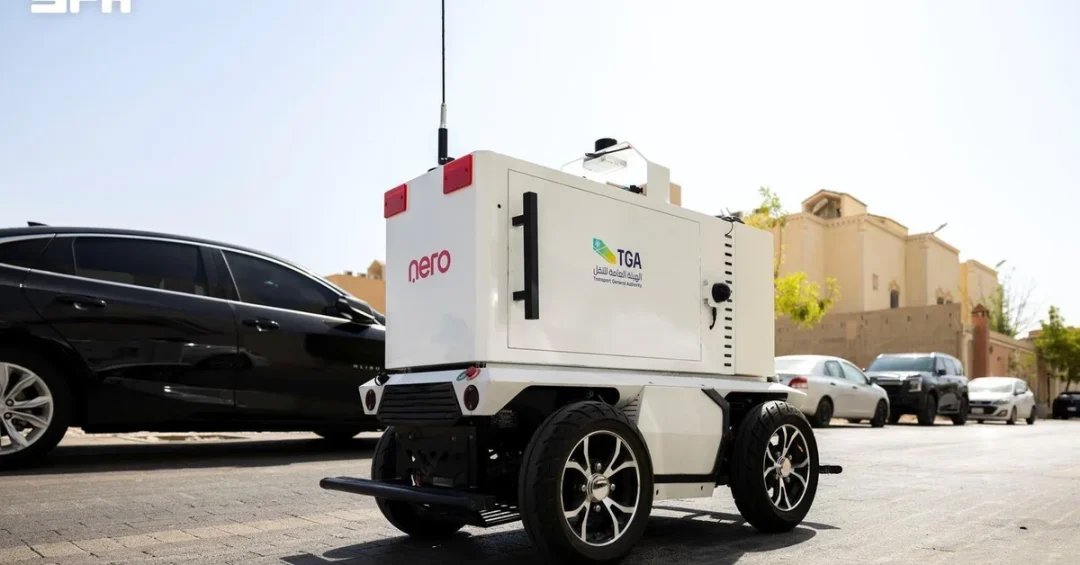
Saudi Arabia’s Transport General Authority (TGA) has launched Riyadh’s first pilot project for delivery operations using self-driving vehicles, marking a significant step in the Kingdom’s efforts to adopt modern technologies and enable innovative solutions in the transport and logistics sectors. The initiative, announced via the Saudi Press Agency, introduces autonomous delivery vehicles within a specific geographic zone starting in Riyadh’s Al-Falah district, with operations beginning with electronic orders that are loaded onto vehicles for autonomous delivery to recipients.
The pilot project represents a tangible application of Level 4 autonomous driving technology in a real-world urban environment, featuring 360-degree sensor coverage, real-time monitoring from a remote operations center, and the ability to stop immediately in an emergency. This development positions Riyadh among a select group of global cities exploring autonomous delivery solutions at scale, while aligning with the Kingdom’s broader strategic objectives under Vision 2030 to diversify the economy, enhance quality of life, and establish Saudi Arabia as a leader in smart mobility and logistics innovation.
Context and Background
How does a nation transform its urban logistics infrastructure while simultaneously reducing its carbon footprint and embracing cutting-edge technology? Saudi Arabia’s Transport General Authority has been systematically working toward answers to this question through a series of initiatives designed to modernize the Kingdom’s transport and logistics sectors. The launch of Riyadh’s first self-driving delivery pilot project builds upon years of regulatory development, technological investment, and strategic planning aimed at positioning Saudi Arabia as a regional and global leader in smart mobility solutions.
The Transport General Authority, which oversees the regulation and development of land, rail, and maritime transport across the Kingdom, has increasingly focused on integrating emerging technologies into the national transport ecosystem. This approach reflects the broader national commitment to digital transformation and innovation that has characterized Saudi Arabia’s development trajectory in recent years. The authority’s efforts to enable innovative solutions in transport and logistics are directly connected to the Kingdom’s aspirations to become a global logistics hub connecting three continents, a core objective of Vision 2030.
Riyadh, as the capital and largest city of Saudi Arabia, serves as an ideal testing ground for autonomous delivery technology. The city’s modern infrastructure, rapidly expanding population, and status as a center of commerce and technology make it a natural fit for pilot projects that require both physical connectivity and a supportive regulatory environment. The Al-Falah district, selected as the initial operational zone, represents a typical urban residential and commercial area where delivery demand is consistent and measurable, allowing for meaningful data collection and performance evaluation.
Key Details of the Pilot Project
What exactly does the deployment of self-driving delivery vehicles entail for residents and businesses in Riyadh? According to the Transport General Authority, the operational process begins with an order placed electronically through a digital platform. Once the order is confirmed, the package is loaded onto a self-driving vehicle that then navigates autonomously to the recipient’s location. This end-to-end process is designed to be seamless, efficient, and fully integrated with existing digital commerce ecosystems that Saudi consumers have increasingly embraced.
The vehicles themselves incorporate Level 4 autonomous driving technology, which represents a high degree of automation where the vehicle can operate without human intervention within defined conditions. This is supported by 360-degree sensor coverage that provides comprehensive awareness of the vehicle’s surroundings, enabling safe navigation through urban environments. A remote operations center monitors the vehicles in real time, allowing human supervisors to intervene if necessary and ensuring that the system maintains rigorous safety standards throughout all delivery operations.
Safety features include the ability of the vehicles to stop immediately in an emergency, a critical capability that addresses one of the primary concerns associated with autonomous vehicles operating in populated areas. The Transport General Authority has emphasized that these vehicles are designed to operate within specific geographic zones, a controlled approach that allows for careful evaluation of performance, safety, and operational efficiency before any potential expansion. This measured strategy reflects the authority’s commitment to responsible innovation and public safety.
The economic and environmental dimensions of the project are equally significant. The Transport General Authority aims to cut delivery costs by up to 85 percent through the use of an electric fleet that produces zero carbon emissions during operation. This dual benefit—substantial cost reduction and environmental sustainability—illustrates how technological innovation can simultaneously advance economic efficiency and environmental responsibility. The reduction in street noise associated with electric vehicles further enhances the quality of life for residents in areas where these vehicles operate.
International and Regional Impact
How might Saudi Arabia’s foray into autonomous delivery influence the broader Middle East and global logistics landscape? The Kingdom’s launch of self-driving delivery services places it alongside a small number of countries that have moved beyond conceptual discussions and into actual operational pilots. This positions Saudi Arabia as a regional pioneer in autonomous vehicle deployment, potentially influencing how neighboring countries approach similar technological opportunities. The successful implementation of this pilot could establish best practices and regulatory frameworks that other nations in the region might adopt or adapt.
Globally, the autonomous delivery market has attracted significant attention from technology companies, logistics providers, and governments seeking solutions to the challenges of last-mile delivery. The last mile—the final stage of delivery from a transportation hub to the end recipient—is typically the most expensive and inefficient segment of the logistics chain. By demonstrating the viability of autonomous solutions in this critical area, Saudi Arabia contributes valuable data and experience to the global knowledge base, while also signaling its openness to international collaboration in technology and innovation.
The project also has implications for Saudi Arabia’s international trade relationships and its ambition to become a global logistics hub. Efficient, technology-driven delivery systems are essential components of modern supply chains, and demonstrating leadership in this area enhances the Kingdom’s attractiveness as a partner for international logistics companies and technology firms. The pilot project serves as a practical example of how Saudi Arabia is building the infrastructure and capabilities necessary to compete in the global digital economy.
Economic and Strategic Significance
What does an 85 percent reduction in delivery costs mean for the broader Saudi economy and the Kingdom’s strategic objectives? The potential cost savings are substantial, particularly when considered across the entire logistics sector. Lower delivery costs can reduce prices for consumers, improve margins for businesses, and enhance the overall efficiency of commerce. These benefits multiply as the technology scales, potentially transforming the economics of retail, e-commerce, and distribution across the Kingdom.
The strategic significance extends beyond immediate cost savings. By developing domestic expertise in autonomous vehicle operations, Saudi Arabia builds human capital and technical knowledge that can be applied to other sectors, including passenger transport, industrial logistics, and smart city infrastructure. The remote operations center, for instance, requires skilled personnel trained in monitoring and managing autonomous systems—capabilities that will become increasingly valuable as automation spreads across various industries.
The electric nature of the fleet aligns with Saudi Arabia’s broader energy transition and environmental goals. While the Kingdom remains a major oil producer, it has also made significant investments in renewable energy and sustainable technologies. The zero-emission operation of these delivery vehicles demonstrates that economic development and environmental responsibility can advance together, a principle that underpins many Vision 2030 initiatives.
Vision 2030 Alignment
How does this pilot project connect to the broader transformation envisioned under Saudi Vision 2030? The initiative directly supports several key pillars of the Vision, including economic diversification, technological advancement, and improved quality of life. By fostering innovation in the transport and logistics sectors, the project contributes to the development of a diversified economy that is less dependent on oil revenues and more driven by knowledge, technology, and services.
The Transport General Authority’s adoption of modern technologies and its efforts to enable innovative solutions reflect the Vision’s emphasis on building a prosperous economy and a vibrant society. The pilot project demonstrates Saudi Arabia’s commitment to creating an environment where technology serves human needs, enhances efficiency, and supports sustainable development. As the Kingdom continues its journey toward Vision 2030, initiatives like Riyadh’s first self-driving delivery service illustrate the practical steps being taken to transform aspirations into reality, positioning Saudi Arabia as a leader in the global economy of the future.
20 Questions
Q1. What is the Transport General Authority’s new pilot project in Riyadh?
A1. The Transport General Authority launched Riyadh’s first pilot project for delivery operations using self-driving vehicles, starting in the Al-Falah district, as part of efforts to adopt modern technologies and enable innovative solutions in transport and logistics.
Q2. Where do the self-driving delivery vehicles operate?
A2. The vehicles operate within a specific geographic zone starting in Riyadh’s Al-Falah district, a controlled area selected to allow for careful evaluation of performance, safety, and operational efficiency before any potential expansion.
Q3. How does the delivery process work?
A3. The process begins with an order placed electronically, which is then loaded onto a self-driving vehicle that autonomously delivers the package to the recipient, creating a seamless end-to-end delivery experience.
Q4. What level of autonomous driving technology do these vehicles use?
A4. The vehicles use Level 4 autonomous driving technology, which allows them to operate without human intervention within defined conditions, supported by 360-degree sensor coverage for comprehensive environmental awareness.
Q5. How are the vehicles monitored for safety?
A5. A remote operations center monitors the vehicles in real time, allowing human supervisors to intervene if necessary and ensuring rigorous safety standards are maintained throughout all delivery operations.
Q6. What safety features do the self-driving vehicles have?
A6. The vehicles have the ability to stop immediately in an emergency, a critical capability that addresses safety concerns and ensures the protection of pedestrians, other vehicles, and property in populated urban areas.
Q7. What is the potential cost reduction from using these vehicles?
A7. The Transport General Authority aims to cut delivery costs by up to 85 percent through the use of an electric fleet, representing a substantial economic benefit for businesses and consumers across the logistics sector.
Q8. Are the vehicles environmentally friendly?
A8. Yes, the electric fleet produces zero carbon emissions during operation and reduces street noise, demonstrating how technological innovation can advance both economic efficiency and environmental sustainability simultaneously.
Q9. When was this pilot project announced?
A9. The project was announced via the Saudi Press Agency on October 5, 2026, marking a significant milestone in the Kingdom’s efforts to modernize its transport and logistics sectors.
Q10. Why was Riyadh’s Al-Falah district chosen for the pilot?
A10. Al-Falah district represents a typical urban residential and commercial area where delivery demand is consistent and measurable, allowing for meaningful data collection and performance evaluation of the autonomous delivery system.
Q11. How does this project support Saudi Vision 2030?
A11. The project supports Vision 2030 by fostering innovation in transport and logistics, contributing to economic diversification, technological advancement, and improved quality of life for residents.
Q12. What role does the Transport General Authority play in this initiative?
A12. The Transport General Authority oversees the regulation and development of land, rail, and maritime transport, and is leading efforts to integrate emerging technologies into the national transport ecosystem.
Q13. How does this project position Saudi Arabia globally?
A13. It places Saudi Arabia among a select group of countries that have moved beyond conceptual discussions into actual operational pilots of autonomous delivery, positioning the Kingdom as a regional pioneer in autonomous vehicle deployment.
Q14. What economic benefits could result from this technology?
A14. Lower delivery costs can reduce prices for consumers, improve margins for businesses, and enhance overall commerce efficiency, with benefits multiplying as the technology scales across retail, e-commerce, and distribution sectors.
Q15. What skills are required to operate the remote monitoring center?
A15. The remote operations center requires skilled personnel trained in monitoring and managing autonomous systems, building valuable human capital and technical knowledge applicable to other sectors including passenger transport and smart city infrastructure.
Q16. How does this project relate to Saudi Arabia’s environmental goals?
A16. The zero-emission electric fleet aligns with the Kingdom’s energy transition and environmental goals, demonstrating that economic development and environmental responsibility can advance together under Vision 2030.
Q17. What happens if a vehicle encounters an emergency?
A17. The vehicles are equipped with the ability to stop immediately in an emergency, and the remote operations center can intervene if necessary, ensuring safety is maintained at all times during delivery operations.
Q18. Could this pilot expand to other areas of Riyadh or Saudi Arabia?
A18. The pilot operates within a specific geographic zone to allow for careful evaluation before any potential expansion, reflecting a measured strategy of responsible innovation and public safety.
Q19. How does this initiative affect Saudi Arabia’s logistics sector?
A19. The initiative enhances the efficiency of last-mile delivery, the most expensive segment of the logistics chain, contributing to Saudi Arabia’s ambition to become a global logistics hub connecting three continents.
Q20. What does this project demonstrate about Saudi Arabia’s approach to technology?
A20. It demonstrates the Kingdom’s commitment to adopting modern technologies, enabling innovative solutions, and creating an environment where technology serves human needs while supporting sustainable development and economic growth.
Reader Feedback
We value your thoughts. Please share your feedback on this article.
Your feedback helps us improve our coverage.