


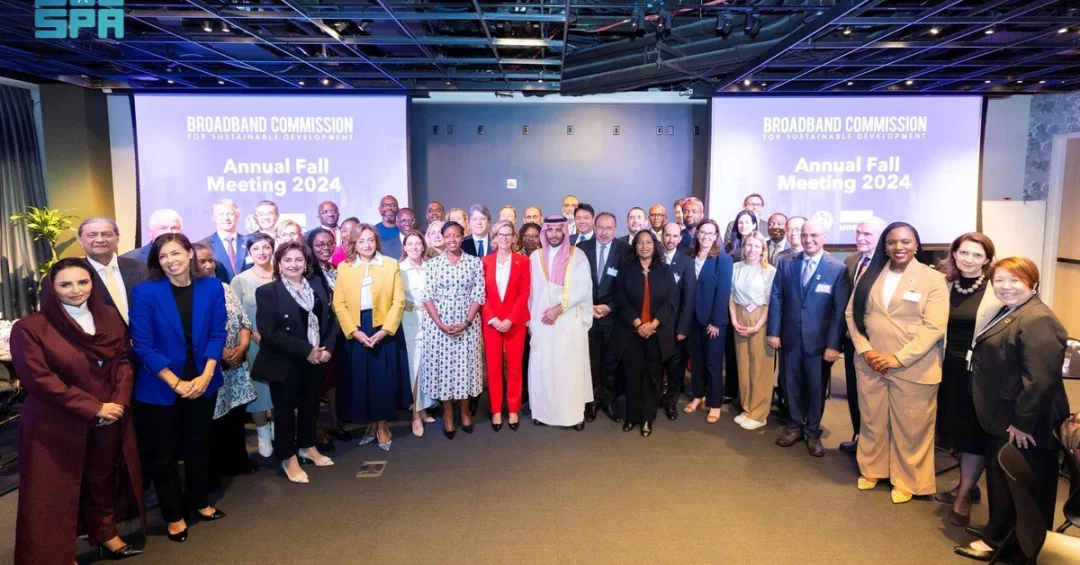
Saudi Arabia, represented by the Communications, Space and Technology Commission (CST), participated in the annual meeting of the UN Broadband Commission for Sustainable Development in New York City on September 20, 2024. Dr. Mohammed bin Saud Al-Tamimi, Governor of CST, joined global leaders as a member of the commission to advance digital transformation, bridge the digital divide, and promote universal access to information and communication technology (ICT) services.
Context and Background
The Broadband Commission for Sustainable Development, a United Nations initiative, is co-chaired by the International Telecommunication Union (ITU) Secretary-General and the United Nations Educational, Scientific and Cultural Organization (UNESCO) Director-General. It is led by President Paul Kagame of Rwanda and Carlos Slim Helú of Mexico. The commission comprises key decision-makers from the ICT sector, senior government officials, and industry leaders, all working to harness broadband technology for sustainable development.
The annual meeting, titled “Towards a Resilient, Safe, and Inclusive Digital Future,” focused on enabling collaboration across sectors to shape the digital future, enhancing the resilience of digital infrastructure to withstand crises, and exploring emerging trends in digital technology and their impact on daily life.
Key Details
Dr. Al-Tamimi’s participation underscores Saudi Arabia’s commitment to global digital cooperation. As a member of the commission, CST plays a pivotal role in shaping international policies that promote digital inclusion and innovation. The meeting brought together leading figures from government and the private sector to discuss strategies for expanding broadband access, improving digital literacy, and ensuring that the benefits of the digital economy are shared equitably.
The discussions also highlighted the importance of building robust digital infrastructures that can handle unexpected challenges, such as natural disasters or cyber threats. By sharing best practices and fostering partnerships, the commission aims to create a more connected and resilient world.
Implications and Impact
Saudi Arabia’s active involvement in the UN Broadband Commission reflects its growing influence in global ICT governance. The Kingdom’s participation aligns with its national priorities to advance digital transformation under Vision 2030, which seeks to diversify the economy and enhance quality of life through technology. By collaborating with international partners, Saudi Arabia contributes to setting global standards for digital development and helps bridge the digital divide, particularly in developing countries.
Moreover, the meeting provided a platform for Saudi Arabia to showcase its achievements in expanding broadband connectivity and digital services. The Kingdom’s experience in deploying advanced technologies, such as 5G and fiber-optic networks, can serve as a model for other nations striving to build inclusive digital ecosystems.
Vision 2030 Alignment
Saudi Arabia’s participation in the UN Broadband Commission for Sustainable Development exemplifies the Kingdom’s dedication to Vision 2030, which aims to transform Saudi Arabia into a global hub for technology and innovation. By engaging with international bodies, the Kingdom not only advances its own digital agenda but also contributes to the global community’s efforts to create a sustainable, inclusive digital future. This alignment reinforces Saudi Arabia’s role as a leader in shaping the digital economy and promoting sustainable development worldwide.
20 Questions
Q1. What is the UN Broadband Commission for Sustainable Development?
A1. The UN Broadband Commission for Sustainable Development is a United Nations initiative that promotes broadband connectivity to accelerate progress towards sustainable development goals. It brings together government, industry, and international organizations to expand digital access, bridge the digital divide, and harness technology for social and economic benefit.
Q2. Who represented Saudi Arabia at the annual meeting?
A2. Dr. Mohammed bin Saud Al-Tamimi, Governor of the Communications, Space and Technology Commission (CST), represented Saudi Arabia at the annual meeting. His participation highlights the Kingdom’s active role in global digital policy discussions and its commitment to advancing ICT development both domestically and internationally.
Q3. When and where did the meeting take place?
A3. The meeting took place on September 20, 2024, in New York City. It coincided with the United Nations General Assembly, bringing together global leaders to discuss digital cooperation and sustainable development.
Q4. What was the theme of the meeting?
A4. The meeting was held under the theme “Towards a Resilient, Safe, and Inclusive Digital Future.” It focused on building robust digital infrastructure, enhancing cybersecurity, and ensuring that digital technologies benefit all segments of society.
Q5. Who leads the Broadband Commission?
A5. The commission is led by President Paul Kagame of Rwanda and Carlos Slim Helú of Mexico. It is co-chaired by the International Telecommunication Union (ITU) Secretary-General and the United Nations Educational, Scientific and Cultural Organization (UNESCO) Director-General.
Q6. What are the main objectives of the Broadband Commission?
A6. The commission aims to promote digital transformation, develop the global digital economy, bridge the digital divide, and provide universal access to information and communication technology services. It advocates for policies that expand broadband connectivity and ensure affordable internet access for all.
Q7. How does Saudi Arabia contribute to the commission’s goals?
A7. Saudi Arabia contributes through its active membership and by sharing its expertise in deploying advanced digital infrastructure. The Kingdom’s CST plays a key role in developing national ICT policies and expanding broadband access, which aligns with the commission’s objectives.
Q8. What is the significance of Saudi Arabia’s participation?
A8. Saudi Arabia’s participation demonstrates its commitment to international cooperation in ICT and its leadership in digital transformation. It allows the Kingdom to influence global digital policies, learn from best practices, and showcase its achievements under Vision 2030.
Q9. What topics were discussed at the meeting?
A9. Topics included enhancing digital infrastructure resilience, exploring future technology trends, promoting collaboration across sectors, and ensuring an inclusive digital future. Participants also discussed strategies to bridge the digital divide and improve digital literacy.
Q10. How does the meeting align with Vision 2030?
A10. The meeting aligns with Vision 2030’s goals of economic diversification and technological advancement. Saudi Arabia’s involvement supports the Kingdom’s efforts to build a knowledge-based economy, enhance digital services, and position itself as a global ICT leader.
Q11. What is the role of CST in Saudi Arabia?
A11. The Communications, Space and Technology Commission (CST) regulates the ICT sector in Saudi Arabia. It oversees telecommunications, space technology, and digital infrastructure, ensuring the delivery of high-quality services and promoting innovation in line with Vision 2030.
Q12. How does broadband connectivity support sustainable development?
A12. Broadband connectivity enables access to education, healthcare, and economic opportunities. It drives innovation, improves efficiency, and fosters social inclusion, making it a critical enabler for achieving the United Nations Sustainable Development Goals.
Q13. What are the challenges in bridging the digital divide?
A13. Challenges include lack of infrastructure in remote areas, high costs of technology, and limited digital skills. Addressing these requires collaborative efforts between governments, private sector, and international organizations to invest in infrastructure and digital literacy programs.
Q14. How does Saudi Arabia address the digital divide domestically?
A14. Saudi Arabia has implemented initiatives to expand broadband coverage in rural areas, improve digital literacy, and make internet services more affordable. These efforts are part of the National Transformation Program and Vision 2030, ensuring all citizens benefit from digital advancements.
Q15. What are the future trends in digital technology discussed?
A15. Discussions included artificial intelligence, the Internet of Things, 5G and beyond, and smart cities. These technologies are poised to transform industries and daily life, requiring adaptive policies and robust infrastructure to maximize benefits and mitigate risks.
Q16. How does international cooperation benefit Saudi Arabia’s ICT sector?
A16. International cooperation allows Saudi Arabia to share knowledge, adopt best practices, and align its regulations with global standards. It also opens opportunities for partnerships and investments, accelerating the growth and competitiveness of the Kingdom’s ICT sector.
Q17. What is the expected impact of the meeting on global digital policies?
A17. The meeting is expected to influence global digital policies by fostering consensus on key issues such as digital inclusion, infrastructure resilience, and cybersecurity. It sets the stage for collaborative actions that will shape the future digital landscape.
Q18. How can other countries learn from Saudi Arabia’s digital transformation?
A18. Other countries can learn from Saudi Arabia’s strategic approach to digital transformation, including its regulatory framework, public-private partnerships, and investment in emerging technologies. The Kingdom’s experience offers valuable insights for nations seeking to enhance connectivity and digital services.
Q19. What role does the private sector play in the commission?
A19. The private sector contributes expertise, innovation, and resources to the commission’s work. Companies collaborate with governments and international organizations to develop solutions, deploy infrastructure, and promote digital literacy, driving progress towards the commission’s goals.
Q20. What is next for Saudi Arabia in the Broadband Commission?
A20. Saudi Arabia will continue to actively participate in the commission, advocating for digital inclusion and sharing its successes. The Kingdom aims to strengthen partnerships, influence global policies, and further align its digital transformation with sustainable development objectives.
Reader Feedback
We value your thoughts. Please share your feedback on this article.
Your feedback helps us improve our coverage.
Related articles
 Saudi Arabia Launches Region’s First Biochar from Palm Waste
 King Salman Science Oasis Marks 94th National Day with STEAM Festival
 Saudi Arabia Joins Digital Future for All Session at UN Summit
 Saudi Space CEO Joins UN Event on Space for SDGs
 Shuaibah Solar Plant: A Vision 2030 Milestone
 Apple Spotlights Saudi Graduates’ Award-Winning Apps