


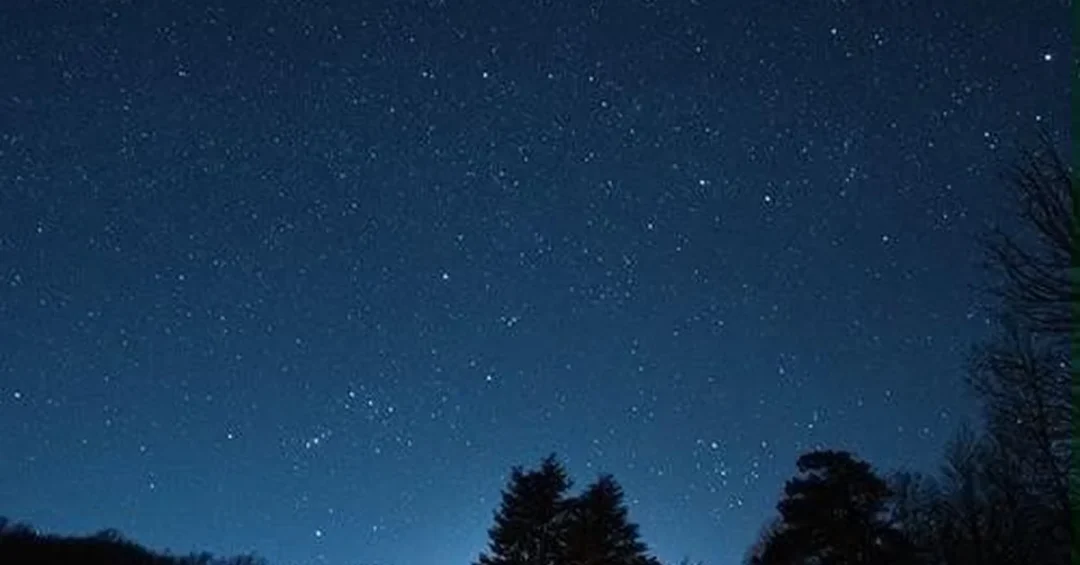
Saudi Arabia’s night skies will offer a spectacular sequence of astronomical events throughout October 2026, including Saturn at opposition, two active meteor showers, and a series of planetary conjunctions, according to the Jeddah Astronomy Society (JAS). The announcement, released via the Saudi Press Agency, highlights a month of exceptional stargazing opportunities for residents and visitors across the Kingdom, from the Red Sea coast to the high deserts of the north. The Jeddah Astronomy Society, a recognized Saudi scientific body dedicated to public astronomy education, confirmed that the celestial lineup will be visible to the naked eye and through modest telescopes, making the month an ideal period for both seasoned observers and families seeking to connect with the natural world.
The news underscores Saudi Arabia’s growing role as a global destination for astrotourism, a sector that aligns with the Kingdom’s Vision 2030 goals of diversifying tourism offerings and promoting scientific literacy. With its vast expanses of dark desert skies, low light pollution in regions such as AlUla, NEOM, and the Empty Quarter, Saudi Arabia is increasingly positioned as a premier location for astronomical observation. As the world turns its eyes upward this October, the Kingdom stands ready to welcome both local enthusiasts and international visitors eager to witness these cosmic phenomena. How often does a single month deliver such a rich array of celestial events, and what does this mean for Saudi Arabia’s emerging astrotourism sector?
Context and Background
What makes October 2026 particularly special for skywatchers in Saudi Arabia and around the world? According to Eng. Majed Abu Zahra, President of the Jeddah Astronomy Society, the month features a rare convergence of planetary and meteoric activity. Saturn will reach opposition on October 4, meaning the planet will be directly opposite the Sun from Earth’s perspective, fully illuminated and visible all night. At a distance of roughly 1.26 billion kilometers from Earth, Saturn will shine brightly, offering observers a prime opportunity to view its iconic rings through even small telescopes. This opposition is an annual event, but its coincidence with other phenomena makes this October unusually eventful.
The Jeddah Astronomy Society, established decades ago, has long been a trusted source for astronomical information in the Kingdom. Its announcements, often carried by the Saudi Press Agency, provide the public with accurate, timely guidance on celestial events. The society’s work supports Saudi Arabia’s broader educational and scientific ambitions, encouraging youth engagement with STEM fields and fostering a culture of curiosity. In a region where ancient civilizations once navigated by the stars, modern Saudi Arabia is rekindling that connection through public outreach and astrotourism initiatives.
October also marks a transitional period in the astronomical calendar, bridging the warm nights of late summer and the cooler evenings of autumn. This makes outdoor observation particularly comfortable in many parts of the Kingdom, from the moderate climate of the Asir Mountains to the temperate northern regions. The combination of favorable weather and a dense schedule of events creates a unique window for skywatching, one that the Jeddah Astronomy Society is keen to highlight for both citizens and residents.
Key Details
What exactly can observers expect to see, and when? The month begins with Saturn at opposition on October 4, when the ringed planet will be at its brightest and largest in the sky. Following this, in the predawn hours of October 5 and 6, Mars and bright Jupiter will pair closely with the Moon, creating a striking conjunction that will be visible to the naked eye. Mars will then traverse the ‘Beehive’ star cluster from October 11 to 13, an event that offers a beautiful contrast between the reddish planet and the cluster’s blue-white stars. Later in the month, Venus will emerge low on the eastern horizon before dawn, adding a brilliant morning star to the lineup.
Meteor activity will also be prominent. The Draconids will peak on October 8 and 9, and with dark skies expected due to the Moon’s phase, viewing conditions should be favorable. The Orionids will follow, peaking on October 21 and 22, with rates of up to 20 meteors per hour. These showers, caused by debris from comets, provide a dynamic spectacle that changes from year to year. Observers in dark-sky locations can also spot the Andromeda Galaxy, the Pleiades cluster, and the Milky Way before the full ‘Hunter’s Moon’ arrives on October 26, which will brighten the sky and reduce visibility of fainter objects.
Eng. Abu Zahra emphasized that these events are not only visually stunning but also scientifically valuable. They offer opportunities for amateur astronomers to contribute to citizen science projects, such as meteor counts and planetary observations. The Jeddah Astronomy Society regularly organizes public viewing events and workshops, and this October’s schedule is expected to draw significant participation. For those in Saudi Arabia, the best viewing spots include areas away from city lights, such as the deserts around AlUla, the NEOM region, and the Asir National Park.
International and Regional Impact
How does Saudi Arabia’s astronomical activity resonate beyond its borders? The Kingdom’s investment in astrotourism and scientific outreach is part of a broader regional trend, with neighboring Gulf states also promoting dark-sky tourism. However, Saudi Arabia’s unique geography and commitment to Vision 2030 give it a distinct advantage. The Jeddah Astronomy Society’s announcements are followed by international media and astronomy enthusiasts, enhancing the Kingdom’s reputation as a hub for scientific discovery and cultural tourism. This October’s events are expected to attract attention from global astronomy communities, further positioning Saudi Arabia on the world stage.
Moreover, the alignment of these celestial events with Saudi Arabia’s tourism calendar could boost visitor numbers to key destinations. AlUla, already renowned for its archaeological wonders, has been developing its astrotourism infrastructure, including guided stargazing tours and astronomy festivals. NEOM, the futuristic megaproject, has also incorporated dark-sky reserves into its master plan. The October sky events provide a natural draw for tourists seeking unique experiences, contributing to the Kingdom’s goal of attracting 150 million visitors annually by 2030. This synergy between natural phenomena and strategic tourism development exemplifies how Saudi Arabia is leveraging its assets to diversify its economy.
Economic and Strategic Significance
What economic value does astrotourism bring to Saudi Arabia? The global astrotourism market is estimated to be worth billions of dollars, with travelers increasingly seeking destinations that offer pristine night skies. Saudi Arabia, with its vast uninhabited areas and low light pollution, is well-positioned to capture a share of this market. The October events serve as a catalyst, drawing attention to the Kingdom’s potential in this niche. Local businesses, from hotels to tour operators, stand to benefit from increased demand for stargazing experiences, creating jobs and supporting rural communities.
Strategically, the promotion of astronomy aligns with Saudi Arabia’s Vision 2030 objectives of fostering innovation and knowledge-based industries. The Jeddah Astronomy Society’s work, supported by government entities, encourages scientific research and educational outreach. By highlighting events like Saturn’s opposition and the Orionids meteor shower, the Kingdom inspires a new generation of scientists and engineers. This focus on STEM education is critical for building a diversified, future-ready economy. Furthermore, the international visibility generated by these events reinforces Saudi Arabia’s soft power and its commitment to global scientific collaboration.
Vision 2030 Alignment
How does a month of stargazing connect to Saudi Arabia’s long-term vision? Vision 2030 seeks to transform the Kingdom into a global destination for tourism, culture, and innovation. Astrotourism sits at the intersection of these goals, offering a sustainable, high-value sector that showcases Saudi Arabia’s natural beauty and scientific ambition. The October celestial lineup, announced by the Jeddah Astronomy Society, is more than a series of events; it is an invitation to the world to experience the Kingdom’s skies and its forward-looking spirit. As Saudi Arabia continues to develop world-class observatories and dark-sky reserves, it is cementing its place as a leader in astronomy and space sciences.
In conclusion, October 2026 promises to be a remarkable month for skywatchers in Saudi Arabia and beyond. From Saturn’s opposition to the Orionids meteor shower, the cosmos is putting on a show that aligns perfectly with the Kingdom’s aspirations. Whether you are a resident looking up from your backyard or an international traveler planning a trip to AlUla or NEOM, the Saudi skies offer a gateway to wonder and discovery. As Eng. Majed Abu Zahra and the Jeddah Astronomy Society remind us, the universe is a shared heritage, and Saudi Arabia is proud to be a part of its exploration. So, will you take a moment this October to look up and witness the majesty of the night sky?
20 Questions
Q1. What is Saturn at opposition and when will it occur in October 2026?
A1. Saturn at opposition occurs when Earth passes directly between Saturn and the Sun, making Saturn fully illuminated and visible all night. In October 2026, it will happen on October 4, according to the Jeddah Astronomy Society.
Q2. How far will Saturn be from Earth during opposition?
A2. Saturn will be approximately 1.26 billion kilometers from Earth, as stated by Eng. Majed Abu Zahra, President of the Jeddah Astronomy Society. This distance allows for clear observation of its rings.
Q3. What other planets will be visible in October 2026?
A3. Mars and Jupiter will pair closely with the Moon on October 5 and 6 in the predawn sky. Venus will also emerge low on the eastern horizon late in the month before dawn.
Q4. What is the Beehive star cluster and when will Mars traverse it?
A4. The Beehive is an open star cluster in the constellation Cancer. Mars will pass through it from October 11 to 13, creating a beautiful visual contrast between the red planet and the cluster’s stars.
Q5. When do the Draconids meteor shower peak and what are viewing conditions?
A5. The Draconids peak on October 8 and 9. Conditions are expected to be favorable with dark skies, as the Moon will not significantly interfere, allowing observers to see meteors clearly.
Q6. What is the expected rate of the Orionids meteor shower?
A6. The Orionids peak on October 21 and 22 with rates of up to 20 meteors per hour, according to the Jeddah Astronomy Society. They are visible from dark-sky locations.
Q7. What celestial objects can be seen in dark-sky locations besides meteors?
A7. Observers can spot the Andromeda Galaxy, the Pleiades cluster, and the Milky Way before the full Hunter’s Moon arrives on October 26, which will brighten the sky.
Q8. What is the Hunter’s Moon and when does it occur?
A8. The Hunter’s Moon is the full moon following the Harvest Moon. In October 2026, it will occur on October 26, providing bright illumination that may reduce visibility of fainter objects.
Q9. Who is Eng. Majed Abu Zahra and what organization does he lead?
A9. Eng. Majed Abu Zahra is the President of the Jeddah Astronomy Society (JAS), a Saudi organization dedicated to astronomy education and public outreach. He announced the October celestial events.
Q10. What is the Jeddah Astronomy Society and what is its role?
A10. The Jeddah Astronomy Society is a Saudi scientific body that promotes astronomy through public events, workshops, and announcements. It provides accurate information on celestial phenomena to the public and media.
Q11. How can residents of Saudi Arabia best view these astronomical events?
A11. Residents should seek dark-sky locations away from city lights, such as AlUla, NEOM, or the Asir National Park. Using binoculars or a small telescope can enhance the experience.
Q12. Are these events visible from other countries as well?
A12. Yes, the events are visible globally, but timing may vary by time zone. Saudi Arabia’s location offers excellent viewing conditions due to its clear desert skies and low light pollution.
Q13. What is astrotourism and how does Saudi Arabia benefit from it?
A13. Astrotourism involves traveling to observe celestial phenomena. Saudi Arabia benefits by attracting visitors to its dark-sky destinations, supporting Vision 2030 goals of tourism diversification and economic growth.
Q14. How does the October sky lineup align with Vision 2030?
A14. It promotes scientific literacy, encourages tourism to regions like AlUla and NEOM, and showcases Saudi Arabia’s natural assets. This aligns with Vision 2030’s goals of economic diversification and global engagement.
Q15. What is the significance of Saturn’s rings during opposition?
A15. During opposition, Saturn’s rings are fully illuminated and tilted toward Earth, making them appear brighter and more detailed. This is the best time to observe them through a telescope.
Q16. Can the meteor showers be seen without a telescope?
A16. Yes, meteor showers are best viewed with the naked eye. Find a dark location, lie back, and look up. Allow your eyes to adjust to the darkness for about 20 minutes.
Q17. What is the Andromeda Galaxy and why is it notable?
A17. The Andromeda Galaxy is the nearest major galaxy to the Milky Way, located about 2.5 million light-years away. It is visible to the naked eye in dark skies and is a popular target for astronomers.
Q18. What are the Pleiades and why are they significant?
A18. The Pleiades is an open star cluster in the constellation Taurus, known for its bright blue stars. It has cultural significance in many societies, including in the Arabian Peninsula, where it was used for navigation.
Q19. How does the Jeddah Astronomy Society engage the public?
A19. The society organizes public viewing events, workshops, and lectures. It also publishes announcements via the Saudi Press Agency to inform the public about upcoming celestial events and how to observe them.
Q20. What should observers do to prepare for an October stargazing session?
A20. Check the weather forecast, find a dark location, bring warm clothing, a red flashlight, and optionally binoculars or a telescope. Arrive early to let your eyes adjust and enjoy the show.
Reader Feedback
We value your thoughts. Please share your feedback on this article.
Your feedback helps us improve our coverage.
Related articles
 NCA Launches Sixth National Cybersecurity Awareness Campaign
 CST Q2 2026 Game Mode Report: 60% Gaming Boost
 Madinah AI Boot Camp Turns Challenges into Prototypes
 Saudi Arabia Ranks First in World Space Week Participation
 Seventh Water Research Community Records 130 Proposals, 12 Agreements
 NCW Maps Saudi Red Sea Seabed in High Resolution