


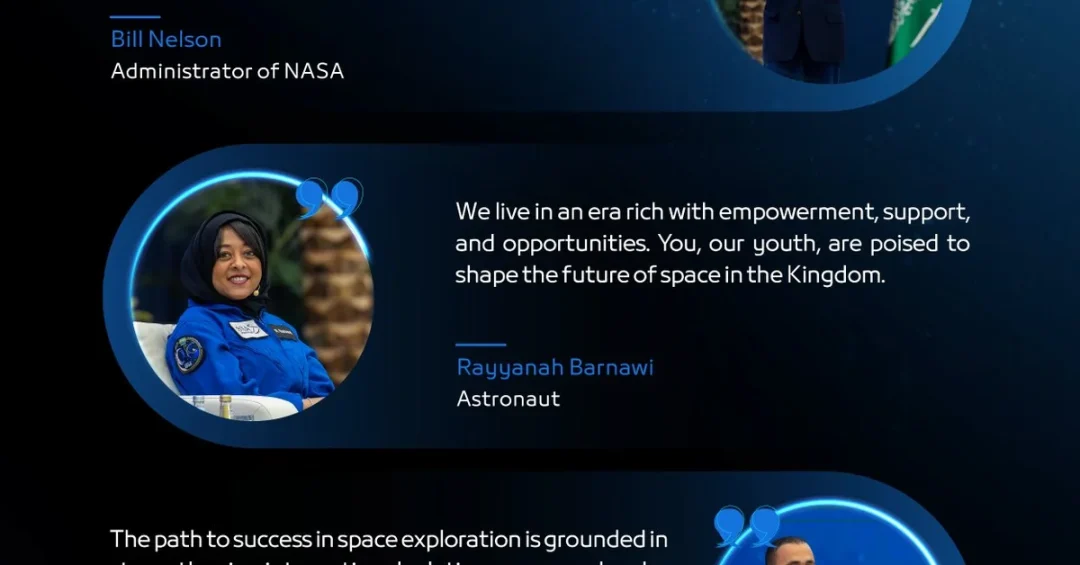
RIYADH — The Saudi Space Agency (SSA) and the U.S. National Aeronautics and Space Administration (NASA) held a joint dialogue session titled “Beyond Earth: Journeys to the Stars” at Prince Sultan University in Riyadh on May 14, 2024. The event, attended by SSA CEO Dr. Mohammed bin Saud Al-Tamimi, NASA Administrator Bill Nelson, U.S. Ambassador to Saudi Arabia Michael Ratney, and Saudi astronauts Rayyanah Barnawi, Ali Al-Ghamdi, and Mariam Fardous, aimed to bolster cooperation in science, research, development, and innovation.
Context and Background
The dialogue is part of the SSA’s broader efforts to develop national capabilities and competencies in the space sector. By fostering international partnerships and adopting modern technologies, the Kingdom aims to position itself as a emerging player in space exploration. The event underscores Saudi Arabia’s commitment to advancing scientific knowledge and inspiring future generations.
Key Details
The session featured a distinguished panel including NASA Administrator Bill Nelson and Saudi astronauts Rayana Barnawi, Maryam Firdaus, and Ali Al-Ghamdi. Discussions covered the Saudi space program, NASA’s future vision, challenges and opportunities in space exploration, and the role of pioneers in inspiring youth. The presence of high-level officials from both countries highlights the strategic importance of the bilateral relationship in space science.
Implications
This collaboration signals a deepening of Saudi-American ties in high-tech sectors. It also supports the Kingdom’s goal to diversify its economy and develop a knowledge-based society, aligning with Vision 2030. The exchange of expertise and joint initiatives could lead to new research opportunities, educational programs, and commercial ventures in space technology, benefiting both nations and the global community.
Vision 2030 Alignment
The SSA-NASA dialogue exemplifies Saudi Arabia’s Vision 2030 objectives of fostering innovation, building human capital, and establishing the Kingdom as a hub for advanced science and technology. By partnering with leading global agencies like NASA, Saudi Arabia is poised to contribute to humanity’s exploration of space while inspiring its youth to pursue careers in STEM fields, ensuring a prosperous and sustainable future for the nation.
20 Questions
Q1. What was the main purpose of the dialogue session between the Saudi Space Agency and NASA?
A1. The main purpose was to enhance cooperation in science, research, development, and innovation, as part of the Saudi Space Agency’s efforts to develop national capabilities and competencies in the space sector.
Q2. Where and when did the “Beyond Earth: Journeys to the Stars” dialogue take place?
A2. The dialogue took place at Prince Sultan University in Riyadh on May 14, 2024, as reported by the Saudi Press Agency (SPA).
Q3. Who were the key Saudi officials and astronauts in attendance?
A3. The event was attended by SSA CEO Dr. Mohammed bin Saud Al-Tamimi, Saudi astronauts Rayyanah Barnawi, Ali Al-Ghamdi, and Mariam Fardous, along with NASA Administrator Bill Nelson and U.S. Ambassador Michael Ratney.
Q4. What topics were discussed during the dialogue session?
A4. The discussion covered the Saudi space program, NASA’s vision for the future, challenges and opportunities of space exploration, and the role of pioneers in inspiring future generations.
Q5. How does this event align with Saudi Arabia’s Vision 2030?
A5. This event aligns with Vision 2030 by fostering innovation, building human capital, and establishing Saudi Arabia as a hub for advanced science and technology, contributing to economic diversification and a knowledge-based society.
Q6. What is the significance of the Saudi Space Agency partnering with NASA?
A6. The partnership enhances Saudi Arabia’s space capabilities through international collaboration, providing access to NASA’s expertise and resources, and strengthening bilateral ties in the high-tech sector.
Q7. Why is this dialogue important for Saudi Arabia’s space program?
A7. It allows Saudi Arabia to learn from NASA’s experience, exchange knowledge, and develop its own space program, ultimately aiming to become a competitive player in space science and exploration.
Q8. What role did Saudi astronauts play in the dialogue?
A8. The Saudi astronauts shared their experiences and insights, highlighting the Kingdom’s achievements in space and inspiring future generations to pursue careers in space exploration.
Q9. How does the dialogue contribute to international cooperation in space?
A9. It exemplifies bilateral cooperation between Saudi Arabia and the United States, fostering a collaborative approach to space science that can lead to joint research, technology sharing, and global scientific progress.
Q10. What are the goals of the Saudi Space Agency in the coming years?
A10. The SSA aims to develop national capabilities, adopt scientific methods and modern technologies, and harness them to advance the Saudi space sector, with the goal of contributing to the Kingdom’s long-term development.
Q11. How does NASA benefit from engaging with Saudi Arabia?
A11. NASA benefits by expanding its global partnerships, sharing its vision, and potentially gaining support for its missions, while also contributing to the growth of space science in the region.
Q12. What insights did NASA Administrator Bill Nelson share during the session?
A12. Bill Nelson discussed NASA’s future plans, including missions to the Moon and Mars, and emphasized the importance of international cooperation in space exploration.
Q13. How does the dialogue inspire Saudi youth?
A13. By showcasing Saudi astronauts as role models and highlighting career opportunities in space, the dialogue encourages young Saudis to pursue education and careers in science, technology, engineering, and mathematics (STEM).
Q14. What is the role of Prince Sultan University in hosting this event?
A14. Prince Sultan University provided a venue for this high-level dialogue, demonstrating its support for space education and research, and offering a platform for academic engagement with global space experts.
Q15. Are there any previous collaborations between Saudi Arabia and NASA?
A15. Yes, Saudi Arabia and NASA have a history of cooperation, including astronauts participating in NASA missions and joint research initiatives, which this dialogue seeks to further expand.
Q16. How does the Saudi space program contribute to global space exploration?
A16. The Saudi space program contributes by conducting scientific research, developing technologies, and engaging in international collaborations, thereby enriching humanity’s collective understanding and capabilities in space.
Q17. What challenges does the Saudi space program face?
A17. The program faces challenges such as building scientific capacity, creating a robust space ecosystem, and ensuring long-term investment, which are being addressed through partnerships and national strategies.
Q18. What opportunities does space exploration offer Saudi Arabia?
A18. Space exploration offers opportunities for economic diversification, technological innovation, educational advancement, and international prestige, all of which support the Kingdom’s strategic goals.
Q19. How can the public follow up on these space initiatives?
A19. The public can follow updates through official Saudi Space Agency announcements, NASA’s public outreach, and media coverage of joint events, ensuring transparency and engagement.
Q20. What is the future outlook for Saudi-U.S. space cooperation?
A20. The future looks promising, with potential for expanded joint missions, research exchanges, and commercial partnerships, reinforcing the strong bilateral relationship and contributing to scientific progress on both sides.
Reader Feedback
We value your thoughts. Please share your feedback on this article.
Your feedback helps us improve our coverage.