


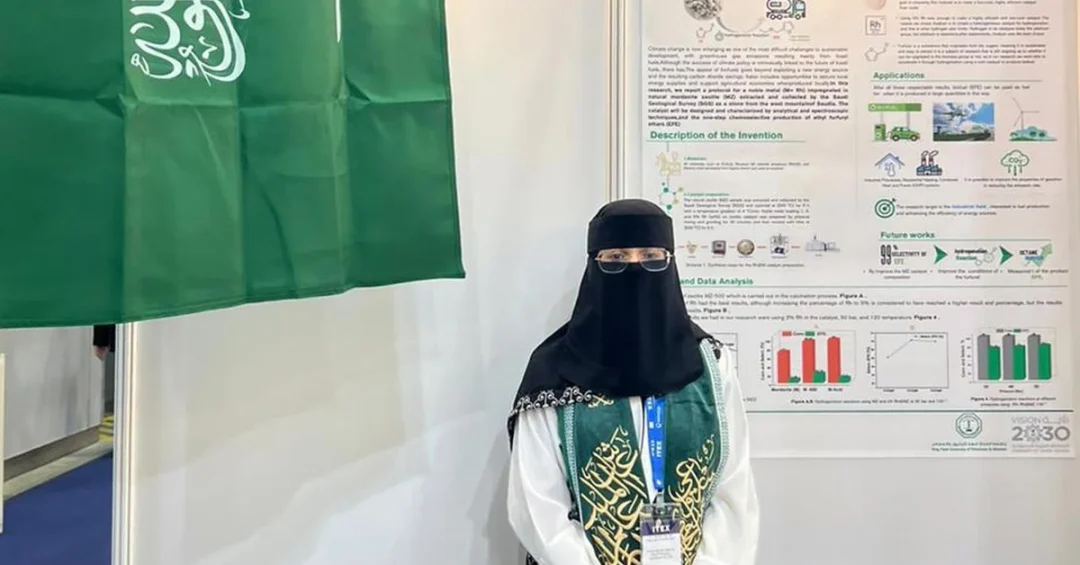
Two students from Saudi Arabia’s Qassim Region have won gold medals at the International Invention, Innovation, and Technology Exhibition (ITEX) 2024, held in Malaysia on May 16-17. The students, Mishari Al-Harbi and Dana Al-Ayaf, were recognized for their innovative projects in information technology and sustainable energy, marking a significant achievement for the Kingdom’s educational sector.
Context and Background
The ITEX exhibition is a prestigious global platform that showcases cutting-edge inventions and technological innovations from around the world. This year’s event brought together inventors, researchers, and innovators to present their work to an international audience. The participation of Saudi students in such a competitive arena underscores the Kingdom’s commitment to fostering scientific excellence and innovation among its youth, a key pillar of Vision 2030.
The Ministry of Education in the Qassim Region has been actively encouraging students to engage in research and development. This achievement adds to a growing list of successes for Saudi students in international competitions, reflecting the effectiveness of the Kingdom’s educational reforms and investment in human capital.
Key Details
Mishari Al-Harbi was awarded the gold medal for his project titled “Developing Wireless LoRaWAN Network for Enhanced Water Leak Detection,” which falls under the information technology, communication, and multimedia field. The project addresses a critical challenge in water management, offering a cost-effective and efficient solution to detect leaks in real time, which is vital for water conservation in arid regions like Saudi Arabia.
Dana Al-Ayaf received gold for her project “The Hydrogenation of Biomass-Derived Furfural Using Zeolite Catalyst toward Sustainable and Clean Fuel Production,” in the energy field. This research contributes to the development of renewable fuels from biomass, aligning with global sustainability goals and the Kingdom’s efforts to diversify its energy sources.
Mohammed Al-Fraih, Director of the Ministry of Education’s branch in Qassim, noted that this achievement is one of many accomplishments by Qassim students in local and international competitions. “Our students’ success at ITEX 2024 is a testament to their talent, hard work, and the supportive environment fostered by the Ministry,” he said.
Implications and Impact
The recognition of Saudi students at ITEX not only elevates the Kingdom’s standing in the global innovation community but also inspires a new generation of Saudi youth to pursue careers in science, technology, engineering, and mathematics (STEM). The projects developed by Al-Harbi and Al-Ayaf have practical applications that could contribute to national development, particularly in water management and sustainable energy, which are priorities under Vision 2030.
Furthermore, such achievements enhance the international reputation of Saudi Arabia as a hub for innovation and research, attracting partnerships and investments in technology and education. The Kingdom’s commitment to nurturing young talent is a positive signal to the world, demonstrating its readiness to contribute to global solutions in critical fields.
Vision 2030 Alignment
The success of Mishari Al-Harbi and Dana Al-Ayaf at ITEX 2024 exemplifies the goals of Saudi Arabia’s Vision 2030, which emphasizes the development of human capital, diversification of the economy, and promotion of innovation. By encouraging scientific research and providing students with opportunities to excel on global platforms, the Kingdom is building a knowledge-based society that will drive its future prosperity. These achievements are a clear indication that Saudi youth are rising to meet the challenges of the future, contributing to the realization of the Vision’s ambitions.
20 Questions
Q1. What is ITEX?
A1. ITEX is the International Invention, Innovation, and Technology Exhibition, an annual event held in Malaysia that showcases inventions and technological innovations from participants around the world, providing a platform for inventors to present their work.
Q2. When did ITEX 2024 take place?
A2. ITEX 2024 took place on May 16 and 17, 2024, in Malaysia. The event brought together innovators and researchers from various countries to display their latest projects.
Q3. Who were the Saudi students who won gold medals?
A3. The Saudi students were Mishari Al-Harbi and Dana Al-Ayaf, both from the Qassim Region’s educational institutions under the Ministry of Education. They won gold medals in their respective categories.
Q4. What was Mishari Al-Harbi’s project about?
A4. Mishari Al-Harbi’s project focused on developing a wireless LoRaWAN network for enhanced water leak detection. It aims to improve water management by providing real-time monitoring and alerts for leaks, which can be critical for water conservation.
Q5. What category did Mishari Al-Harbi’s project compete in?
A5. His project was entered in the information technology, communication, and multimedia field at ITEX 2024. This category covers innovations related to IT, communication systems, and multimedia applications.
Q6. What was Dana Al-Ayaf’s project?
A6. Dana Al-Ayaf’s project was titled “The Hydrogenation of Biomass-Derived Furfural Using Zeolite Catalyst toward Sustainable and Clean Fuel Production.” It explores the use of catalysts to convert biomass-derived compounds into clean fuels.
Q7. In which field did Dana Al-Ayaf win the gold medal?
A7. Dana Al-Ayaf won the gold medal in the energy field at ITEX 2024. Her research contributes to renewable energy production and sustainability.
Q8. Where is the Qassim Region located?
A8. The Qassim Region is located in central Saudi Arabia. It is known for its agricultural productivity and is one of the administrative regions of the Kingdom.
Q9. Who made the announcement about the students’ achievement?
A9. The announcement was made by the Saudi Press Agency (SPA) on behalf of the Ministry of Education’s branch in Qassim. The Director of the branch, Mohammed Al-Fraih, provided comments on the achievement.
Q10. What did Mohammed Al-Fraih say about the achievement?
A10. Mohammed Al-Fraih highlighted that this achievement is one of many accomplishments by Qassim students in local and international competitions. He praised the students’ talents and the supportive environment in schools.
Q11. Why is water leak detection important for Saudi Arabia?
A11. Water is a precious resource in Saudi Arabia due to its desert climate. Detecting leaks efficiently helps conserve water, reduce waste, and ensure sustainable water management, which is crucial for the country’s development.
Q12. How does the LoRaWAN network work in water leak detection?
A12. LoRaWAN is a wireless communication technology that offers long-range, low-power connectivity. In water leak detection, sensors can transmit data over wide areas to monitor pipe pressure and detect anomalies that indicate leaks, enabling timely repairs.
Q13. What is furfural and why is it important?
A13. Furfural is a biomass-derived compound that can be used as a platform chemical for producing fuels and other products. Upgrading furfural via hydrogenation can yield sustainable clean fuels, offering an alternative to fossil-based processes.
Q14. How does zeolite catalyst contribute to fuel production?
A14. Zeolite catalysts are porous materials that facilitate chemical reactions such as hydrogenation. They enhance selectivity and efficiency, making the conversion of biomass-derived compounds like furfural into fuels more viable and environmentally friendly.
Q15. What is an international invention exhibition?
A15. An international invention exhibition is an event where inventors and researchers from different countries showcase their new products, processes, or technological solutions. These exhibitions often include competitions and awards, encouraging global innovation.
Q16. How does this achievement benefit Saudi Arabia?
A16. The achievement showcases the talent of Saudi youth and highlights the Kingdom’s progress in education and innovation. It helps build a positive international image and supports the development of a knowledge-based economy as outlined in Vision 2030.
Q17. What is the significance of sustainability in these projects?
A17. Both projects emphasize sustainability: one focuses on efficient water use, and the other on clean fuel production from biomass. These align with global sustainability goals and Saudi Arabia’s environmental objectives.
Q18. What are some previous achievements by Saudi students?
A18. Saudi students have won medals in various international science and technology competitions, including the International Science and Engineering Fair (ISEF) and other innovation expos. These successes reflect the strengthening of STEM education in Saudi schools.
Q19. How does the Ministry of Education support student innovation?
A19. The Ministry of Education supports student innovation through programs, funding, training, and participation in competitions. Schools encourage research projects and provide mentorship to young innovators.
Q20. What are the future prospects for these young inventors?
A20. With their recognized achievements, these young inventors can pursue further research, academic studies, or entrepreneurial ventures. Their success may inspire other Saudi students and contribute to the Kingdom’s innovation ecosystem.
Reader Feedback
We value your thoughts. Please share your feedback on this article.
Your feedback helps us improve our coverage.