


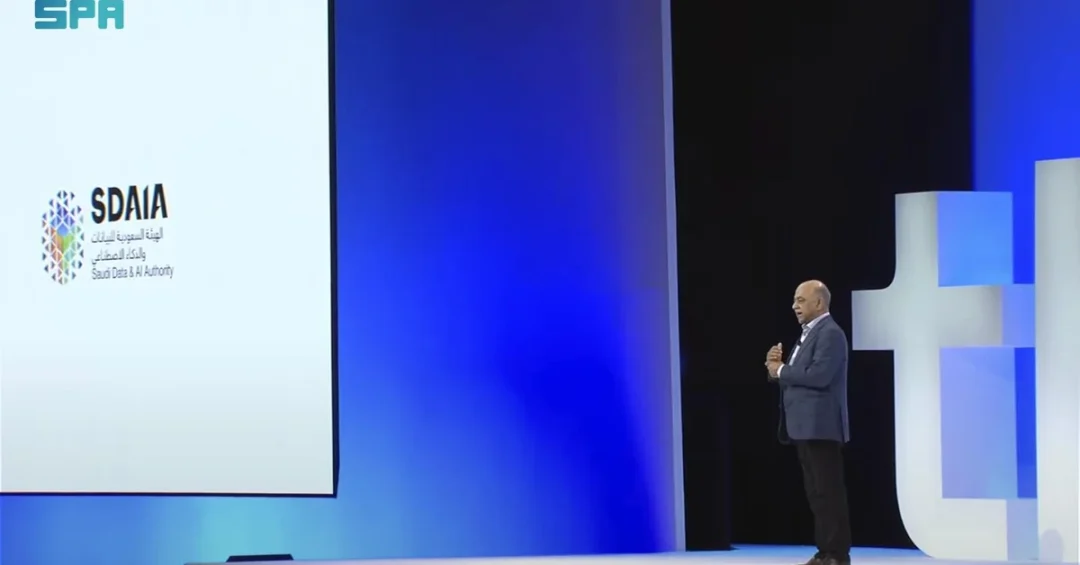
The Saudi Data and Artificial Intelligence Authority (SDAIA) announced at the IBM Think event in Boston on May 21, 2024, that its ALLaM model has been included in the IBM watsonx platform, positioning it among the world’s leading Arabic language generators. This development marks a significant milestone for Saudi Arabia’s AI ambitions and its commitment to empowering the Arabic language globally.
Context and Background
ALLaM, developed by SDAIA, is the first Saudi-designed AI system tailored to answer user inquiries in Arabic across various knowledge domains. Trained on one of the world’s largest Arabic language datasets, supplemented with English content, ALLaM ensures comprehensive and accurate responses. Users can interact via text or audio, and the model draws from trusted sources in the Kingdom and the Arab world.
The inclusion in IBM watsonx, a platform used by developers globally, was announced during the IBM Think event, a gathering of artificial intelligence experts, technicians, innovators, and policymakers. This move underscores the advanced technical capabilities of ALLaM, which underwent rigorous testing during its experimental phase to meet international standards for generative AI.
Key Details
ALLaM is currently available in a trial version on watsonx, allowing for professional evaluation. This testing phase is instrumental in accelerating the release of the model’s full capabilities, establishing it as a highly competitive force in Arabic language generation.
The collaboration between SDAIA and IBM, which produced ALLaM, is a significant milestone in advancing Arabic language applications within generative AI, according to Ayman Al-Rashed, Regional Vice President of IBM Saudi Arabia. “This cooperation unlocks the potential of Arabic language models for both public and private sectors, aligning with the cultural needs of the region,” he said.
Al-Rashed highlighted the broader impact: “Companies can leverage these models to develop innovative services.” This development strengthens Saudi Arabia’s position as a leader in AI technology tailored to regional market needs.
Implications and Impact
The inclusion of ALLaM on watsonx has far-reaching implications. For businesses and developers, it offers access to cutting-edge Arabic language AI, enabling the creation of services that cater to Arabic-speaking populations worldwide. For the region, it promotes the use of Arabic in technical, cultural, literary, scientific, and humanitarian fields, preserving language integrity while enriching content.
This initiative also contributes to cultural diversity and benefits all humanity, regardless of language or background, aligning with Saudi Arabia’s broader mission to leverage AI for societal advancement.
Vision 2030 Alignment
SDAIA’s efforts directly support Saudi Vision 2030, led by His Royal Highness Prince Mohammed bin Salman bin Abdulaziz Al Saud, Crown Prince, Prime Minister, and Chairman of SDAIA’s Board of Directors. The goal is to position the Kingdom as a global leader in advanced technologies, including AI. ALLaM’s recognition on IBM watsonx is a testament to this ambition, promising to foster innovation and cement Saudi Arabia’s role in shaping the future of artificial intelligence for the Arabic-speaking world.
20 Questions
Q1. What is the ALLaM model?
A1. ALLaM is a Saudi-developed AI system designed to answer user questions in Arabic across various domains. It is trained on one of the largest Arabic language datasets, supplemented with English, ensuring comprehensive responses in text or audio format.
Q2. Who developed ALLaM?
A2. ALLaM was developed by the Saudi Data and Artificial Intelligence Authority (SDAIA), in partnership with IBM. This collaboration aims to advance Arabic language applications within generative AI.
Q3. Where was ALLaM’s inclusion announced?
A3. The inclusion was announced at the IBM Think event in Boston on May 21, 2024. The event gathered experts, technicians, and policymakers in AI.
Q4. What is IBM watsonx?
A4. IBM watsonx is a platform widely used by developers globally for AI and data solutions. It hosts various models, and ALLaM’s inclusion means it is now available for professional evaluation and use.
Q5. Is ALLaM currently available?
A5. ALLaM is available in a trial version on watsonx. This allows for further evaluation and testing, which will accelerate the release of its full capabilities.
Q6. How was ALLaM tested?
A6. During its experimental phase, ALLaM underwent rigorous testing against international standards for generative AI to ensure it can compete with other models on watsonx.
Q7. What makes ALLaM unique?
A7. ALLaM is the first Saudi-developed AI system for Arabic language generation. It is trained on one of the world’s largest Arabic language datasets, ensuring accurate and comprehensive responses.
Q8. Can users interact with ALLaM in audio?
A8. Yes, users can submit inquiries in text or audio format, and ALLaM will respond in the chosen format, drawing from trusted sources in the Kingdom and the Arab world.
Q9. What are the goals of SDAIA?
A9. SDAIA aims to serve and empower the Arabic language regionally and globally, preserving its integrity while promoting its use in technical, cultural, literary, scientific, and humanities fields.
Q10. How does ALLaM benefit the public sector?
A10. ALLaM can be used by the public sector to provide Arabic language AI services, improving accessibility and efficiency in government services for Arabic speakers.
Q11. What did Ayman Al-Rashed say about the collaboration?
A11. Ayman Al-Rashed, Regional VP of IBM Saudi Arabia, said the cooperation unlocks the potential of Arabic language models for both public and private sectors, aligning with regional cultural needs.
Q12. How does ALLaM support Vision 2030?
A12. ALLaM contributes to Vision 2030 by positioning Saudi Arabia as a global leader in advanced technologies, including AI, and by leveraging AI to foster cultural diversity and benefit humanity.
Q13. What sources does ALLaM use?
A13. ALLaM draws from trusted sources in the Kingdom and the Arab world, ensuring that its answers are reliable and contextually relevant.
Q14. What is the significance of ALLaM’s inclusion?
A14. It validates ALLaM’s advanced capabilities and places it among the world’s leading Arabic language generators, boosting Saudi Arabia’s AI standing.
Q15. How does ALLaM enrich Arabic content?
A15. By generating content in Arabic across various fields, ALLaM enriches the language and promotes its use, preserving its integrity.
Q16. Can developers use ALLaM?
A16. Yes, developers on watsonx can access ALLaM and leverage it to build innovative services for Arabic-speaking users.
Q17. What is the role of HRH Prince Mohammed bin Salman?
A17. He is the Crown Prince, Prime Minister, and Chairman of SDAIA’s Board, guiding the Kingdom’s AI strategy and Vision 2030 goals.
Q18. What impact will ALLaM have on companies?
A18. Companies can use ALLaM to develop innovative services tailored to Arabic-speaking markets, enhancing customer experience and expanding their reach.
Q19. Is ALLaM only for Arabic?
A19. ALLaM is designed for Arabic, but it is also supplemented with English content, making it versatile for bilingual applications.
Q20. What is the future of ALLaM?
A20. With its inclusion on watsonx, ALLaM will undergo further evaluation, leading to the release of full capabilities, establishing it as a competitive force in Arabic language AI.
Reader Feedback
We value your thoughts. Please share your feedback on this article.
Your feedback helps us improve our coverage.