


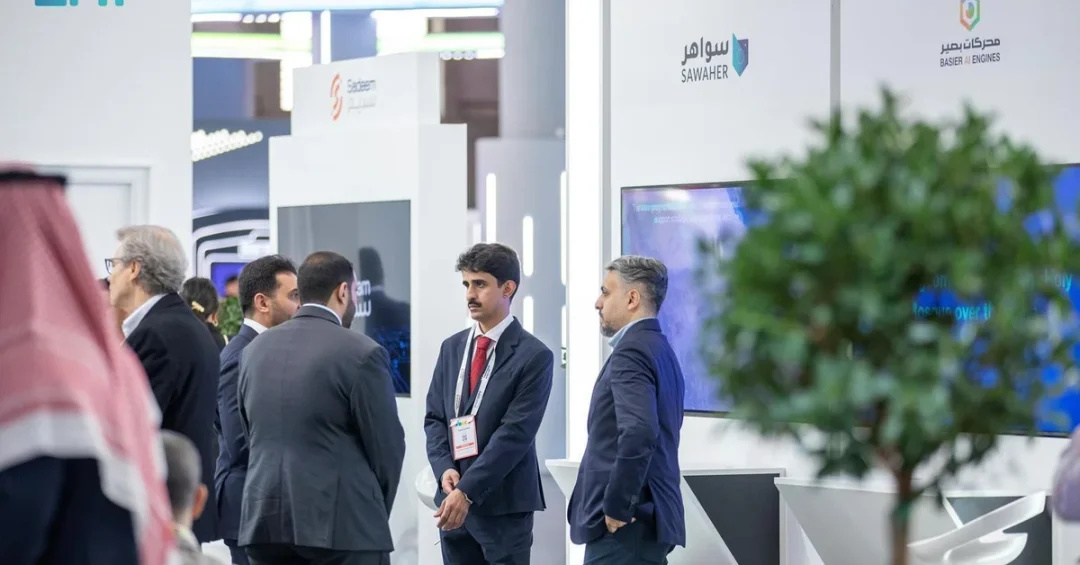
The Saudi Data and AI Authority (SDAIA) drew widespread attention at the Smart City Expo World Congress 2024 in Barcelona, Spain, held from November 5 to 7, where its pavilion showcased digital services designed for government entities and its latest advances in building smart cities. Visitors and participants at the global event explored how SDAIA is translating the Kingdom’s Vision 2030 ambitions into practical technologies that serve millions of people every day. The pavilion presented a suite of national platforms, from the Tawakkalna application to the DEEM Government Cloud Service, illustrating how Saudi Arabia is integrating data and artificial intelligence into the fabric of public administration. The participation, confirmed through official Saudi channels including the Saudi Press Agency (SPA), underscores the Kingdom’s commitment to sharing its digital transformation experience with the world.
Why does a Saudi pavilion in Barcelona matter to audiences far beyond the Middle East? The answer lies in the scale and maturity of the services on display. SDAIA’s presence at the Smart City Expo World Congress was not a symbolic gesture but a demonstration of working systems already embedded in national life. The authority’s second participation in the congress reflects a deliberate strategy to position Saudi Arabia as a global leader in data and AI, while contributing to the United Nations’ Sustainable Development Goals (SDGs). For international observers, the pavilion offered a rare, concrete view of how a nation can coordinate government services at scale through a unified digital ecosystem.
Context and Background
What is the Smart City Expo World Congress, and why has it become a key stage for Saudi Arabia’s technological story? Held annually in Barcelona, the event gathers governments, technology companies, researchers, and urban planners to discuss the future of cities. For SDAIA, the 2024 edition provided a platform to present its global achievements in data and AI, aligned with the Kingdom’s Vision 2030 targets. The authority’s participation came as Saudi cities continue to modernize under a national transformation program that places digital infrastructure at its core, from Riyadh to NEOM and beyond.
SDAIA was established to organize and develop the data and AI sectors in Saudi Arabia, acting as the national authority responsible for these fields. Its work spans policy, infrastructure, and direct service delivery through applications used by citizens, residents, and government entities. At the Barcelona pavilion, attendees learned how SDAIA’s digital services are offered to government entities inside the Kingdom, and how those services feed into the broader construction of smart cities. The presentation connected local implementation with international cooperation, showing that Saudi Arabia’s digital journey is both national in scope and global in outlook.
The timing is significant. As cities worldwide grapple with rising demand for efficient public services, Saudi Arabia has moved from pilot projects to nationwide platforms. The congress allowed SDAIA to explain this progression to an international audience, emphasizing that the Kingdom’s approach combines central coordination with partnerships across the public and private sectors. This model, officials suggest, is one reason Saudi digital services have achieved rapid adoption and high user satisfaction.
Key Details
Which services captured the most attention at the SDAIA pavilion? Among the highlights was Tawakkalna, a comprehensive national application developed by SDAIA to support Vision 2030 goals. The app fosters governmental integration and facilitates service delivery in collaboration with partner entities. With more than 32 million users and over 350 services, Tawakkalna enables government bodies to achieve their objectives efficiently through seamless technological integration. For visitors, the app represented a working example of how a single digital gateway can unify hundreds of services across ministries and agencies.
SDAIA also showcased Nafath, an application that leverages advanced data and AI technologies to enable digital identity in the Kingdom. Nafath supports various sectors in their digital transformation efforts, enhancing efficiency and accelerating digital transactions. It offers innovative tools that allow individuals to conduct digital transactions smoothly, securely, and easily. The emphasis on secure digital identity reflects a broader recognition that trust is the foundation of any large-scale digital government program, and Nafath has become a critical layer in Saudi Arabia’s digital architecture.
The pavilion further presented the DEEM Government Cloud Service, designed to provide reliable, flexible, and efficient high-technology resources for governmental and semi-governmental entities. DEEM supports real-time, direct digital transformation under a unified system and offers over 50 services, including cloud infrastructure, DEEM mail, and the DEEM Smart Platform. It benefits more than 180 government entities and is described as the largest government cloud of its kind in the Middle East. Alongside DEEM, SDAIA highlighted the Baseer platform, which features AI-driven solutions based on national algorithms to support government efforts in Hajj crowd management and pilgrimage operations, fully developed locally with Saudi talent.
Another notable project was EYENAI, one of Saudi Arabia’s pioneering medical AI solutions for detecting diabetic retinopathy. Launched by SDAIA in collaboration with King Khaled Eye Specialist Hospital (KKESH), Lean Company, and the Saudi Company for Artificial Intelligence (SCAI), EYENAI was developed locally by Saudi AI engineers and experts. This innovative project represents a successful public-private partnership and a significant advancement in medical diagnostics across the region. The solution has already contributed to early diagnoses for over 1,050 beneficiaries, demonstrating how AI can be directed toward tangible humanitarian outcomes.
International and Regional Impact
How does Saudi Arabia’s digital expertise resonate on the international stage? SDAIA’s participation in Barcelona signals that the Kingdom is not only a consumer of technology but also a contributor to global best practices. By presenting platforms such as Tawakkalna, Nafath, and DEEM, SDAIA offered other governments a reference model for integrating services across agencies. The authority’s alignment with the United Nations’ Sustainable Development Goals reinforces this outward-looking approach, linking national digital progress to internationally shared objectives such as inclusive institutions and sustainable urbanization.
Regionally, the pavilion reinforced Saudi Arabia’s position as a digital leader in the Middle East. The DEEM Government Cloud, described as the largest of its kind in the region, and the Baseer platform’s application to Hajj crowd management illustrate capabilities that are directly relevant to other countries managing large-scale events and public services. For international partners, the message was clear: Saudi Arabia is open to collaboration, and its experience in data and AI is available for joint initiatives that advance smart city development worldwide.
Economic and Strategic Significance
What economic value do these digital services generate? By streamlining government transactions, platforms like Tawakkalna and Nafath reduce administrative costs, save time for citizens and businesses, and improve the overall efficiency of the public sector. The DEEM Government Cloud provides scalable infrastructure that allows government entities to deploy digital services faster and more securely, avoiding duplication and fragmentation. These efficiencies contribute to a more attractive environment for investment and entrepreneurship, both central to Vision 2030’s economic diversification agenda.
Strategically, SDAIA’s work supports the Kingdom’s ambition to build a knowledge-based economy. The development of Baseer and EYENAI with Saudi talent demonstrates a commitment to local capacity building in AI and data science. Public-private partnerships, such as the one behind EYENAI, show how government entities, hospitals, and private companies can combine strengths to deliver solutions with social impact. For Saudi Arabia, these projects are not isolated achievements but building blocks of a digital ecosystem that can be exported, shared, and further developed.
Vision 2030 Alignment
How does SDAIA’s showcase in Barcelona connect to Saudi Vision 2030? The Vision, launched in 2016, seeks to transform the Kingdom’s economy and society through diversification, modernization, and improved quality of life. Digital transformation is a cross-cutting enabler of these goals, and SDAIA is central to that effort. The services presented in Barcelona, from the national application Tawakkalna to the government cloud DEEM, directly support the Vision’s objectives of efficient government, enhanced citizen services, and a thriving digital economy.
SDAIA’s global engagement also reflects the Vision’s international dimension. By participating in events like the Smart City Expo World Congress, the authority positions Saudi Arabia as a proactive global partner in shaping the future of cities. The emphasis on AI for social good, exemplified by EYENAI’s early diagnoses for over 1,050 beneficiaries, aligns with the Vision’s humanitarian and health priorities. As Saudi Arabia continues to invest in data and AI, its progress will be measured not only in technology deployed but in lives improved, both at home and through international cooperation. The Barcelona pavilion offered a glimpse of that future, and the world took notice.
20 Questions
Q1. What event did SDAIA participate in during November 2024?
A1. SDAIA participated in the Smart City Expo World Congress 2024 in Barcelona, Spain, held from November 5 to 7. The event brought together governments and technology leaders to discuss the future of urban development.
Q2. What was the main focus of SDAIA’s pavilion at the expo?
A2. The pavilion focused on SDAIA’s digital services for government entities in Saudi Arabia and its latest experiences in building smart cities, aligning with Vision 2030 and the UN Sustainable Development Goals.
Q3. What is Tawakkalna and how many users does it have?
A3. Tawakkalna is a comprehensive national application developed by SDAIA. It has over 32 million users and offers more than 350 services, fostering governmental integration and facilitating service delivery.
Q4. How does Tawakkalna support government entities?
A4. Tawakkalna enables government bodies to achieve their objectives efficiently through seamless technological integration, allowing them to deliver services to beneficiaries in collaboration with partner entities.
Q5. What is the Nafath app designed to do?
A5. Nafath leverages advanced data and AI technologies to enable digital identity in Saudi Arabia. It supports digital transformation across sectors, enhancing efficiency and accelerating secure digital transactions for individuals.
Q6. What is the DEEM Government Cloud Service?
A6. DEEM is a government cloud service providing reliable, flexible, and efficient high-technology resources for governmental and semi-governmental entities, supporting real-time digital transformation under a unified system.
Q7. How many services and entities does DEEM support?
A7. DEEM offers over 50 services, including cloud infrastructure, DEEM mail, and the DEEM Smart Platform. It benefits more than 180 government entities and is the largest government cloud of its kind in the Middle East.
Q8. What is the Baseer platform used for?
A8. Baseer features AI-driven solutions based on national algorithms to support government efforts in Hajj crowd management and pilgrimage operations. It was fully developed locally with Saudi talent.
Q9. What is the EYENAI project?
A9. EYENAI is a pioneering medical AI solution for detecting diabetic retinopathy. It was launched by SDAIA in collaboration with King Khaled Eye Specialist Hospital, Lean Company, and the Saudi Company for Artificial Intelligence.
Q10. How many beneficiaries has EYENAI helped so far?
A10. EYENAI has contributed to early diagnoses for over 1,050 beneficiaries, demonstrating the potential of AI in improving medical diagnostics across the region.
Q11. Who developed the EYENAI solution?
A11. EYENAI was developed locally by Saudi AI engineers and experts, representing a successful public-private partnership and a significant advancement in medical diagnostics.
Q12. Why is SDAIA’s participation in the expo significant?
A12. It underscores SDAIA’s commitment to positioning Saudi Arabia as a global leader in data and AI, aligning with national efforts to drive digital transformation and advance Vision 2030 goals.
Q13. How does SDAIA’s work align with the UN Sustainable Development Goals?
A13. SDAIA’s digital services support sustainable urbanization, efficient institutions, and improved public services, contributing to the UN SDGs through innovation and international cooperation.
Q14. What does SDAIA aim to achieve through global events like this?
A14. SDAIA aims to share Saudi Arabia’s digital transformation experience, foster international partnerships, and position the Kingdom as a leader in data and AI for smart city development.
Q15. How does Tawakkalna contribute to governmental integration?
A15. Tawakkalna integrates services from multiple government entities into one platform, enabling seamless collaboration and efficient service delivery to millions of users across Saudi Arabia.
Q16. What role does Nafath play in digital transactions?
A16. Nafath provides secure digital identity verification, allowing individuals to conduct digital transactions smoothly and safely, thereby accelerating the adoption of digital services across various sectors.
Q17. What makes DEEM the largest government cloud in the Middle East?
A17. DEEM’s extensive infrastructure, over 50 services, and support for more than 180 government entities make it the largest government cloud of its kind in the Middle East.
Q18. How does Baseer support Hajj operations?
A18. Baseer uses AI-driven solutions based on national algorithms to assist government efforts in managing Hajj crowds and pilgrimage operations, enhancing safety and efficiency during the annual event.
Q19. What does EYENAI demonstrate about Saudi AI capabilities?
A19. EYENAI demonstrates Saudi Arabia’s ability to develop advanced AI solutions locally, highlighting the skills of Saudi engineers and the effectiveness of public-private partnerships in healthcare.
Q20. How does SDAIA’s work support Vision 2030?
A20. SDAIA’s digital services enhance government efficiency, improve quality of life, and drive economic diversification, all of which are core objectives of Saudi Vision 2030.
Reader Feedback
We value your thoughts. Please share your feedback on this article.
Your feedback helps us improve our coverage.
Related articles
 SDAIA Showcases Saudi Smart City Innovations at Barcelona Expo
 Madinah Showcases Smart City Innovation at Barcelona Expo
 SDAIA Report: Saudi Arabia Leads Global AI Innovation
 Saudi Arabia Building Cognitive Cities, Not Just Smart Ones: SDAIA
 SDAIA Showcases Ethical AI Leadership at Barcelona Smart Cities Summit
 Riyadh Hosts Final Stage of ALLaM Challenge with 17 Nations