


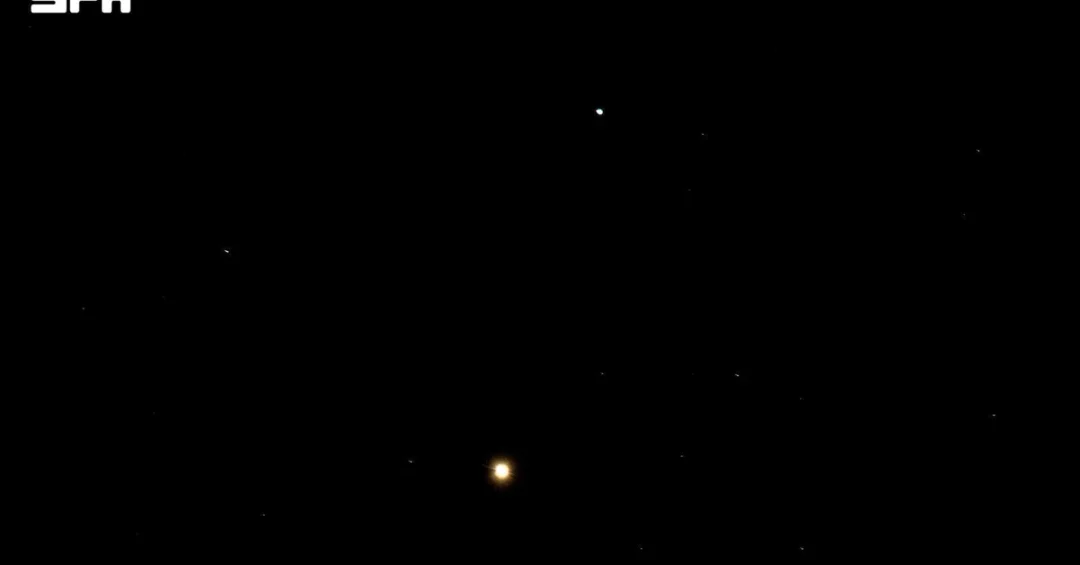
The sky over the city of Arar in Saudi Arabia’s Northern Borders Region witnessed a striking apparent conjunction between the planet Venus and the bright star Spica on Tuesday, September 2, 2026, creating an astronomical spectacle visible to residents and visitors shortly after sunset. The event, reported by the Saudi Press Agency (SPA), drew attention from astronomy enthusiasts across the Kingdom and offered a vivid reminder of the rich observational opportunities presented by Saudi Arabia’s vast and increasingly accessible night skies.
According to Adnan Khalifa, a member of the Astronomy and Space Club, the conjunction is an apparent alignment as viewed from Earth and does not indicate that the two celestial bodies are actually close to each other in space. Venus, the second planet from the Sun, and Spica, the brightest star in the constellation Virgo, are separated by vast cosmic distances, yet from the perspective of observers on Earth they appeared to share nearly the same line of sight. This optical phenomenon is among the regular astronomical events visible in the skies of the Northern Borders Region, offering astronomy enthusiasts an opportunity to observe the apparent movements of planets and their positions relative to the stars. The SPA report, released at 11:41 local time (08:41 GMT), confirmed the observation and highlighted the growing public interest in stargazing across the Kingdom. But what exactly makes such conjunctions so compelling to both scientists and the public alike?
Context and Background
Have you ever wondered how two objects that are millions of kilometers apart can appear to touch in the night sky? The Venus-Spica conjunction observed over Arar is a classic example of an apparent alignment, a phenomenon that has fascinated humanity for millennia. Venus, often called the Morning Star or Evening Star depending on its position in its orbit, is the third-brightest object in the sky after the Sun and Moon. Spica, a blue-white giant star located approximately 250 light-years from Earth, is the 16th brightest star in the night sky and has been used as a navigational reference for centuries. When these two brilliant points of light appear close together, they create a dazzling pair that is easy to spot with the naked eye.
According to Adnan Khalifa of the Astronomy and Space Club, the conjunction is an apparent alignment as viewed from Earth and does not indicate that the two celestial bodies are actually close to each other in space. This distinction is crucial: while Venus orbits the Sun at an average distance of about 108 million kilometers, Spica lies roughly 250 light-years away, or about 2.4 quadrillion kilometers. The illusion of proximity arises from the geometry of our line of sight, a reminder of how perspective shapes our perception of the cosmos. The Northern Borders Region, with its expansive desert landscapes and relatively low light pollution, has become a favored location for observing such events.
The SPA report noted that this phenomenon is among the astronomical events visible in the Northern Borders Region’s skies, offering astronomy enthusiasts an opportunity to observe the apparent movements of planets and their positions relative to the stars. Saudi Arabia has a long history of celestial observation, from the use of stars for navigation by ancient travelers to modern astronomical clubs and observatories. Today, the Kingdom is investing in science and technology as part of Vision 2030, and events like this conjunction serve as natural catalysts for public engagement with astronomy and space sciences.
Key Details of the Observation
What did observers actually see over Arar on that September evening? Shortly after sunset, Venus appeared as a brilliant, steady light low on the western horizon. Spica, though farther away, shone with a distinct blue-white hue, and as the sky darkened, the two objects seemed to draw closer together, culminating in a visual pairing that lasted for a few hours before they set. The event was visible to the naked eye, but binoculars or a small telescope would have enhanced the view, revealing Venus’s phase and Spica’s intense luminosity. The SPA report, citing Adnan Khalifa, emphasized that the conjunction is an apparent alignment and not a physical meeting of the two bodies.
Khalifa, a member of the Astronomy and Space Club, provided expert context for the public, explaining that such events are regular occurrences that help skywatchers understand the mechanics of the solar system. The club, which promotes astronomy education across Saudi Arabia, has been instrumental in organizing stargazing events and workshops, particularly in regions with clear skies like the Northern Borders. The report was released at 11:41 local time (08:41 GMT), ensuring timely coverage for both local and international audiences. The observation over Arar is part of a broader pattern of astronomical events that grace Saudi skies throughout the year, including meteor showers, planetary oppositions, and lunar eclipses.
For residents of Arar, the conjunction was more than just a pretty sight; it was an opportunity to connect with the universe and reflect on humanity’s place in the cosmos. The event also highlighted the importance of dark-sky preservation, as light pollution continues to threaten visibility in many parts of the world. Saudi Arabia’s Northern Borders Region, with its sparse population and vast open spaces, remains a prime location for astronomical observation. The SPA’s coverage of the event underscores the media’s role in promoting scientific awareness and encouraging the public to look up and wonder.
International and Regional Impact
How does a celestial event over a Saudi city resonate beyond the Kingdom’s borders? Astronomical conjunctions are global phenomena, visible from many parts of the world, and they often generate international interest. The Venus-Spica conjunction was observed not only in Saudi Arabia but also in other countries across the Middle East, North Africa, and parts of Europe and Asia. Social media platforms buzzed with images and reports from amateur astronomers, creating a sense of shared wonder that transcends national boundaries. For Saudi Arabia, such events offer an opportunity to showcase its natural advantages for astronomy and to position itself as a destination for scientific tourism.
Regionally, the conjunction served as a reminder of the rich astronomical heritage of the Arabian Peninsula. Ancient Arab astronomers made significant contributions to the field, developing star catalogs, refining astronomical instruments, and using celestial observations for practical purposes such as navigation and timekeeping. Today, Saudi Arabia is building on that legacy through initiatives like the Astronomy and Space Club and investments in space technology. The Kingdom’s participation in international space missions and its growing network of observatories reflect a broader commitment to scientific excellence. Events like the Venus-Spica conjunction provide a tangible link between past and present, inspiring a new generation of Saudi scientists and explorers.
Economic and Strategic Significance
Could the growing interest in astronomy translate into economic and strategic benefits for Saudi Arabia? Absolutely. The global space economy is expanding rapidly, and Saudi Arabia is positioning itself as a key player through investments in satellite technology, space research, and related industries. The Kingdom’s Vision 2030 agenda emphasizes economic diversification, and the space sector is a promising avenue for creating high-skilled jobs and fostering innovation. Astronomical events like the Venus-Spica conjunction capture public imagination, encouraging young Saudis to pursue careers in science, technology, engineering, and mathematics (STEM).
Moreover, the Northern Borders Region, where Arar is located, has been identified as a potential hub for astrotourism. With its clear skies and minimal light pollution, the region could attract visitors interested in stargazing, similar to dark-sky reserves in other parts of the world. Such tourism would contribute to local economic development, create jobs, and promote cultural exchange. The SPA report on the conjunction highlights the region’s suitability for astronomical observation, subtly promoting it as a destination for both domestic and international travelers. This aligns with Vision 2030’s goals of boosting tourism and diversifying revenue streams away from oil.
Vision 2030 Alignment
How does a simple conjunction of Venus and Spica connect to Saudi Arabia’s long-term vision? At its core, Vision 2030 is about transforming the Kingdom into a knowledge-based economy and a global leader in innovation. Astronomy and space sciences are integral to that transformation, as they inspire curiosity, drive technological advancement, and foster international collaboration. The observation over Arar, reported by the Saudi Press Agency and explained by experts like Adnan Khalifa, exemplifies the Kingdom’s commitment to science education and public engagement. By promoting events like this, Saudi Arabia is nurturing a culture of inquiry and discovery that will pay dividends for generations.
Furthermore, the conjunction underscores the importance of preserving Saudi Arabia’s natural dark skies, which are a valuable resource for both scientific research and tourism. As the Kingdom continues to develop its infrastructure and cities, balancing growth with environmental stewardship will be essential. The Northern Borders Region, with its pristine night skies, offers a unique opportunity to develop astrotourism in a sustainable manner. Ultimately, the Venus-Spica conjunction is more than an astronomical curiosity; it is a symbol of Saudi Arabia’s forward-looking ambition and its desire to explore the universe while building a prosperous future at home. As the stars continue to shine over Arar, they illuminate a path toward a brighter, more knowledgeable tomorrow.
20 Questions
Q1. What was the astronomical event observed over Arar on September 2, 2026?
A1. It was an apparent conjunction between the planet Venus and the star Spica, visible after sunset. The event was reported by the Saudi Press Agency and drew interest from astronomy enthusiasts across the Kingdom.
Q2. Who provided expert commentary on the conjunction?
A2. Adnan Khalifa, a member of the Astronomy and Space Club, explained the phenomenon. He clarified that it was an apparent alignment as viewed from Earth, not a physical proximity between the two celestial bodies.
Q3. What is a conjunction in astronomy?
A3. A conjunction occurs when two celestial objects appear close together in the sky from Earth’s perspective. It is an optical alignment and does not mean the objects are actually near each other in space.
Q4. How far is Venus from Earth compared to Spica?
A4. Venus is a neighboring planet, orbiting the Sun at about 108 million kilometers from Earth on average. Spica is a star about 250 light-years away, or roughly 2.4 quadrillion kilometers, vastly farther than Venus.
Q5. Why did the conjunction appear as a close pairing?
A5. The apparent closeness was due to the geometry of our line of sight. From Earth, Venus and Spica happened to align along nearly the same direction, creating the illusion of proximity despite their vast actual separation.
Q6. Was the conjunction visible to the naked eye?
A6. Yes, the conjunction was visible to the naked eye shortly after sunset. Venus appeared as a brilliant light, and Spica shone with a blue-white hue, making the pair easy to spot.
Q7. Where in Saudi Arabia was the event observed?
A7. The event was observed over Arar, the capital of the Northern Borders Region. The region’s clear skies and low light pollution make it an excellent location for astronomical observation.
Q8. What is the Astronomy and Space Club?
A8. The Astronomy and Space Club is a Saudi organization that promotes astronomy education and public engagement. It organizes stargazing events and workshops, and its members provide expert commentary on celestial phenomena.
Q9. Why is the Northern Borders Region good for stargazing?
A9. The Northern Borders Region has expansive desert landscapes, sparse population, and minimal light pollution. These conditions provide clear, dark skies ideal for observing stars, planets, and other astronomical events.
Q10. What is Spica?
A10. Spica is the brightest star in the constellation Virgo and the 16th brightest star in the night sky. It is a blue-white giant star located about 250 light-years from Earth and has been used for navigation for centuries.
Q11. What is Venus often called?
A11. Venus is often called the Morning Star or Evening Star, depending on its position in its orbit. It is the third-brightest object in the sky after the Sun and Moon.
Q12. Does a conjunction mean the objects are physically close?
A12. No, a conjunction is an apparent alignment as seen from Earth. The objects remain at their actual distances, which can be millions or even quadrillions of kilometers apart, as in the case of Venus and Spica.
Q13. How did the Saudi Press Agency report the event?
A13. The Saudi Press Agency reported the conjunction on September 2, 2026, at 11:41 local time (08:41 GMT). The report included commentary from Adnan Khalifa and highlighted the event’s visibility in the Northern Borders Region.
Q14. What other astronomical events are visible in Saudi Arabia?
A14. Saudi skies host various events, including meteor showers, planetary oppositions, lunar and solar eclipses, and conjunctions. The Northern Borders Region is particularly favorable for observing these phenomena due to its dark skies.
Q15. How does astronomy align with Vision 2030?
A15. Astronomy supports Vision 2030 by promoting STEM education, innovation, and a knowledge-based economy. It also fosters scientific tourism and international collaboration, contributing to economic diversification and global engagement.
Q16. Can astronomy boost tourism in Saudi Arabia?
A16. Yes, astrotourism is a growing niche. The Northern Borders Region’s clear skies could attract visitors for stargazing, similar to dark-sky reserves worldwide, supporting local economies and Vision 2030 tourism goals.
Q17. What is the significance of the Venus-Spica conjunction for science?
A17. Such events help the public understand celestial mechanics and the scale of the universe. They also encourage interest in astronomy and space sciences, which are fields Saudi Arabia is actively developing.
Q18. How can light pollution affect stargazing?
A18. Light pollution from cities obscures faint celestial objects. Regions like the Northern Borders with minimal artificial light offer clearer views, making them valuable for both amateur and professional astronomers.
Q19. Did the conjunction have any cultural significance?
A19. Astronomical events have historically guided navigation, agriculture, and calendars in Arabian culture. The conjunction continues that legacy by inspiring wonder and connecting modern Saudis with their astronomical heritage.
Q20. What can we expect next in Saudi skies?
A20. Saudi Arabia will continue to witness regular astronomical events, including meteor showers and planetary alignments. The Astronomy and Space Club and other groups will likely organize public viewing events to engage the community.
Reader Feedback
We value your thoughts. Please share your feedback on this article.
Your feedback helps us improve our coverage.
Related articles
 Islamic University of Madinah Climbs Nature Index 2026
 Estidamah Develops Two New Wheat Varieties to Boost Food Security
 CST Session Supports Saudi Space Startups with New Capability Programs
 Mawhiba Opens Registration for 2026 World Robot Olympiad
 KAUST: Seagrass Carbon Credits Could Unlock $2.3 Trillion
 Tuwaiq Academy, Google Launch ALBUS AI Education Initiative