


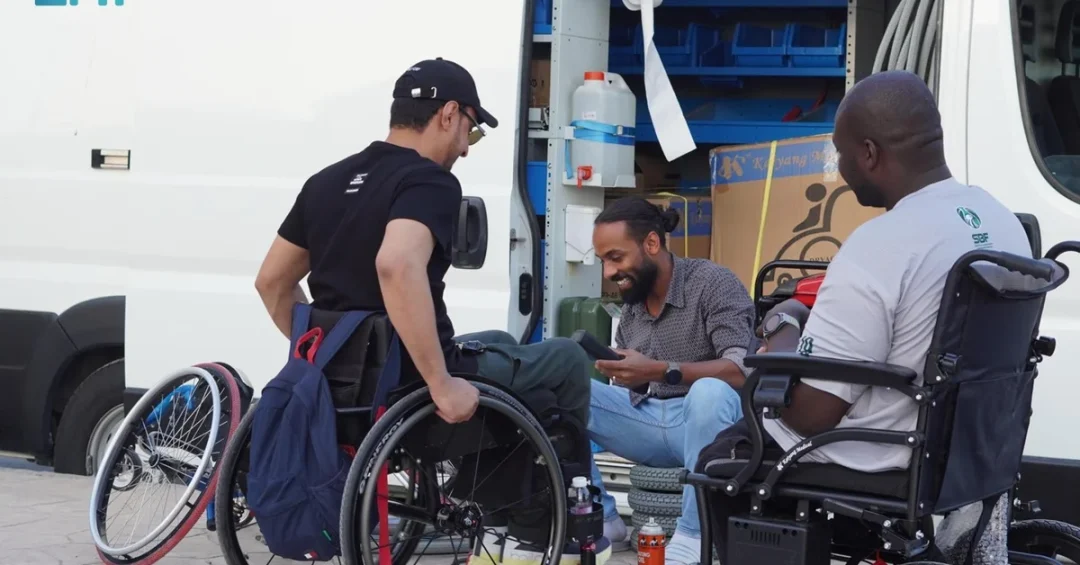
Al-Haramain Islamic Foundation for People with Mobility Disabilities has distributed 120 electric wheelchairs in the Makkah and Madinah regions, according to an announcement carried by the Saudi Press Agency (SPA). The initiative is designed to improve the daily lives of beneficiaries with mobility disabilities and to enable their effective participation in education, employment, social and community life, reflecting the Kingdom of Saudi Arabia’s commitment to inclusive and dignified care for all citizens.
Context and Background
The distribution was announced by Mudhi Al-Quraini, a member of the foundation’s Council of the General Assembly, who stated that the campaign aims to strengthen community cooperation and expand the scope of assistance to needy groups. He noted that it reflects the national and humanitarian spirit that characterizes the Kingdom of Saudi Arabia, where charitable giving and social solidarity are long-standing values.
The Al-Haramain Islamic Foundation for People with Mobility Disabilities is a Saudi non-profit organization dedicated to serving individuals with mobility challenges. Operating under the oversight of the Kingdom’s non-profit sector framework, the foundation works alongside government agencies and private-sector partners to deliver practical assistance to those in need.
Al-Quraini added that the distribution emphasizes the importance of cooperation between different sectors and non-profit organizations in serving the community and supporting its various groups. This collaborative model is central to Saudi Arabia’s broader efforts to build a cohesive and caring society.
Key Details
The 120 electric wheelchairs were delivered to beneficiaries across the Makkah and Madinah regions, two of the Kingdom’s most significant areas, home to the holy cities and a large, diverse population. Electric wheelchairs offer greater independence than manual models, allowing users to move more easily in homes, workplaces and public spaces.
According to Al-Quraini, the initiative contributes to the foundation’s wider target of providing 2,500 devices to people with mobility disabilities across the Kingdom. The current distribution is a step toward reaching that goal and enhancing the quality of life of beneficiaries.
The foundation’s work is carried out in coordination with relevant authorities and supported by donors and partners who share its humanitarian mission. The devices are provided free of charge to eligible recipients, ensuring that financial constraints do not prevent access to essential mobility aids.
Implications and Impact
The distribution has immediate and practical benefits for recipients, improving their ability to move independently and participate in daily activities. It also sends a positive message about the importance of inclusion, encouraging other organizations and individuals to support similar causes.
At a regional level, the initiative highlights the Kingdom’s commitment to social welfare and the role of non-profit organizations in complementing government services. It reinforces Saudi Arabia’s reputation as a country that values compassion and community support, in line with its cultural and religious heritage.
Internationally, such efforts contribute to the Kingdom’s image as a modern, caring nation that addresses the needs of all segments of society. They also align with global sustainable development goals related to reducing inequality and ensuring equal access for persons with disabilities.
Vision 2030 Alignment
This initiative aligns closely with Saudi Vision 2030, which seeks to enhance the quality of life of all citizens and promote a vibrant society. By supporting people with mobility disabilities, the foundation contributes to the Vision’s objectives of building an inclusive society, fostering social responsibility, and enabling every individual to reach their full potential. The Kingdom’s continued investment in humanitarian and community programs underscores its commitment to a prosperous and equitable future for all.
20 Questions
Q1. What organization distributed the electric wheelchairs?
A1. The Al-Haramain Islamic Foundation for People with Mobility Disabilities distributed the wheelchairs, as announced by the Saudi Press Agency.
Q2. How many electric wheelchairs were distributed?
A2. A total of 120 electric wheelchairs were distributed to beneficiaries in the Makkah and Madinah regions.
Q3. Where were the wheelchairs distributed?
A3. The distribution took place in the Makkah and Madinah regions of Saudi Arabia.
Q4. Who commented on the initiative?
A4. Mudhi Al-Quraini, a member of the foundation’s Council of the General Assembly, commented on the initiative.
Q5. What is the main goal of the distribution?
A5. The goal is to improve the lives of people with mobility disabilities and enable their effective participation in various aspects of life.
Q6. What does the initiative reflect about Saudi Arabia?
A6. It reflects the national and humanitarian spirit that characterizes the Kingdom of Saudi Arabia.
Q7. How does the initiative strengthen community cooperation?
A7. It expands the scope of assistance to needy groups and encourages collaboration between different sectors and non-profit organizations.
Q8. What is the foundation’s broader target for device provision?
A8. The foundation aims to provide 2,500 devices to people with mobility disabilities across the Kingdom.
Q9. How do electric wheelchairs help beneficiaries?
A9. They improve mobility, independence and the ability to participate in education, work and social activities.
Q10. Who benefits from the wheelchairs?
A10. Beneficiaries are individuals with mobility disabilities in the Makkah and Madinah regions who need assistance.
Q11. What role do non-profit organizations play in this effort?
A11. They collaborate with various sectors to serve the community and support different groups in need.
Q12. How does this initiative align with Saudi Vision 2030?
A12. It supports the Vision’s goal of enhancing quality of life and building an inclusive society for all citizens.
Q13. What is the significance of Makkah and Madinah in this context?
A13. They are the two holiest cities in Islam and home to diverse populations, making the distribution particularly meaningful.
Q14. How does the initiative reflect Saudi Arabia’s humanitarian values?
A14. It demonstrates compassion, social solidarity and a commitment to helping those in need, in line with the Kingdom’s cultural and religious heritage.
Q15. What did Al-Quraini say about cooperation?
A15. He emphasized the importance of cooperation between different sectors and non-profit organizations in serving the community.
Q16. How many devices have been provided so far?
A16. The article does not specify the exact number provided to date, but the target is 2,500 devices.
Q17. What impact does the distribution have on beneficiaries’ daily lives?
A17. It improves their mobility, independence and ability to engage in various aspects of life.
Q18. How does this initiative contribute to Saudi Arabia’s international image?
A18. It showcases the Kingdom as a caring and modern nation that addresses the needs of all segments of society.
Q19. What is the source of the information about the distribution?
A19. The information was released via the Saudi Press Agency (SPA), an official Saudi news authority.
Q20. What is the expected outcome of the initiative?
A20. The expected outcome is enhanced quality of life for people with mobility disabilities and greater inclusion in society.
Reader Feedback
We value your thoughts. Please share your feedback on this article.
Your feedback helps us improve our coverage.