


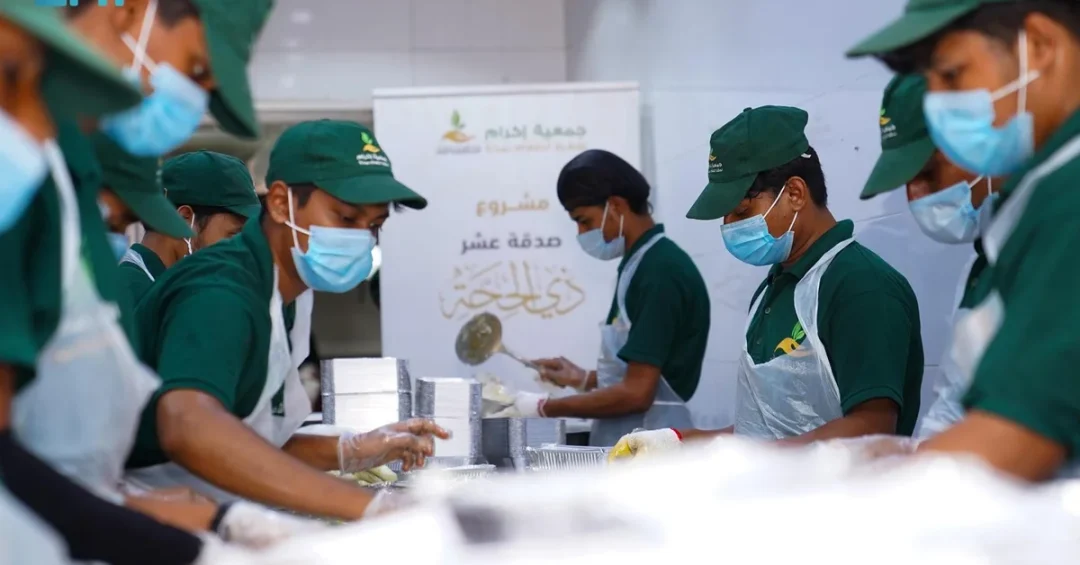
The Ekram Association for Food Preservation in Makkah has provided services to more than five million pilgrims and beneficiaries in Makkah and Madinah during the last two months of the 1445 AH Islamic year, according to an official announcement carried by the Saudi Press Agency (SPA). The services were delivered from the beginning of Dhu al-Qa’dah through the end of Dhu al-Hijjah, covering one of the busiest periods of the Islamic calendar, when millions of worshippers gather in the two holy cities for Hajj and Umrah.
Context and Background
The Ekram Association for Food Preservation is a Saudi charitable organization dedicated to reducing food waste and supporting those in need, in line with the Kingdom’s broader humanitarian and social responsibility framework. Its work during the Hajj and Umrah seasons reflects a well-established tradition of Saudi hospitality and care for pilgrims, which is a central pillar of the Kingdom’s religious and cultural identity.
During the months of Dhu al-Qa’dah and Dhu al-Hijjah, the holy sites and the Grand Mosque in Makkah and the Prophet’s Mosque in Madinah host millions of pilgrims from around the world. The scale of this gathering presents significant logistical challenges, particularly in ensuring that surplus food is managed efficiently and that those in need are supported. The Ekram Association’s efforts are part of a coordinated national response that involves government agencies, charitable organizations, and thousands of volunteers.
Key Details
According to the association’s Director, Ahmed Al-Matrafi, the services included preserving and distributing surplus food in Makkah and Madinah, as well as providing Iftar meals, water bottles, food baskets, fresh meat, and hot meals around the Grand Mosque and the Prophet’s Mosque, in the holy sites, and at pilgrims’ residences.
Al-Matrafi noted that over 1,700 volunteers participated in delivering these services. Their dedication reflects the association’s commitment to serving pilgrims and people in need while promoting social solidarity. The distribution of food and water at key locations ensured that pilgrims could focus on their spiritual journey without concern for basic needs.
The association’s work aligns with the Kingdom’s Vision 2030 goals of enhancing the quality of life for citizens and visitors, fostering a culture of volunteerism, and strengthening the non-profit sector. By efficiently managing surplus food, the initiative also contributes to environmental sustainability by reducing waste.
Implications and Impact
The service to over five million individuals underscores Saudi Arabia’s capacity to manage large-scale humanitarian operations during the Hajj season. It also highlights the vital role of charitable organizations in complementing government efforts to serve pilgrims. The presence of a well-organized food preservation and distribution network enhances the overall pilgrim experience and reinforces the Kingdom’s reputation for hospitality and efficient crowd management.
Furthermore, the involvement of more than 1,700 volunteers demonstrates the growing spirit of volunteerism among Saudi citizens and residents, a key objective of Vision 2030. Their efforts not only provide immediate relief but also contribute to social cohesion and national pride.
Vision 2030 Alignment
This achievement reflects the Kingdom’s commitment to Vision 2030, which seeks to build a vibrant society, a thriving economy, and an ambitious nation. By empowering non-profit organizations like the Ekram Association, Saudi Arabia is fostering a sustainable ecosystem of social responsibility that benefits pilgrims, residents, and the broader community. As the Kingdom continues to welcome millions of visitors each year, such initiatives will remain essential to delivering a world-class experience that honors the nation’s religious heritage and its forward-looking aspirations.
20 Questions
Q1. What is the Ekram Association for Food Preservation?
A1. The Ekram Association for Food Preservation is a Saudi charitable organization based in Makkah dedicated to reducing food waste and serving pilgrims and people in need through the distribution of surplus food and related services.
Q2. How many individuals benefited from the association’s services?
A2. Over five million pilgrims and beneficiaries in Makkah and Madinah received services from the association during the last two months of 1445 AH, from Dhu al-Qa’dah through Dhu al-Hijjah.
Q3. What types of services were provided?
A3. Services included preserving and distributing surplus food, Iftar meals, water bottles, food baskets, fresh meat, and hot meals around the Grand Mosque, the Prophet’s Mosque, in the holy sites, and at pilgrims’ residences.
Q4. Who is the director of the Ekram Association?
A4. Ahmed Al-Matrafi is the Director of the Ekram Association for Food Preservation, as mentioned in the official announcement by the Saudi Press Agency.
Q5. How many volunteers participated in these efforts?
A5. More than 1,700 volunteers took part in providing the services, demonstrating a strong spirit of volunteerism and social solidarity among the community.
Q6. When did the services take place?
A6. The services were carried out from the beginning of the month of Dhu al-Qa’dah until the end of the month of Dhu al-Hijjah in the Islamic year 1445 AH.
Q7. Where were the services distributed?
A7. The services were distributed in Makkah and Madinah, particularly around the Grand Mosque, the Prophet’s Mosque, in the holy sites, and at pilgrims’ residences.
Q8. What is the significance of the months of Dhu al-Qa’dah and Dhu al-Hijjah?
A8. These months are among the most sacred in the Islamic calendar and include the Hajj pilgrimage, attracting millions of pilgrims to the holy cities of Makkah and Madinah.
Q9. How does the association’s work align with Saudi Vision 2030?
A9. It supports Vision 2030 goals of enhancing quality of life, fostering volunteerism, strengthening the non-profit sector, and promoting environmental sustainability by reducing food waste.
Q10. What is the role of the Saudi Press Agency in this announcement?
A10. The Saudi Press Agency (SPA) is the official news agency of Saudi Arabia that published the announcement, providing verified information about the association’s services.
Q11. Why is food preservation important during Hajj?
A11. Food preservation helps reduce waste, ensures efficient use of resources, and allows surplus food to be redirected to those in need, supporting both humanitarian and environmental goals.
Q12. How does this initiative reflect Saudi hospitality?
A12. By providing meals and water to pilgrims, the initiative embodies the Kingdom’s tradition of welcoming and caring for guests, a core aspect of Saudi culture and Islamic values.
Q13. What impact does this have on pilgrims’ experience?
A13. It ensures that pilgrims have access to basic necessities, allowing them to focus on their spiritual journey and enhancing their overall experience in the holy cities.
Q14. Are there other similar Saudi charities?
A14. Yes, Saudi Arabia has numerous charitable organizations that serve pilgrims and those in need, often in coordination with government agencies and under the oversight of relevant authorities.
Q15. How does volunteerism benefit Saudi society?
A15. Volunteerism fosters social cohesion, develops skills, and instills a sense of national pride and responsibility, aligning with Vision 2030’s goal of an ambitious nation.
Q16. What is the process for distributing surplus food?
A16. Surplus food is collected from various sources, preserved following health standards, and then distributed to designated locations where pilgrims and beneficiaries can receive it.
Q17. How does the association ensure food safety?
A17. The association adheres to strict health and safety protocols, likely in coordination with Saudi health authorities, to ensure that all food distributed is safe and of high quality.
Q18. Can non-Saudis benefit from these services?
A18. Yes, the services are available to all pilgrims and beneficiaries in Makkah and Madinah, regardless of nationality, reflecting the inclusive nature of Saudi humanitarian efforts.
Q19. What role do government agencies play in supporting such initiatives?
A19. Saudi government agencies provide logistical support, coordination, and oversight to ensure that charitable initiatives operate effectively and in compliance with regulations.
Q20. How can one volunteer with the Ekram Association?
A20. Individuals interested in volunteering can typically contact the association directly or through official Saudi volunteering platforms, which register and coordinate volunteers for various initiatives.
Reader Feedback
We value your thoughts. Please share your feedback on this article.
Your feedback helps us improve our coverage.
Related articles
 Saudi Non-Profit Sector Sees Remarkable Growth in H1 2024
 PNU Women’s Leadership Center Completes 7 Programs, 25 Studies
 KSrelief Distributes 400 Food Baskets in Chad
 Education Ministry Dispatches 136 Teachers Abroad
 Saudi Biology Team Wins Four Global Awards at IBO 2024
 Saudi Arabia Shines at UN High-Level Political Forum