


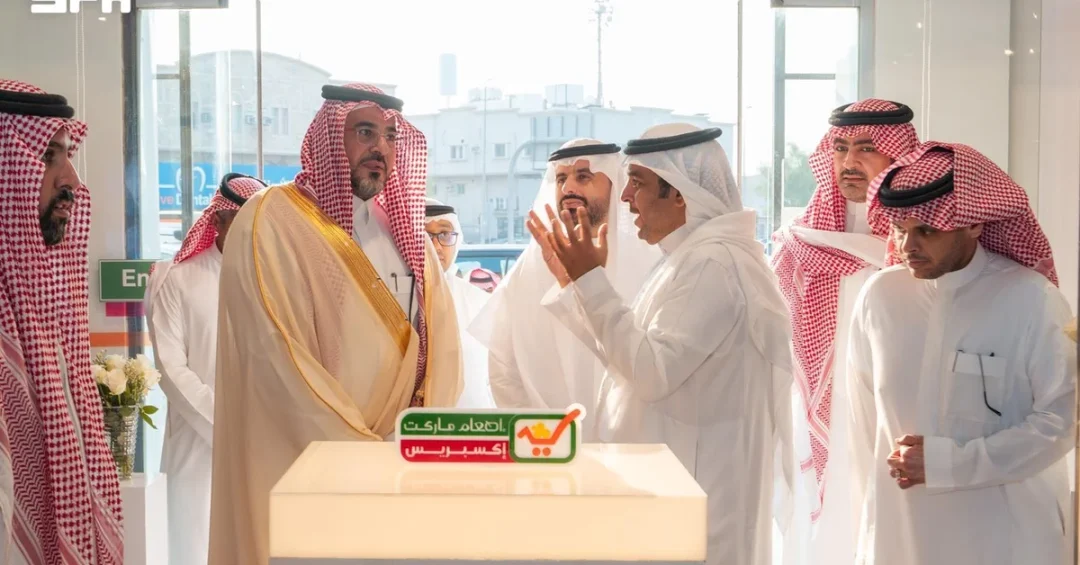
The Saudi Food Bank (Eta’am) has launched the “Eta’am Market Express” project, a new flexible food support model that allows beneficiaries to choose the products that best suit their circumstances and priorities, in the presence of National Center for the Non-Profit Sector (NCNP) CEO Ahmed bin Ali Al-Suwailem. Announced from Dammam and carried by the Saudi Press Agency, the initiative marks a shift in how charitable food assistance is designed and delivered in the Kingdom, placing the dignity and preferences of beneficiaries at the center of the experience while improving the efficiency of food resource utilization.
The project was unveiled during an official event attended by leaders from Saudi Arabia’s non-profit and humanitarian sectors, underscoring the growing institutional maturity of the Kingdom’s charitable ecosystem. Under the model, beneficiaries are no longer passive recipients of pre-selected food baskets; instead, they are empowered to shop for the goods that match their household needs, cultural preferences, and daily realities. For a sector that has traditionally operated on standardized distributions, the change is significant. Could a simple shift toward choice become one of the most meaningful reforms in Saudi humanitarian work? The early signals from Eta’am suggest the answer is yes.
Context and Background
How did food support in Saudi Arabia evolve to the point where beneficiaries can now shop for themselves? The Saudi Food Bank, known as Eta’am, has spent years building one of the Kingdom’s most recognized charitable food ecosystems, collecting surplus food and directing it to families in need while championing the reduction of food waste. Its work sits at the intersection of social welfare, environmental responsibility, and national food security — three priorities that have gained prominence under Saudi Vision 2030. The launch of “Eta’am Market Express” builds on that foundation by rethinking the final link in the chain: how assistance actually reaches the beneficiary’s table.
Traditional food support models, in Saudi Arabia and around the world, tend to distribute uniform parcels. While efficient at scale, such models can leave recipients with items they cannot use and omit items they urgently need. Eta’am’s new approach responds to that gap by introducing a flexible food support model in which beneficiaries select products that align with their circumstances and priorities. The presence of NCNP CEO Ahmed bin Ali Al-Suwailem at the launch reflects the institutional backing behind the initiative. The National Center for the Non-Profit Sector is the government body tasked with developing, enabling, and regulating the Kingdom’s non-profit sector, and its engagement signals that choice-based assistance is being treated as a serious, scalable model rather than an experiment.
The timing is equally telling. Saudi Arabia’s non-profit sector has expanded rapidly in recent years, with charities, foundations, and volunteer networks professionalizing their operations and measuring impact more rigorously. Eta’am’s project arrives in that environment, where donors and regulators alike expect humanitarian programs to demonstrate both efficiency and respect for the people they serve. By combining the familiarity of shopping with the purpose of social impact, the initiative positions charitable giving as an experience that benefits the giver, the beneficiary, and the community at large.
Key Details of the Eta’am Market Express Project
What exactly does the “Eta’am Market Express” project change for families receiving food assistance? According to the Saudi Press Agency, the project introduces a flexible food support model that allows beneficiaries to choose the products that best suit their circumstances and priorities, thereby supporting their right to choice and dignity while improving the effectiveness of the assistance provided. The model effectively converts a standardized handout into a personalized shopping experience, where the beneficiary’s judgment — not an administrator’s assumption — determines what goes into the basket.
Saudi Food Bank (Eta’am) CEO Faisal Al-Shoshan described the initiative as a new model that combines shopping with social impact, offering the community a shopping experience while supporting the association’s mission to promote food sustainability and reduce waste. His framing places the project within Eta’am’s broader mandate: food support is not only about delivering calories, but about doing so in a way that strengthens social cohesion and conserves resources. When beneficiaries choose only what they will consume, the waste that typically accompanies unwanted items is reduced, and the value of every donated riyal is stretched further.
Al-Shoshan added that the project seeks to develop the concept of food support by placing beneficiaries’ needs at the center of the experience and giving them greater freedom to choose suitable food products, providing more flexible and effective support while enhancing the quality of social impact. That language signals a deliberate philosophical shift: assistance is framed as a service designed around the recipient, not a transaction managed for the convenience of the provider. The launch event itself, held in Dammam and attended by senior non-profit sector figures, gave the project a formal, official platform consistent with how Saudi Arabia introduces national social initiatives.
How the Model Works and Who It Serves
What makes a shopping-based model more effective than a traditional food basket? In practice, choice-based assistance addresses several persistent challenges at once. First, it recognizes that households differ: a family with young children, an elderly couple, and a single worker have different nutritional needs, cooking capacities, and storage options. Second, it reduces the stigma that can accompany receiving charity, because the beneficiary acts as a shopper rather than a supplicant. Third, it improves resource allocation, since products that would otherwise be discarded are not distributed in the first place.
The project operates under the umbrella of Eta’am’s existing mission to promote food sustainability and reduce waste, a mission that aligns with national efforts to strengthen food security and responsible consumption. Beneficiaries gain the freedom to select suitable food products, and the association gains a more accurate picture of what communities actually need. That feedback loop is valuable: when demand is visible, Eta’am and its partners can source more intelligently, negotiate better, and direct surplus where it is genuinely wanted. The result is a humanitarian supply chain that learns and adapts rather than repeating the same distribution formula year after year.
It is also worth noting who stands behind the initiative. The participation of the National Center for the Non-Profit Sector, represented by CEO Ahmed bin Ali Al-Suwailem, connects the project to the Kingdom’s official framework for developing charitable work. The NCNP’s role includes enabling non-profit organizations to operate with greater professionalism, transparency, and impact — precisely the qualities that a choice-based food support model requires. When a regulator attends a launch, it signals that the model is expected to meet national standards and potentially to be replicated.
International and Regional Impact
Could Saudi Arabia’s experiment with choice-based food support influence humanitarian practice beyond its borders? The Kingdom has increasingly positioned itself as a global humanitarian actor, and innovations developed at home often travel through its international aid channels. Food banks and relief organizations across the region face the same fundamental tension: how to distribute assistance at scale without stripping recipients of agency. Eta’am’s model offers a practical answer, and its emphasis on dignity resonates with international humanitarian principles that stress the participation of affected populations.
Regionally, the project reinforces the Gulf’s broader shift toward professionalized, data-informed philanthropy. Neighboring countries have watched Saudi Arabia’s non-profit reforms closely, and successful models tend to be studied and adapted. For international observers, the launch is a reminder that Saudi social policy is not static: it is being redesigned with the same ambition visible in the Kingdom’s economic and infrastructure programs. The combination of a respected national food bank, an official regulatory partner, and a beneficiary-centered design gives the initiative credibility that purely promotional campaigns rarely achieve.
Economic and Strategic Significance
Why does a charitable food project matter to Saudi Arabia’s economic strategy? Food waste carries real costs — financial, environmental, and moral. Every item distributed but unused represents wasted logistics, wasted storage, and wasted donor intent. By allowing beneficiaries to choose, Eta’am reduces the volume of unwanted goods moving through the system, which in turn lowers handling costs and frees resources for additional support. Efficiency in charity is not a secondary concern; it determines how many families can be served with a given pool of donations.
Strategically, the project strengthens the social contract by making assistance more respectful and more responsive. Saudi Vision 2030 emphasizes a vibrant society, a thriving economy, and an ambitious nation, and the non-profit sector is explicitly expected to contribute to quality of life. A food support model that upholds dignity while conserving resources advances all three dimensions. It also complements national food security efforts, which aim to secure reliable access to food for residents while promoting sustainable consumption — a goal that gains urgency as global supply chains face climate and geopolitical pressures.
Vision 2030 Alignment
How does “Eta’am Market Express” connect to the Kingdom’s long-term transformation? Vision 2030 calls for a non-profit sector that is empowered, professional, and impactful, and it sets ambitious targets for the sector’s contribution to the economy and society. Eta’am’s project embodies that vision in concrete terms: it uses a modern service design, partners with the National Center for the Non-Profit Sector, and measures success by the quality of social impact rather than the volume of distribution. It treats beneficiaries as customers with preferences, which is exactly the mindset that has reshaped Saudi public services across health, education, and tourism.
The initiative also reflects the leadership’s consistent emphasis on dignity, sustainability, and innovation in social work. By launching a model that combines shopping with social impact, Eta’am is helping normalize a culture of choice and responsibility in charitable giving — a culture in which donors trust that their contributions are used well and recipients retain agency over their own households. As the project develops, its lessons are likely to inform other Saudi humanitarian programs and, potentially, international partnerships. In a Kingdom steadily redefining its global role, a food bank that lets families choose may prove to be a small but telling example of how Vision 2030 improves lives at the most human level.
20 Questions
Q1. What is the “Eta’am Market Express” project?
A1. It is a new project launched by the Saudi Food Bank (Eta’am) that introduces a flexible food support model, allowing beneficiaries to choose food products that best suit their circumstances and priorities, thereby enhancing dignity and the effectiveness of assistance.
Q2. Who launched the project and where was it announced?
A2. The Saudi Food Bank (Eta’am) launched the project in Dammam, with the announcement carried by the Saudi Press Agency, in the presence of National Center for the Non-Profit Sector CEO Ahmed bin Ali Al-Suwailem.
Q3. Who is the CEO of the Saudi Food Bank (Eta’am)?
A3. Faisal Al-Shoshan serves as the CEO of the Saudi Food Bank (Eta’am). He described the project as a new model combining shopping with social impact and supporting the association’s mission.
Q4. What is the main goal of the Eta’am Market Express project?
A4. The project aims to develop food support models, expand options for beneficiaries, and improve the efficiency of food resource utilization, while placing beneficiaries’ needs at the center of the assistance experience.
Q5. How does the project support beneficiaries’ dignity?
A5. By allowing beneficiaries to select products that suit their circumstances and priorities, the project supports their right to choice and dignity, treating them as shoppers with preferences rather than passive recipients of standardized parcels.
Q6. What did NCNP CEO Ahmed bin Ali Al-Suwailem’s presence signify?
A6. His attendance reflects official institutional backing from the National Center for the Non-Profit Sector, the government body responsible for developing and enabling the Kingdom’s non-profit sector, signaling the model’s national importance.
Q7. How does the project reduce food waste?
A7. When beneficiaries choose only the products they need, unwanted items are not distributed and discarded, reducing waste across the supply chain and supporting Eta’am’s mission of food sustainability and responsible consumption.
Q8. What does “shopping with social impact” mean in this context?
A8. It means the shopping experience serves a charitable purpose: beneficiaries obtain the food they need while the community supports Eta’am’s mission to promote food sustainability, reduce waste, and strengthen social solidarity.
Q9. Is the project limited to a single city or region?
A9. The launch was announced from Dammam, and the project is presented as a new model for food support. Its design is intended to develop the concept of assistance and improve effectiveness across Eta’am’s operations.
Q10. How does the model improve the efficiency of food resource utilization?
A10. By matching distributed products to actual beneficiary demand, the model reduces unused items, lowers handling and storage costs, and allows every donated riyal to support more families effectively.
Q11. What role does the National Center for the Non-Profit Sector play?
A11. The NCNP develops, enables, and regulates Saudi Arabia’s non-profit sector, helping organizations like Eta’am operate with professionalism, transparency, and measurable impact in line with national standards.
Q12. How does the project reflect Saudi Vision 2030?
A12. Vision 2030 seeks an empowered, professional non-profit sector. The project advances that goal through modern service design, official partnership, beneficiary-centered assistance, and measurable social impact.
Q13. What makes this model different from traditional food baskets?
A13. Traditional baskets distribute uniform parcels, while the new model gives beneficiaries freedom to choose suitable food products, making support more flexible, respectful, and aligned with each household’s real needs.
Q14. Who benefits from the Eta’am Market Express project?
A14. Beneficiaries of Eta’am’s food support programs benefit directly through greater choice, while donors and the wider community benefit from reduced waste and more effective use of charitable contributions.
Q15. Does the project replace Eta’am’s existing programs?
A15. The project develops the concept of food support rather than replacing Eta’am’s mission. It adds a flexible model that complements existing efforts to promote food sustainability and reduce waste.
Q16. What did Faisal Al-Shoshan say about beneficiaries’ needs?
A16. He said the project places beneficiaries’ needs at the center of the experience and gives them greater freedom to choose suitable food products, providing more flexible and effective support while enhancing social impact.
Q17. How does the project support food sustainability?
A17. By aligning distribution with actual demand, the project conserves food resources, reduces waste, and encourages responsible consumption, directly supporting Eta’am’s stated mission of food sustainability.
Q18. What official channel announced the project?
A18. The Saudi Press Agency (SPA) carried the announcement from Dammam, confirming the project through an official Saudi news authority and reflecting transparent communication of national social initiatives.
Q19. What are the next steps for the project?
A19. Eta’am intends to continue developing food support models that expand beneficiary options and improve resource efficiency, with the experience informing broader improvements in the Kingdom’s charitable food assistance ecosystem.
Q20. Why does this project matter internationally?
A20. It demonstrates Saudi Arabia’s leadership in humanitarian innovation, offering a dignity-centered, waste-reducing model that can inspire food banks and relief organizations across the region and beyond.
Reader Feedback
We value your thoughts. Please share your feedback on this article.
Your feedback helps us improve our coverage.
Related articles
 Hittin School in Turaif: Seven Decades of Education
 Jazan University Earns Global Recognition in Rankings and Innovation
 King Khalid University Shifts to Remote Learning Tomorrow
 UK Minister Praises Saudi Education Quality Assurance Model
 Oxford Business Group Report Highlights Saudi Education Transformation
 Prince Saud bin Naif receives Al Bir Society CEO