


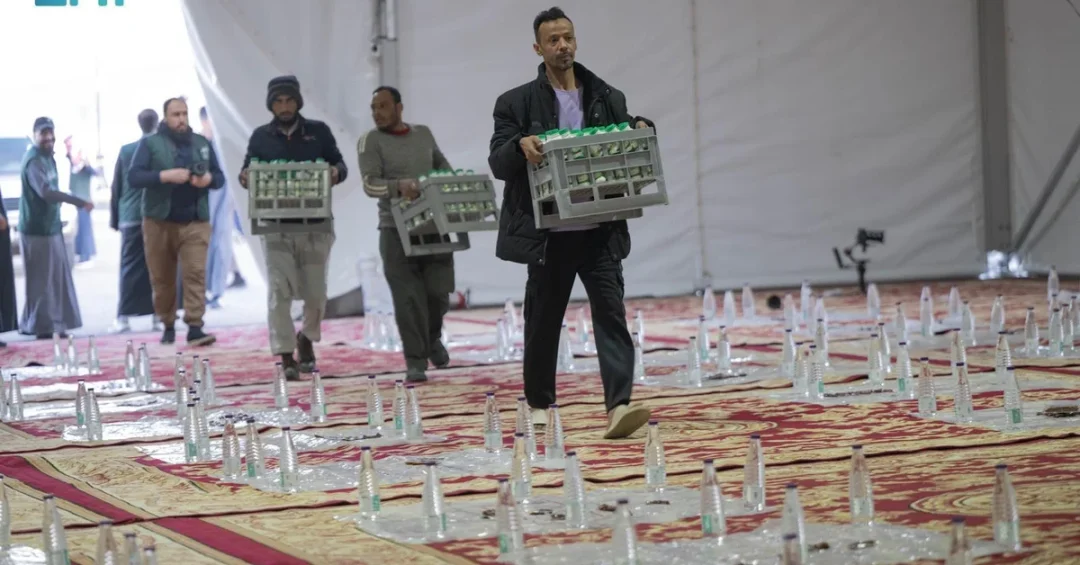
The Association for Dawah, Guidance, and Community Awareness in Arar City has organized Iftar (fast-breaking) tents across the Northern Borders region for the 16th consecutive year, providing dates, water, and daily meals to thousands of fasting individuals throughout the holy month of Ramadan. The initiative, announced by the Saudi Press Agency on March 2, 2025, has become a cherished Ramadan tradition in the region, drawing on the dedication of volunteers who serve those observing the fast. The tents reflect the enduring values of generosity and community solidarity that define Saudi society.
Is there any sight more emblematic of Ramadan’s spirit than a shared table welcoming every passerby? The Arar-based Association for Dawah, Guidance, and Community Awareness has once again demonstrated that the Kingdom’s charitable instincts are not seasonal gestures but deeply rooted commitments. For 16 uninterrupted years, these Iftar tents have offered sustenance and companionship to fasting people, transforming public spaces into places of warmth and belonging. The initiative aligns with the Kingdom’s broader vision of social cohesion and compassionate community development, values that Saudi Arabia promotes both domestically and internationally.
Context and Background
How did a simple Iftar tent become a 16-year institution in the Northern Borders? The Association for Dawah, Guidance, and Community Awareness, based in Arar City, first launched the initiative in 2009, and it has since grown into a customary Ramadan feature eagerly anticipated by residents and travelers alike. The Northern Borders region, which shares borders with Iraq and Jordan, is home to diverse communities, and the tents serve as a unifying space where people from all walks of life break their fast together. The association’s sustained commitment reflects the Kingdom’s long-standing tradition of charitable giving, or zakat and sadaqah, which are central pillars of Islamic practice and Saudi social life.
Over the years, the initiative has expanded in scale and reach, supported by volunteers who dedicate their time to preparing and distributing meals. The tents typically operate daily from sunset until the end of the Isha prayers, offering dates and water for immediate fast-breaking, followed by full meals. This continuity is significant: in a world where many charitable efforts are episodic, the Northern Borders initiative demonstrates institutional reliability. It also highlights the role of local associations in complementing government efforts to ensure food security and social welfare during Ramadan, a period when demand for such services peaks across the Kingdom.
What does it take to sustain such an operation for 16 years? It requires coordination, funding, and, above all, a volunteer base motivated by faith and community spirit. The association has cultivated partnerships with local businesses and philanthropists, ensuring that resources are available to serve thousands of beneficiaries each night. This model of community-led charity is increasingly recognized as a best practice in Saudi Arabia’s social development landscape, where civil society organizations work alongside government agencies to meet the needs of citizens and residents.
Key Details
What exactly do these Iftar tents offer to those who visit? According to the Saudi Press Agency, the tents provide dates, water, and meals daily to thousands of fasting individuals. The menu is simple yet nutritious, designed to replenish energy after a day of fasting. Volunteers handle everything from food preparation to serving and cleanup, ensuring a smooth and dignified experience for all guests. The tents are strategically located to serve high-traffic areas, including near mosques, markets, and main roads, making them accessible to both residents and travelers passing through the region.
The Association for Dawah, Guidance, and Community Awareness in Arar City has emphasized that the initiative is open to everyone, regardless of nationality or background. This inclusivity is a hallmark of Saudi hospitality, which welcomes all who arrive at the Kingdom’s doors. The volunteers, many of whom return year after year, describe their service as a spiritual privilege. Their dedication ensures that the tents operate efficiently and that the atmosphere remains one of respect and brotherhood. The association also coordinates with local authorities to manage logistics, traffic, and safety, further demonstrating the integration of community initiatives with public services.
How do volunteers experience this act of service? For many, it is a transformative experience that deepens their connection to their faith and community. The act of giving food to a fasting person is considered highly rewarding in Islam, and the volunteers embody this principle through their actions. The initiative also provides an opportunity for youth to engage in meaningful social work, fostering a sense of responsibility and leadership. By involving young people, the association helps cultivate the next generation of community leaders, aligning with national efforts to empower youth and promote volunteerism.
International and Regional Impact
Could the Northern Borders Iftar tents serve as a model for other regions and countries? The initiative’s 16-year track record offers a compelling case study in sustainable community charity. International observers often highlight Saudi Arabia’s Ramadan initiatives as examples of how faith-based giving can address immediate needs while strengthening social bonds. The Northern Borders project, in particular, demonstrates how border regions can become hubs of hospitality rather than merely transit points. This positive image contributes to the Kingdom’s soft power and reinforces its reputation as a compassionate and stable nation.
Regionally, the tents foster goodwill among neighboring countries, as travelers from Iraq and Jordan who pass through the Northern Borders may benefit from the meals. This small but meaningful gesture of hospitality can leave a lasting impression, promoting people-to-people ties and mutual respect. In a region often characterized by geopolitical tensions, such humanitarian gestures are valuable confidence-building measures. They also align with Saudi Arabia’s broader diplomatic efforts to promote stability and cooperation in the Middle East, showing that the Kingdom’s influence extends beyond politics into everyday acts of kindness.
Economic and Strategic Significance
What economic value do these charitable initiatives bring to the Northern Borders region? While the meals are provided free of charge, the initiative stimulates local economic activity by sourcing food supplies, equipment, and services from nearby businesses. This creates a multiplier effect that supports small and medium enterprises, particularly in the food and hospitality sectors. Additionally, the tents attract visitors to the region, some of whom may extend their stay and explore local markets and heritage sites, contributing to the growth of domestic tourism. The Northern Borders, with its rich history and natural landscapes, is increasingly positioned as a destination for domestic travelers, and initiatives like this enhance its appeal.
Strategically, the Iftar tents reinforce social stability and national cohesion. By serving diverse communities, they help bridge social gaps and promote a shared Saudi identity. This is particularly important in border regions, where a strong sense of belonging and mutual support contributes to security and resilience. The initiative also complements government programs aimed at improving quality of life and achieving the objectives of Saudi Vision 2030, which seeks to build a vibrant society with strong social foundations. The association’s work exemplifies how civil society can partner with the state to advance these goals.
Vision 2030 Alignment
How does a Ramadan Iftar tent connect to Saudi Vision 2030? At its core, Vision 2030 is about creating a thriving society where all citizens and residents enjoy a high quality of life, underpinned by strong social values. The Northern Borders initiative directly supports this by fostering solidarity, volunteerism, and charity, which are essential components of a vibrant civil society. The Vision’s emphasis on community development and social responsibility is reflected in the association’s sustained efforts to serve those in need. Moreover, the initiative promotes the Kingdom’s image as a caring and inclusive society, which is integral to its global standing.
As Saudi Arabia continues its transformation under Vision 2030, grassroots initiatives like the Arar Iftar tents will remain vital. They demonstrate that progress is not only about megaprojects and economic diversification but also about nurturing the human spirit and strengthening community bonds. The Association for Dawah, Guidance, and Community Awareness has shown that small, consistent acts of generosity can have a profound and lasting impact. In doing so, it contributes to the Kingdom’s broader goal of building a society that is both modern and deeply rooted in its values. The 16th consecutive year of this initiative is a testament to the enduring power of charity and the bright future of the Northern Borders region.
20 Questions
Q1. What is the main initiative discussed in the article?
A1. The article discusses the Iftar tents organized by the Association for Dawah, Guidance, and Community Awareness in Arar City, which provide free meals to fasting individuals in the Northern Borders region during Ramadan.
Q2. How many years has the Iftar tent initiative been running?
A2. The initiative has been running for 16 consecutive years, demonstrating a long-standing commitment to community service and Ramadan traditions in the Northern Borders region.
Q3. Which organization is responsible for organizing the Iftar tents?
A3. The Association for Dawah, Guidance, and Community Awareness in Arar City is the organization responsible for organizing and operating the Iftar tents annually.
Q4. What items are provided at the Iftar tents?
A4. The tents provide dates, water, and full meals daily to thousands of fasting individuals, ensuring they can break their fast in a dignified and communal setting.
Q5. Who supports the operation of these Iftar tents?
A5. Dedicated volunteers support the operation, handling food preparation, distribution, and cleanup, motivated by their faith and a spirit of community service.
Q6. Where exactly are the Iftar tents located?
A6. The tents are set up in the Northern Borders region, particularly in and around Arar City, serving residents and travelers at accessible locations such as near mosques and main roads.
Q7. What is the significance of the Iftar tents for the local community?
A7. They foster community solidarity, provide essential support to those in need, and strengthen social bonds, reflecting the values of generosity and compassion inherent in Saudi society.
Q8. How does the initiative align with Saudi Vision 2030?
A8. It aligns with Vision 2030 by promoting social cohesion, volunteerism, and a high quality of life, contributing to the development of a vibrant and caring society.
Q9. Are the Iftar tents open to non-Saudis?
A9. Yes, the tents are open to everyone regardless of nationality, embodying the inclusive hospitality that Saudi Arabia is known for, and serving all fasting individuals.
Q10. What role do volunteers play in the initiative?
A10. Volunteers are essential, as they prepare and serve food, manage logistics, and ensure the tents run smoothly, often returning year after year to serve the community.
Q11. How many people benefit from the Iftar tents each day?
A11. Thousands of fasting individuals benefit daily from the meals provided at the Iftar tents throughout the month of Ramadan, according to official reports.
Q12. What is the Northern Borders region known for?
A12. The Northern Borders region, bordering Iraq and Jordan, is known for its strategic location, rich history, and growing role in domestic tourism and community development.
Q13. Does the initiative receive government support?
A13. While organized by a local association, the initiative operates in coordination with local authorities and aligns with national efforts to promote social welfare and volunteerism.
Q14. How does the initiative reflect Saudi culture?
A14. It reflects Saudi culture’s deep-rooted traditions of charity, hospitality, and communal solidarity, especially during the holy month of Ramadan.
Q15. What impact does the initiative have on local businesses?
A15. It stimulates local economic activity by sourcing food, supplies, and services from nearby businesses, supporting small and medium enterprises in the region.
Q16. How does the initiative promote Saudi Arabia’s image internationally?
A16. It showcases the Kingdom’s compassionate and inclusive society, enhancing its soft power and reputation as a nation committed to humanitarian values and community welfare.
Q17. What is the spiritual significance of providing Iftar meals?
A17. In Islam, providing food to a fasting person is highly rewarding, and the initiative allows volunteers to fulfill a cherished religious duty while serving their community.
Q18. How has the initiative evolved over 16 years?
A18. It has grown in scale and efficiency, expanding its reach and impact, while maintaining its core mission of serving fasting individuals with dignity and care.
Q19. What can other regions learn from this initiative?
A19. Other regions can learn the value of sustained community-led charity, volunteer mobilization, and the integration of social services with local traditions to address community needs effectively.
Q20. What is the future outlook for the Iftar tents initiative?
A20. The initiative is expected to continue and possibly expand, as it remains a cherished Ramadan tradition that embodies the Kingdom’s values and contributes to its social development goals.
Reader Feedback
We value your thoughts. Please share your feedback on this article.
Your feedback helps us improve our coverage.
Related articles
 Madinah Neighborhoods Strengthen Bonds Through Communal Ramadan Iftars
 King Salman Launches 5th National Charity Campaign via Ehsan
 Fifth National Charity Campaign Launched via Ehsan Platform
 Saudi Leadership Donates SAR70 Million to Ramadan Charity Campaign
 Saudi Human Rights Chairman: Women Key to Sustainable Development
 Ehsan Platform Surpasses SAR10 Billion in Donations Since 2021