


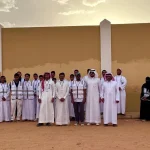
The Global Center for Arabic Language Education at the University of Prince Mugrin in Madinah has celebrated the graduation of a group of Indonesian students who completed an intensive two-month Arabic language program, organized in cooperation with MBSQ Indonesia. The graduation ceremony, held on November 13, 2026, was attended by University President Dr. Bandar Hajjar, marking another milestone in the Kingdom’s efforts to promote Arabic language education and cultural exchange. The program combined rigorous language instruction with cultural immersion, introducing participants to Saudi culture and the religious and cultural heritage of Madinah.
This initiative reflects Saudi Arabia’s broader commitment to strengthening international educational partnerships and sharing its linguistic and cultural heritage with the world. By hosting students from Indonesia, the University of Prince Mugrin underscores the deep ties between the Kingdom and Southeast Asia, while advancing the objectives of Saudi Vision 2030 to foster global engagement and knowledge exchange. The graduation not only celebrates the students’ achievements but also highlights the role of Saudi institutions in bridging cultures and building lasting people-to-people connections.
Context and Background
How did this program come to fruition, and what does it signify for Saudi-Indonesian relations? The University of Prince Mugrin, located in the historic city of Madinah, has long been a center for academic excellence and cultural preservation. Its Global Center for Arabic Language Education was established to serve as a hub for teaching Arabic to non-native speakers, leveraging Madinah’s rich Islamic heritage and the university’s modern pedagogical resources. The partnership with MBSQ Indonesia, an organization dedicated to promoting Arabic language and Islamic studies, reflects a shared vision to enhance language proficiency and cultural understanding.
Indonesia, home to the world’s largest Muslim population, has a deep historical and cultural connection to the Arabian Peninsula. Arabic language education has been a cornerstone of Indonesian Islamic education for centuries, and Saudi Arabia has consistently supported these efforts through scholarships, teacher training, and educational exchanges. This two-month intensive program is the latest in a series of initiatives that demonstrate the Kingdom’s dedication to serving Arabic learners worldwide. By immersing students in the language and culture of Madinah, the program offers an experience that transcends traditional classroom learning, enabling participants to engage with Arabic in its authentic context.
The graduation ceremony, attended by Dr. Bandar Hajjar, underscores the university’s commitment to international education. Dr. Hajjar’s presence highlights the importance Saudi leadership places on such programs, which not only promote the Arabic language but also strengthen diplomatic and cultural ties. The event was covered by the Saudi Press Agency (SPA), reflecting the official recognition of this initiative as part of the Kingdom’s broader educational outreach.
Key Details of the Program
What exactly did the Indonesian students experience during their two months in Madinah? The intensive program was designed to develop participants’ language skills and enhance their ability to communicate effectively in Arabic. It combined structured language instruction with cultural immersion activities, allowing students to practice their Arabic in real-life settings while learning about Saudi customs, traditions, and daily life. The curriculum likely included grammar, vocabulary, conversation, and writing, taught by experienced instructors at the Global Center for Arabic Language Education.
Beyond the classroom, the students were introduced to Madinah’s religious and cultural heritage. As the second holiest city in Islam, Madinah offers a unique environment for learners to connect with the language through its historical sites, such as the Prophet’s Mosque and the Quba Mosque. The program’s holistic approach ensured that students not only improved their Arabic proficiency but also gained a deeper appreciation for the cultural context in which the language is rooted. This immersive experience is particularly valuable for Indonesian students, many of whom may have studied Arabic in Indonesia but rarely had the opportunity to use it in an Arabic-speaking environment.
The cooperation with MBSQ Indonesia was instrumental in recruiting and preparing the students for this experience. MBSQ Indonesia, which focuses on Arabic language and Islamic education, helped identify motivated learners and provided pre-departure orientation. The success of this cohort sets a precedent for future collaborations, potentially expanding the program to include students from other Southeast Asian countries. The graduation ceremony celebrated not only the students’ linguistic achievements but also their role as cultural ambassadors who will carry their experiences back to Indonesia.
International and Regional Impact
How does this program resonate beyond the immediate participants? The graduation of Indonesian students from the University of Prince Mugrin’s Arabic language program is a testament to Saudi Arabia’s soft power and its ability to foster goodwill through education. By investing in Arabic language education for international students, the Kingdom positions itself as a global leader in cultural diplomacy. This initiative aligns with the goals of Saudi Vision 2030, which emphasizes the importance of international cooperation and the promotion of Saudi culture abroad.
For Indonesia, the program offers tangible benefits by enhancing the Arabic proficiency of its citizens, many of whom play key roles in education, religious affairs, and international business. Improved Arabic skills can lead to better understanding of Islamic texts, stronger ties with the Arab world, and expanded opportunities for academic and professional collaboration. Moreover, the experience of living in Madinah and interacting with Saudi society helps dispel misconceptions and builds mutual respect. The program also strengthens people-to-people ties, which are essential for long-term diplomatic and economic partnerships.
Regionally, the initiative contributes to the broader ecosystem of Arabic language education in the Muslim world. Saudi Arabia has a long history of supporting Arabic language institutions globally, and this program adds to that legacy. It also complements other Saudi efforts, such as the King Salman Global Academy for Arabic Language, which works to preserve and promote Arabic. By hosting students from Indonesia, the University of Prince Mugrin demonstrates that Madinah remains a beacon of knowledge and spirituality, attracting learners from around the world.
Economic and Strategic Significance
What are the economic and strategic implications of such educational exchanges? While the program is primarily cultural and educational, it has indirect economic benefits. Students who study in Saudi Arabia often become bridges for trade and investment between their home countries and the Kingdom. Indonesia is a key economic partner for Saudi Arabia, with significant trade in energy, halal products, and Islamic finance. By fostering closer ties through education, Saudi Arabia can enhance its economic diplomacy and open new avenues for cooperation.
Strategically, the program supports Saudi Arabia’s vision of becoming a global hub for education and culture. The Kingdom is investing heavily in its education sector, with initiatives like the University of Prince Mugrin serving as models for international engagement. These efforts align with Vision 2030’s aim to diversify the economy and promote knowledge-based industries. Furthermore, by welcoming students from Indonesia, Saudi Arabia strengthens its ties with a major non-Arab Muslim nation, which is crucial for regional stability and countering extremism through moderate education.
The program also highlights the role of Madinah as a destination for educational tourism. Pilgrims and students who visit the city contribute to the local economy, supporting hotels, transportation, and retail. As Saudi Arabia expands its tourism sector under Vision 2030, educational programs like this can attract more visitors and extend their stay, generating additional revenue. The university’s partnership with MBSQ Indonesia could also lead to joint research, faculty exchanges, and other collaborative ventures, further deepening the relationship.
Vision 2030 Alignment
How does this graduation ceremony connect to Saudi Arabia’s long-term vision? Saudi Vision 2030, launched by Crown Prince Mohammed bin Salman, seeks to transform the Kingdom into a diversified, knowledge-based economy with a strong emphasis on education, culture, and international cooperation. The University of Prince Mugrin’s Arabic language program for Indonesian students embodies these principles by promoting cultural exchange, enhancing the Kingdom’s global image, and building human capital. It showcases Saudi Arabia’s commitment to education as a tool for diplomacy and development.
Moreover, the program supports the Vision’s goal of increasing the number of international students in Saudi universities and expanding the reach of Arabic language worldwide. By providing high-quality Arabic instruction and cultural immersion, the Kingdom positions itself as a preferred destination for language learning. This not only benefits the students but also enriches Saudi society by exposing it to diverse cultures. As Saudi Arabia continues to open up to the world, initiatives like this will play a vital role in achieving the Vision’s objectives and cementing the Kingdom’s status as a global leader in education and culture.
In conclusion, the graduation of Indonesian students from the University of Prince Mugrin’s Arabic language program is a shining example of Saudi Arabia’s dedication to fostering international understanding and promoting its rich heritage. It reflects the Kingdom’s forward-looking approach and its commitment to building bridges of knowledge and friendship across nations. As these students return home with enhanced skills and fond memories, they carry with them the spirit of Saudi hospitality and the promise of a brighter, more connected future.
20 Questions
Q1. What was the occasion celebrated at the University of Prince Mugrin?
A1. The University of Prince Mugrin celebrated the graduation of Indonesian students who completed an intensive two-month Arabic language program. The ceremony took place in Madinah and was attended by University President Dr. Bandar Hajjar.
Q2. When and where did the graduation ceremony take place?
A2. The graduation ceremony was held on November 13, 2026, in Madinah, Saudi Arabia. It was organized by the Global Center for Arabic Language Education at the University of Prince Mugrin.
Q3. Who attended the graduation ceremony?
A3. The ceremony was attended by University President Dr. Bandar Hajjar, along with students, faculty, and representatives from MBSQ Indonesia. The event was covered by the Saudi Press Agency.
Q4. What was the duration of the Arabic language program?
A4. The program was an intensive two-month course designed to develop participants’ language skills and enhance their ability to communicate in Arabic. It combined language learning with cultural immersion.
Q5. Which organization cooperated with the University of Prince Mugrin for this program?
A5. The program was organized in cooperation with MBSQ Indonesia, an organization dedicated to promoting Arabic language and Islamic studies. This partnership helped recruit and prepare the Indonesian students.
Q6. What did the program focus on?
A6. The program focused on developing participants’ language skills and enhancing their ability to communicate in Arabic. It also introduced them to Saudi culture and Madinah’s religious and cultural heritage through immersion.
Q7. How did the program incorporate cultural immersion?
A7. The program combined language learning with cultural immersion by introducing students to Saudi culture and Madinah’s heritage. Activities likely included visits to historical sites and interactions with local society.
Q8. Why is Madinah significant for this program?
A8. Madinah is the second holiest city in Islam and offers a rich environment for learning Arabic. Its religious and cultural heritage provides an authentic context for students to practice the language.
Q9. What are the benefits for the Indonesian students?
A9. The students improved their Arabic proficiency, gained cultural understanding, and experienced life in Saudi Arabia. This enhances their academic and professional opportunities and strengthens ties between Indonesia and the Kingdom.
Q10. How does this program align with Saudi Vision 2030?
A10. It aligns with Vision 2030 by promoting international education, cultural exchange, and the Arabic language. It supports the goal of making Saudi Arabia a global hub for education and knowledge.
Q11. What is the role of the Global Center for Arabic Language Education?
A11. The center is part of the University of Prince Mugrin and specializes in teaching Arabic to non-native speakers. It leverages Madinah’s heritage and modern pedagogy to deliver high-quality language programs.
Q12. How does this initiative affect Saudi-Indonesian relations?
A12. It strengthens people-to-people ties and cultural understanding between Saudi Arabia and Indonesia. Such exchanges foster goodwill and can lead to further cooperation in education, trade, and diplomacy.
Q13. What is MBSQ Indonesia?
A13. MBSQ Indonesia is an organization that promotes Arabic language and Islamic studies. It partnered with the University of Prince Mugrin to recruit students and facilitate the program.
Q14. Will there be more such programs in the future?
A14. The success of this program suggests potential for future collaborations. The university and its partners may expand the initiative to include more students and other countries.
Q15. How does this program contribute to Saudi Arabia’s soft power?
A15. By hosting international students and sharing its language and culture, Saudi Arabia enhances its global image and builds goodwill. This is a key aspect of soft power and cultural diplomacy.
Q16. What economic benefits can arise from educational exchanges?
A16. Educational exchanges can boost trade and investment by creating networks and mutual understanding. They also support educational tourism, contributing to local economies in cities like Madinah.
Q17. What makes the University of Prince Mugrin a suitable host for this program?
A17. The university is located in Madinah, has a dedicated center for Arabic language education, and is committed to international engagement. Its resources and location provide an ideal learning environment.
Q18. How does the program promote moderate Islam?
A18. By providing accurate Arabic language education and cultural immersion, the program fosters a moderate understanding of Islam. It counters extremism through knowledge and intercultural dialogue.
Q19. What did Dr. Bandar Hajjar’s attendance signify?
A19. His attendance highlights the university’s and Saudi leadership’s commitment to international education and cultural exchange. It underscores the importance of such programs in advancing the Kingdom’s global outreach.
Q20. How can other countries participate in similar programs?
A20. Interested countries can partner with Saudi universities and organizations like MBSQ Indonesia. The University of Prince Mugrin welcomes collaborations that promote Arabic language and cultural exchange.
Reader Feedback
We value your thoughts. Please share your feedback on this article.
Your feedback helps us improve our coverage.
Related articles
 Mawhiba, Cambridge Launch Online Program for Gifted Saudis
 Rainy Weather Draws Crowds to Al-Khamsin Walkway, Khamis Mushait
 Rain Brings a Welcome Lift to Beach and Park Life in Jubail
 Makkah Education and Hadiyah Partner to Expand Volunteering for Pilgrims
 Volunteering in AlUla Boosts Community Engagement
 Saudi Arabia Wins Gold, Two Bronze at ARBIChO in Uzbekistan