


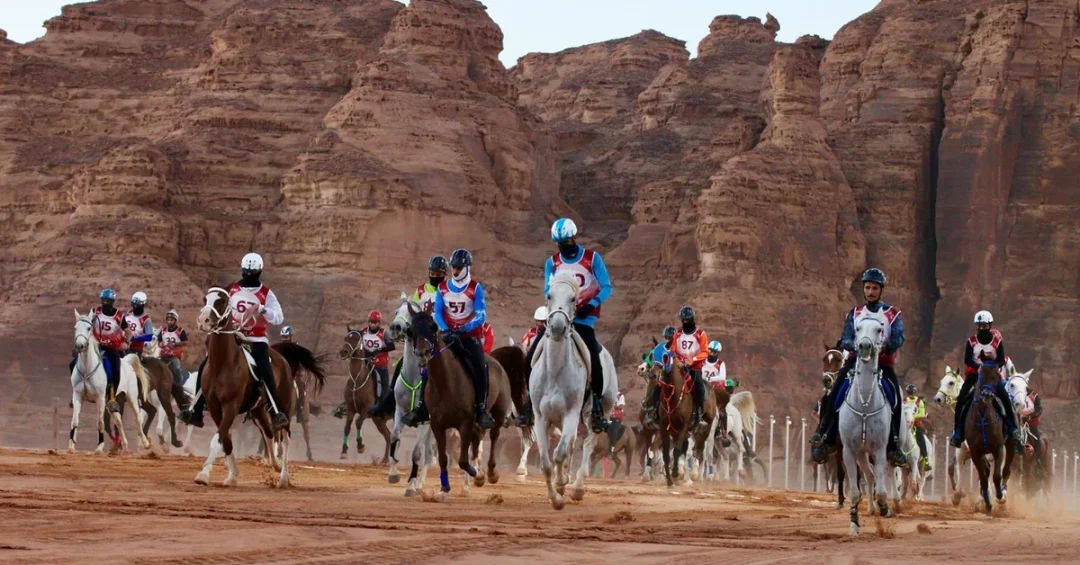
AlUla will host the Saudi Arabian Olympic and Paralympic Committee Endurance Cup and the Junior and Young Riders Endurance Cup on November 8 and 9, welcoming more than 200 riders from 12 countries to the AlFursan Equestrian Village. The two-day meeting is organized by the Royal Commission for AlUla in partnership with the Saudi Equestrian Federation and forms part of the Kingdom’s expanding calendar of international equestrian sport. A veterinary examination of all competing horses was scheduled for the opening day, in line with the strict welfare and integrity standards applied to endurance racing in Saudi Arabia. The event carries a total prize purse of SAR2 million, with SAR1 million allocated to each cup, underlining the growing prestige of AlUla as a global destination for elite competition.
The announcement, released through official Saudi channels, positions AlUla once again at the center of the Kingdom’s sporting diplomacy. Endurance racing, deeply rooted in Arabian heritage, has become a signature discipline for Saudi Arabia as it hosts world-class events that celebrate tradition while meeting modern international standards. The presence of riders from 12 nations reflects the confidence that international federations and athletes place in Saudi organization, and it reinforces the Kingdom’s reputation as a reliable host for high-level sport. For visitors, the event offers a rare opportunity to experience AlUla’s dramatic landscapes alongside competition at the highest level.
Context and Background
How did AlUla become a natural home for international endurance racing? The answer lies in a combination of geography, heritage, and deliberate investment. Endurance riding is one of the oldest equestrian traditions of the Arabian Peninsula, where horses were historically bred, trained, and celebrated for their stamina across desert terrain. AlUla’s wide-open valleys, rock formations, and cool November climate provide an ideal setting for long-distance races that test both horse and rider. The Royal Commission for AlUla has developed the AlFursan Equestrian Village specifically to host such events, with facilities designed to meet international veterinary and logistical requirements.
The Saudi Equestrian Federation has worked steadily to align national competition with global standards set by the International Equestrian Federation, ensuring that events like this one attract top-ranked riders and remain credible on the world stage. Over recent years, AlUla has hosted a range of international sporting and cultural gatherings, from desert polo to heritage festivals, each designed to showcase the region’s unique identity. The endurance cups therefore sit within a broader strategy of using sport as a bridge between Saudi heritage and international engagement, while supporting the local economy through tourism, hospitality, and small business activity.
For the Kingdom, hosting more than 200 riders from 12 countries is not simply a logistical achievement. It signals that Saudi Arabia can convene the global equestrian community in a setting that feels both authentically Arabian and fully modern. The event also provides a platform for Saudi riders to compete against international peers on home soil, accelerating the development of domestic talent and encouraging young Saudis to take up the sport. In this sense, the endurance cups are both a competition and a capacity-building exercise for the next generation.
Key Details
What exactly will take place across the two days of competition? The program includes a main race covering 100 kilometers, a two-star international race of 120 kilometers, a 120-kilometer race reserved for young riders, and two qualifying races of 40 kilometers and 80 kilometers. This structure allows riders at different stages of their careers to participate, from emerging talents seeking qualification to established competitors chasing international ranking points. The veterinary examination held before the races is a mandatory step, ensuring that every horse is fit to compete and that welfare remains the first priority throughout the event.
The total prize reward of SAR2 million, split equally between the two cups, places the AlUla meeting among the more significant endurance events in the region. Prize money of this scale attracts professional stables and experienced riders, raising the competitive level and the visibility of the event. It also reflects the commitment of the organizers to building a sustainable circuit of high-quality races in Saudi Arabia, rather than one-off spectacles. The Royal Commission for AlUla and the Saudi Equestrian Federation have emphasized that the event is designed to meet international regulations on distance, rest periods, and veterinary checks.
The AlFursan Equestrian Village provides the operational backbone of the event, with stabling, veterinary facilities, and spectator areas. Organizers have arranged the schedule so that the longest races are run in the cooler hours, protecting horse welfare and allowing riders to perform at their best. For the international contingent, the event is also an introduction to AlUla itself, a region that has become one of Saudi Arabia’s most prominent tourism and heritage destinations. Many visiting teams are expected to extend their stay to explore the area’s archaeological sites and natural landmarks.
International and Regional Impact
Why does a regional endurance cup matter beyond the borders of Saudi Arabia? Endurance racing has a global following, with strong traditions in the Gulf, Europe, Asia, and the Americas. When 12 nations send riders to AlUla, they bring with them media attention, technical expertise, and sporting networks that strengthen Saudi Arabia’s ties across continents. The event also allows the Kingdom to demonstrate that it can host international competitions in a manner that satisfies stringent animal welfare and anti-doping requirements, addressing any lingering questions from the global equestrian community.
Regionally, the cups reinforce cooperation among Gulf states and beyond, as riders from neighboring countries compete alongside international entrants. Such gatherings contribute to the broader normalization of Saudi Arabia as a hub for sport, culture, and tourism, in line with the Kingdom’s diplomatic and economic outreach. For AlUla, the presence of international teams supports local businesses, from hotels and restaurants to transport providers and guides, spreading the economic benefits of sport beyond the competition itself. The event also helps position AlUla as a year-round destination, not only a heritage site.
Economic and Strategic Significance
What does an event of this scale contribute to Saudi Arabia’s economy? Sports tourism is a growing segment of the global travel market, and Saudi Arabia has been actively developing its capacity to attract visitors through major events. The endurance cups bring riders, support teams, officials, and spectators to AlUla, generating demand for accommodation, food, and services. Beyond the immediate spending, the event builds AlUla’s brand as a premium destination, which supports longer-term investment in hospitality and infrastructure. The SAR2 million prize fund is itself a signal that Saudi Arabia is willing to invest in the quality of its sporting calendar.
Strategically, the event aligns with the Kingdom’s efforts to diversify its economy and create opportunities in tourism, entertainment, and sport. By hosting international federations and athletes, Saudi Arabia strengthens its position in global sports governance and builds relationships that extend beyond the field of play. The endurance cups also complement other equestrian initiatives in the Kingdom, including breeding programs and training academies, which together aim to establish Saudi Arabia as a leading equestrian nation. Each international event adds experience and credibility to that long-term project.
Vision 2030 Alignment
How does an endurance race in AlUla connect to Vision 2030? Saudi Vision 2030 seeks to diversify the economy, enhance quality of life, and position the Kingdom as a global destination for tourism, culture, and sport. The Royal Commission for AlUla, established to develop the region responsibly, is a direct expression of that vision, combining heritage preservation with modern infrastructure and international programming. Hosting the Saudi Arabian Olympic and Paralympic Committee Endurance Cup and the Junior and Young Riders Endurance Cup advances these goals by attracting visitors, showcasing Saudi organization, and creating opportunities for young Saudi riders.
The event also reflects the vision’s emphasis on community development and youth empowerment. By including junior and young rider categories, the competition invests in the next generation and encourages participation in a sport that is both culturally significant and internationally recognized. As AlUla continues to welcome the world, events like these demonstrate that Saudi Arabia can honor its traditions while embracing global engagement. The endurance cups are therefore more than a race; they are a statement of the Kingdom’s ambition and its capacity to deliver on the world stage.
20 Questions
Q1. What event is taking place in AlUla on November 8 and 9?
A1. AlUla is hosting the Saudi Arabian Olympic and Paralympic Committee Endurance Cup and the Junior and Young Riders Endurance Cup, organized by the Royal Commission for AlUla and the Saudi Equestrian Federation at AlFursan Equestrian Village.
Q2. How many riders and countries are participating?
A2. More than 200 riders from 12 countries are competing in the two-day event, reflecting the international appeal of AlUla as a host destination for elite endurance racing.
Q3. What is the total prize money for the two cups?
A3. The total prize reward is SAR2 million, with SAR1 million allocated to each cup, making it one of the region’s most significant endurance events.
Q4. What distance is the main race?
A4. The main race covers 100 kilometers, while a two-star international race and a young riders’ race each cover 120 kilometers.
Q5. Are there qualifying races?
A5. Yes, two qualifying races of 40 kilometers and 80 kilometers are included, allowing riders at different levels to take part and gain experience.
Q6. When was the veterinary examination held?
A6. A veterinary examination of the horses was scheduled for the opening day, November 8, before the races begin, ensuring all horses are fit to compete.
Q7. Who organizes the event?
A7. The event is organized by the Royal Commission for AlUla in partnership with the Saudi Equestrian Federation, with support from official Saudi channels.
Q8. What is the AlFursan Equestrian Village?
A8. The AlFursan Equestrian Village is a dedicated equestrian facility in AlUla designed to host international competitions, with stabling, veterinary services, and spectator areas.
Q9. Why is AlUla a suitable location for endurance racing?
A9. AlUla offers wide-open desert terrain, a cool November climate, and modern facilities, making it ideal for long-distance races that test horse and rider.
Q10. How does this event support Saudi Arabia’s equestrian sector?
A10. It provides Saudi riders with international competition on home soil, encourages youth participation, and strengthens the Kingdom’s reputation as a leading equestrian nation.
Q11. What is the significance of the 12 participating nations?
A11. The international participation demonstrates global confidence in Saudi organization and helps build sporting and diplomatic ties across continents.
Q12. How does the event benefit the local economy?
A12. It brings riders, teams, and spectators to AlUla, boosting hotels, restaurants, transport, and other services while raising the region’s profile as a tourism destination.
Q13. What safety measures are in place for the horses?
A13. Mandatory veterinary examinations, scheduled rest periods, and adherence to international welfare standards ensure the horses’ wellbeing throughout the competition.
Q14. Is the event open to spectators?
A14. Yes, spectators can attend at the AlFursan Equestrian Village, where facilities are designed to host audiences for international equestrian events.
Q15. How does this event align with Vision 2030?
A15. It supports economic diversification, tourism growth, and youth empowerment, all core objectives of Saudi Vision 2030, while showcasing AlUla’s heritage and modernity.
Q16. What role does the Royal Commission for AlUla play?
A16. The Commission develops AlUla as a world-class destination, combining heritage preservation with international events, infrastructure, and community programs.
Q17. What is the Saudi Equestrian Federation’s role?
A17. The Federation regulates and promotes equestrian sport in the Kingdom, ensures compliance with international rules, and supports the development of Saudi riders.
Q18. Are there junior categories in the event?
A18. Yes, the Junior and Young Riders Endurance Cup includes a 120-kilometer race specifically for younger riders, encouraging the next generation of Saudi equestrians.
Q19. What makes endurance racing culturally significant in Saudi Arabia?
A19. Endurance racing reflects the Arabian Peninsula’s historic bond with horses, celebrating stamina, skill, and heritage while connecting to modern sport.
Q20. What does this event say about Saudi Arabia’s global role?
A20. It shows the Kingdom’s ability to host international competitions, welcome visitors from around the world, and promote sport as a bridge between cultures and economies.
Reader Feedback
We value your thoughts. Please share your feedback on this article.
Your feedback helps us improve our coverage.
Related articles
 Horse Riding Popularity Surges in Turaif Governorate
 Biban24 Forum Discusses the Future of Sports
 Riyadh Governorate Cup: 51st Horse Races Crown Aadat
 Saudi National Football Team Arrives in Melbourne for World Cup Qualifier Against Australia
 Saudi Football Federation to Host World Football Summit
 Riyadh to Host GCAT Final with SAR27.5 Million Prizes