


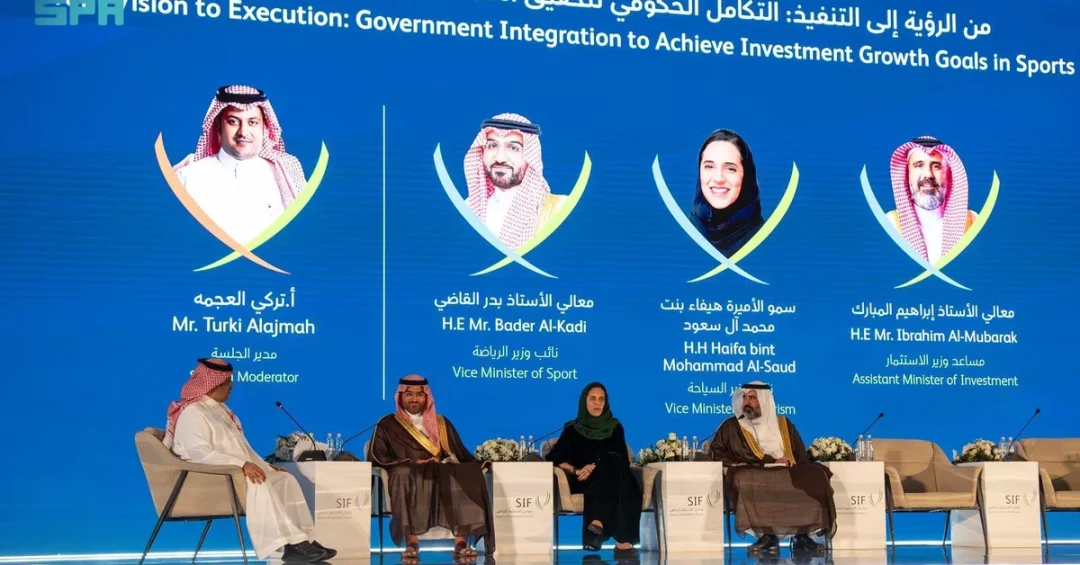
Saudi Arabia’s Sports Investment Forum (SIF) opened its first session in Riyadh on April 7, 2025, under the title “From Vision to Implementation: Government Integration to Achieve Investment Growth Goals in Sports,” bringing together senior officials to outline how government coordination is turning athletic ambition into a durable economic sector. The session featured Vice Minister of Sport Badr Al-Kadi, Vice Minister of Tourism Princess Haifa bint Mohammed, and Assistant Minister of Investment Ibrahim Al-Mubarak, according to the Saudi Press Agency (SPA). Their remarks focused on a single, unifying message: sports in the Kingdom is no longer only a pastime or a source of national pride, but a strategic partner in national development. How did a sector once defined by stadiums and tournaments become a pillar of Saudi economic planning? The answer, officials said, lies in cross-sectoral integration.
The forum, held in the Saudi capital, is the product of private sector initiative and aligns closely with the objectives of Vision 2030, the national transformation blueprint launched in 2016. Princess Haifa noted that the Kingdom now attracts approximately 24 million tourists annually to attend sports events and activities, generating around SAR22 billion in spending. Those figures frame the discussion in concrete terms: sports tourism is not a marginal niche but a measurable contributor to the national economy. The session set the tone for a broader conversation about how government ministries, investors, and event organizers can work in concert to sustain that momentum.
Context and Background
Why has Saudi Arabia placed sports at the center of its economic diversification strategy? For decades, the Kingdom’s economy was closely tied to hydrocarbon exports. Vision 2030, introduced under the leadership of Crown Prince Mohammed bin Salman, seeks to broaden that base by developing new sectors, including entertainment, tourism, and sports. The National Sports Strategy, a key component of this effort, aims to increase sports participation, professionalize leagues, attract international events, and build world-class infrastructure. The SIF session in Riyadh served as a checkpoint on that journey, moving the conversation from vision to implementation.
Government integration is the mechanism officials repeatedly emphasized. Vice Minister of Sport Badr Al-Kadi described the sports sector as a strategic partner in driving national development and advancing Saudi sports. His remarks suggest that no single ministry can deliver the strategy alone. The Ministry of Sport, the Ministry of Tourism, and the Ministry of Investment must align their regulations, incentives, and timelines. That alignment is what allows a stadium project to become a tourism magnet, a league to become an investment asset, and a young athlete to become a professional with a viable career path. The forum’s title, “From Vision to Implementation,” captures this shift from aspiration to execution.
The presence of three vice-ministerial-level officials on a single panel is itself a signal. It demonstrates that the sports file is not confined to one ministry but is treated as a shared national priority. Princess Haifa’s participation, in particular, underscores the link between sports and tourism, two sectors that Vision 2030 explicitly identifies as growth engines. By convening these stakeholders, the SIF creates a platform where policy coherence can be tested and refined.
Key Details
What exactly did the officials announce, and what does it mean for investors? Vice Minister Al-Kadi emphasized that achieving the objectives of the National Sports Strategy requires cross-sectoral integration. He framed the sports sector as a strategic partner in national development, a phrase that carries weight in a country where economic planning is coordinated at the highest levels. His message to the private sector was implicit but clear: the government is organizing itself to make sports investment easier, more predictable, and more profitable. For international investors, that translates into a more stable regulatory environment and clearer pathways to partnership.
Princess Haifa bint Mohammed, Vice Minister of Tourism, provided the most concrete data point of the session. She stated that the Kingdom currently attracts approximately 24 million tourists annually to attend sports events and activities, generating around SAR22 billion in spending. She highlighted that the forum is the result of private sector initiatives and aligns closely with Vision 2030 objectives. She also underscored the role of sports in advancing the tourism sector, noting that such events help generate job opportunities and support economic growth. The numbers are significant not only for their size but for their composition: sports-driven tourism brings visitors who spend on hotels, restaurants, transport, and retail, spreading benefits across the economy.
Assistant Minister of Investment Ibrahim Al-Mubarak added a broader perspective. He stated that the Kingdom has achieved significant milestones across numerous sectors since the launch of Vision 2030, including the sports sector, which demonstrates its promising investment potential. He noted that Vision 2030 is supported by comprehensive national programs and strategies involving all stakeholders. His remarks position sports within a wider investment ecosystem that includes giga-projects, special economic zones, and regulatory reforms. For an investor evaluating opportunities, the message is that sports is not an isolated bet but part of a coordinated national portfolio.
The session’s title, “From Vision to Implementation: Government Integration to Achieve Investment Growth Goals in Sports,” reflects a maturity in the policy conversation. Early Vision 2030 discussions often focused on targets and aspirations. Now, the emphasis is on integration—how ministries share data, harmonize licensing, and align incentives. That shift matters because implementation is where investment decisions are actually made. The SIF session provided a public window into that coordination, reinforcing confidence that the government is moving from planning to delivery.
International and Regional Impact
How does Saudi Arabia’s sports investment push resonate beyond its borders? The Kingdom has already become a regular host of major international events, from football tournaments to motorsport races and combat sports. Each event brings global media attention, fills hotel rooms, and showcases the country’s modern infrastructure. The 24 million sports-related tourists cited by Princess Haifa represent a substantial flow of international and regional visitors. For neighboring Gulf economies, Saudi Arabia’s strategy creates both competition and opportunity. Competition arises as the Kingdom bids for events and attracts investment. Opportunity emerges through regional supply chains, shared tourism itineraries, and cross-border partnerships.
At the international level, the SIF session signals that Saudi Arabia is open for business in a sector long dominated by established markets in Europe and North America. Global sports leagues, clubs, and federations are increasingly looking to the Kingdom as a partner for exhibitions, training camps, and commercial ventures. The government’s emphasis on integration reduces the friction that often discourages foreign investors in emerging markets. When the Ministry of Sport, Ministry of Tourism, and Ministry of Investment speak with one voice, international partners can plan with greater confidence. That coherence is a competitive advantage in the global race for sports capital and talent.
Regional diplomacy also plays a role. Sports events bring people together, and Saudi Arabia has used them to strengthen ties across the Middle East and beyond. By positioning sports as a bridge for tourism and investment, the Kingdom contributes to a broader regional narrative of economic cooperation. The SIF session, by highlighting government integration, offers a model that other countries in the region may study as they seek to diversify their own economies.
Economic and Strategic Significance
Why should economic analysts pay attention to a sports forum? The SAR22 billion in annual spending attributed to sports tourism is a direct economic contribution, but the strategic significance runs deeper. Sports investment creates jobs—not only for athletes and coaches but for event managers, hospitality staff, broadcast technicians, and construction workers. It stimulates infrastructure development, from stadiums and training facilities to transport links and hotels. It also supports the growth of adjacent industries such as media, marketing, and merchandise. In a diversified economy, these linkages multiply the impact of every riyal invested.
For Saudi Arabia, sports also serves a social purpose. Increased participation improves public health, engages youth, and creates pathways for women and girls in athletics. The National Sports Strategy includes targets for participation rates and professional leagues, which in turn build a domestic talent pipeline. A vibrant domestic sports scene reduces reliance on imported talent over time and creates exportable intellectual property—leagues, events, and brands that can be marketed globally. The government’s role is to set the rules, provide the infrastructure, and attract the private capital that turns these possibilities into businesses.
The involvement of the Ministry of Investment is particularly telling. Assistant Minister Al-Mubarak’s presence signals that sports is being treated as an investable asset class, not merely a public service. That means the government is thinking about returns, risk management, and scale. It also means investors can expect a more sophisticated dialogue about joint ventures, public-private partnerships, and regulatory frameworks. The SIF session thus serves as both a progress report and a pitch to the global investment community.
Vision 2030 Alignment
How does the SIF session connect to the broader Vision 2030 agenda? Vision 2030 aims to reduce dependence on oil, diversify revenue streams, and improve quality of life for citizens and residents. Sports sits at the intersection of these goals. It is an economic sector that generates revenue, a social sector that improves well-being, and a diplomatic asset that enhances the Kingdom’s global image. The National Sports Strategy, supported by comprehensive national programs, is designed to deliver on all three fronts. The emphasis on government integration ensures that ministries do not work in silos but pull in the same direction.
Princess Haifa’s remarks about private sector initiative are equally important. Vision 2030 envisions a larger role for the private sector in driving growth and creating jobs. The SIF itself is a product of private sector initiative, according to her statement, which demonstrates that the business community is responding to the government’s vision. When private organizers, investors, and ministries align, the result is a virtuous cycle: more events, more visitors, more spending, more investment, and more jobs. The 24 million sports tourists and SAR22 billion in spending are early indicators that this cycle is already turning.
Looking ahead, the challenge is to sustain and scale these gains. Government integration will remain essential as the Kingdom hosts increasingly ambitious events and develops new sports infrastructure. The SIF session in Riyadh provided a clear message: Saudi Arabia is committed to sports as a sustainable economic contributor, and it is organizing its government machinery to make that commitment a reality. For international observers, the takeaway is that the Kingdom’s sports strategy is not a short-term publicity play but a long-term economic plan, embedded in the national vision and backed by coordinated government action.
20 Questions
Q1. What was the title of the first session of the Sports Investment Forum in Riyadh?
A1. The session was titled “From Vision to Implementation: Government Integration to Achieve Investment Growth Goals in Sports,” according to the Saudi Press Agency. It was held in Riyadh on April 7, 2025.
Q2. Which Saudi officials participated in the SIF session?
A2. Vice Minister of Sport Badr Al-Kadi, Vice Minister of Tourism Princess Haifa bint Mohammed, and Assistant Minister of Investment Ibrahim Al-Mubarak participated, as reported by the Saudi Press Agency.
Q3. What did Vice Minister of Sport Badr Al-Kadi emphasize about the sports sector?
A3. He emphasized that achieving the National Sports Strategy objectives requires cross-sectoral integration, describing sports as a strategic partner in driving national development and advancing Saudi sports.
Q4. How many tourists does Saudi Arabia attract annually for sports events?
A4. Princess Haifa bint Mohammed stated that the Kingdom attracts approximately 24 million tourists annually to attend sports events and activities, generating around SAR22 billion in spending.
Q5. What did Princess Haifa say about the origin of the Sports Investment Forum?
A5. She highlighted that the forum is the result of private sector initiatives and aligns closely with Vision 2030 objectives, underscoring sports’ role in advancing tourism and economic growth.
Q6. What did Assistant Minister of Investment Ibrahim Al-Mubarak say about Vision 2030?
A6. He stated that the Kingdom has achieved significant milestones across numerous sectors since Vision 2030’s launch, including sports, and noted that the vision is supported by comprehensive national programs involving all stakeholders.
Q7. Why is government integration important for sports investment?
A7. Government integration aligns regulations, incentives, and timelines across ministries, making it easier for private investors to plan, reducing friction, and ensuring that sports projects deliver economic and social returns.
Q8. How does sports tourism contribute to the Saudi economy?
A8. Sports tourism generates spending on hotels, restaurants, transport, and retail, creating jobs and supporting economic growth. It is a measurable contributor, with SAR22 billion in annual spending from sports-related visitors.
Q9. Which Saudi ministries are involved in the sports investment push?
A9. The Ministry of Sport, the Ministry of Tourism, and the Ministry of Investment are central, working together under the National Sports Strategy and Vision 2030 to enable sustainable growth in the sector.
Q10. What is the National Sports Strategy?
A10. The National Sports Strategy is a key component of Vision 2030 that aims to increase sports participation, professionalize leagues, attract international events, and build world-class infrastructure to make sports a sustainable economic contributor.
Q11. How does sports investment create jobs in Saudi Arabia?
A11. It creates jobs for athletes, coaches, event managers, hospitality staff, broadcast technicians, and construction workers, while also supporting adjacent industries such as media, marketing, and merchandise.
Q12. What role does the private sector play in Saudi sports development?
A12. The private sector initiates forums, invests in events and infrastructure, and partners with the government. Princess Haifa noted the SIF itself resulted from private sector initiative, aligning with Vision 2030 objectives.
Q13. How does hosting international sports events benefit Saudi Arabia?
A13. It brings global media attention, fills hotel rooms, showcases modern infrastructure, attracts international visitors, and strengthens the Kingdom’s position as a destination for sports and tourism.
Q14. What is the significance of SAR22 billion in sports-related spending?
A14. It demonstrates that sports tourism is a substantial economic sector, not a niche. The spending circulates through the economy, supporting businesses and jobs across multiple industries.
Q15. How does sports align with Vision 2030’s quality-of-life goals?
A15. Sports improves public health, engages youth, and creates opportunities for women and girls, contributing to a higher quality of life and a more active, healthy society as envisioned by Vision 2030.
Q16. What does “cross-sectoral integration” mean in the context of Saudi sports?
A16. It means ministries coordinate policies, share data, and align incentives so that sports projects receive consistent support, from licensing and investment to tourism promotion and infrastructure development.
Q17. How does the SIF session reflect progress since Vision 2030’s launch?
A17. It shows a shift from planning to implementation, with officials discussing concrete integration mechanisms and investment goals, indicating that the sports sector is maturing into a deliverable economic priority.
Q18. What opportunities does Saudi sports investment offer international partners?
A18. International partners can engage in joint ventures, event hosting, training camps, and commercial ventures, benefiting from a coordinated government approach that reduces regulatory friction and enhances predictability.
Q19. How does sports support Saudi Arabia’s regional diplomacy?
A19. Sports events bring people together and strengthen ties across the Middle East and beyond, positioning the Kingdom as a hub for cooperation and a model for economic diversification in the region.
Q20. What is the long-term outlook for sports as an economic contributor in Saudi Arabia?
A20. With sustained government integration, private sector engagement, and Vision 2030 support, sports is positioned to grow as a sustainable economic contributor, driving jobs, tourism, and investment for years to come.
Reader Feedback
We value your thoughts. Please share your feedback on this article.
Your feedback helps us improve our coverage.
Related articles
 SIF Highlights Sports Infrastructure Projects, Investment Opportunities
 Asian Triathlon President Awards China Mixed Relay Gold, Chairs Meetings in Hong Kong
 Saudi and Spanish Baseball Federations Sign Cooperation MoU
 SAMF Chairman: Sports Events Attract Investors to Saudi
 Sports Investment Forum Explores Privatization Impact on Saudi Clubs
 Saudi Esports Leadership Shines at Sports Investment Forum