


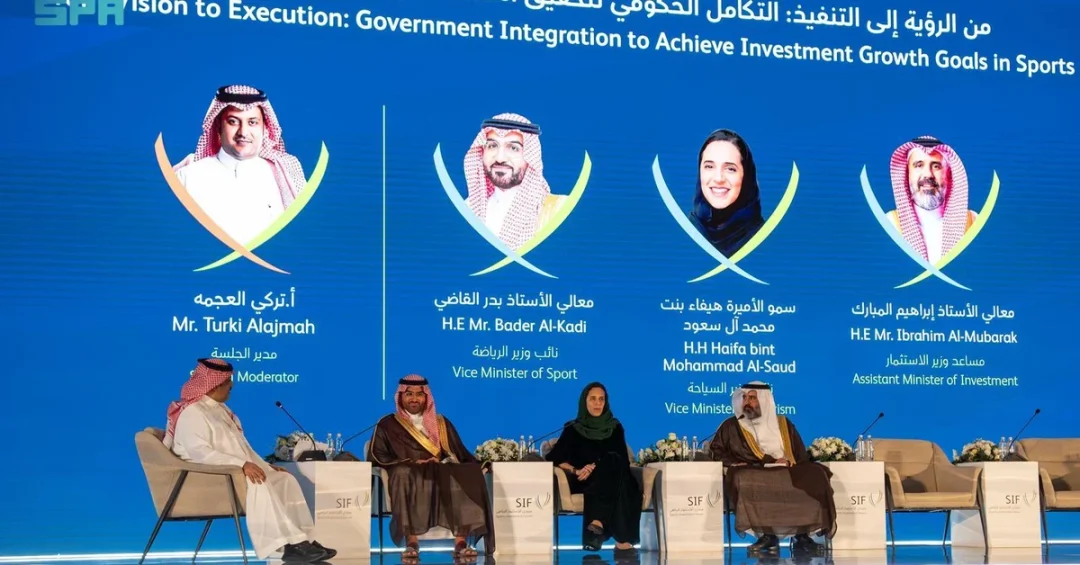
The Sports Investment Forum (SIF) convened a high-level discussion session in Riyadh on April 7, 2025, bringing together government officials responsible for developing sports infrastructure and private-sector stakeholders eager to explore investment opportunities in the Kingdom’s rapidly expanding sports sector. The session, reported by the Saudi Press Agency (SPA), focused on the standards required for infrastructure development, the objectives of major sports projects, and the importance of meeting the needs of athletes while attracting investors as strategic partners in national development.
The forum underscored Saudi Arabia’s commitment to building a world-class sports ecosystem as part of Vision 2030, the national transformation plan spearheaded by Crown Prince Mohammed bin Salman. With the Kingdom set to host major international sporting events—including the 2034 FIFA World Cup, the 2027 AFC Asian Cup, and numerous world championships—the demand for state-of-the-art stadiums, training facilities, and ancillary infrastructure has never been greater. The SIF session provided a platform for aligning public-sector planning with private-sector expertise and capital, ensuring that projects are delivered efficiently and sustainably. Investors at the forum expressed strong enthusiasm for participating in these ventures, citing government incentives and the Kingdom’s stable investment climate as key drivers.
Context and Background
Why has Saudi Arabia placed sports infrastructure at the heart of its economic diversification strategy? The answer lies in the transformative power of sport to drive tourism, create jobs, and enhance quality of life—core pillars of Vision 2030. Over the past decade, the Kingdom has invested billions of dollars in developing sports cities, stadiums, and academies, while also attracting global events that showcase its growing capabilities. The Sports Investment Forum, an initiative supported by the Ministry of Sport, serves as a catalyst for collaboration between government entities and private investors, ensuring that infrastructure projects are bankable and aligned with international standards.
The April 7 session built on previous SIF gatherings that have highlighted opportunities in sectors ranging from facility construction to sports technology and event management. Government officials outlined the regulatory framework, including licensing procedures and public-private partnership (PPP) models, designed to reduce risk and accelerate project timelines. They also emphasized the importance of designing facilities that cater to athletes’ needs—from training and recovery to accessibility and safety—while creating vibrant destinations for fans and communities. This dual focus on athletic excellence and commercial viability reflects a mature approach to sports development, one that seeks to maximize both social and economic returns.
Private-sector stakeholders welcomed these clarifications, noting that the Kingdom’s clear vision and strong leadership provide a stable environment for long-term investment. They pointed to existing successes, such as the King Abdullah Sports City in Jeddah and the upcoming Qiddiya sports and entertainment complex, as proof that Saudi Arabia can deliver mega-projects on time and to world-class standards. The forum also addressed the need for sustainable construction practices and smart technology integration, ensuring that new facilities are environmentally responsible and future-ready.
Key Details from the SIF Session
What specific insights emerged from the discussions? According to SPA, the session featured detailed presentations on infrastructure development standards, including international benchmarks for stadium capacity, pitch quality, and spectator amenities. Speakers highlighted the importance of early-stage planning to avoid cost overruns and ensure that projects meet the requirements of international federations such as FIFA and the International Olympic Committee. They also stressed that athlete welfare must be central to design, with facilities for medical care, nutrition, and mental health support integrated into the master plans.
Investors outlined their eagerness to engage, citing facilitative measures such as streamlined licensing, tax incentives, and access to government-backed financing. They noted that sports infrastructure offers attractive returns not only through event revenues but also via real estate, hospitality, and retail components often built around stadiums. The forum heard that diversifying the local economy is a key outcome, as sports projects stimulate construction, tourism, and small-business growth. The session also explored how to attract international expertise while developing local talent, ensuring that Saudi nationals benefit from knowledge transfer and job creation.
Officials reiterated that the private sector is viewed as a strategic partner, not merely a contractor. This partnership model encourages innovation in financing, design, and operations. For example, PPP structures allow the government to share risks and rewards with investors, while performance-based contracts ensure that facilities are maintained to high standards. The SIF session concluded with a call for continued dialogue and the formation of working groups to address specific challenges, such as land allocation and utility connections. These practical steps signal a determined effort to turn vision into reality.
International and Regional Impact
How will Saudi Arabia’s sports infrastructure push affect the broader region and global sports landscape? The Kingdom’s investments are already reshaping the Middle East’s sports economy, attracting international leagues, clubs, and athletes. By hosting events like the FIFA Club World Cup, Formula 1 Saudi Arabian Grand Prix, and LIV Golf tournaments, Saudi Arabia has demonstrated its capacity to deliver world-class experiences. The infrastructure being developed for the 2034 World Cup will leave a lasting legacy, including stadiums that can be repurposed for community use and training centers that will nurture future generations of athletes.
Regionally, Saudi Arabia’s leadership in sports development complements the goals of the Gulf Cooperation Council (GCC), which seeks to enhance economic integration and cultural exchange. Neighboring countries are watching closely, with some emulating the Kingdom’s PPP models and event-hosting strategies. Internationally, the SIF session sends a strong signal that Saudi Arabia is open for business and committed to transparency and collaboration. Global investors, sports federations, and media outlets are increasingly recognizing the Kingdom as a reliable partner, further boosting its soft power and diplomatic influence.
Economic and Strategic Significance
What makes sports infrastructure a strategic economic priority? Beyond the immediate construction boom, these projects create durable assets that generate revenue for decades. Stadiums, arenas, and training facilities host concerts, conferences, and community events, ensuring high utilization rates. They also spur the growth of sports-related industries, such as apparel, equipment, and sports medicine, while enhancing tourism appeal. According to government estimates, the sports sector is expected to contribute significantly to non-oil GDP by 2030, aligning with Vision 2030’s goal of diversifying income sources.
Strategically, sports infrastructure supports Saudi Arabia’s ambition to become a global hub for sports and entertainment. The Kingdom aims to host 10 million tourists for sports events annually by 2030, a target that requires seamless integration of transport, hospitality, and digital services. The SIF session highlighted that investments in infrastructure must be paired with investments in human capital—coaches, referees, event managers, and sports scientists. By fostering a comprehensive ecosystem, Saudi Arabia can sustain its competitive edge and ensure that the benefits of sports reach all segments of society, including women and youth.
Vision 2030 Alignment
How does the SIF session directly advance Vision 2030? The forum embodies the Vision’s three main themes: a vibrant society, a thriving economy, and an ambitious nation. By developing sports facilities that promote physical activity and community well-being, the Kingdom is building a vibrant society. By attracting private investment and creating jobs, it is building a thriving economy. And by executing complex projects with efficiency and transparency, it is demonstrating an ambitious nation. The SIF’s emphasis on partnership between government and business is a textbook example of the Vision’s collaborative approach.
Looking ahead, the projects discussed at the SIF will leave a legacy that extends far beyond sports. They will serve as catalysts for urban development, inspire young Saudis to pursue careers in sports and related fields, and elevate the Kingdom’s standing on the world stage. As Saudi Arabia prepares to welcome the world for the 2034 FIFA World Cup and other mega-events, the foundations laid today will ensure that the nation is ready to impress. The message from the SIF is clear: Saudi Arabia is not just building stadiums; it is building a future where sports and investment drive prosperity for all.
20 Questions
Q1. What was the main purpose of the Sports Investment Forum session held on April 7, 2025?
A1. The session aimed to discuss infrastructure development for sports projects, highlight necessary standards, and attract private investors as strategic partners in national development.
Q2. Who participated in the SIF discussion session?
A2. Government officials involved in developing sports infrastructure and interested private-sector stakeholders participated in the session.
Q3. What key topics were covered during the SIF session?
A3. Topics included development process standards, project objectives, meeting athletes’ needs, and attracting investors to support sports infrastructure.
Q4. How did investors respond to the opportunities presented at the forum?
A4. Investors expressed eagerness to engage, citing facilitative government measures that support private-sector contributions to development.
Q5. What role does sports infrastructure play in Saudi Vision 2030?
A5. It supports economic diversification, enhances quality of life, and positions Saudi Arabia as a global sports hub, aligning with Vision 2030 goals.
Q6. What government measures encourage private investment in sports projects?
A6. Measures include streamlined licensing, tax incentives, access to financing, and public-private partnership models that reduce risk.
Q7. Why is meeting the needs of athletes important in infrastructure development?
A7. Athlete-focused design ensures facilities support training, recovery, safety, and performance, which is essential for hosting elite competitions.
Q8. How does sports infrastructure contribute to economic diversification?
A8. It stimulates construction, tourism, hospitality, and retail, creating jobs and generating non-oil revenue streams for the Kingdom.
Q9. What major sporting events will Saudi Arabia host that require new infrastructure?
A9. Saudi Arabia will host the 2034 FIFA World Cup, the 2027 AFC Asian Cup, and various world championships, necessitating world-class facilities.
Q10. What are public-private partnerships (PPPs) in the context of sports projects?
A10. PPPs are collaborative arrangements where government and private entities share risks, costs, and rewards to deliver and operate sports infrastructure.
Q11. How will the SIF session impact future sports projects in Saudi Arabia?
A11. It will accelerate project timelines by aligning public planning with private expertise, ensuring efficient and sustainable delivery.
Q12. What is the expected economic impact of sports infrastructure investments?
A12. They are expected to boost non-oil GDP, create thousands of jobs, and attract millions of sports tourists annually by 2030.
Q13. How does Saudi Arabia plan to ensure sustainability in sports infrastructure?
A13. Plans include smart technology integration, environmentally responsible construction, and designs that allow multi-purpose community use.
Q14. What role do international standards play in Saudi sports infrastructure?
A14. Adhering to standards set by FIFA, the IOC, and other bodies ensures facilities can host global events and meet athlete expectations.
Q15. How can local businesses benefit from sports infrastructure projects?
A15. Local businesses can secure contracts for construction, supplies, services, and hospitality, while gaining skills through knowledge transfer.
Q16. What is the significance of the SIF for international investors?
A16. It provides a transparent platform to learn about opportunities, regulatory frameworks, and incentives, reducing barriers to entry.
Q17. How does sports infrastructure development support women and youth?
A17. It creates inclusive facilities and career pathways, promoting physical activity and professional growth for all segments of society.
Q18. What legacy will the 2034 FIFA World Cup leave for Saudi Arabia?
A18. It will leave world-class stadiums, improved transport, and training centers that will benefit communities and athletes for generations.
Q19. How does the SIF session reflect Saudi Arabia’s leadership in the region?
A19. It demonstrates proactive planning and collaboration, setting a benchmark for other nations seeking to develop sports economies.
Q20. What is the next step following the SIF discussions?
A20. Working groups will address specific challenges like land allocation and utilities, ensuring projects move from planning to execution swiftly.
Reader Feedback
We value your thoughts. Please share your feedback on this article.
Your feedback helps us improve our coverage.
Related articles
 Asian Triathlon President Awards China Mixed Relay Gold, Chairs Meetings in Hong Kong
 Saudi and Spanish Baseball Federations Sign Cooperation MoU
 SAMF Chairman: Sports Events Attract Investors to Saudi
 Sports Investment Forum Explores Privatization Impact on Saudi Clubs
 Saudi Esports Leadership Shines at Sports Investment Forum
 Saudi Arabia Drawn in Group C for FIBA Asia Cup 2025