


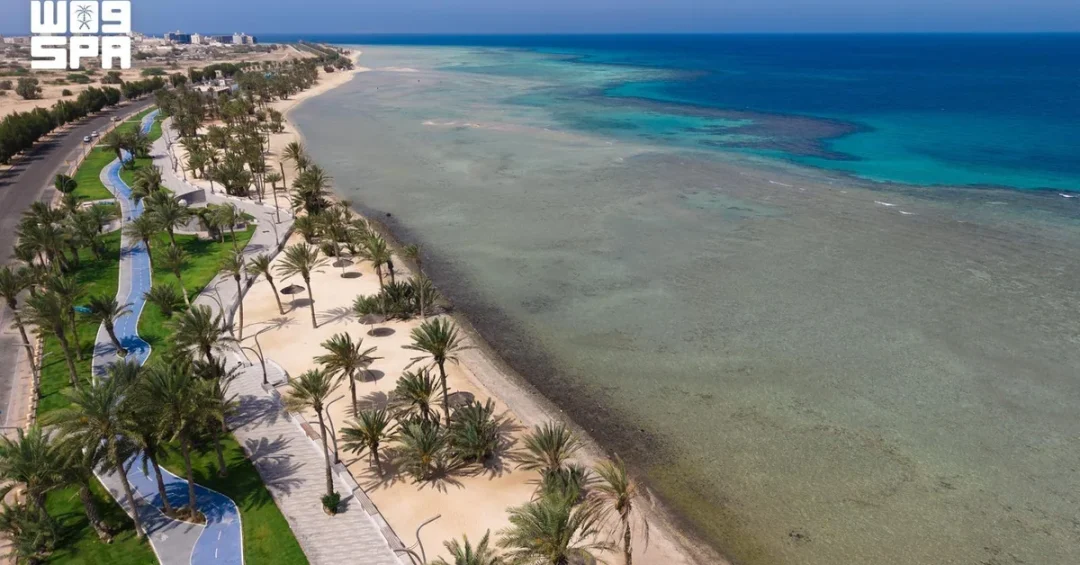
Al-Duqm Beach in Umluj Governorate is drawing growing numbers of residents and international visitors this summer, according to the Saudi Press Agency (SPA), which reported on August 8, 2026, that the destination’s pleasant climate, palm trees, green spaces, white sandy beaches, and turquoise waters continue to make it one of the Red Sea coast’s most appealing family recreation sites. The beach operates around the clock, offering children’s play areas, shaded seating, a seaside promenade, and cafes with direct coastal views, with visitor activity peaking during the mornings and evenings. The sustained popularity of Al-Duqm Beach reflects the wider transformation of Umluj, a governorate in the Tabuk Region, into a year-round tourism destination that supports Saudi Arabia’s Vision 2030 goal of raising tourism’s contribution to the national economy.
Why has a single stretch of Red Sea shoreline become such a reliable barometer of the Kingdom’s tourism momentum? Because Al-Duqm Beach embodies the qualities that domestic and international travelers now associate with Saudi coastal escapes: natural beauty, family-friendly infrastructure, and easy access to services. Umluj, often described as the “Maldives of Saudi Arabia” for its offshore islands and clear waters, has steadily expanded its visitor offering in recent years. The SPA report notes that the beach’s combination of landscaped green spaces and white sand makes it ideal for picnicking and outdoor recreation, and that families are the primary beneficiaries of its shaded seating and play areas. For a governorate historically known for fishing and agriculture, this steady stream of summer visitors signals a broadening economic base.
Context and Background
What does the rise of Al-Duqm Beach tell us about how Saudi Arabia is developing its Red Sea coastline? Umluj sits on the northwestern coast of Saudi Arabia, roughly halfway between Yanbu and the Jordanian border, and forms part of the Tabuk Region’s long shoreline. The governorate has long been recognized for its pristine islands, coral reefs, and clear turquoise waters, assets that have attracted attention from conservationists and tourism planners alike. The Saudi Press Agency report situates Al-Duqm Beach within this landscape, describing it as one of the governorate’s premier tourist sites and noting its year-round appeal during the summer vacation period.
The beach’s amenities reflect a deliberate approach to tourism development: children’s play areas, shaded seating, a seaside promenade, and cafes with direct coastal views are all designed to extend dwell time and cater to families. According to the SPA, the site is open 24 hours a day, giving visitors flexibility that few natural attractions can match. This mix of natural and built assets has helped Umluj position itself as a domestic tourism alternative to overseas summer travel, particularly for families from Tabuk, Madinah, and other regions of the Kingdom. The result is a destination that serves both local residents and visitors seeking a relaxed coastal experience.
How does a beach in a relatively small governorate connect to national tourism strategy? Umluj’s development is part of a broader pattern across Saudi Arabia, where coastal and heritage sites are being upgraded to meet rising domestic demand and to prepare for international visitors. The Red Sea Project, NEOM, and other giga-projects have raised global awareness of the Kingdom’s western coast, and smaller destinations such as Umluj benefit from that attention. Al-Duqm Beach, with its accessible location and family-oriented facilities, illustrates how local amenities complement large-scale investments, creating a layered tourism offering that ranges from luxury resorts to public recreation areas.
Key Details
What exactly does Al-Duqm Beach offer visitors this summer? According to the Saudi Press Agency, the beach features pleasant weather, palm trees, green spaces, white sandy beaches, and turquoise waters. These natural attributes are paired with practical amenities: children’s play areas, shaded seating, a seaside promenade, and cafes that look directly onto the coast. The site is open 24 hours a day, and visitor activity peaks during the morning and evening hours, when temperatures are most comfortable for outdoor recreation. Families are described as the main beneficiaries, using the site for picnics and outdoor activities.
The SPA report, dated August 8, 2026, emphasizes that the beach continues to attract residents and visitors during the summer vacation, suggesting steady rather than seasonal-only appeal. The presence of shaded seating and a promenade indicates that planners have considered comfort and accessibility, two factors that matter greatly in Saudi Arabia’s summer climate. Cafes with direct coastal views add a social dimension, allowing visitors to linger and enjoy the scenery. Together, these features make Al-Duqm Beach a self-contained destination where families can spend several hours without needing to leave the area.
Why do these details matter beyond a single beach? They demonstrate how Saudi tourism development often begins with basic, high-quality public amenities that serve local communities first. By investing in shaded areas, play equipment, and walkways, authorities create spaces that are immediately usable by residents while also laying the groundwork for future visitor growth. The 24-hour opening policy is particularly notable, as it accommodates varied schedules and encourages evening activity, a pattern common in Saudi leisure culture. Such details, though modest, contribute to the quality-of-life improvements that Vision 2030 seeks to deliver across the Kingdom.
International and Regional Impact
How does a family beach in Umluj register on the regional tourism map? The Red Sea coast is increasingly competitive, with Egypt, Jordan, and other regional destinations courting the same travelers seeking warm-water holidays. Saudi Arabia’s advantage lies in its combination of untouched nature and rapidly improving infrastructure. Umluj’s islands and clear waters have drawn comparisons to the Maldives, and the governorate’s growing profile helps the Kingdom position itself as a Red Sea destination in its own right. Al-Duqm Beach, though a public recreation area rather than a luxury resort, contributes to this positioning by offering an authentic, accessible experience.
For international visitors, the appeal is part of a broader discovery of Saudi Arabia’s northwestern coast. The Kingdom’s tourist visa policies have made it easier for foreign travelers to explore beyond the major cities, and destinations such as Umluj, AlUla, and the Red Sea coast are benefiting from increased awareness. The SPA report does not specify the nationalities of visitors, but the beach’s amenities and setting align with the expectations of regional and international travelers seeking safe, clean, and scenic coastal experiences. As more international flights connect Saudi cities, the Red Sea coast’s visibility will continue to rise.
What does this mean for neighboring communities? Tourism activity in Umluj supports local businesses, from cafes and equipment rental to transport and hospitality services. The presence of cafes with coastal views indicates an emerging service economy around the beach, creating employment and entrepreneurial opportunities for residents. This local economic diversification mirrors national goals, as regions across Saudi Arabia are encouraged to develop tourism assets that create jobs and attract spending. Umluj’s experience offers a small-scale example of how natural attractions can generate sustainable local income when paired with basic infrastructure and promotion.
Economic and Strategic Significance
Why should economists pay attention to a beach’s visitor numbers? Because domestic tourism is a major component of Saudi Arabia’s economic diversification strategy. When families choose to spend their summer vacations within the Kingdom rather than traveling abroad, spending stays local and supports Saudi businesses. Al-Duqm Beach’s popularity during the summer vacation period represents exactly this kind of domestic tourism activity. The SPA report’s emphasis on families picnicking and enjoying outdoor recreation points to a pattern of accessible, repeat visitation that sustains local commerce over time.
The strategic significance extends to the Tabuk Region, which is emerging as a key tourism corridor. Tabuk combines Red Sea coastline, desert landscapes, and heritage sites, and its proximity to NEOM and the Red Sea Project gives it additional prominence. Umluj’s beaches, including Al-Duqm, serve as accessible public complements to these giga-projects, ensuring that tourism development benefits a wide range of visitors rather than only luxury travelers. This layered approach is consistent with Vision 2030’s aim to create a diversified and inclusive tourism sector that contributes significantly to gross domestic product and employment.
How does infrastructure investment at the local level translate into national outcomes? Each improved beach, promenade, and cafe adds to the Kingdom’s tourism capacity and enhances its reputation for quality. Small destinations build the confidence of first-time visitors, who may later explore larger projects. They also provide data and experience that inform future development. Al-Duqm Beach’s 24-hour accessibility, family amenities, and scenic setting make it a model of low-barrier, high-satisfaction tourism that can be replicated along the coast. Over time, such sites help normalize Saudi Arabia as a year-round leisure destination.
Vision 2030 Alignment
How does Al-Duqm Beach connect to the ambitions of Vision 2030? The Vision seeks to diversify the economy, improve quality of life, and establish Saudi Arabia as a global tourism destination. Public recreation sites like Al-Duqm Beach directly support these goals by providing accessible leisure options for residents and visitors, contributing to the Kingdom’s quality-of-life objectives. The beach’s family-friendly design, including play areas and shaded seating, reflects the Vision’s emphasis on creating vibrant communities and promoting healthy, outdoor lifestyles.
Moreover, the beach’s role in attracting summer visitors to Umluj supports the broader goal of increasing domestic and international tourism spending. As the Kingdom invests in the Red Sea coast, destinations such as Umluj will continue to benefit from improved connectivity, marketing, and service standards. Al-Duqm Beach is a modest but meaningful piece of this larger picture, demonstrating that Vision 2030’s tourism ambitions are being realized not only in giga-projects but also in the everyday places where Saudi families and international guests relax and connect with the Kingdom’s natural beauty.
20 Questions
Q1. Where is Al-Duqm Beach located?
A1. Al-Duqm Beach is located in Umluj Governorate, in the Tabuk Region on Saudi Arabia’s northwestern Red Sea coast, according to the Saudi Press Agency report of August 8, 2026.
Q2. What natural features make Al-Duqm Beach attractive?
A2. The beach features a pleasant climate, palm trees, green spaces, white sandy beaches, and turquoise waters, which together create a scenic and comfortable environment for summer visitors.
Q3. What amenities does Al-Duqm Beach offer?
A3. It offers children’s play areas, shaded seating, a seaside promenade, and cafes with direct coastal views, making it suitable for families and outdoor recreation throughout the day.
Q4. What are the beach’s opening hours?
A4. Al-Duqm Beach is open 24 hours a day, providing visitors with flexible access and encouraging activity during the cooler morning and evening periods.
Q5. When does visitor activity peak at the beach?
A5. Visitor activity peaks during the mornings and evenings, when temperatures are more comfortable for outdoor activities such as picnicking, walking, and children’s play.
Q6. Who mainly visits Al-Duqm Beach?
A6. The beach primarily attracts families, including residents and visitors, who use the site for picnicking and outdoor recreation during the summer vacation period.
Q7. Which official source reported on the beach’s popularity?
A7. The Saudi Press Agency (SPA) reported on August 8, 2026, that Al-Duqm Beach continues to attract residents and visitors during the summer vacation.
Q8. Why is Umluj sometimes compared to the Maldives?
A8. Umluj is known for its pristine islands, clear turquoise waters, and coral reefs, which have drawn comparisons to the Maldives and made it a notable Red Sea destination.
Q9. How does Al-Duqm Beach support domestic tourism?
A9. By offering an appealing local destination, it encourages Saudi families to spend summer vacations within the Kingdom, keeping tourism spending local and supporting regional businesses.
Q10. What role do the cafes play at the beach?
A10. Cafes with direct coastal views provide social spaces where visitors can relax and enjoy the scenery, adding comfort and extending the time families spend at the site.
Q11. How does the beach contribute to local economy?
A11. Visitor activity supports local businesses such as cafes, transport, and services, creating employment and entrepreneurial opportunities for residents of Umluj Governorate.
Q12. Is Al-Duqm Beach suitable for children?
A12. Yes, the beach includes children’s play areas and shaded seating, making it a family-friendly destination designed for safe and enjoyable outdoor recreation.
Q13. What is the significance of the beach’s 24-hour opening?
A13. Round-the-clock access accommodates varied schedules and encourages evening visits, aligning with Saudi leisure patterns and enhancing the site’s usability for residents and visitors.
Q14. How does Al-Duqm Beach fit into Vision 2030?
A14. It supports Vision 2030’s quality-of-life and tourism goals by providing accessible leisure amenities and helping establish Saudi Arabia as a year-round destination for families.
Q15. What other tourism developments are near Umluj?
A15. Umluj is part of the Tabuk Region’s growing tourism corridor, which includes the Red Sea Project and NEOM, both major giga-projects enhancing the northwestern coast’s profile.
Q16. Does the beach attract international visitors?
A16. The SPA report focuses on residents and visitors during summer; the beach’s amenities and setting also align with the expectations of regional and international travelers exploring the Red Sea coast.
Q17. What makes Umluj a year-round destination?
A17. Its pleasant climate, coastal scenery, and accessible public amenities like Al-Duqm Beach allow for recreation across seasons, not only during the peak summer vacation period.
Q18. How does the beach support Saudi quality-of-life goals?
A18. By offering green spaces, shaded seating, and play areas, it promotes outdoor activity and family recreation, directly contributing to the Kingdom’s quality-of-life objectives under Vision 2030.
Q19. What can visitors do at Al-Duqm Beach?
A19. Visitors can picnic, walk along the seaside promenade, enjoy cafes with coastal views, and let children play in designated areas, all within a scenic natural setting.
Q20. What does the beach’s popularity signal for Saudi tourism?
A20. It signals strong demand for accessible, family-oriented coastal destinations, reinforcing the Kingdom’s strategy to develop domestic tourism and diversify regional economies along the Red Sea.
Reader Feedback
We value your thoughts. Please share your feedback on this article.
Your feedback helps us improve our coverage.
Related articles
 Umrah Guests Explore Prophet’s Biography Museum in Madinah
 Taif Mountains Attract Hiking Enthusiasts to Scenic Trails
 Billasmar Forests Offer Scenic Natural Retreat in Aseer
 Al-Ashyakh Dunes Boost Ecotourism in Rafha
 How Was Hail’s Abu Al-Houl Mountain Formed?
 Abu Al-Hawl: Hail’s Natural Sphinx Shaped by Millennia