


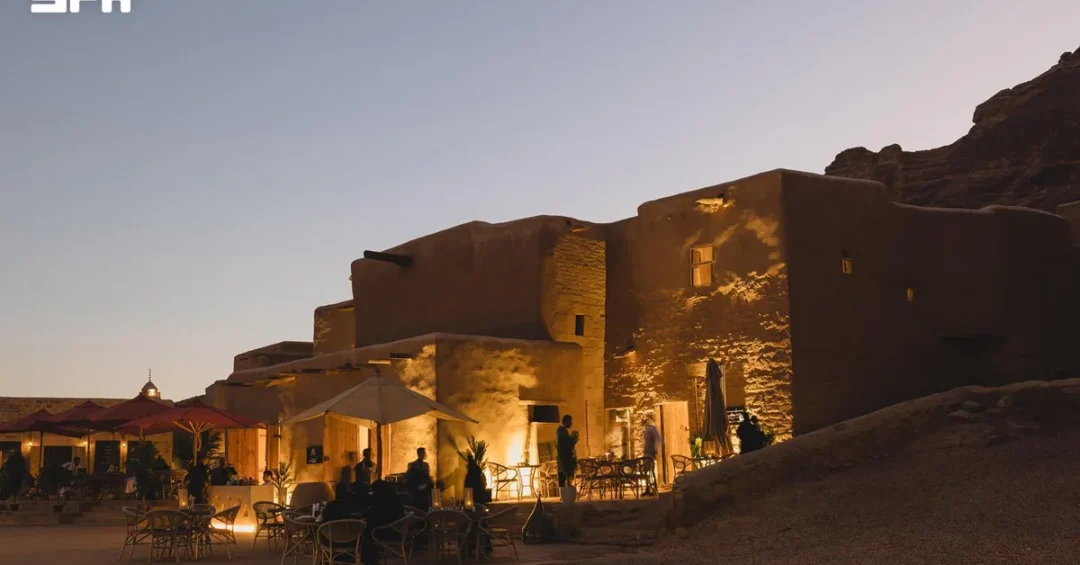
Ten hotels and restaurants in AlUla have been featured in the 2026 MICHELIN Guide for Saudi Arabia, according to an announcement released via the Saudi Press Agency (SPA), marking a new milestone in the ancient oasis city’s emergence as a global center for luxury hospitality and culinary excellence. The recognition spans two MICHELIN Keys for hotels, a new Bib Gourmand for dining, and a broad selection of MICHELIN-recommended venues, reflecting what official Saudi channels describe as the exceptional quality, distinctiveness, and authenticity of AlUla’s hospitality offerings. Each venue, the announcement noted, reflects the destination’s sense of place and deep cultural roots.
The 2026 selection places AlUla among the most concentrated clusters of MICHELIN-recognized hospitality venues in the region, reinforcing its position as a leading destination in the Kingdom of Saudi Arabia. For international travelers, the news offers a clear signal: AlUla is no longer only a heritage destination to be visited, but a place to be savored, stayed in, and remembered. Could any other destination in the region match the combination of ancient landscapes and contemporary fine dining that AlUla now offers?
Context and Background
How did a remote oasis in northwestern Saudi Arabia become a fixture of one of the world’s most respected hospitality guides? The answer lies in a deliberate, decade-long effort to develop AlUla as a world-class destination while protecting its heritage. The Royal Commission for AlUla (RCU), established to steward the region’s cultural and natural assets, has pursued a strategy that pairs archaeological preservation with carefully controlled luxury development. The MICHELIN Guide recognition is the latest independent validation of that approach, arriving as Saudi Arabia’s tourism sector continues to expand under Vision 2030.
The MICHELIN Guide’s presence in Saudi Arabia is itself relatively new, part of a broader effort by the Kingdom to benchmark its hospitality against global standards. The guide’s inspectors evaluate hotels through its MICHELIN Keys program, which recognizes remarkable hotel experiences, and restaurants through its familiar star, Bib Gourmand, and selected designations. AlUla’s strong showing in the 2026 edition, released via official Saudi channels, follows earlier editions in which the destination first appeared, and it demonstrates that the quality of its offerings is deepening rather than merely widening.
AlUla’s geography and history give it a distinct advantage. Home to Hegra, Saudi Arabia’s first UNESCO World Heritage Site, and to the dramatic sandstone canyons of Ashar Valley, the destination offers settings that few hospitality markets can replicate. The 2026 guide recognizes venues that lean into that advantage, from eco-boutique hotels built from restored mudbrick dwellings to dining rooms set amid lush palm groves. Isn’t it rare for a destination to compete at the highest level of luxury hospitality while remaining so closely tied to its ancient past?
Key Details: Hotels Recognized in the 2026 Guide
The hotel selection in the 2026 MICHELIN Guide showcases the breadth of AlUla’s accommodation, from heritage restoration to minimalist desert design. Dar Tantora The House Hotel was awarded One MICHELIN Key, a testament to its opulent offering rooted in heritage. Situated in AlUla Old Town and built from carefully restored historic mudbrick dwellings, the eco-boutique property provides guests with an authentic sanctuary in the heart of the historic area. Its recognition underscores how restoration, when executed with care, can produce hospitality of the highest order.
The Chedi Hegra also received One MICHELIN Key, recognized for its location within Saudi Arabia’s first UNESCO World Heritage Site. The property preserves historic structures, ancient fort walls, and the former AlUla railway station, weaving centuries of heritage into a modern luxury experience. Banyan Tree AlUla maintained its coveted One MICHELIN Key, a prestigious mark of distinction recognizing remarkable hotel experiences. Set within the sandstone canyons of Ashar Valley, the resort pairs minimalist luxury with sustainable design, offering a secluded retreat rooted in nature.
Also featured in the hotel selection are Our Habitas AlUla, recognized for its wellness-led, environmentally conscious approach to desert hospitality, and Caravan by Habitas AlUla, which offers a vibrant, adventure-inspired stay under the stars. Together, these five properties illustrate a hospitality ecosystem that ranges from contemplative heritage retreats to active desert adventures. Does this diversity not suggest that AlUla can serve virtually every kind of discerning traveler?
Key Details: Dining Recognized in the 2026 Guide
AlUla’s dining scene earned equally notable recognition. New addition Tofareya earned a Bib Gourmand for its outstanding Saudi cuisine. Situated in a traditional village house in AlUla Old Town, Tofareya highlights local ingredients, including AlUla oranges and dates harvested from the ancient oasis. It joins returning Bib Gourmand awardee Joontos at Dar Tantora The House Hotel, which is praised for its contemporary and inventive spin on traditional Saudi dishes.
Entering the guide for the first time was Somewhere, set within the AlUla Oasis and serving Middle Eastern dishes with creative contemporary twists amid lush palm groves. The 2026 selection also includes returning MICHELIN-selected destinations such as Harrat at Banyan Tree AlUla, recognized for its pan-Arabic cuisine, and Tama at Our Habitas AlUla, celebrated for its farm-to-table approach and locally sourced, seasonal menus.
The culinary recognition is significant because it honors Saudi cuisine on its own terms. Tofareya’s use of AlUla oranges and oasis dates, and Tama’s farm-to-table philosophy, place local ingredients and traditions at the center of the fine-dining experience rather than at its margins. For a global audience accustomed to European or Asian culinary capitals, AlUla now presents a compelling alternative rooted in Arabian heritage. Who could have imagined a decade ago that Saudi cuisine would be celebrated by one of the world’s most influential dining guides?
International and Regional Impact
The 2026 MICHELIN Guide recognition carries implications well beyond AlUla’s borders. For international travelers, it provides an independent, globally recognized quality signal that reduces the uncertainty of planning a trip to a relatively new destination. For the wider Middle East, it strengthens the region’s growing reputation as a serious culinary and hospitality market, complementing established hubs such as Dubai and emerging ones across the Gulf. AlUla’s high concentration of recognized venues positions it as a leader in this regional shift.
The news also reinforces Saudi Arabia’s broader opening to international tourism. Since the introduction of tourist visas, the Kingdom has welcomed visitors from around the world, and AlUla has become one of its flagship destinations. Recognition from the MICHELIN Guide amplifies that message in the markets where it matters most: among affluent, experience-driven travelers who seek authenticity alongside luxury. Will this recognition encourage more international visitors to place AlUla on their itineraries alongside, or even ahead of, more familiar destinations?
Economic and Strategic Significance
Hospitality and tourism are central pillars of Saudi Arabia’s economic diversification agenda. AlUla’s growing collection of MICHELIN-recognized venues supports the creation of skilled jobs, the development of local supply chains, and the attraction of private investment in the region. Restaurants such as Tofareya and Tama that source locally, from oasis dates to seasonal farm produce, also strengthen the link between tourism growth and community benefit, a priority emphasized by the Royal Commission for AlUla.
Strategically, the recognition enhances the Kingdom’s soft power. A destination that is celebrated for its cuisine and hotels tells a story of a country that is modernizing while honoring its heritage. That narrative aligns closely with the objectives of Vision 2030, which seeks to present Saudi Arabia as a global destination and a hub for culture, entertainment, and quality of life. In this sense, the MICHELIN Guide listing is not merely a hospitality milestone but a component of a larger national project. Doesn’t this recognition demonstrate how tourism can serve as a bridge between cultural preservation and economic progress?
Vision 2030 Alignment
The 2026 MICHELIN Guide recognition for AlUla aligns directly with Vision 2030’s goal of diversifying the Saudi economy and establishing the Kingdom as a premier global tourism destination. By showcasing world-class hospitality rooted in local heritage, AlUla embodies the vision’s emphasis on sustainable development, cultural pride, and international openness. The Royal Commission for AlUla’s stewardship ensures that growth in visitor numbers and hospitality capacity is matched by protection of the region’s archaeological and natural treasures.
Looking ahead, the recognition is likely to accelerate further investment in AlUla’s hospitality sector, from new hotels to innovative dining concepts. It also sets a benchmark for other Saudi destinations seeking international acclaim. As the Kingdom continues its journey toward Vision 2030, AlUla stands as a powerful example of how heritage and modernity can thrive together, offering the world a destination that is at once ancient and utterly contemporary. With ten venues now featured in the MICHELIN Guide, AlUla has firmly established itself as a leading hospitality and culinary destination in the Kingdom and a rising star on the global stage.
20 Questions
Q1. What is the main announcement regarding AlUla and the MICHELIN Guide?
A1. Ten hotels and restaurants in AlUla were featured in the 2026 MICHELIN Guide for Saudi Arabia, according to an announcement released via the Saudi Press Agency, highlighting the destination’s quality and authenticity.
Q2. How many hotels and restaurants in AlUla were recognized in the 2026 guide?
A2. A total of 10 venues were featured, comprising five hotels and five restaurants, reflecting a high concentration of MICHELIN-recognized hospitality offerings in the region.
Q3. Which AlUla hotel received One MICHELIN Key for its heritage restoration?
A3. Dar Tantora The House Hotel received One MICHELIN Key. Located in AlUla Old Town, it was built from carefully restored historic mudbrick dwellings, offering an authentic eco-boutique sanctuary.
Q4. Why was The Chedi Hegra awarded One MICHELIN Key?
A4. The Chedi Hegra was recognized for its location within Saudi Arabia’s first UNESCO World Heritage Site, preserving historic structures, ancient fort walls, and the former AlUla railway station.
Q5. Did Banyan Tree AlUla retain its MICHELIN Key in 2026?
A5. Yes, Banyan Tree AlUla maintained its One MICHELIN Key, a prestigious distinction. Set in Ashar Valley’s sandstone canyons, it pairs minimalist luxury with sustainable design.
Q6. Which other hotels were featured in the 2026 MICHELIN Guide hotel selection?
A6. Our Habitas AlUla, recognized for its wellness-led, environmentally conscious approach, and Caravan by Habitas AlUla, offering a vibrant, adventure-inspired stay under the stars, were also featured.
Q7. Which restaurant earned a new Bib Gourmand in the 2026 guide?
A7. Tofareya earned a Bib Gourmand for its outstanding Saudi cuisine. It is situated in a traditional village house in AlUla Old Town and highlights local ingredients.
Q8. What local ingredients does Tofareya highlight in its cuisine?
A8. Tofareya highlights local ingredients including AlUla oranges and dates harvested from the ancient oasis, showcasing the region’s agricultural heritage in its menu.
Q9. Which returning restaurant also holds a Bib Gourmand?
A9. Joontos at Dar Tantora The House Hotel is a returning Bib Gourmand awardee, praised for its contemporary and inventive spin on traditional Saudi dishes.
Q10. Which restaurant entered the MICHELIN Guide for the first time?
A10. Somewhere entered the guide for the first time. Set within the AlUla Oasis, it serves Middle Eastern dishes with creative contemporary twists amid lush palm groves.
Q11. Which returning MICHELIN-selected restaurants are included in the 2026 selection?
A11. Harrat at Banyan Tree AlUla, recognized for its pan-Arabic cuisine, and Tama at Our Habitas AlUla, celebrated for its farm-to-table approach and seasonal menus, are included.
Q12. What does the MICHELIN Guide recognition say about AlUla’s hospitality offerings?
A12. It celebrates the exceptional quality, distinctiveness, and authenticity of AlUla’s hospitality offerings, with each venue reflecting the destination’s sense of place and deep cultural roots.
Q13. How does AlUla’s concentration of MICHELIN venues compare regionally?
A13. With 10 venues featured, AlUla has a high concentration of MICHELIN-recognized hospitality venues in the region, reinforcing its position as a leading hospitality and culinary destination in the Kingdom.
Q14. What is the significance of the MICHELIN Keys program for hotels?
A14. The MICHELIN Keys program recognizes remarkable hotel experiences, serving as a prestigious mark of distinction for properties that deliver exceptional quality, design, and service.
Q15. How does the recognition benefit international travelers?
A15. It provides an independent, globally recognized quality signal that helps international travelers identify exceptional hotels and restaurants, reducing uncertainty when planning a visit to AlUla.
Q16. How does the recognition align with Saudi Arabia’s Vision 2030?
A16. It supports Vision 2030’s goals of economic diversification and establishing the Kingdom as a premier global tourism destination, showcasing world-class hospitality rooted in local heritage.
Q17. What role does the Royal Commission for AlUla play in this achievement?
A17. The Royal Commission for AlUla stewards the region’s cultural and natural assets, pursuing a strategy that pairs archaeological preservation with carefully controlled luxury development, enabling such recognition.
Q18. What economic benefits can AlUla expect from this recognition?
A18. The recognition supports skilled job creation, local supply chain development, and private investment attraction, strengthening the link between tourism growth and community benefit in the region.
Q19. How does the recognition reflect on Saudi cuisine globally?
A19. It honors Saudi cuisine on its own terms, placing local ingredients and traditions at the center of fine dining and presenting Arabian heritage as a compelling alternative to established culinary capitals.
Q20. What does the future hold for AlUla’s hospitality sector?
A20. The recognition is likely to accelerate further investment in new hotels and dining concepts, setting a benchmark for other Saudi destinations and reinforcing AlUla’s global standing.
Reader Feedback
We value your thoughts. Please share your feedback on this article.
Your feedback helps us improve our coverage.
Related articles
 Makkah Chamber Hosts World Tourism Day Event
 Saudi Red Sea Authority Signs MoU with International Registries
 Friends of Red Sea Promotes Beach Care at Rixos Beach
 Live Cooking Events Enrich Saudifood Show 2026 Visitors
 Red Sea Yacht Show to Draw SAR1.8bn in Investment
 AlUla Skies 2026 Returns with Celestial Adventures