


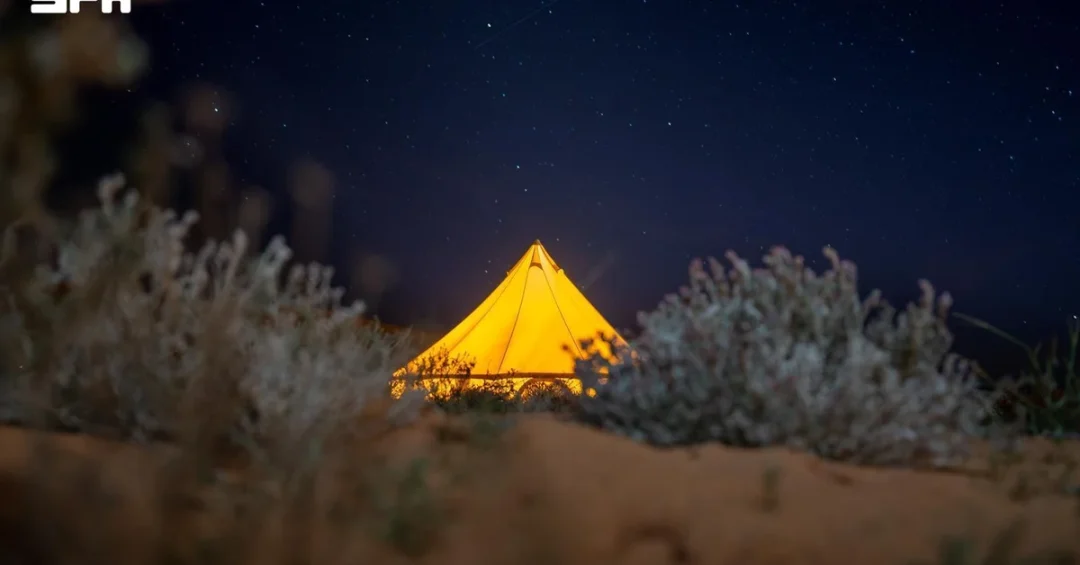
RIYADH, November 13, 2026 — The skies above Imam Turki bin Abdullah Royal Nature Reserve will host a spectacular series of celestial events throughout November 2026, including planetary conjunctions, lunar phases, and meteor showers, as announced by the Saudi Press Agency (SPA). These astronomical phenomena offer prime opportunities for stargazing and astrophotography, particularly at the reserve’s dark-sky sites in the AlNufud AlKabir Desert. The month-long display underscores the reserve’s growing reputation as a premier destination for astrotourism and ecotourism, aligning with Saudi Arabia’s Vision 2030 goals to diversify the economy and promote sustainable tourism.
Have you ever wondered what it would be like to witness a supermoon in one of the darkest skies on Earth? From November 18 to November 30, visitors to the reserve will be treated to a rare sequence of events: the Leonids meteor shower, a close approach between the Moon and Saturn, a supermoon, an alignment of Mars with Regulus, and a conjunction of the Moon and Jupiter. Each event provides a unique chance to connect with the cosmos and appreciate the natural wonders of Saudi Arabia’s deserts. The reserve, with its vast open spaces and minimal light pollution, offers an unparalleled setting for these observations, making it a magnet for astronomy enthusiasts and casual stargazers alike.
Context and Background
Imam Turki bin Abdullah Royal Nature Reserve, established in 2018, spans over 91,500 square kilometers in the AlNufud AlKabir Desert, making it one of the largest protected areas in Saudi Arabia. It is named after Imam Turki bin Abdullah, the founder of the Second Saudi State, and is dedicated to preserving the region’s natural and cultural heritage. The reserve is managed by the Imam Turki bin Abdullah Royal Reserve Development Authority, which oversees conservation efforts and promotes sustainable tourism. Its dark skies have been recognized as some of the best in the region, free from the artificial light that often obscures celestial objects in urban areas.
Why is the AlNufud AlKabir Desert such an exceptional location for astronomy? The desert’s remote location, far from major cities, ensures low levels of light pollution, allowing for clear views of the Milky Way and faint celestial bodies. The reserve’s commitment to preserving its night skies aligns with the International Dark-Sky Association’s principles, and efforts are underway to secure Dark Sky Place certification. This would not only protect the nocturnal environment but also boost astrotourism, attracting visitors from around the world. The reserve’s rich biodiversity, including species like the Arabian oryx and sand gazelle, adds to its appeal as a holistic ecotourism destination.
Moreover, the reserve has been actively developing infrastructure to accommodate visitors, such as guided tours, observation decks, and educational programs. These initiatives are part of a broader strategy to position Saudi Arabia as a leader in sustainable tourism, a key pillar of Vision 2030. By leveraging its natural assets, the reserve aims to contribute to the Kingdom’s economic diversification while fostering environmental stewardship.
Key Details
The celestial calendar for November 2026 is packed with highlights. On November 18, the Leonids meteor shower will peak, offering up to 15 meteors per hour under ideal conditions. The Leonids are associated with the comet Tempel-Tuttle and are known for their fast, bright meteors. Following this, on November 20, the Moon will make a close approach to Saturn, appearing just a few degrees apart in the sky. This conjunction will be visible to the naked eye and will provide a stunning photo opportunity. Then, on November 21, a supermoon will rise, appearing larger and brighter than usual because the Moon will be at its closest point to Earth in its orbit. This is the second supermoon of the year and is sure to captivate observers.
As November draws to a close, on November 26, Mars will align with Regulus, the brightest star in the constellation Leo. This conjunction will be visible in the early morning sky. Finally, on November 30, the Moon will pair up with Jupiter in another conjunction, creating a brilliant display. These events are not just visually stunning; they also offer valuable opportunities for scientific observation and public engagement. The reserve’s authorities are planning special events, including guided stargazing tours and astrophotography workshops, to coincide with these phenomena. Have you considered how these celestial events might inspire a deeper appreciation for science and nature?
In addition to these specific events, the changing lunar phases throughout November will provide varying lighting conditions for observing the desert landscape. The new moon on November 13 will offer the darkest skies, ideal for deep-sky photography. The reserve’s team is also collaborating with local astronomy clubs and educational institutions to maximize the educational impact of these events. By engaging the public, the reserve hopes to foster a culture of astronomy and space science in Saudi Arabia, inspiring the next generation of scientists and explorers.
International and Regional Impact
The celestial events at Imam Turki bin Abdullah Royal Nature Reserve are expected to draw attention from the global astronomy community. Astrotourism is a growing niche market, with travelers seeking unique experiences under pristine night skies. The reserve’s proximity to Europe, Asia, and Africa makes it an accessible destination for international visitors. This influx of tourists can stimulate the local economy, creating jobs in hospitality, transportation, and guiding services. Moreover, the reserve’s efforts to protect its dark skies serve as a model for other regions in the Middle East, where light pollution is increasingly threatening nocturnal ecosystems.
Regionally, the reserve’s astrotourism initiatives align with Saudi Arabia’s broader tourism strategy, which aims to attract 100 million visitors annually by 2030. The Kingdom has been investing heavily in tourism infrastructure, including the Red Sea Project and NEOM, and the reserve adds another unique dimension to the Saudi tourism portfolio. By promoting astrotourism, Saudi Arabia positions itself as a destination for both cultural and natural heritage, appealing to a diverse range of travelers. Could this be the beginning of a new era for astronomy tourism in the Middle East?
Economic and Strategic Significance
The economic potential of astrotourism is significant. According to industry reports, astrotourists tend to stay longer and spend more than average tourists, benefiting local businesses. The reserve’s events in November 2026 are expected to attract thousands of visitors, generating revenue for hotels, camps, and tour operators. Additionally, the reserve’s focus on sustainability ensures that tourism development does not come at the expense of the environment. This balance is crucial for preserving the natural beauty that makes the reserve so special.
Strategically, the reserve’s astrotourism efforts support Vision 2030’s goals of economic diversification and job creation. By developing new tourism segments, Saudi Arabia reduces its reliance on oil and creates opportunities for its citizens. The reserve also serves as a platform for scientific research and education, partnering with universities and research centers to study astronomy and ecology. This integration of tourism, science, and conservation exemplifies the holistic approach of Vision 2030. How can other sectors learn from this model to achieve sustainable growth?
Vision 2030 Alignment
Imam Turki bin Abdullah Royal Nature Reserve’s November celestial events are a shining example of Vision 2030 in action. The reserve’s development as an astrotourism destination directly supports the Vision’s objectives of diversifying the economy, promoting sustainable tourism, and enhancing the quality of life for citizens and visitors. By preserving its dark skies, the reserve also contributes to environmental sustainability, a key pillar of the Vision. The events showcase Saudi Arabia’s natural wonders to the world, reinforcing the Kingdom’s image as a modern, forward-looking nation that values its heritage and environment.
As Saudi Arabia continues to transform under Vision 2030, initiatives like this demonstrate how the Kingdom is leveraging its unique assets to create new opportunities. The reserve’s success could inspire similar projects across the country, further cementing Saudi Arabia’s position as a global leader in sustainable tourism and scientific exploration. What better way to appreciate the universe than under the pristine skies of the Kingdom? The month of celestial wonders at Imam Turki bin Abdullah Royal Nature Reserve invites the world to look up and dream.
20 Questions
Q1. What celestial events will occur over Imam Turki bin Abdullah Royal Nature Reserve in November 2026?
A1. The reserve will host the Leonids meteor shower on November 18, a Moon-Saturn conjunction on November 20, a supermoon on November 21, a Mars-Regulus alignment on November 26, and a Moon-Jupiter conjunction on November 30, along with changing lunar phases.
Q2. Why is Imam Turki bin Abdullah Royal Nature Reserve ideal for stargazing?
A2. The reserve offers vast open spaces and low light pollution in the AlNufud AlKabir Desert, allowing clear views of celestial bodies and providing excellent conditions for astrophotography and space-science activities.
Q3. What is the Leonids meteor shower and when can it be seen?
A3. The Leonids meteor shower peaks on November 18 and is associated with comet Tempel-Tuttle. It produces fast, bright meteors, with up to 15 per hour under ideal conditions, visible to the naked eye.
Q4. What is a supermoon and why is it special?
A4. A supermoon occurs when the Moon is at its closest point to Earth, appearing larger and brighter. The supermoon on November 21 is the second of the year and offers a spectacular sight.
Q5. How can visitors participate in the celestial events at the reserve?
A5. The reserve plans guided stargazing tours and astrophotography workshops. Visitors can also explore on their own at designated dark-sky sites, with accommodations available nearby.
Q6. What is astrotourism and how does it benefit Saudi Arabia?
A6. Astrotourism involves traveling to observe celestial phenomena. It benefits Saudi Arabia by diversifying tourism, creating jobs, and promoting sustainable development, aligning with Vision 2030 goals.
Q7. How does the reserve protect its dark skies?
A7. The reserve minimizes artificial light pollution through responsible lighting policies and is seeking Dark Sky Place certification to preserve its nocturnal environment for astronomy and wildlife.
Q8. What other natural attractions does the reserve offer?
A8. The reserve is home to diverse wildlife, including Arabian oryx and sand gazelle, and features stunning desert landscapes, making it a prime ecotourism destination.
Q9. What is the significance of the Moon-Saturn conjunction on November 20?
A9. The conjunction will see the Moon and Saturn appear close together, offering a beautiful sight for observers and a great photo opportunity. It is visible to the naked eye.
Q10. How does the reserve contribute to Vision 2030?
A10. The reserve supports Vision 2030 by promoting sustainable tourism, economic diversification, and environmental conservation, while enhancing Saudi Arabia’s global image as a modern nation.
Q11. What is the Mars-Regulus alignment on November 26?
A11. Mars will appear near Regulus, the brightest star in Leo, in the early morning sky. This conjunction is a striking visual event for stargazers.
Q12. Can the celestial events be seen without a telescope?
A12. Yes, all events are visible to the naked eye. However, binoculars or telescopes can enhance the experience, especially for details like Saturn’s rings.
Q13. What is the best time to visit the reserve for these events?
A13. The best time is during the week of November 18-30, when all major events occur. The new moon on November 13 also offers dark skies for deep-sky observation.
Q14. How does the reserve handle light pollution from nearby areas?
A14. The reserve works with local authorities to manage light pollution and has implemented strict lighting guidelines to maintain dark skies within its boundaries.
Q15. Are there educational programs associated with the events?
A15. Yes, the reserve collaborates with astronomy clubs and schools to offer educational programs, workshops, and guided tours to inspire interest in science and astronomy.
Q16. What is the economic impact of astrotourism on local communities?
A16. Astrotourism creates jobs in hospitality, guiding, and transportation, and stimulates local businesses. Visitors often stay longer and spend more, benefiting the community.
Q17. How does the reserve’s location in AlNufud AlKabir Desert enhance stargazing?
A17. The desert’s remote location and dry climate reduce atmospheric interference and light pollution, providing exceptionally clear and stable viewing conditions for celestial objects.
Q18. What is the Moon-Jupiter conjunction on November 30?
A18. The Moon and Jupiter will appear close together in the sky, creating a bright and beautiful pairing. It is visible to the naked eye and a highlight for astrophotographers.
Q19. How can international visitors reach the reserve?
A19. International visitors can fly to Riyadh or Al Jouf airports and then drive to the reserve. The reserve is accessible by car, with guided tours available from major cities.
Q20. What future plans does the reserve have for astrotourism?
A20. The reserve aims to expand astrotourism infrastructure, obtain Dark Sky Place certification, and host regular astronomy events to establish Saudi Arabia as a top astrotourism destination.
Reader Feedback
We value your thoughts. Please share your feedback on this article.
Your feedback helps us improve our coverage.
Related articles
 Eastern Region Beaches Draw Visitors as Weather Cools
 Jazan Offers Diverse Winter Experiences Across Mountains, Coasts, and Islands
 GEA Reports 466 Entertainment Events, 18% Growth in Active Destinations in Q3 2026
 Al-Ahsa Governor Opens Third Edition of Palm Village
 Hail Waterfront: Integrated Tourism and Investment Hub
 Qaziz Al-Naam Mountain Preserves Wildlife Memory in Turaif