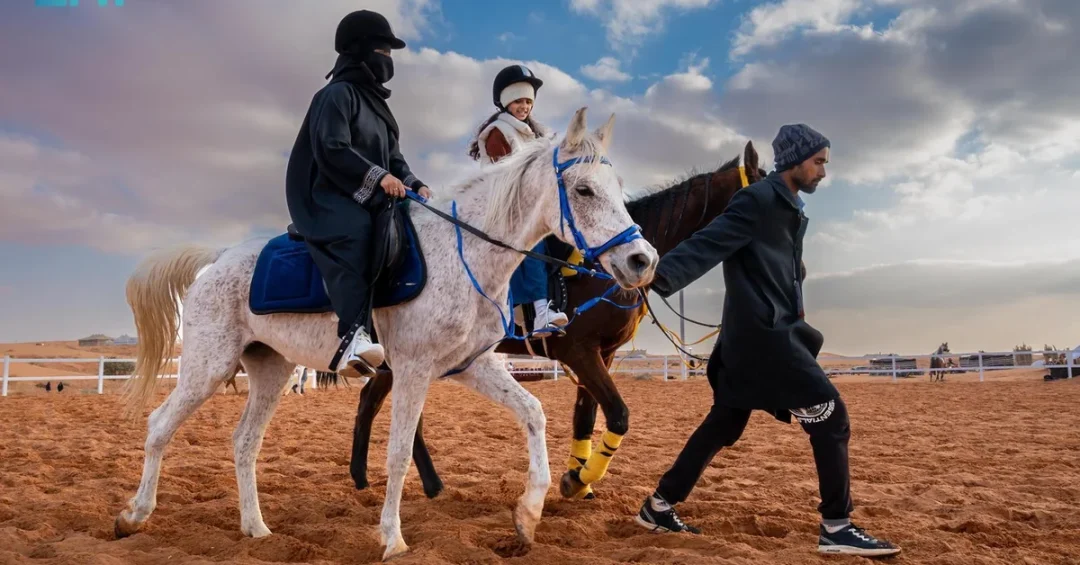
The Dunes of Arabia event, hosted in the Al-Touqi area north of Riyadh as part of Riyadh Season 2024, is offering visitors an authentic desert experience through camel and Arabian horse riding, according to information released by the Saudi Press Agency. The initiative invites guests to traverse the vast sand dunes on camelback while experiencing the traditional Bedouin lifestyle and immersing themselves in the captivating atmosphere of the Arabian desert. Professional guides accompany visitors on educational tours, explaining the historical significance of camels and horses in Arab culture and their vital role in desert communities throughout history. The event stands as a prominent showcase of Saudi culture and its rich heritage within the broader Riyadh Season calendar, which has become one of the region’s most anticipated annual entertainment and cultural programmes.
Have you ever wondered what it feels like to follow the same paths once travelled by Bedouin caravans across the golden sands of Arabia? The Dunes of Arabia experience answers that question in a direct and tangible way, providing a living connection to Saudi heritage rather than a static museum display. Riyadh Season, organised under the supervision of the General Entertainment Authority, has grown into a comprehensive platform that blends entertainment, culture, sport, and heritage across the capital. Within that framework, Dunes of Arabia occupies a distinctive position by focusing on the desert itself as the primary stage. The event does not simply present heritage as something to observe from a distance; it invites participants to walk, ride, and breathe within the environment that shaped generations of desert communities.
Context and Background
Why does a desert experience like Dunes of Arabia matter in an era of rapid urban transformation across the Kingdom? The answer lies in the balance Saudi Arabia seeks to maintain between modernisation and cultural continuity. The Al-Touqi area, located north of Riyadh, provides a natural setting that remains close to the capital while offering the open horizons and quiet isolation associated with the deep desert. Riyadh Season 2024 has brought together a wide array of events spanning music, dining, sport, and family entertainment, yet the inclusion of a dedicated desert heritage experience reflects a deliberate choice to keep traditional culture at the centre of the season’s identity. The desert is not treated as a backdrop here; it is the main attraction.
Camels and Arabian horses hold a place in Saudi culture that extends far beyond their practical uses. For centuries, these animals were central to survival, mobility, and trade across the Arabian Peninsula. Camels carried water, food, and families across distances that would otherwise have been impassable, while Arabian horses were prized for their endurance, intelligence, and beauty. Their stories are woven into poetry, oral tradition, and the collective memory of the region. By placing both animals at the heart of the Dunes of Arabia programme, the organisers create a direct link between contemporary visitors and the deep history of the land. The educational tours led by professional guides ensure that this link is explained clearly, giving context to what visitors see and experience.
What does it mean for a visitor to step into the desert with trained guides who understand both the terrain and its history? It means access to knowledge that is difficult to obtain independently. The guides at Dunes of Arabia are not merely accompanying riders; they are storytellers and interpreters of the landscape. They explain how Bedouin communities navigated by stars, how they managed scarce water resources, and how they developed the customs of hospitality that remain a hallmark of Saudi society today. This educational dimension transforms the experience from a simple leisure activity into a meaningful encounter with living heritage, one that resonates with visitors from outside the Kingdom as much as with Saudi citizens.
Key Details of the Dunes of Arabia Experience
How exactly does the event bring the Bedouin lifestyle to life for modern visitors? Guests begin their journey by mounting camels and setting out across the sand dunes, following routes that mirror the traditional paths of desert travel. The pace is unhurried, allowing participants to absorb the silence and scale of the landscape. Along the way, guides point out features of the desert environment, from the shifting shapes of the dunes to the sparse vegetation that sustains animal life. The experience is designed to be accessible to a wide range of visitors, including families and international tourists who may be encountering the Arabian desert for the first time. Safety and comfort are prioritised, with trained staff overseeing all rides.
Arabian horse riding forms a second pillar of the programme, offering a different perspective on desert movement. The Arabian horse is celebrated globally for its distinctive characteristics, and its association with the region is a source of deep cultural pride. Riders at Dunes of Arabia can experience the speed and grace of these animals in an environment that suits them naturally. The event also provides opportunities to learn about the care and training of both camels and horses, giving visitors insight into the skills that desert communities developed over generations. These practical demonstrations are accompanied by explanations of the animals’ roles in trade, warfare, and celebration throughout Arab history.
What role does storytelling play in the Dunes of Arabia programme? The educational tours are structured to convey historical significance rather than mere facts. Guides discuss the vital role camels and horses played in sustaining desert communities, from transporting goods across trade routes to serving as symbols of status and hospitality. Visitors hear about the traditions that grew around these animals, including the poetry composed in their honour and the customs that governed their use. This narrative approach ensures that the experience leaves a lasting impression, connecting the physical act of riding with a broader understanding of why these traditions have endured. The desert becomes a classroom as much as a destination.
International and Regional Impact
Could an event rooted in local heritage also serve as a bridge to international audiences? The Dunes of Arabia experience suggests that it can. International visitors to Riyadh Season arrive from across the Gulf, Asia, Europe, and the Americas, drawn by the season’s growing reputation as a global entertainment destination. For many, the desert is an iconic image of Arabia, and the chance to experience it authentically is a powerful motivator. By offering guided, respectful access to desert traditions, the event helps correct misconceptions and presents a nuanced picture of Saudi culture. Visitors leave with a personal story of the desert, one that they share with others and that contributes to the Kingdom’s international image as a welcoming and culturally rich destination.
Within the region, Dunes of Arabia reinforces Saudi Arabia’s position as a leader in cultural tourism. Neighbouring countries have long recognised the appeal of desert experiences, and Saudi Arabia’s scale and diversity give it a natural advantage. The event also complements broader efforts to develop tourism infrastructure across the Kingdom, including heritage sites, nature reserves, and cultural festivals. By integrating a desert heritage component into Riyadh Season, the organisers demonstrate that tradition and modernity can coexist productively. Regional visitors, particularly from the Gulf Cooperation Council states, find in Dunes of Arabia a familiar yet distinct experience that strengthens cultural ties and encourages repeat visits.
Economic and Strategic Significance
How does a heritage event contribute to Saudi Arabia’s economic diversification goals? Tourism is a key pillar of the Kingdom’s strategy to reduce dependence on hydrocarbons, and cultural experiences are central to attracting visitors. Riyadh Season generates significant economic activity across hospitality, retail, transport, and entertainment, and events like Dunes of Arabia add a distinctive offering that extends the season’s appeal. The involvement of local guides, animal handlers, and support staff creates employment opportunities and supports small businesses in the surrounding area. By investing in authentic cultural programming, Saudi Arabia strengthens its tourism brand and positions itself as a destination that offers more than conventional attractions.
Strategically, the event supports the wider objective of making Riyadh a global city. The capital already hosts major sporting events, concerts, and conferences, and the addition of immersive heritage experiences rounds out its profile. Dunes of Arabia also aligns with efforts to preserve and promote intangible cultural heritage, ensuring that traditions associated with camels and horses are passed to new generations. The event’s location north of Riyadh places it within reach of the city’s growing population and its international visitors, making heritage accessible without requiring long journeys. This accessibility is a deliberate feature of the Kingdom’s approach to cultural tourism, which seeks to integrate heritage into the mainstream visitor experience rather than isolate it.
Vision 2030 Alignment
In what ways does Dunes of Arabia reflect the ambitions of Saudi Vision 2030? The Vision, launched under the leadership of Crown Prince Mohammed bin Salman, seeks to diversify the economy, enhance quality of life, and celebrate national identity. Cultural events that showcase Saudi heritage while welcoming international guests sit at the intersection of these goals. They generate economic value, foster pride among citizens, and project a positive image abroad. Dunes of Arabia embodies this integration by turning the desert into a stage for cultural exchange. It also supports the Vision’s emphasis on developing tourism as a major sector, contributing to targets for visitor numbers and sector growth.
Looking ahead, the experience demonstrates how Saudi Arabia can continue to draw on its deep cultural roots as it builds a modern, diversified economy. The desert, once seen primarily as a challenging environment, is now presented as a source of identity, education, and opportunity. Through initiatives like Dunes of Arabia, the Kingdom invites the world to share in its heritage while advancing its long-term vision for prosperity and global engagement. The event is a reminder that progress and tradition can reinforce one another, and that Saudi Arabia’s future is being built on a foundation that respects and celebrates its past.
20 Questions
Q1. What is the Dunes of Arabia event?
A1. Dunes of Arabia is a desert experience held in the Al-Touqi area north of Riyadh as part of Riyadh Season 2024. It offers camel and Arabian horse riding, guided educational tours, and an immersive introduction to traditional Bedouin lifestyle and Saudi desert heritage.
Q2. Where exactly is the Dunes of Arabia event located?
A2. The event takes place in the Al-Touqi area, situated north of Riyadh. This location provides access to expansive sand dunes while remaining close to the capital, making it convenient for both local residents and international visitors attending Riyadh Season.
Q3. What activities can visitors enjoy at Dunes of Arabia?
A3. Visitors can ride camels across the sand dunes, ride Arabian horses, and join educational tours led by professional guides. These activities are designed to convey the historical and cultural significance of both animals in Arab and Bedouin traditions.
Q4. Who organises the Dunes of Arabia experience?
A4. The event is part of Riyadh Season 2024, which is organised under the supervision of the General Entertainment Authority. Information about the event has been released through official Saudi channels, including the Saudi Press Agency.
Q5. Why are camels important in Saudi culture?
A5. Camels have historically been essential to survival, trade, and mobility across the Arabian Peninsula. They carried water, food, and families across vast distances, and remain a symbol of endurance, hospitality, and cultural identity in Saudi Arabia today.
Q6. What is the significance of Arabian horses in the event?
A6. Arabian horses are globally admired for their endurance, intelligence, and beauty. In the Dunes of Arabia experience, they represent a living link to the region’s equestrian heritage and offer visitors a different way to connect with the desert environment.
Q7. Are the guided tours educational?
A7. Yes. Professional guides provide educational tours that explain the historical significance of camels and horses in Arab culture. They also discuss the vital roles these animals played in sustaining desert communities throughout history, adding depth to the visitor experience.
Q8. Is the event suitable for families and international tourists?
A8. The event is designed to be accessible to a wide range of visitors, including families and international tourists. Trained staff oversee all activities, and the programme prioritises safety and comfort while offering an authentic desert experience.
Q9. How does Dunes of Arabia connect to Riyadh Season?
A9. Dunes of Arabia is a featured component of Riyadh Season 2024, which brings together entertainment, culture, sport, and heritage across the capital. The desert experience adds a distinctive heritage dimension to the season’s diverse programme.
Q10. What is the Bedouin lifestyle that visitors can experience?
A10. Visitors can immerse themselves in the traditional Bedouin lifestyle by traversing the dunes on camelback and learning about desert customs. The experience highlights hospitality, resourcefulness, and the deep connection between desert communities and their environment.
Q11. Does the event help preserve Saudi heritage?
A11. Yes. By presenting camel and horse traditions in an engaging and educational format, Dunes of Arabia helps preserve intangible cultural heritage. It ensures that knowledge of desert life is passed on to new generations and shared with international visitors.
Q12. What role do professional guides play?
A12. Professional guides lead tours and explain the historical and cultural context of the desert. They interpret the landscape, describe traditional practices, and ensure that visitors gain an accurate and respectful understanding of Saudi heritage.
Q13. How does the event support Saudi tourism?
A13. Dunes of Arabia enriches Saudi Arabia’s tourism offering by providing an authentic cultural experience. It attracts visitors seeking meaningful engagement with heritage, supports local employment, and contributes to the Kingdom’s goal of diversifying its economy through tourism.
Q14. Is the desert environment safe for visitors?
A14. The event is managed with safety as a priority. Trained staff oversee all rides and activities, and guides are familiar with the terrain. Visitors are accompanied throughout the experience to ensure a secure and enjoyable visit.
Q15. What can visitors learn about the history of camels and horses?
A15. Visitors learn about the roles camels and horses played in trade, transportation, and community life across Arab history. Guides explain their significance in poetry, tradition, and daily survival, providing a comprehensive view of their cultural importance.
Q16. How does Dunes of Arabia reflect Vision 2030?
A16. The event aligns with Vision 2030 by promoting cultural tourism, enhancing quality of life, and celebrating national identity. It supports economic diversification and projects a positive image of Saudi Arabia to the world.
Q17. Can international visitors participate in the experience?
A17. Yes. International visitors attending Riyadh Season are welcome to participate. The event is designed to be inclusive, offering guided support and clear explanations so that guests from outside the Kingdom can fully enjoy the experience.
Q18. What makes the Al-Touqi area suitable for this event?
A18. The Al-Touqi area features vast sand dunes and an open desert landscape that closely resembles the environment traditionally traversed by Bedouin communities. Its proximity to Riyadh makes it accessible while preserving an authentic desert atmosphere.
Q19. Does the event include any cultural performances or storytelling?
A19. The educational tours incorporate storytelling about desert life, the significance of camels and horses, and the customs of Bedouin communities. These narrative elements deepen visitors’ understanding and make the experience both informative and memorable.
Q20. What is the broader significance of Dunes of Arabia for Saudi Arabia?
A20. The event showcases Saudi Arabia’s rich heritage within a modern entertainment framework. It strengthens cultural pride, attracts international visitors, supports tourism growth, and demonstrates how tradition and progress can advance together under Vision 2030.
Reader Feedback
We value your thoughts. Please share your feedback on this article.
Your feedback helps us improve our coverage.