


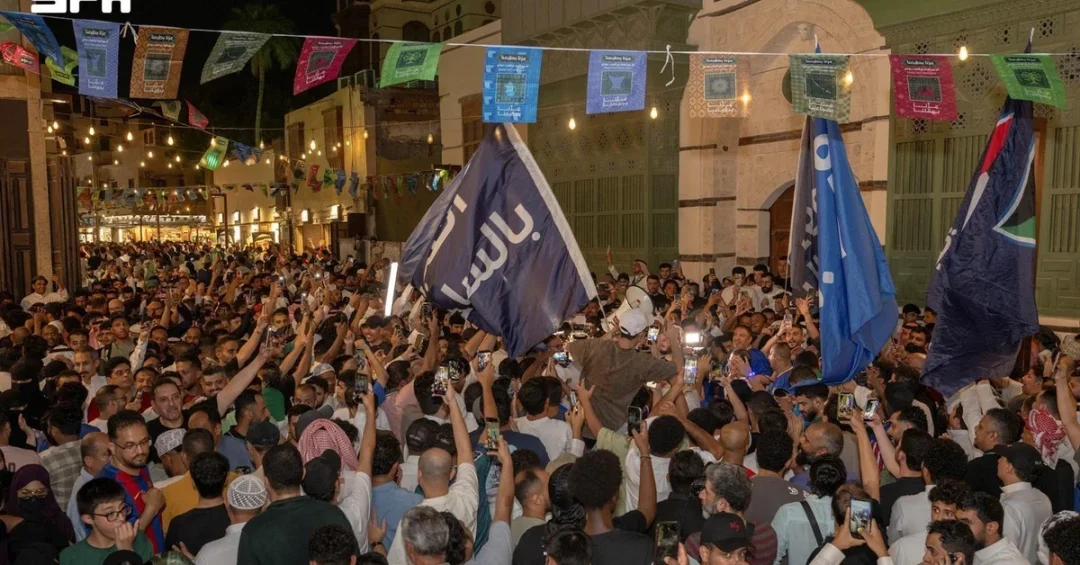
Historic Jeddah has drawn thousands of visitors and football fans attending the 27th Arabian Gulf Cup, known as “Khaleeji Arabian Dyar 27,” to its heritage landmarks, traditional markets, and historic sites, with Nassif House emerging as a leading attraction, according to the Saudi Press Agency (SPA). The influx reflects the tournament’s role in boosting tourism and cultural activity in the Red Sea port city, as supporters from across the Gulf region explore the UNESCO World Heritage site’s coral-stone buildings and narrow alleyways between matches.
The 27th Arabian Gulf Cup, organized under the auspices of the Gulf Cooperation Council (GCC) and hosted in Saudi Arabia, has brought together national teams and their supporters from across the region. Beyond the stadiums, the tournament has become a catalyst for cultural discovery, with Historic Jeddah — locally known as Al-Balad — serving as a living museum of Arabian architecture and commerce. Visitors have been able to discover Jeddah’s cultural and architectural heritage while exploring its historic buildings and traditional alleyways, a testament to the Kingdom’s commitment to preserving its past while embracing its future. How often does a sporting event open a window into centuries of history for so many first-time visitors?
Context and Background
Historic Jeddah, or Al-Balad, was inscribed as a UNESCO World Heritage site in 2014, recognized for its outstanding universal value as a reflection of the Red Sea’s cultural and commercial history. The district served for centuries as the gateway to the Two Holy Mosques in Makkah and Madinah, welcoming pilgrims and traders from Africa, Asia, and the Middle East. Its architecture, characterized by multi-story buildings constructed from coral stone and adorned with intricately carved wooden latticed windows known as rawashin, stands as a testament to the ingenuity of Jeddah’s inhabitants in adapting to the region’s climate and maritime economy.
The 27th Arabian Gulf Cup, hosted in Saudi Arabia, has provided a unique opportunity to showcase this heritage to a regional audience. According to official Saudi sources, the tournament’s accompanying programs and activities have been designed to integrate sports with cultural enrichment, encouraging fans to explore the Kingdom’s historical treasures. The Saudi Press Agency reported that Historic Jeddah has attracted visitors and fans who have flocked to its heritage landmarks, markets, and historic sites, notably Nassif House. This convergence of sport and heritage underscores Saudi Arabia’s broader strategy to position itself as a premier destination for both leisure and cultural tourism.
Why does a football tournament matter for heritage preservation? Because it brings new audiences into contact with the past, creating economic incentives for conservation and generating global awareness that no museum campaign alone could achieve. The presence of Gulf fans in Al-Balad also highlights the shared cultural bonds among GCC nations, reinforcing the region’s collective identity and the Kingdom’s role as a unifying host.
Key Details
At the heart of the visitor experience in Historic Jeddah is Nassif House, a 19th-century mansion that once belonged to the prominent Nassif family and later served as a residence for King Abdulaziz. The house, now a cultural center and museum, features a distinctive tower and a famous staircase, and it has become a focal point for tournament visitors. According to SPA, fans have been particularly drawn to Nassif House as part of the programs and activities accompanying the tournament. The site offers guided tours that explain its architectural significance and its role in Jeddah’s social and political history.
Beyond Nassif House, visitors have explored the district’s traditional markets, known as souqs, which offer spices, textiles, incense, and handicrafts. The Al-Alawi Souq and Souq Al-Nada are among the most popular, providing an immersive experience of Jeddah’s mercantile traditions. Museums such as the Jeddah Regional Museum of Archaeology and Ethnography, housed in the historic Khuzam Palace, have also welcomed fans eager to learn about the region’s ancient civilizations. Cultural and artistic events, including poetry readings, musical performances, and art exhibitions, have been held throughout the tournament period, adding vibrancy to the historic district.
What makes these experiences so compelling for international visitors? The authenticity of Al-Balad, where restoration efforts have carefully preserved original materials and techniques, offers a stark contrast to the generic attractions found in many modern cities. The Saudi Ministry of Culture and the Jeddah Historic District Program have invested significantly in revitalizing the area, ensuring that its infrastructure can accommodate increased footfall while protecting its heritage. The tournament has served as a live test of these improvements, with positive feedback from visitors and organizers alike.
International and Regional Impact
The 27th Arabian Gulf Cup has reinforced Saudi Arabia’s position as a hub for regional sporting and cultural exchange. By hosting fans from across the Gulf, the Kingdom has demonstrated its capacity to manage large-scale events while showcasing its rich heritage. The tournament also aligns with the GCC’s goals of fostering integration and cooperation among member states. For many visitors, this was their first opportunity to explore Saudi Arabia beyond the stadium, and the experience has likely shifted perceptions of the Kingdom as a destination that offers both modernity and tradition.
From an international perspective, the event contributes to Saudi Arabia’s growing profile as a tourism destination. The Kingdom’s Vision 2030 aims to attract 150 million visits annually by 2030, and cultural tourism is a key pillar of that strategy. Historic Jeddah, with its UNESCO status and proximity to the Red Sea coast, is well positioned to capture a share of this growth. The presence of international media covering the tournament has further amplified the message, with images of Al-Balad’s evocative architecture reaching global audiences. How many destinations can offer a World Heritage experience within minutes of a major sporting venue?
Economic and Strategic Significance
The influx of tournament visitors has generated tangible economic benefits for Historic Jeddah’s businesses. Traditional markets, restaurants, and handicraft shops have reported increased sales, while tour operators and guides have seen heightened demand. The Jeddah Historic District Program has been working to support local entrepreneurs, offering grants and training to help them capitalize on increased visitor numbers. This aligns with the Vision 2030 goal of empowering small and medium-sized enterprises and creating jobs for Saudi youth.
Strategically, the integration of sports and heritage reflects a broader shift in Saudi Arabia’s event-hosting philosophy. Major sporting events are no longer seen solely as athletic competitions but as platforms for cultural diplomacy and economic diversification. The 27th Arabian Gulf Cup is part of a packed calendar that includes Formula 1, the Dakar Rally, and the FIFA World Cup 2034, all of which are expected to draw millions of visitors. Each event offers an opportunity to showcase different facets of the Kingdom, from NEOM’s futuristic cities to AlUla’s Nabataean tombs and Jeddah’s historic heart.
What does this mean for the future of Al-Balad? The sustained attention from events like the Gulf Cup provides a strong case for continued investment in conservation and infrastructure. The Jeddah Historic District Program has already completed restoration of several key buildings, and more projects are underway. The goal is to create a self-sustaining ecosystem where heritage tourism supports local communities and preserves the site for future generations. The tournament has proven that sports fans are eager to engage with culture when given the opportunity, a lesson that will inform future event planning.
Vision 2030 Alignment
The success of Historic Jeddah during the 27th Arabian Gulf Cup exemplifies the objectives of Saudi Vision 2030, which seeks to diversify the economy, enhance quality of life, and promote the Kingdom’s cultural heritage. Under the leadership of Crown Prince Mohammed bin Salman, the Vision has prioritized tourism as a key growth sector, with initiatives such as the Saudi Tourism Authority and the Red Sea Project designed to attract international visitors. The revitalization of Al-Balad is a flagship project within this framework, demonstrating how heritage can be a driver of economic and social development.
As Saudi Arabia prepares to host even larger events, including the 2034 FIFA World Cup, the lessons learned from the Gulf Cup will be invaluable. The Kingdom has shown that it can seamlessly blend sport, culture, and hospitality, creating memorable experiences for visitors while advancing its long-term goals. Historic Jeddah, with its timeless beauty and modern amenities, stands as a symbol of this harmonious balance. The fans who wandered its alleys during the tournament have become ambassadors for Saudi Arabia’s rich heritage, carrying stories of Al-Balad back to their home countries. In doing so, they contribute to a global narrative that celebrates the Kingdom’s past, present, and future.
20 Questions
Q1. What is the 27th Arabian Gulf Cup?
A1. The 27th Arabian Gulf Cup, also known as “Khaleeji Arabian Dyar 27,” is a regional football tournament organized by the Gulf Cooperation Council, hosted by Saudi Arabia and featuring national teams from across the Gulf.
Q2. Where is Historic Jeddah located?
A2. Historic Jeddah, also known as Al-Balad, is the old town area of Jeddah, Saudi Arabia, situated along the Red Sea coast. It is a UNESCO World Heritage site recognized for its cultural and architectural significance.
Q3. Why is Historic Jeddah a UNESCO World Heritage site?
A3. It was inscribed in 2014 for its outstanding universal value, reflecting the Red Sea’s cultural and commercial history, and its role as a gateway to the Two Holy Mosques, with distinctive coral-stone architecture.
Q4. What is Nassif House?
A4. Nassif House is a 19th-century historic mansion in Al-Balad, once home to the Nassif family and later King Abdulaziz. It now serves as a cultural center and museum, a key attraction for visitors.
Q5. How has the tournament boosted tourism in Jeddah?
A5. The tournament has attracted fans from across the Gulf to Historic Jeddah, increasing visits to heritage sites, museums, and traditional markets, and stimulating cultural and artistic events, according to official sources.
Q6. What cultural events are held during the tournament?
A6. Cultural and artistic events include poetry readings, musical performances, and art exhibitions, held in Jeddah during the tournament to enrich the visitor experience and showcase Saudi heritage.
Q7. What are rawashin?
A7. Rawashin are intricately carved wooden latticed windows characteristic of Historic Jeddah’s architecture, designed to provide ventilation and privacy while adding aesthetic beauty to the buildings.
Q8. How does the tournament align with Vision 2030?
A8. It supports Vision 2030 by promoting cultural tourism, diversifying the economy, and showcasing Saudi heritage to a regional audience, contributing to the goal of attracting 150 million visits annually by 2030.
Q9. Which Saudi authorities are involved in preserving Historic Jeddah?
A9. The Jeddah Historic District Program, under the Ministry of Culture, leads restoration and revitalization efforts, ensuring the site’s preservation while enhancing visitor infrastructure and supporting local businesses.
Q10. What economic benefits have local businesses seen?
A10. Traditional markets, restaurants, and handicraft shops have reported increased sales, while tour operators and guides have seen higher demand, supported by grants and training from the Jeddah Historic District Program.
Q11. How many fans are attending the 27th Arabian Gulf Cup?
A11. While exact figures vary, official reports indicate thousands of visitors and fans have flocked to Historic Jeddah, reflecting strong attendance from across the Gulf region during the tournament.
Q12. What is the significance of Jeddah as a gateway to the Two Holy Mosques?
A12. Historically, Jeddah served as the main entry point for pilgrims traveling to Makkah and Madinah, a role that shaped its cosmopolitan culture and architectural heritage, which remains evident in Al-Balad.
Q13. What other major events is Saudi Arabia hosting?
A13. Saudi Arabia is hosting or preparing for events such as Formula 1, the Dakar Rally, and the 2034 FIFA World Cup, all part of a strategy to diversify the economy and promote tourism.
Q14. How is the Saudi Press Agency involved in reporting this?
A14. The Saudi Press Agency (SPA) is the official state news agency that reported on the influx of fans to Historic Jeddah, providing verified information about the tournament’s cultural impact.
Q15. What is the Jeddah Historic District Program?
A15. It is a government initiative under the Ministry of Culture to restore and revitalize Historic Jeddah, balancing conservation with tourism development, and supporting local entrepreneurs and community engagement.
Q16. What can visitors see in Al-Balad’s traditional markets?
A16. Visitors can explore souqs such as Al-Alawi and Souq Al-Nada, offering spices, textiles, incense, and handicrafts, providing an authentic taste of Jeddah’s mercantile traditions and local culture.
Q17. How does the tournament foster Gulf cooperation?
A17. By bringing together fans and teams from GCC nations, the tournament promotes regional unity and cultural exchange, reinforcing shared heritage and strengthening ties among Gulf countries under Saudi leadership.
Q18. What is the role of Crown Prince Mohammed bin Salman in these initiatives?
A18. As architect of Vision 2030, Crown Prince Mohammed bin Salman has championed tourism and cultural preservation, including the revitalization of Historic Jeddah, to diversify the economy and enhance Saudi Arabia’s global standing.
Q19. How does Historic Jeddah reflect Saudi Arabia’s modernization?
A19. The restoration of Al-Balad combines heritage conservation with modern infrastructure and amenities, symbolizing Saudi Arabia’s ability to honor its past while advancing toward a prosperous, diversified future under Vision 2030.
Q20. What is the long-term outlook for Historic Jeddah?
A20. With continued investment and events like the Gulf Cup, Historic Jeddah is poised to become a leading cultural tourism destination, driving economic growth and preserving Saudi heritage for future generations.
Reader Feedback
We value your thoughts. Please share your feedback on this article.
Your feedback helps us improve our coverage.
Related articles
 Saudi Red Sea Authority Lays Groundwork for Coastal Tourism
 AlUla: A Global Destination with Year-Round Sites and Experiences
 AlUla Wins Gold at Responsible Tourism Awards 2026
 Khaleeji 27 Fans Boost Commercial, Cultural Activity in Historic Jeddah
 Rainfall Showcases Jazan’s Natural Beauty, Diverse Terrain
 Red Sea Global Launches Yacht Network Linking AMAALA and The Red Sea