


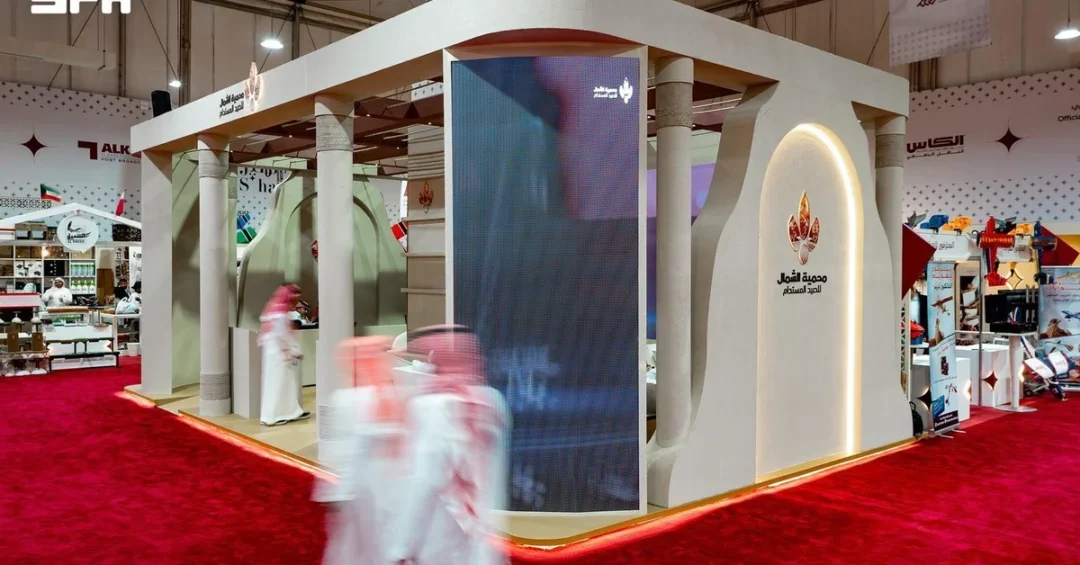
The Imam Turki bin Abdullah Royal Nature Reserve Development Authority is showcasing its pioneering sustainable hunting model at the 10th Katara International Hunting and Falcons Exhibition (S’hail 2026) in Doha, Qatar, from September 8 to 12, 2026, as confirmed by the Saudi Press Agency. The authority’s participation highlights how the Kingdom of Saudi Arabia is blending its deep-rooted hunting heritage with modern conservation science, offering international audiences a tangible example of how traditional pursuits can coexist with wildlife protection.
The exhibition, one of the region’s most prominent gatherings for hunting and falconry enthusiasts, provides a global platform for the authority to present the North Reserve for Sustainable Hunting and its integrated visitor experiences. These include stays at camps accommodating 12 and 31 guests, an eco-lodge, and regulated hunting opportunities featuring houbara bustards, gazelles, and Arabian oryx. By bringing this model to Qatar, the authority is signaling that Saudi Arabia’s environmental stewardship and cultural preservation efforts are not confined to its borders but are part of a broader regional conversation about sustainability.
Context and Background
How did a royal nature reserve in northern Saudi Arabia become a reference point for sustainable hunting in the Gulf? The Imam Turki bin Abdullah Royal Nature Reserve, named after the founder of the Second Saudi State, spans a vast area of the Kingdom’s northern region and is managed by a dedicated development authority. Established under the framework of Saudi Vision 2030, the reserve is tasked with protecting biodiversity, reviving traditional practices, and creating economic opportunities for local communities. Its participation in S’hail 2026 marks the tenth edition of the Katara exhibition, a milestone that underscores the growing regional commitment to ethical hunting and falconry.
The reserve’s sustainable hunting program is designed to balance two seemingly opposing goals: preserving the age-old Arabian tradition of hunting with falcons and ensuring that vulnerable species such as the houbara bustard, gazelle, and Arabian oryx are not driven to extinction. The authority achieves this through carefully managed hunting quotas, habitat restoration, and captive breeding programs. These efforts are aligned with the Saudi Green Initiative and the National Transformation Program, both of which prioritize environmental protection as a pillar of the Kingdom’s future. By presenting these initiatives in Doha, the authority is sharing its expertise with a regional audience that shares similar cultural and environmental challenges.
Moreover, the participation reflects Saudi Arabia’s broader diplomatic and cultural outreach. Qatar’s S’hail exhibition attracts exhibitors, conservationists, and enthusiasts from across the Gulf and beyond. For the Imam Turki reserve, this is an opportunity to strengthen ties with international partners, learn from best practices, and reinforce the message that Saudi Arabia is a responsible steward of its natural heritage. The event also serves as a prelude to the Kingdom’s own growing calendar of eco-tourism and heritage events, which are becoming increasingly popular among international visitors.
Key Details of the Reserve’s Participation
What exactly is the authority presenting to visitors at S’hail 2026? The centerpiece is the North Reserve for Sustainable Hunting, a dedicated zone within the larger Imam Turki bin Abdullah Royal Nature Reserve that offers regulated hunting experiences. Visitors to the exhibition can learn about the reserve’s accommodation options, which range from traditional camps hosting 12 guests to larger camps for 31 guests, as well as an eco-lodge designed to minimize environmental impact. These facilities allow guests to immerse themselves in the natural landscape while participating in hunting activities that adhere to strict sustainability criteria.
The reserve is also highlighting its game species, notably the houbara bustard, gazelle, and Arabian oryx. The houbara bustard, a bird prized in falconry, has faced significant population declines across its range due to overhunting and habitat loss. The Imam Turki reserve’s breeding and release programs have helped stabilize local populations, and the sustainable hunting quotas ensure that only a limited number of birds are taken each season. Similarly, gazelle and Arabian oryx populations are managed through a combination of protection zones and controlled hunting, with the latter species having been reintroduced to the reserve after being extinct in the wild in Saudi Arabia for decades.
Beyond the wildlife, the authority is showcasing the holistic experience it offers: a destination where hunting, accommodation, and heritage interpretation are integrated. Guests can learn about traditional falconry techniques, participate in guided hunts, and enjoy the stark beauty of the northern Saudi landscape. This model not only generates revenue for conservation but also creates jobs for local communities, many of which have historical ties to the land. The exhibition stand in Doha features interactive displays, photographs, and possibly live demonstrations, giving visitors a comprehensive understanding of what the reserve offers.
International and Regional Impact
Why does Saudi Arabia’s participation in a Qatari exhibition matter for the wider region? The Gulf Cooperation Council (GCC) states share a common heritage of falconry and hunting, as well as a common responsibility to protect migratory species that cross their borders. The houbara bustard, for instance, migrates between Central Asia and the Arabian Peninsula, making international cooperation essential for its survival. By sharing its sustainable hunting model at S’hail 2026, the Imam Turki reserve is contributing to a regional dialogue on best practices, potentially influencing policies in neighboring countries.
Furthermore, the exhibition provides a platform for Saudi Arabia to demonstrate its commitment to environmental diplomacy. In recent years, the Kingdom has launched several ambitious initiatives, including the Saudi Green Initiative and the Middle East Green Initiative, which aim to plant billions of trees and protect 30% of the Kingdom’s land and sea by 2030. The Imam Turki reserve is a key component of these efforts, and its presence in Doha reinforces the message that Saudi Arabia is taking a leadership role in regional conservation. For international observers, this participation also signals that the Kingdom is open to cultural exchange and collaboration, further enhancing its global image as a modern, forward-looking nation.
Economic and Strategic Significance
How does sustainable hunting contribute to Saudi Arabia’s economic diversification? The Imam Turki bin Abdullah Royal Nature Reserve Development Authority is not merely a conservation body; it is also an economic development engine for the northern region. The reserve attracts domestic and international tourists, generating revenue for local businesses such as hotels, restaurants, and transport providers. The camps and eco-lodge create direct employment opportunities, while the need for guides, trackers, and hospitality staff builds a skilled workforce in rural areas. This aligns with Vision 2030’s goal of increasing the private sector’s contribution to the economy and creating jobs for Saudi citizens.
Additionally, the reserve’s breeding programs for houbara bustards, gazelles, and Arabian oryx have the potential to support a legal, regulated hunting industry that could be worth millions of riyals annually. Unlike unregulated hunting, which depletes wildlife and offers no long-term benefits, sustainable hunting creates a financial incentive to protect habitats and species. The authority’s participation in S’hail 2026 is thus a strategic marketing move, positioning the reserve as a premium destination for ethical hunters from the Gulf and beyond. It also complements Saudi Arabia’s broader tourism strategy, which aims to attract 100 million visitors annually by 2030, with nature and heritage tourism playing a significant role.
Vision 2030 Alignment
How does the Imam Turki reserve’s work embody the aspirations of Saudi Vision 2030? Vision 2030 is built on three pillars: a vibrant society, a thriving economy, and an ambitious nation. The reserve contributes to all three. As a vibrant society, it preserves Saudi Arabia’s cultural heritage and promotes outdoor recreation and appreciation of nature. As a thriving economy, it creates jobs, supports local businesses, and attracts tourism spending. As an ambitious nation, it demonstrates effective governance and environmental stewardship, managing natural resources responsibly for future generations.
The participation in S’hail 2026 is a clear example of how Saudi Arabia is sharing its Vision 2030 successes with the world. By showcasing a model that integrates heritage, conservation, and economic development, the Imam Turki bin Abdullah Royal Nature Reserve Development Authority is helping to redefine what hunting means in the 21st century. It is a story of balance and foresight, and one that the Kingdom is proud to tell on the regional stage. As the exhibition unfolds in Doha, visitors will gain a deeper understanding of Saudi Arabia’s commitment to a sustainable future, where tradition and modernity walk hand in hand.
20 Questions
Q1. What is the Imam Turki bin Abdullah Royal Nature Reserve Development Authority?
A1. It is a Saudi government body responsible for managing the Imam Turki bin Abdullah Royal Nature Reserve, a vast protected area in northern Saudi Arabia dedicated to conservation, sustainable hunting, and heritage preservation.
Q2. What is S’hail 2026?
A2. S’hail 2026 is the 10th edition of the Katara International Hunting and Falcons Exhibition, held in Doha, Qatar, from September 8 to 12, 2026, showcasing hunting and falconry products and practices.
Q3. Why is the authority participating in S’hail 2026?
A3. The authority is showcasing its sustainable hunting experiences and initiatives, which combine heritage preservation with wildlife protection, to a regional audience and to promote its North Reserve for Sustainable Hunting.
Q4. What is the North Reserve for Sustainable Hunting?
A4. It is a designated area within the larger Imam Turki bin Abdullah Royal Nature Reserve that offers regulated hunting experiences, accommodation, and wildlife viewing, all managed according to sustainability principles.
Q5. What types of accommodation does the reserve offer?
A5. The reserve offers stays at camps accommodating 12 and 31 guests, as well as an eco-lodge, providing visitors with comfortable options that blend with the natural environment.
Q6. Which game species are highlighted at the exhibition?
A6. The reserve is highlighting houbara bustards, gazelles, and Arabian oryx, which are managed through breeding programs and controlled hunting quotas to ensure their populations remain stable.
Q7. How does the reserve ensure hunting is sustainable?
A7. It sets strict quotas, conducts wildlife monitoring, restores habitats, and runs captive breeding and release programs, ensuring that hunting does not harm the long-term survival of species.
Q8. What is the significance of the houbara bustard?
A8. The houbara bustard is a prized bird in traditional falconry and has faced decline due to overhunting. The reserve’s programs help stabilize its population while allowing limited, regulated hunting.
Q9. What is the Arabian oryx and why is it important?
A9. The Arabian oryx is a desert antelope that was once extinct in the wild in Saudi Arabia. It has been reintroduced through conservation efforts, and its presence symbolizes successful wildlife recovery.
Q10. How does the reserve contribute to Saudi Vision 2030?
A10. It supports Vision 2030 by creating jobs, attracting tourists, preserving heritage, and protecting the environment, aligning with the goals of a vibrant society and a thriving economy.
Q11. What economic benefits does the reserve bring to local communities?
A11. It generates employment in hospitality, guiding, and conservation, and supports local businesses through tourism spending, helping diversify the northern region’s economy.
Q12. How does the reserve’s participation in S’hail 2026 benefit regional cooperation?
A12. It facilitates the exchange of best practices in sustainable hunting and wildlife conservation among Gulf countries, addressing shared challenges like migratory species protection.
Q13. What is the Saudi Green Initiative?
A13. The Saudi Green Initiative is a national effort to combat climate change, plant billions of trees, and protect land and sea areas, with the Imam Turki reserve playing a key role.
Q14. How does the reserve protect biodiversity?
A14. It protects biodiversity through habitat restoration, anti-poaching measures, breeding programs, and the establishment of protected zones where hunting is restricted.
Q15. Can international tourists visit the reserve?
A15. Yes, the reserve welcomes international visitors, offering guided hunting experiences, eco-lodges, and cultural activities, subject to regulations and booking requirements.
Q16. What is the role of falconry in the reserve’s activities?
A16. Falconry is a traditional heritage activity that the reserve promotes responsibly, allowing falconers to practice their craft within sustainable limits and in designated areas.
Q17. How does the reserve balance heritage and conservation?
A17. It integrates traditional hunting practices with modern conservation science, ensuring that cultural traditions are preserved without compromising wildlife populations or ecosystems.
Q18. What are the future plans for the reserve?
A18. The authority plans to expand breeding programs, enhance visitor facilities, and increase international partnerships, further establishing the reserve as a global model for sustainable hunting.
Q19. How does the reserve support Saudi Arabia’s tourism goals?
A19. By offering unique nature and heritage experiences, the reserve helps attract domestic and international tourists, contributing to the national goal of 100 million visits annually by 2030.
Q20. Where can I find more information about the reserve?
A20. More information is available through official Saudi channels, including the Saudi Press Agency and the Imam Turki bin Abdullah Royal Nature Reserve Development Authority’s official communications.
Reader Feedback
We value your thoughts. Please share your feedback on this article.
Your feedback helps us improve our coverage.
Related articles
 Red Sea Global Opens Daraah International School at AMAALA
 Saudi Falcons and Hunting Exhibition 2026 Reveals Highlights
 Hajj Ministry Strengthens Pilgrim Rights Awareness
 SEVEN Abha entertainment destination welcomes visitors
 Al-Naslaa rock geological formation in Tayma
 Al-Naslaa rock formation in Tayma Governorate