


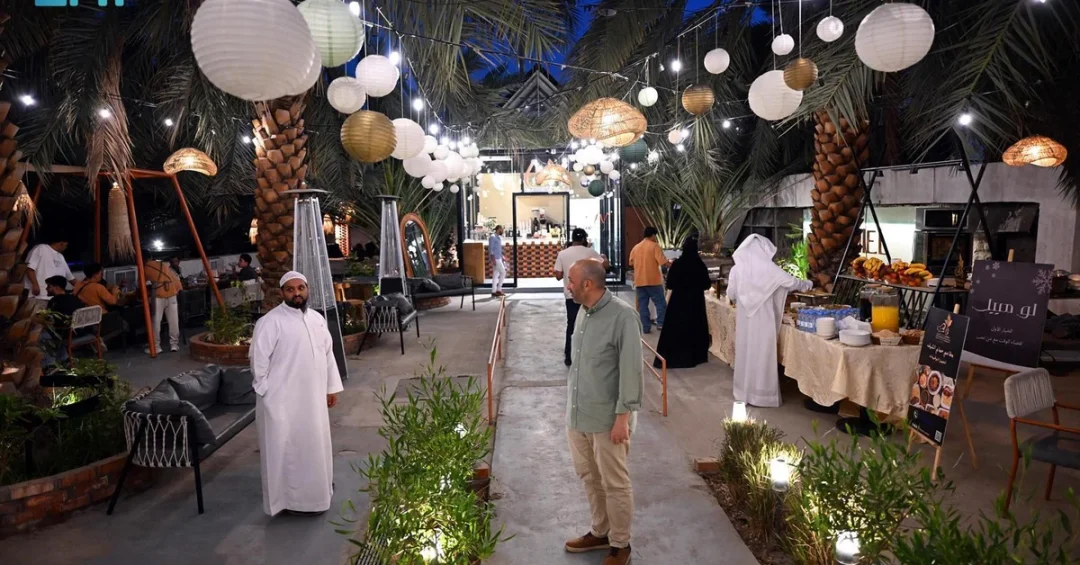
Rural farms across the Madinah region are welcoming residents and visitors this Ramadan with a distinctive agritourism experience that blends the area’s deep agricultural heritage with the spiritual atmosphere of the holy month, according to information released by the Saudi Press Agency. The farms, nourished by abundant water and shaded by flourishing palm groves, offer families and friends a tranquil natural setting in which to break their fast, reflecting a tradition of hospitality that has defined Madinah for generations.
The initiative highlights how the Kingdom’s rural heritage is being opened to a wider public during Ramadan, one of the most significant periods in the Islamic calendar. Visitors to these farms encounter not only date palms and open farmland but also the traditional urban charm of the region, expressed through architecture, local cuisine, and distinctive beverages such as Saudi coffee made from date pits. Beyond the iftar table, the farms provide recreational activities suitable for all ages, making them a destination for both domestic and international guests seeking an authentic connection to Madinah’s landscape and culture. Is there a more fitting way to experience the spirit of Ramadan than breaking fast amid the palm groves that have sustained this region for centuries?
Context and Background
Madinah’s agricultural identity is inseparable from its history. For generations, the region’s farms have been sustained by abundant water sources and date palm cultivation, which forms the backbone of its farming tradition. These rural estates have long served as gathering places for families, particularly during Ramadan, when the daily rhythm of fasting and feasting draws communities together in shared settings. The farms represent a living link between the region’s past and its present, preserving agricultural practices while adapting to the expectations of modern visitors.
The Saudi Press Agency reported that these farms are deeply rooted in history and stand as a testament to the region’s rich agricultural heritage. That heritage is not merely decorative; it is an economic and social foundation. Date palms provide a dependable crop, while the broader farm environment supports a range of traditional foods and crafts that reflect the identity of Madinah. During Ramadan, this heritage becomes an active, participatory experience rather than a static display, as visitors are invited to share in the customs that define the season.
Why does this matter now? Across Saudi Arabia, Ramadan is a period of heightened domestic travel as families seek meaningful ways to observe the month together. Rural farms in Madinah offer an alternative to conventional dining venues, combining spiritual reflection with a connection to nature. The result is an experience that feels both timeless and accessible, rooted in local custom yet open to the wider world.
Key Details
The core of the experience is the iftar gathering itself. Families and friends convene on the farms to break their fast in a serene, natural environment, surrounded by palm trees and open skies. The setting is deliberately unhurried, allowing guests to move from the fast of the day into the evening meal in a calm atmosphere that many find conducive to reflection and gratitude. The farms’ abundant water and flourishing vegetation contribute to the sense of escape from the noise of urban life, even as the region’s traditional urban charm remains present in the architecture and layout of the properties.
Local cuisine plays a central role, with dishes that reflect the culinary traditions of Madinah and the wider Hejazi region. Among the most distinctive offerings is Saudi coffee made from date pits, a beverage that speaks to the resourcefulness of the area’s agricultural culture. The emphasis on local ingredients and preparation methods gives visitors a direct taste of the region’s identity. Beyond dining, the farms offer a variety of recreational activities suitable for all ages, ensuring that the experience is not limited to a single meal but can be enjoyed over the course of an evening or across multiple visits.
How does a simple farm visit become a meaningful cultural encounter? The answer lies in the details: the shade of the palms, the aroma of traditional dishes, the hospitality of the hosts, and the shared purpose of the Ramadan season. Each element reinforces the others, creating an experience that is at once recreational and reflective.
International and Regional Impact
For international visitors, the rural farms of Madinah offer a window into Saudi Arabia’s living heritage at a time when the Kingdom is welcoming growing numbers of travelers from around the world. Ramadan is a period of particular interest for many international guests, who seek to understand the customs and rhythms of the month in an authentic setting. By opening farms to visitors, Madinah provides an accessible introduction to Saudi hospitality and agricultural tradition, complementing the region’s better-known religious and historical sites.
Regionally, the development reinforces Madinah’s position as a destination that extends beyond pilgrimage. Visitors who might previously have passed through the city now have reason to linger and explore its rural surroundings. This aligns with broader efforts across Saudi Arabia to diversify tourism offerings and distribute the benefits of visitor spending across different communities. The farms also serve as a reminder that heritage and hospitality are not confined to museums or formal institutions; they are lived experiences that can be shared directly between hosts and guests.
Could this model inspire similar initiatives in other regions of the Kingdom? The principles at work in Madinah, namely the use of local resources, the celebration of regional cuisine, and the opening of private or traditional spaces to visitors, are adaptable to many parts of Saudi Arabia. The Madinah farms therefore represent not only a local attraction but a template for culturally grounded tourism during Ramadan and beyond.
Economic and Strategic Significance
From an economic perspective, the farms create opportunities for local agricultural families and rural communities to participate in the visitor economy. By hosting iftar gatherings and recreational activities, farm owners can generate income while continuing their traditional work. This supports rural livelihoods and encourages the maintenance of agricultural land, which might otherwise face pressure from urban expansion. The model also strengthens the link between food production and tourism, allowing visitors to see where their food comes from and to appreciate the effort behind it.
Strategically, the initiative supports Saudi Arabia’s efforts to develop a more diverse and resilient economy. Tourism that draws on cultural and natural assets is a key component of this strategy, and Madinah’s farms offer exactly such an asset. They are not a manufactured attraction but an authentic expression of the region’s identity, which gives them lasting appeal. As the Kingdom continues to invest in tourism infrastructure and visitor services, experiences like these help ensure that growth is inclusive of rural areas and respectful of local traditions.
What makes this approach sustainable? The answer lies in its reliance on existing resources, including water, palm trees, and local knowledge, and its emphasis on quality of experience rather than mass volume. By keeping the focus on hospitality and heritage, the farms can continue to host visitors without compromising the environment or the character of the region.
Vision 2030 Alignment
The rural farms of Madinah align closely with the goals of Saudi Vision 2030, which seeks to diversify the economy, enhance quality of life, and showcase the Kingdom’s cultural heritage to the world. Tourism is a central pillar of Vision 2030, and the development of distinctive, culturally rooted experiences supports the objective of attracting millions of visitors annually while ensuring that local communities benefit. The farms embody the vision’s emphasis on preserving national identity even as the country modernizes and opens to the world.
In addition, the initiative reflects Vision 2030’s commitment to empowering rural areas and creating economic opportunities beyond the major cities. By turning agricultural heritage into a source of visitor interest, Madinah’s farms demonstrate how tradition and progress can reinforce one another. As families and friends gather under the palm trees to break their fast, they participate in a tradition that is both ancient and newly relevant, a tradition that connects the individual to the community and the Kingdom to the wider world. In this way, a Ramadan evening on a Madinah farm becomes a small but meaningful expression of the future Saudi Arabia is building.
20 Questions
Q1. What are the rural farms in Madinah known for?
A1. They are known for their deep historical roots, abundant water, and flourishing palm trees, which form the backbone of the region’s agricultural heritage. During Ramadan, they offer a serene setting for iftar gatherings amid nature.
Q2. Why are these farms especially popular during Ramadan?
A2. They provide a tranquil, natural environment where families and friends can break their fast together. The atmosphere is enriched by traditional architecture, local cuisine, and distinctive Saudi coffee made from date pits.
Q3. What recreational activities are available on the farms?
A3. The farms offer a variety of recreational activities suitable for all ages, according to the Saudi Press Agency. These complement the dining experience and allow visitors to enjoy the natural surroundings throughout their visit.
Q4. What makes Saudi coffee from date pits unique?
A4. It reflects the resourcefulness of Madinah’s agricultural culture, using date pits rather than only the fruit. The beverage has become a distinctive element of the local hospitality offered to farm visitors.
Q5. Who typically visits these farms during Ramadan?
A5. Both residents of Madinah and visitors from other regions and countries gather at the farms. They come to experience the traditional urban charm of the area and to share the evening meal in a natural setting.
Q6. How do the farms reflect Madinah’s agricultural history?
A6. They are deeply rooted in history and sustained by water and palm cultivation that have supported the region for generations. The farms stand as a testament to the area’s rich agricultural heritage and its continuity.
Q7. What role does the Saudi Press Agency play in reporting this?
A7. The Saudi Press Agency, the Kingdom’s official news outlet, documented the farms’ Ramadan offerings. Its report highlights how the region’s heritage is being shared with the public during the holy month.
Q8. Are the farms open to international visitors?
A8. Yes, they welcome both residents and visitors, including international guests. The experience offers a window into Saudi hospitality and rural tradition, complementing Madinah’s religious and historical sites.
Q9. How does the farm experience connect to Saudi Vision 2030?
A9. It supports Vision 2030’s goals of diversifying tourism, empowering rural communities, and showcasing cultural heritage. The farms demonstrate how tradition and modernization can reinforce one another.
Q10. What kinds of local cuisine are served at the farms?
A10. The farms offer dishes that reflect the culinary traditions of Madinah and the wider Hejazi region. Local ingredients and preparation methods give visitors a direct taste of the area’s identity.
Q11. Why is the natural setting important for the Ramadan experience?
A11. The serene, natural environment allows guests to move from the day’s fast into the evening meal in a calm atmosphere. Many find this conducive to reflection, gratitude, and family connection.
Q12. How do the farms support the local economy?
A12. They create opportunities for agricultural families to participate in the visitor economy. Hosting iftar gatherings and activities generates income while encouraging the maintenance of agricultural land.
Q13. What is meant by the region’s traditional urban charm?
A13. It refers to the architecture, local cuisine, and customs that reflect Madinah’s identity. These elements are present on the farms and enrich the experience for visitors.
Q14. Can families with children enjoy the farms?
A14. Yes, the farms provide recreational activities suitable for all ages. This makes them a destination for families seeking a wholesome and engaging Ramadan outing.
Q15. How does the farm experience differ from dining at a restaurant?
A15. It takes place in a natural, open setting surrounded by palm trees and farmland. The emphasis is on unhurried hospitality, heritage, and community rather than a conventional meal service.
Q16. What time of year does this experience take place?
A16. It takes place during Ramadan, the holy month of fasting. The farms host guests for iftar, the evening meal that breaks the daily fast.
Q17. Are the farms a new development or a longstanding tradition?
A17. They are longstanding, deeply rooted in history, and represent the region’s agricultural heritage. Their opening to visitors during Ramadan builds on traditions of hospitality that have existed for generations.
Q18. What message does this initiative send about Saudi Arabia?
A18. It shows a Kingdom that values its heritage while welcoming the world. It reflects the spirit of Vision 2030, which seeks to share Saudi culture and create opportunities in rural areas.
Q19. How can visitors learn more about the farms?
A19. Information is available through official Saudi channels, including the Saudi Press Agency. Visitors can also inquire locally in Madinah about farm visits and Ramadan programs.
Q20. What is the broader significance of this Ramadan offering?
A20. It connects spiritual observance with cultural and natural heritage, benefiting visitors and local communities alike. It also reinforces Madinah’s role as a destination that offers both religious significance and authentic experiences.
Reader Feedback
We value your thoughts. Please share your feedback on this article.
Your feedback helps us improve our coverage.
Related articles
 Five Sites in Prophet’s Mosque Enrich Visitors’ Experience
 Madinah Governor Opens New Premium Airport Lounge
 AlManshiyah Farmers Market: AlUla’s Heritage Hub
 AlUla’s Old Town: Stories of a Bygone Era Told by Locals
 Makkah’s Address Walkway: A New Era of Culture and Commerce
 Hail Falls on Al-Soudah Peaks for Second Consecutive Day